American Folk Songs: Origins, Themes, and Connections to Global Traditions
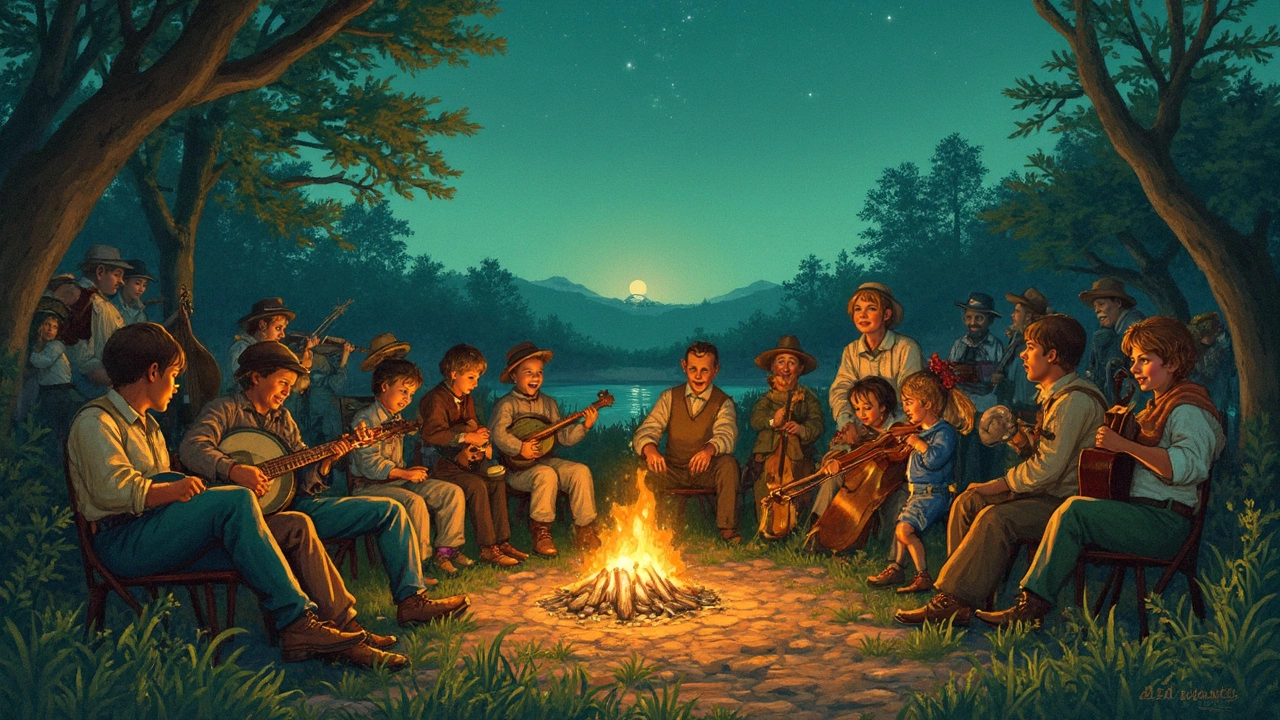
When we talk about American folk songs, traditional melodies passed down orally through communities, often reflecting work, protest, and daily life in the U.S., we’re not just hearing tunes—we’re listening to history. These songs weren’t written for charts or streaming platforms. They were sung by farmers, factory workers, sailors, and enslaved people to keep rhythm, share pain, or celebrate small wins. Unlike pop music, they changed with every voice that sang them—adding new lines, dropping old ones, blending dialects and rhythms until the original became unrecognizable. That’s how they survived: not because they were polished, but because they were real.
What makes American folk songs powerful is how closely they mirror other global traditions. Take bol banao, a form of nonsense singing in Indian folk music that uses rhythmic syllables instead of words to express emotion and maintain tempo. It’s not random noise—it’s a tool, just like the hums in Appalachian ballads or the call-and-response chants in Southern ring shouts. Both traditions use sound as memory, not just melody. You’ll find the same spirit in Tamil Karakattam, a dance with drum-driven songs performed during village festivals, where rhythm carries spiritual meaning. Whether it’s a coal miner in West Virginia or a temple dancer in Tamil Nadu, people use song to hold onto identity when words alone aren’t enough.
And it’s not just about rhythm. American folk songs often carry hidden messages—songs about railroads doubled as maps for escaping slavery; protest tunes from the 1960s borrowed melodies from centuries-old hymns. That’s why they’re still relevant. They’re not relics. They’re living conversations. The same way Tamil communities blend Diwali with Karthigai Deepam, or Punjabi bhangra fuses with modern beats, American folk music keeps evolving—through revivalists, school choirs, and TikTok covers. You don’t need to be from the U.S. to feel its weight. If you’ve ever sung a lullaby in your mother tongue just to feel closer to home, you already understand folk music.
Below, you’ll find articles that explore these connections—not just between regions, but between people. From the hidden ties between Southern dance forms and Native American rituals, to how global music revenue tracks back to simple folk tunes, this collection shows how culture moves, mutates, and survives. You’ll see why a song about a train in Alabama shares more DNA with a Tamil village chant than you’d think. No theory. No fluff. Just real stories, sung loud and clear.