Ancient Indian Art Forms Comparison Tool
Select the art forms you want to compare. Ancient Indian art developed over 5,000 years and includes many distinct styles.
Choose 2-3 forms to see their key characteristics side by side.
Indus Valley Art
Time Period: 2600-1900 BCE
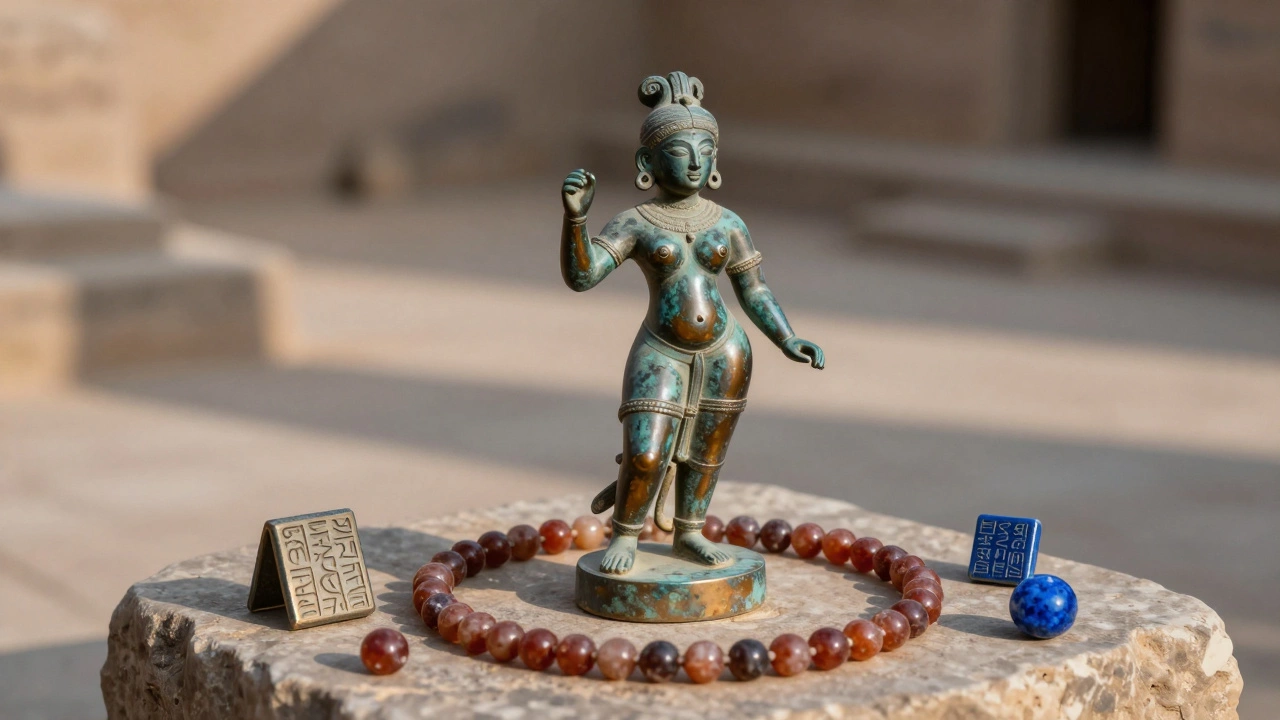
Key Features: Stone seals with animals, geometric pottery, small figurines like the 'Dancing Girl'
Mauryan Art
Time Period: 322-185 BCE
Key Features: Ashoka Pillars, Lion Capital of Sarnath, polished stone sculptures
Gandhara Art
Time Period: 1st-5th century CE
Key Features: Greek-influenced Buddha statues, wavy hair, draped robes, realistic faces
Chola Bronzes
Time Period: 9th-13th century CE
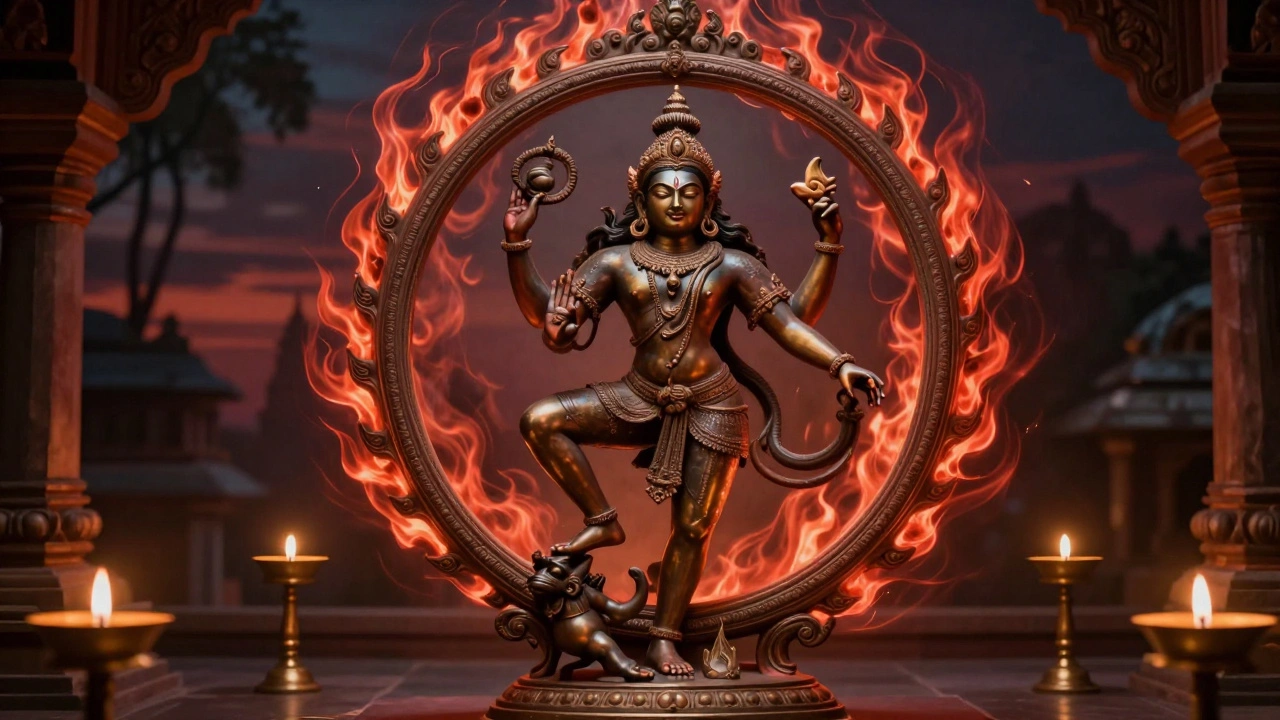
Key Features: Shiva Nataraja bronze, lost-wax casting, cosmic dance symbolism
Ajanta Murals
Time Period: 2nd century BCE-6th century CE
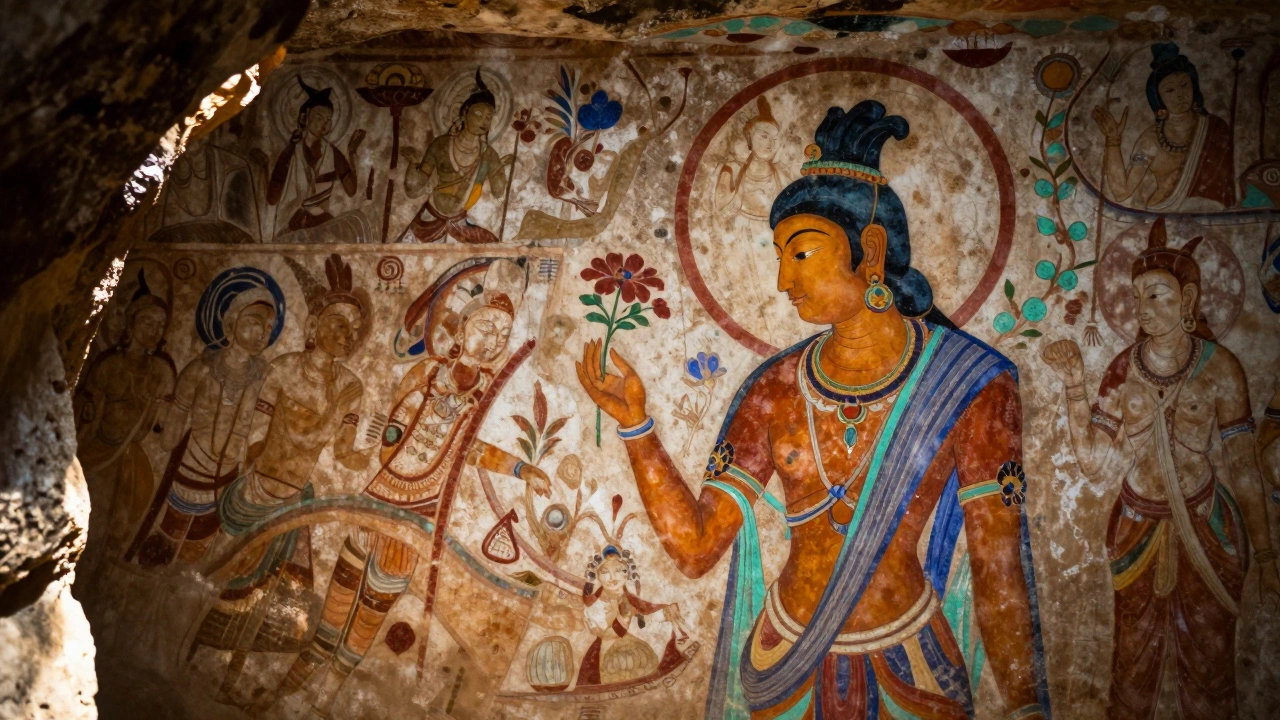
Key Features: Rock-cut cave paintings, Jataka tales, mineral pigments, expressive figures
Comparison Results
When people ask what the name of the art in ancient India is, they’re often looking for one simple label-like ‘Gothic’ or ‘Renaissance’-but there isn’t one. Ancient Indian art isn’t a single style. It’s a collection of visual languages that changed over 5,000 years, shaped by religion, trade, geography, and kingship. If you’re trying to name it, you’re better off asking: What kinds of art did ancient India produce? And the answer is rich, varied, and deeply connected to how people lived, prayed, and told stories.
Indus Valley Art: The First Visual Language
The earliest known art in ancient India comes from the Indus Valley Civilization, around 2600 to 1900 BCE. Cities like Mohenjo-Daro and Harappa had advanced urban planning, and their art was quiet, precise, and functional. You won’t find grand temples or mythic gods here. Instead, you’ll find small stone seals with carved animals-unicorns, bulls, tigers-and short scripts that still haven’t been fully decoded. These weren’t just decorations; they were likely used for trade, identity, or ritual.
Figurines from this time are simple but powerful. The famous ‘Dancing Girl’ bronze statue, only 10.8 centimeters tall, shows a young woman with her hand on her hip, wearing bangles. Her pose feels alive, confident. It’s one of the earliest known depictions of movement in South Asian art. Clay toys, beads made from carnelian and lapis lazuli, and pottery with geometric patterns show that even everyday objects were treated with care and design sense.
Sculpture and the Rise of Religious Imagery
After the Indus Valley declined, art didn’t disappear-it transformed. By 500 BCE, as kingdoms rose and religions like Buddhism and Jainism spread, art became a tool for spiritual expression. Stone and bronze sculptures started appearing across the Gangetic plains and the Deccan.
The Mauryan Empire (322-185 BCE) gave India its first large-scale stone sculptures. The most famous are the Ashoka Pillars-tall, polished sandstone columns topped with animal capitals. The Lion Capital of Sarnath, with four lions back-to-back, became India’s national emblem. These weren’t just monuments; they carried messages of dharma, order, and imperial authority.
At the same time, Buddhist art began to depict the Buddha himself. Early on, he was shown symbolically: an empty throne, a footprint, or a Bodhi tree. By the 1st century CE, human forms emerged. The Gandhara style, influenced by Greek artists after Alexander’s invasion, showed the Buddha with wavy hair, draped robes, and realistic facial features. In Mathura, the Buddha looked more Indian-robust, smiling, wearing thin, clinging cloth that revealed his form beneath.
Temple Art: When Architecture Became Worship
By the 4th century CE, Hinduism’s rise brought a new kind of art: the temple. Temples weren’t just places to pray-they were cosmic maps carved in stone. The earliest surviving temples, like those at Deogarh and Bhitargaon, had simple square sanctums with carved reliefs of gods and mythic scenes.
By the 6th to 12th centuries, temple art exploded in complexity. In South India, the Chola dynasty created bronze statues of Shiva as Nataraja-the Lord of Dance. These weren’t static idols. They showed Shiva dancing within a ring of fire, one foot crushing ignorance, the other raised in blessing. The bronze was cast using the lost-wax technique, and each statue weighed up to 50 kilograms. They were carried in processions, lit with oil lamps, and treated as living deities.
In North India, temples like Khajuraho became famous for their intricate carvings. Walls covered in hundreds of figures-gods, dancers, lovers, animals-told stories from the Puranas. The erotic sculptures often surprise modern viewers, but they weren’t about sensuality alone. They represented cosmic energy, fertility, and the unity of spiritual and physical life.
Painting: Murals That Lasted a Thousand Years
Ancient Indian painting survived mostly on cave walls and temple ceilings. The Ajanta Caves in Maharashtra are the most stunning example. Between the 2nd century BCE and 6th century CE, Buddhist monks and artists carved out 30 rock-cut chambers and painted them with scenes from the Jataka tales-stories of the Buddha’s past lives.
The colors came from natural minerals: red from ochre, blue from lapis, green from malachite. Brushes were made from animal hair. The artists used shading and perspective in ways that were rare in the ancient world. Figures have soft curves, flowing drapery, and expressive eyes. One famous painting shows a princess being offered flowers, her face half-lit, her posture graceful. It feels like a moment caught in time.
Later, in the Ellora Caves, Hindu and Jain artists painted their own stories. The Kailasa Temple, carved from a single rock, had murals of Shiva and Parvati, Vishnu’s avatars, and celestial musicians. These weren’t just decorations-they were visual sermons, meant to guide the mind toward enlightenment.
Regional Styles and the Birth of Classical Traditions
Ancient Indian art didn’t follow one rulebook. Different regions developed their own styles:
- South India: Emphasis on bronze casting, temple architecture, and rhythmic dance poses.
- North India: Focus on stone carving, narrative reliefs, and monumental pillars.
- Eastern India (Bengal/Bihar): Buddhist and Jain art flourished with terracotta plaques and manuscript illustrations.
- Western India (Gujarat/Rajasthan): Jain temples featured delicate marble carvings with thousands of tiny figures.
These regional styles didn’t disappear-they became the roots of India’s classical art traditions. The Chola bronzes influenced later South Indian sculpture. Ajanta’s painting techniques were studied for centuries. Even today, Indian artists trained in classical forms trace their lineage back to these ancient practices.
Why There’s No Single Name
People often expect ancient Indian art to have one name, like ‘Egyptian art’ or ‘Greek art.’ But India’s history wasn’t ruled by one empire for centuries. It was a patchwork of kingdoms, faiths, and cultures. Art wasn’t made for galleries-it was made for temples, homes, markets, and rituals. A farmer in Tamil Nadu didn’t care about Gandhara style. He cared about the image of his village deity carved on a stone outside his house.
So the real answer isn’t a name. It’s a pattern: ancient Indian art was sacred, symbolic, and deeply human. It turned stories into shapes, beliefs into sculptures, and devotion into color. It didn’t aim for realism-it aimed for meaning.
What Survives Today
You can still see ancient Indian art alive in modern India. Temple dancers in Bharatanatyam move like the figures on Chola bronzes. Pattachitra painters in Odisha use the same mineral pigments as Ajanta artists. Goldsmiths in Varanasi still cast small Shiva lingams using the lost-wax method from 1,500 years ago.
Museums in Delhi, Chennai, and Kolkata hold thousands of pieces, but the most powerful art isn’t behind glass. It’s in the rhythm of a drum during a village festival, in the way a priest anoints a statue with oil, in the silent gaze of a stone Buddha in a remote cave. Ancient Indian art didn’t die. It just kept breathing.
Is there one name for ancient Indian art?
No, there isn’t one single name. Ancient Indian art includes many styles developed over thousands of years-like Indus Valley seals, Mauryan pillars, Gandhara Buddha statues, Chola bronzes, and Ajanta murals. Each reflects different regions, religions, and eras. It’s more accurate to talk about its forms than to give it one label.
What’s the most famous piece of ancient Indian art?
The Lion Capital of Ashoka from Sarnath is perhaps the most recognized. It’s the national emblem of India and appears on currency and official documents. But many consider the Chola Nataraja bronze-Shiva dancing as the cosmic lord-to be the most artistically profound. Its balance of movement, symbolism, and technical mastery has influenced artists worldwide.
Did ancient Indians paint on canvas?
Not in the way we think of canvas today. Most ancient Indian paintings were done on cave walls, temple ceilings, or palm leaves. Manuscripts from the 8th century onward used painted illustrations on palm leaves or paper, especially in Jain and Buddhist traditions. Canvas painting became common only in the medieval period, after contact with Central Asia and Persia.
How did Greek influence affect Indian art?
After Alexander the Great’s invasion in 326 BCE, Greek artists and settlers settled in northwest India, especially in Gandhara (modern-day Pakistan and Afghanistan). They introduced realistic human anatomy, drapery folds, and facial expressions. This led to the first anthropomorphic depictions of the Buddha-previously shown only as symbols. The result was Gandhara art, a unique blend of Indian spirituality and Hellenistic style.
Are there any ancient Indian art sites I can visit today?
Yes. The Ajanta and Ellora Caves in Maharashtra, the Sanchi Stupa in Madhya Pradesh, the Khajuraho temples in Uttar Pradesh, and the Mamallapuram shore temples in Tamil Nadu are all UNESCO World Heritage Sites. You can also see original Chola bronzes at the Government Museum in Chennai and the National Museum in Delhi. Many smaller temples across South India still house original ancient sculptures in active worship.
What to Explore Next
If you’re curious about how ancient Indian art shaped later traditions, look into Mughal miniatures, Rajasthani folk paintings, or the revival of classical dance and sculpture in the 19th century. Each builds on these ancient roots. The art didn’t stop when the empires fell-it evolved, adapted, and kept speaking.