West Bengal Handicrafts Quiz
Test Your Knowledge of West Bengal Handicrafts
How much do you know about the traditional crafts of West Bengal? Answer these 5 questions to find out!
Which of these crafts is made from the spongy core of the shola plant?
What is the original purpose of Kantha stitch?
What is the most famous handicraft in West Bengal according to the article?
Where is Shantiniketan painting originally from?
What material is primarily used for the Bankura Horse?
When you think of West Bengal, you might picture the Ganges River, Durga Puja, or the iconic Howrah Bridge. But one of the most enduring legacies of this region isn’t found in its cities-it’s in its hands. For centuries, artisans across West Bengal have turned simple materials like clay, thread, and wood into objects of beauty, function, and deep cultural meaning. These aren’t just crafts. They’re stories passed down through generations, alive in every brushstroke, every stitch, every fired kiln.
The Bankura Horse: More Than a Sculpture
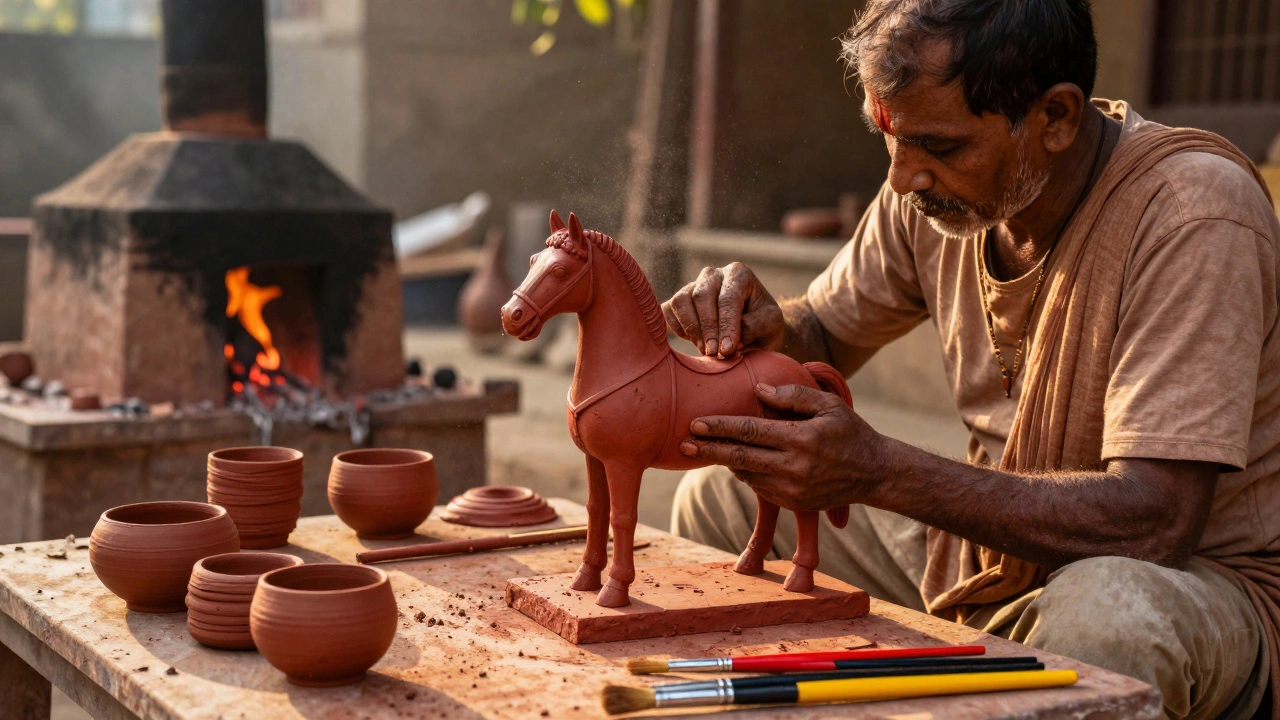
The Bankura horse is perhaps the most recognizable symbol of West Bengal’s handicraft heritage. Made from red clay in the village of Panchmura, these horses are not decorative afterthoughts-they’re sacred objects. For generations, villagers have placed them outside homes and temples as guardians against evil. The horse’s arching neck, flared nostrils, and sturdy legs aren’t just artistic choices; they’re the result of a 200-year-old technique that hasn’t changed much since the 1800s.
Each horse is hand-molded, sun-dried, then fired in a traditional kiln. The final touch? A coat of white base paint, then bold strokes of black, red, and yellow. No two are exactly alike. Artisans don’t use molds. They rely on memory, muscle, and rhythm. A single skilled artisan can make up to 15 horses a day, but each one takes at least three days from clay to completion.
Today, these horses are sold worldwide as art pieces, but in rural Bengal, they’re still offered during festivals and weddings. The Bankura horse isn’t just famous-it’s alive.
Kantha Stitch: The Story in Every Stitch
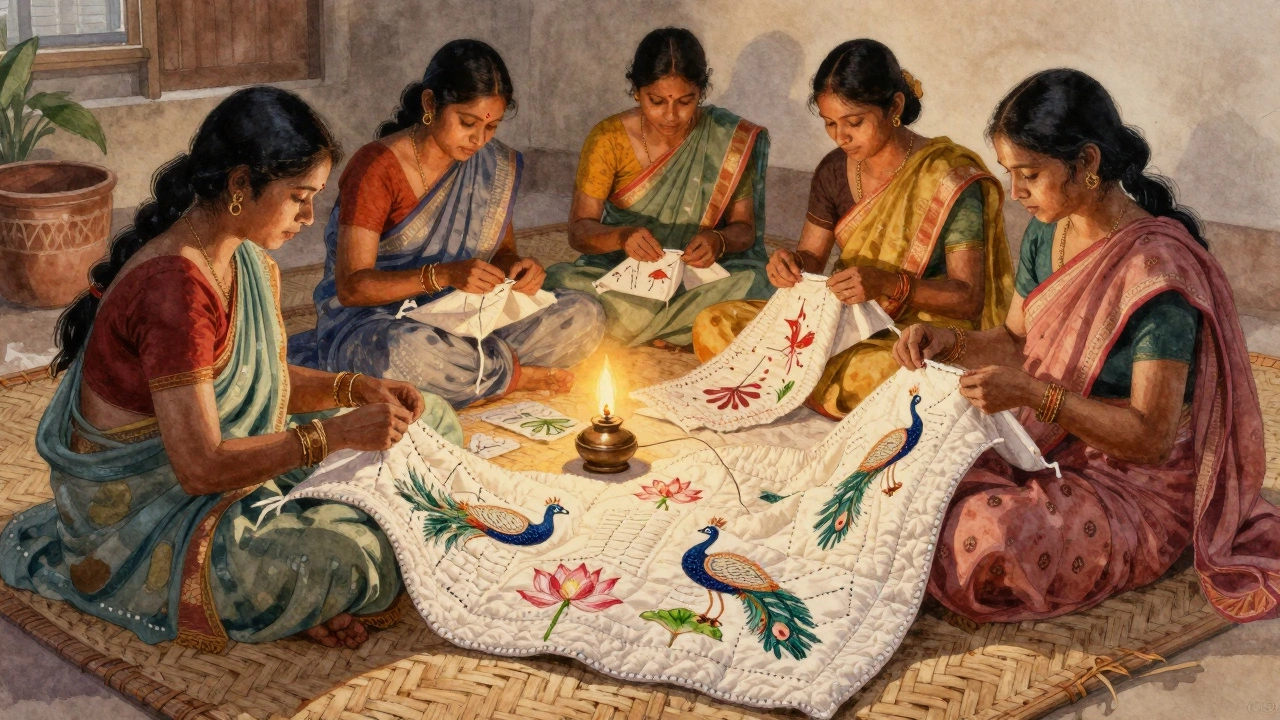
If you’ve ever seen a soft, faded quilt with swirling lines of thread, you’ve likely seen Kantha. Originating in rural Bengal, this embroidery technique transforms old saris and dhotis into quilts, pillow covers, and wall hangings. The word ‘kantha’ comes from the Sanskrit word for ‘rags,’ which tells you everything you need to know: it was born out of necessity.
Women would layer worn-out cloth and stitch them together using a simple running stitch. But over time, these stitches became more than repairs-they became narratives. A Kantha quilt might tell the story of a wedding, a monsoon, or a child’s first steps. Motifs include lotuses, peacocks, elephants, and even scenes from daily life: a woman drawing water, a man plowing a field.
Today, Kantha is a global design favorite. But the real magic is still in the villages of Birbhum and Nadia, where women gather in groups to stitch together, singing folk songs as they work. A single Kantha can take weeks to finish. The thread? Often recycled from old clothes. The needle? Sometimes just a bent piece of metal. The result? Something that lasts longer than the fabric it’s made from.
Shantiniketan Painting: Art Rooted in Philosophy
Not all West Bengal crafts are made from clay or thread. Some are painted on paper. Shantiniketan painting, also called the ‘Bengal School’ style, emerged in the early 1900s as a reaction against Western academic art. Founded by Rabindranath Tagore at Visva-Bharati University, it drew inspiration from Mughal miniatures, Ajanta frescoes, and Indian folk art.
These paintings are quiet. They don’t shout. They whisper. Soft watercolors, earthy tones, delicate lines-subjects include rural women, forest scenes, and spiritual figures. There’s no dramatic lighting, no hyper-realism. Instead, there’s emotion, stillness, and a deep connection to nature.
Artists today still use handmade paper and natural pigments. Indigo from plants, ochre from soil, lampblack from burned coconut shells. The brush? Often a single hair from a squirrel’s tail. The result? Paintings that look like they’ve been touched by time itself. You won’t find these in big city galleries often. But in small studios near Bolpur, you’ll find artists who’ve spent decades mastering this style-and still teach it to apprentices for free.
Teracotta Craft: Clay That Tells History
West Bengal’s terracotta tradition stretches back over 2,000 years. From the temples of Bishnupur to the household shrines of rural homes, terracotta has been the medium for both devotion and decoration. The red clay used here is rich in iron oxide, giving it that deep, warm color that turns almost black when fired.
In Bishnupur, artisans create intricate temple panels showing scenes from the Mahabharata and Ramayana. One temple wall might have 500 individual figures, each carved by hand. The details are astonishing: the folds in a king’s robe, the expression on a warrior’s face, the curve of a horse’s tail. These aren’t mass-produced souvenirs. They’re religious artifacts, made with rituals and respect.
But terracotta isn’t just about temples. You’ll also find terracotta lamps, animal figurines, and even musical instruments like the ektara. The craft is still alive in villages like Daspur and Kotalpukur, where families have worked with clay for seven generations. A single terracotta lamp can take two weeks to complete-from digging the clay to firing it in a wood-fired kiln.
Sholapith: The Lightest Craft in Bengal
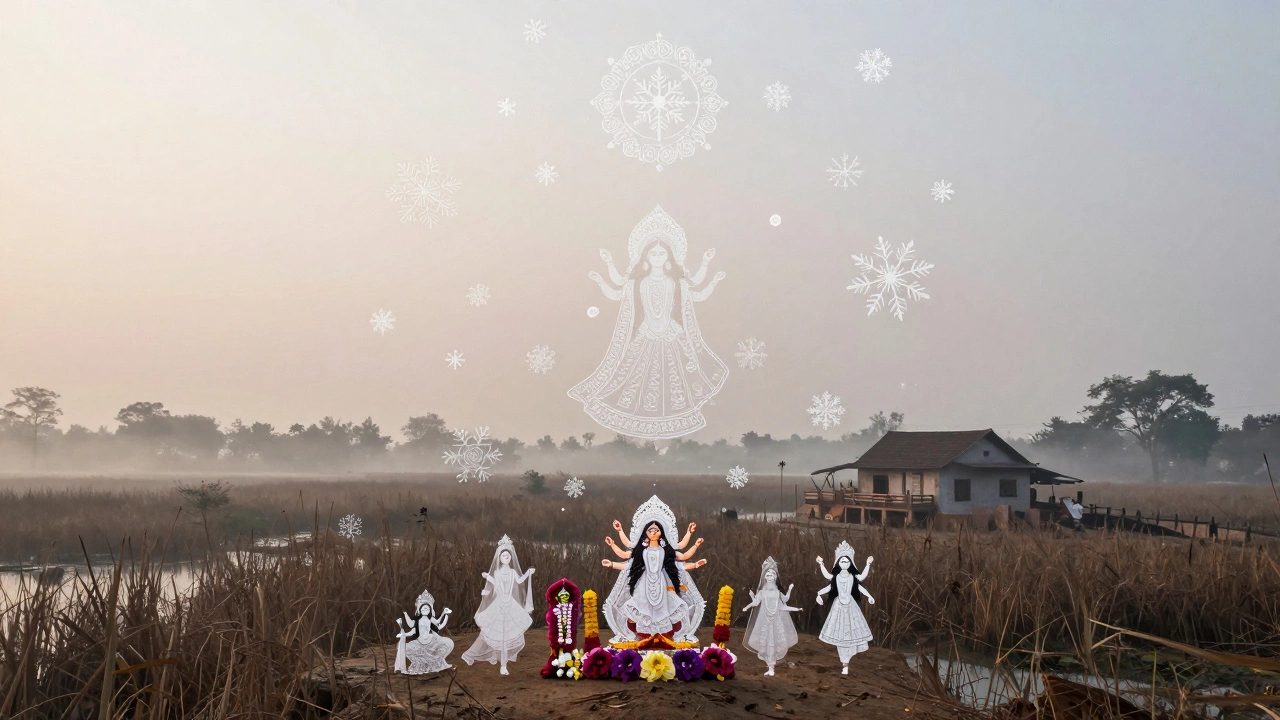
Not all West Bengal crafts are heavy or colorful. Sholapith is delicate, white, and made from the spongy core of the shola plant-a reed that grows in the wetlands of Murshidabad and Nadia. Artisans peel the soft inner core, slice it into thin sheets, and carve it into flowers, crowns, and religious idols.
Sholapith is most famous for its use in Bengali weddings. Brides wear sholapith headpieces called ‘shola shapla,’ which look like snowflakes made of lace. Grooms wear sholapith turbans. During Durga Puja, idols of the goddess are sometimes adorned with sholapith decorations.
It’s a fragile craft. The material is easily damaged by moisture. But that’s also what makes it special. It’s ephemeral, like beauty itself. Fewer than 200 artisans still work with sholapith today. Many are over 60. Young people don’t see it as a livelihood. But in the villages where it’s still made, you’ll find mothers teaching daughters how to carve a single petal-just as their mothers did.
Why These Crafts Still Matter
These five crafts-Bankura horse, Kantha, Shantiniketan painting, terracotta, and sholapith-are more than souvenirs. They’re proof that culture doesn’t live in museums. It lives in the calluses on an artisan’s fingers, in the rhythm of a loom, in the quiet concentration of a woman stitching by candlelight.
Globalization has brought cheaper, machine-made copies. But people are starting to notice the difference. A hand-stitched Kantha quilt lasts 50 years. A machine-made one falls apart in five. A Bankura horse made by hand carries the weight of history. A plastic replica doesn’t.
Supporting these crafts isn’t about buying something pretty. It’s about keeping a way of life alive. When you buy directly from a cooperative in Panchmura or a women’s group in Birbhum, you’re not just getting a product. You’re helping a grandmother keep teaching her granddaughter. You’re keeping a language of art alive.
Where to Find Authentic West Bengal Handicrafts
If you want to buy real West Bengal crafts-not the factory-made versions sold in tourist shops-go straight to the source:
- Panchmura, Bankura - For authentic Bankura horses. Visit local cooperatives like the Panchmura Artisan Cooperative.
- Birbhum and Nadia - For Kantha quilts. Look for women’s self-help groups that sell directly.
- Bolpur, near Shantiniketan - For original Bengal School paintings. Visit the university’s art stalls or small studios.
- Bishnupur - For terracotta panels and lamps. The temple area has small workshops open to visitors.
- Murshidabad - For sholapith items. Ask for artisans who still work with the shola plant.
Avoid big department stores or online marketplaces that don’t name the maker. If the product says ‘handmade’ but has no details about the artisan or village-it’s probably not.
What Happens If These Crafts Disappear?
Imagine a world where no one remembers how to make a Bankura horse. Where Kantha stitching is just a word in a history book. Where sholapith flowers are only seen in photos.
That’s not a fantasy. It’s a real risk. The average age of a terracotta artisan in Bishnupur is 62. Fewer than 10% of young people in these villages want to take up the craft. They’re moving to cities for jobs that pay more, even if they’re soulless.
But change is possible. In 2023, the West Bengal government launched a scheme to give artisans direct access to global markets through digital platforms. NGOs are training youth in traditional techniques. And more people abroad are asking: ‘Who made this?’
The answer matters. Because when you know who made your quilt, your horse, your lamp-you don’t just own an object. You become part of its story.
What is the most famous handicraft in West Bengal?
The Bankura horse is the most iconic handicraft from West Bengal. Made from red clay in Panchmura, it’s a symbol of protection and artistry, with a history dating back over 200 years. Its distinct arching neck and bold painted details make it instantly recognizable across India and beyond.
Is Kantha stitch only used for quilts?
No. While Kantha originally began as a way to stitch together old cloth into quilts, today it’s used on everything from sarees and pillow covers to wall hangings and bags. The running stitch technique remains the same, but the designs have expanded to include modern patterns while still honoring traditional motifs like peacocks, lotuses, and scenes from village life.
Are West Bengal handicrafts expensive?
Authentic West Bengal handicrafts are priced higher than mass-produced items because they take weeks to make, use natural materials, and are created by skilled artisans who earn fair wages. A single Kantha quilt can cost ₹3,000-₹10,000, while a Bankura horse ranges from ₹800-₹2,500. But you’re paying for a lifetime of craftsmanship, not just a product.
Can I visit the artisans who make these crafts?
Yes. Many villages like Panchmura, Bishnupur, and Bolpur welcome visitors. Some cooperatives offer workshops where you can try your hand at making a Bankura horse or stitching a Kantha. It’s best to contact local NGOs or the West Bengal Handicrafts Development Corporation in advance to arrange a visit.
How can I support these crafts if I can’t visit West Bengal?
Buy directly from verified online platforms that work with artisan cooperatives-like Dastkar, Hathkargha, or the West Bengal State Handicrafts Corporation’s official site. Avoid Amazon or Etsy sellers who don’t name the maker. Look for product details that mention the village, artisan name, or craft technique. Your purchase helps keep the tradition alive.
If you want to carry a piece of West Bengal home, don’t just buy a souvenir. Choose something made with hands, not machines. Choose something that carries a story. Because the real magic isn’t in the craft-it’s in the person who made it.