Tamil Nadu Fact Checker
Check if statements about Tamil Nadu are accurate based on the article. Enter a claim and click "Check Fact" to verify.
Ask anyone who’s traveled across India, and they’ll tell you: Tamil Nadu doesn’t feel like the rest of the country. It’s not just about the spicy sambar or the grand temple chariots. There’s something deeper - a rhythm, a rhythm that’s been steady for over two thousand years. While other states have changed dramatically with time, Tamil Nadu holds on to its roots like a tree with deep roots in rocky soil. It doesn’t just preserve its culture; it lives it - every day, in every home, in every temple, in every conversation.
Language That Doesn’t Bend
Most Indian languages evolved by borrowing from Sanskrit, Persian, or English. Not Tamil. It’s one of the oldest living languages in the world, with inscriptions dating back to 300 BCE. Unlike Hindi or Bengali, Tamil didn’t become a hybrid. It stayed pure. You’ll hear it in Chennai’s busy streets, in rural villages where elders speak only Tamil, and even in Tamil-speaking households in Singapore or Malaysia. The state doesn’t just teach Tamil in schools - it celebrates it. Every year, on Tamil Language Day, people recite ancient poetry, host debates, and honor poets like Thiruvalluvar. No other state in India has a state-level holiday for its language. That’s not tradition. That’s identity.
Temples That Run the Calendar
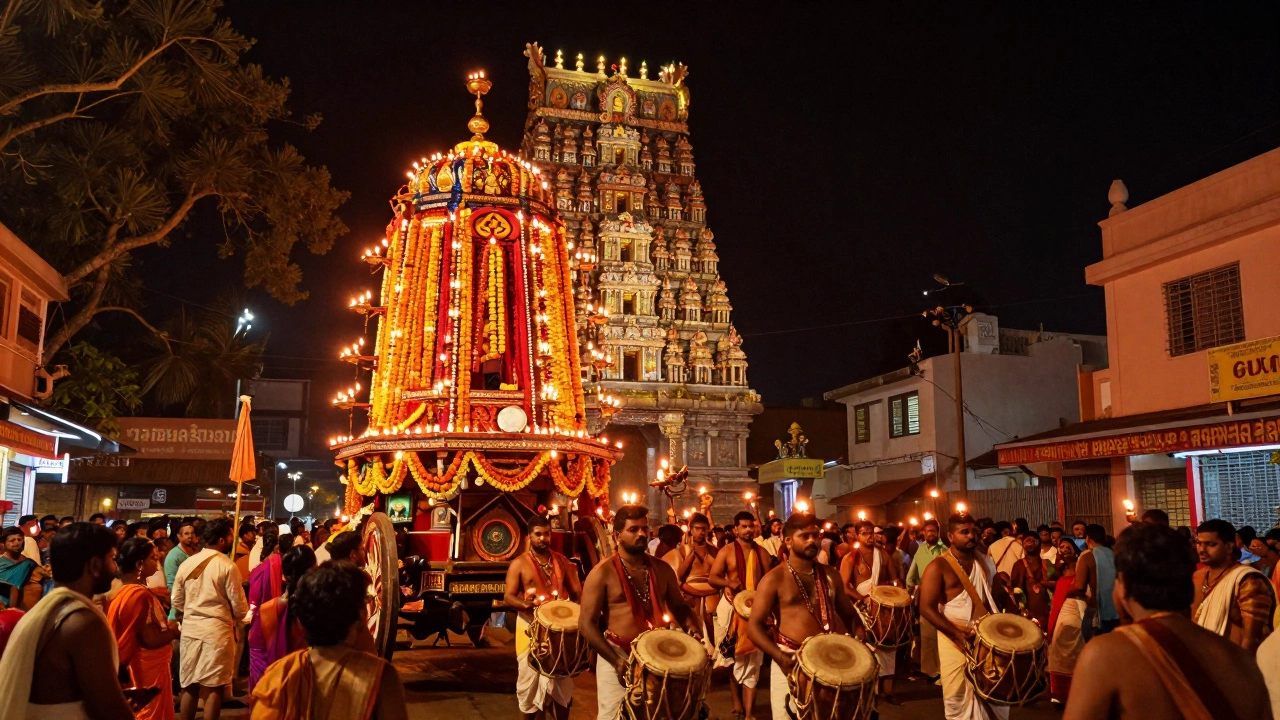
In North India, festivals often revolve around Hindu epics like the Ramayana. In Tamil Nadu, the calendar is ruled by temple rituals. The annual chariot festival at Meenakshi Temple in Madurai draws over a million people. In Kumbakonam, the Mahamaham festival happens once every 12 years, drawing pilgrims from across the globe. These aren’t just religious events - they’re social anchors. Families plan their lives around them. Marriages are arranged after temple festivals. Jobs are taken based on temple schedules. Even the government shuts down for major temple processions. You won’t find this level of integration between religion and daily life anywhere else in India. Temples here aren’t just buildings. They’re the heartbeat of the state.
Food That Defies Trends
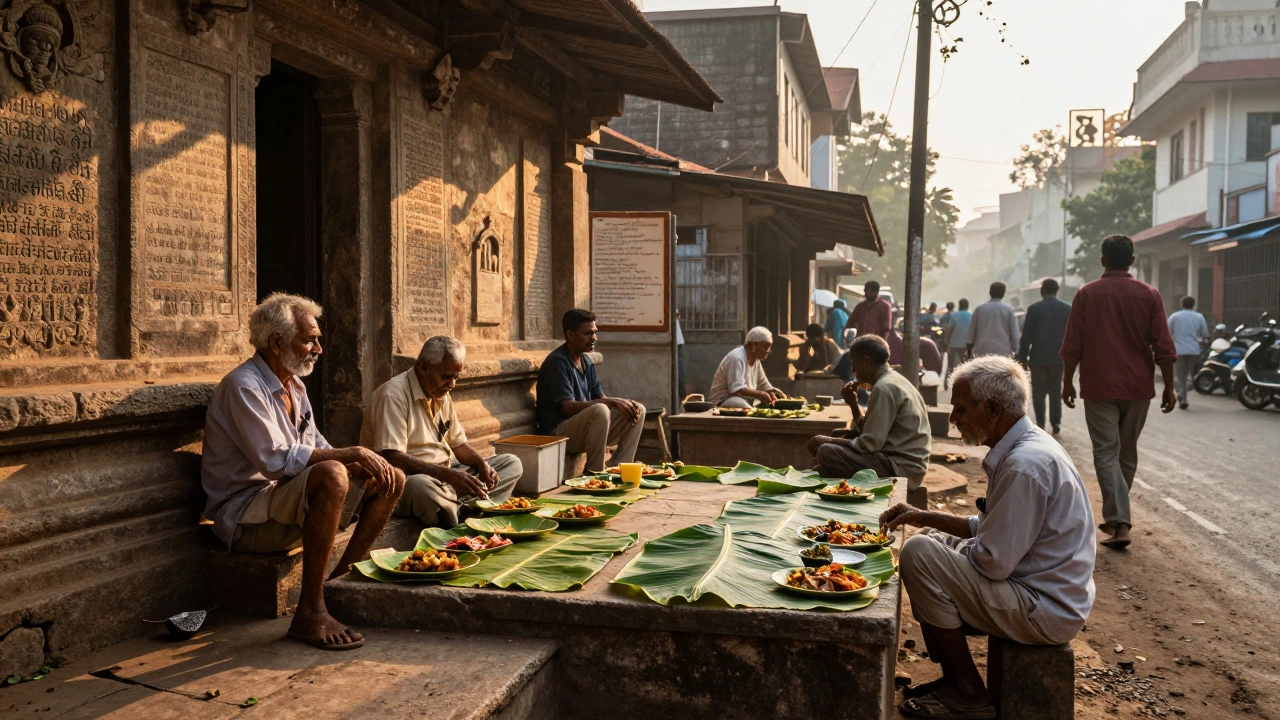
Tamil cuisine doesn’t chase trends. It doesn’t have fusion restaurants or Instagrammable desserts. It’s simple, consistent, and deeply rooted. A typical Tamil meal isn’t just rice and curry - it’s a ritual. It includes nine dishes served on a banana leaf: lentils, pickles, yogurt, fried vegetables, and a sweet finish. The order matters. The taste balance matters. Even the temperature of the rice matters. You won’t find paneer or naan in a traditional Tamil home. Instead, you’ll get parotta made with ghee, idlis steamed in bamboo baskets, and rasam made with tamarind and pepper. This isn’t about taste preferences - it’s about heritage. Tamil Nadu has one of the highest rates of home-cooked meals in India. Even in urban centers, grandmothers still teach their grandchildren how to grind spices the old way - stone mortar and pestle.
Art and Dance That Never Stopped
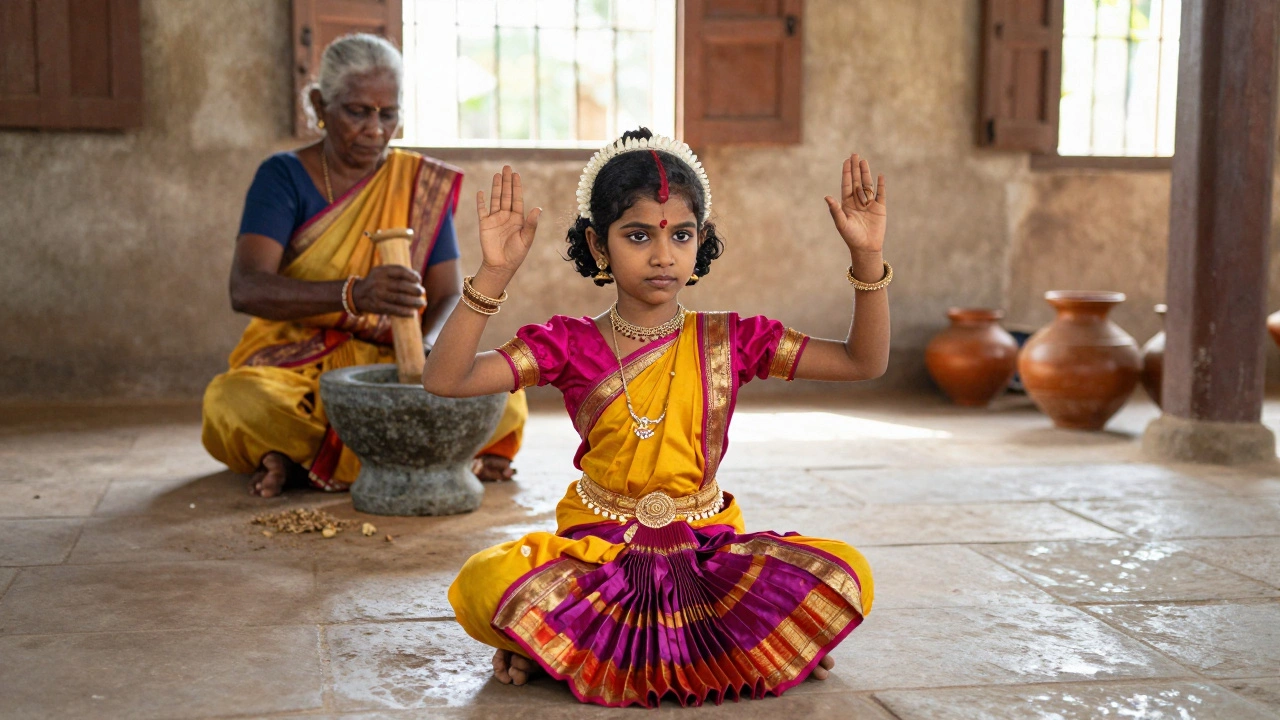
Bharatanatyam didn’t just survive colonial rule - it thrived. While other classical dance forms faded or were reinterpreted, Tamil Nadu kept Bharatanatyam alive in its purest form. It was never commercialized. It was never diluted. Temple dancers, once called devadasis, were persecuted under British rule. But the art didn’t die. It was revived by scholars, musicians, and women who refused to let it vanish. Today, every child in Tamil Nadu learns at least one dance step. Schools teach it like math. You’ll see five-year-olds performing complex mudras in village halls. The music? Carnatic. It’s not just background noise - it’s structured, mathematical, and deeply spiritual. A single raga can take hours to perform. People don’t just listen - they feel it in their bones.
Women Who Lead
Tamil Nadu has the highest female literacy rate in India. It also has the longest history of women in public leadership. The state elected its first female chief minister in 1989 - decades before most states even considered it. J. Jayalalithaa ruled for over 14 years across multiple terms. She didn’t just hold power - she reshaped public services. She built midday meal programs that fed millions of schoolchildren. She expanded healthcare access in rural areas. Even today, women run over 40% of local self-government bodies. In villages, you’ll find women leading temple committees, managing water distribution, and organizing festivals. This isn’t new. In ancient times, Tamil queens commissioned temples, funded poets, and led armies. The culture never stopped honoring women’s authority.
Resistance to Change - and Why It Works
People often say Tamil Nadu is "resistant to change." But that’s not quite right. It doesn’t reject change - it filters it. Mobile phones? Yes. Electric cars? Slowly. Fast food chains? Only if they adapt - like how McDonald’s now serves filter coffee and idli burgers. But the core? The language, the temples, the food, the music - those stay untouched. Why? Because they’re not just customs. They’re proof that a society can be modern without losing its soul. Tamil Nadu doesn’t need to copy Bollywood or follow Delhi’s trends to feel modern. It built its own version of progress - one rooted in ancient wisdom, not imported ideas.
What Makes It Different? The Answer Is Simpler Than You Think
Tamil Nadu isn’t different because it’s more religious, more traditional, or more conservative. It’s different because it never stopped believing in its own story. While other states rebranded themselves to fit national narratives, Tamil Nadu kept telling its own. It didn’t wait for approval. It didn’t apologize for being different. And that’s why, when you walk through a Tamil neighborhood - whether in Coimbatore or Sydney - you feel it. There’s a quiet confidence. A pride that doesn’t shout. A culture that doesn’t need to prove anything. It just is.
Why is Tamil language considered so ancient compared to other Indian languages?
Tamil is one of the few classical languages in the world with a continuous literary tradition spanning over 2,000 years. The earliest Tamil inscriptions, found in Tamil Nadu and Sri Lanka, date back to 300 BCE. Unlike Sanskrit-influenced languages that evolved through mixing, Tamil developed independently, with its own grammar, poetry, and linguistic rules. The Tolkāppiyam, written around 200 BCE, is the world’s oldest surviving grammar text for any Dravidian language. It laid the foundation for Tamil literature, poetry, and even social norms - making it a living language that never faded into history.
How do Tamil Nadu’s temple festivals differ from festivals in other Indian states?
While festivals in other states often focus on mythological stories - like Diwali or Holi - Tamil Nadu’s temple festivals are tied to local deities and temple calendars. They’re not just religious events; they’re community milestones. The chariot processions, music performances, and ritual baths happen on fixed dates based on astrological calculations. These festivals last weeks, involve thousands of volunteers, and dictate the rhythm of daily life - from marriage dates to harvest schedules. No other state integrates temple rituals so deeply into civic life.
Why does Tamil Nadu have such high female literacy and leadership?
Tamil Nadu’s high female literacy rate - over 80% since the 1990s - stems from early investments in public education and social reform movements. In the 19th century, reformers like Pandita Ramabai and the Self-Respect Movement led by Periyar pushed for women’s education and rights. The state’s midday meal program, started in 1982, increased school attendance for girls by over 60%. Combined with cultural respect for women’s roles in temple and household leadership, this created a foundation for female political power. Today, Tamil Nadu leads India in women’s representation in local government.
Is Bharatanatyam only performed in temples today?
No. While Bharatanatyam originated as a temple dance performed by devadasis, it was revived in the 20th century as a classical art form for public stages. Today, it’s performed in theaters, schools, and international festivals. But its essence hasn’t changed - it still follows the same spiritual structure, mudras, and rhythmic patterns. Every student learns the same compositions passed down for centuries. The difference? Now, girls and boys from all backgrounds learn it - not just those tied to temples.
Why doesn’t Tamil Nadu adopt Hindi like other southern states?
Tamil Nadu has a long history of resisting Hindi imposition, dating back to the 1930s. The anti-Hindi agitations of the 1960s were massive, with over 70 people dying in protests. Since then, the state has protected Tamil as the sole official language. Schools teach only Tamil and English. Government work is done in Tamil. Even central government offices in Chennai use Tamil for official communication. This isn’t about politics - it’s about identity. Tamil speakers see their language as a marker of cultural sovereignty, not just a mode of communication.