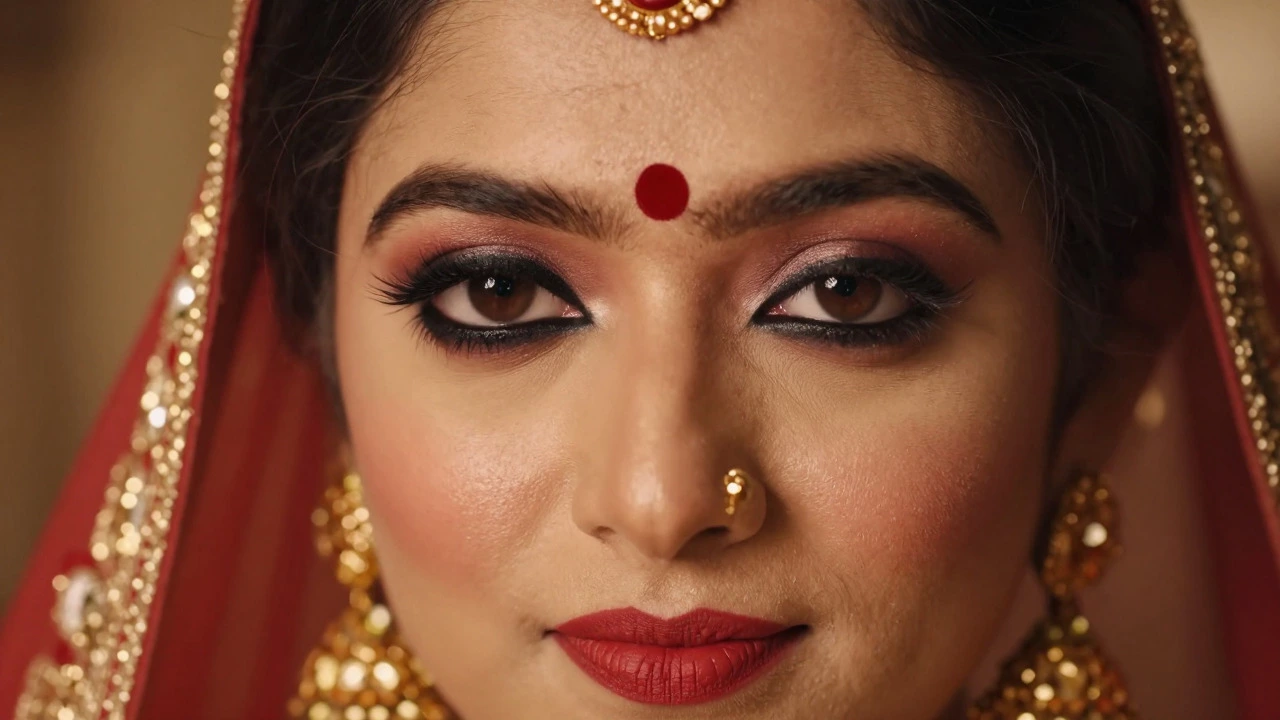
Bridal Makeup Intensity Calculator
Adjust the sliders below to simulate different wedding scenarios. See how historical roots, lighting conditions, and social expectations combine to create the iconic "heavy" look.
A harmonious blend of modern sensibilities and traditional elements. The makeup is visible but not overwhelming, suitable for a standard indoor ceremony with moderate family involvement.
Walk into any traditional Indian wedding hall and the first thing that catches your eye is often the bride. She looks almost unrecognizable compared to her everyday self. Thick eyeliner, a bold red or pink lip, and a base so flawless it looks like a filter in real life. If you’ve ever wondered why the bridal makeup seems so intense, you’re not alone. It’s not just about looking pretty for photos. There are deep cultural roots, practical necessities, and social expectations behind every brush stroke.
For many outsiders, the look can feel overwhelming. But for the bride and her family, it’s a ritual as important as the ceremony itself. Let’s break down exactly why this happens, moving beyond surface-level assumptions.
The Historical Roots of Bridal Beauty
To understand the "why," we have to look at the "when." In ancient India, cosmetics weren’t just for vanity; they were functional and symbolic. The use of Kajal is a traditional eye cosmetic made from soot or carbon, used to protect eyes from dust and sun glare. Before modern sunglasses, brides wore heavy black around their eyes to shield themselves during outdoor rituals under harsh sunlight. Over centuries, this practical tool evolved into a symbol of beauty and protection.
Similarly, the application of Sindoor is a vermilion powder applied to the parting of the hair by married Hindu women, symbolizing marital status and auspiciousness. While not makeup in the Western sense, it sets the stage for the entire aesthetic. The face is prepared to complement these traditional markers. The idea is that the bride should look radiant, vibrant, and distinct from everyone else in the room. This visual distinction serves a social function: it marks her transition from one life stage to another.
Practical Reasons: Light, Camera, and Distance
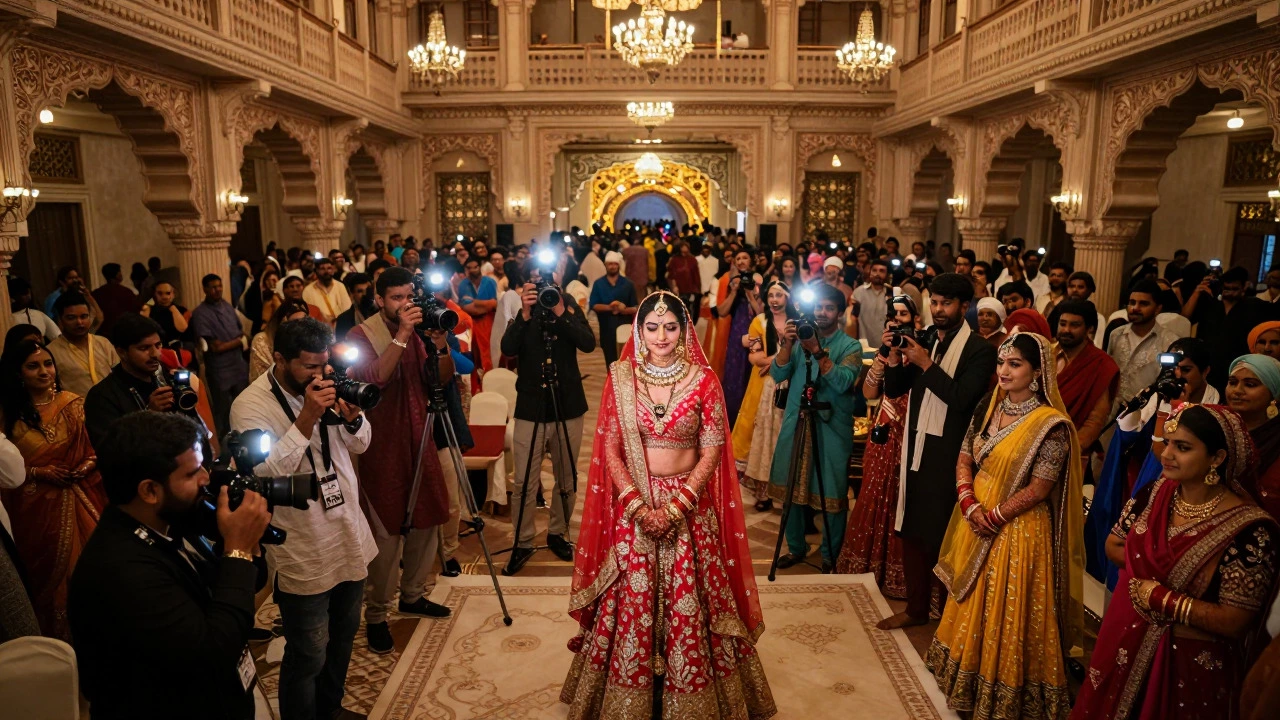
Beyond history, there are very practical physics involved. Indian weddings are often large-scale events with hundreds of guests. The bride needs to be visible from across the hall. Soft, natural makeup tends to disappear in crowded spaces or under mixed lighting. Heavy contouring and bright colors ensure she stands out.
Then there’s the photography factor. Most Indian weddings involve multiple photographers and videographers capturing hours of footage. Flash photography can wash out subtle tones. A "camera-ready" look requires stronger pigments and sharper lines to translate well on film and digital sensors. What looks too much in person often balances out perfectly in high-resolution photos and videos that families will watch for decades.
Cultural Symbolism and Rituals
In many Indian communities, specific makeup elements carry symbolic weight. For example, the use of Mehndi is an art form involving intricate henna designs applied to hands and feet, believed to bring good luck and happiness to the marriage. The dark stain of the Mehndi contrasts with the fairer skin tone created by the base makeup. This contrast is intentional. It highlights the artistry of the henna and ensures the patterns remain visible even after the ceremony ends.
Additionally, the color palette matters. Red and pink lips are traditionally associated with passion, energy, and prosperity. In some regions, a pale complexion is still considered ideal for brides, leading to the use of lighter foundation shades. This preference stems from historical class associations where indoor living led to fairer skin. Today, while diversity is growing, the trend toward a flawless, light-complexioned finish persists in many traditional circles.
The Role of Family and Social Expectations
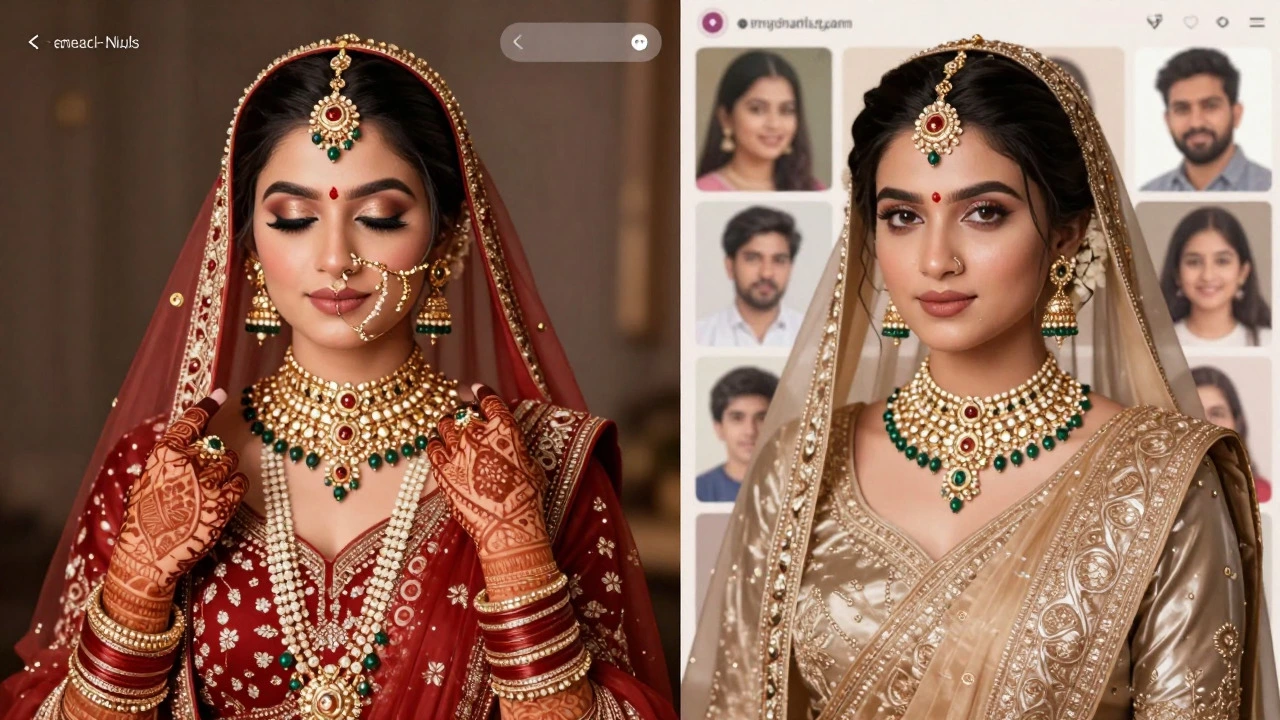
It’s easy to think the bride chooses her look in isolation. In reality, it’s a collaborative effort. Mothers, aunts, and professional makeup artists all have opinions. The pressure to meet family expectations is significant. A bride who arrives looking "too casual" might face gentle criticism from elders who view the elaborate look as a sign of respect for the occasion.
This social dynamic reinforces the standard. When every generation has seen brides wear heavy makeup, it becomes the norm. Deviating from it requires confidence and sometimes negotiation. For many brides, wearing the full look is a way to honor their heritage and satisfy their community’s expectations, ensuring a smooth start to their new family life.
Modern Trends and Changing Standards
Are things changing? Yes, but slowly. With the rise of social media, younger brides are experimenting with different styles. "No-makeup