Bengali Cuisine Explorer
Select your current season or desired flavor profile to find the perfect authentic Bengali dish recommendation.
You have probably heard the joke that a Bengali without fish is like a fisherman without a net. It sounds exaggerated until you actually sit down at a table in Kolkata or Dhaka and watch the plates arrive. The sheer variety of Bengali cuisine is staggering. It isn't just about one dish; it is a complex system of flavors, textures, and seasonal rhythms that has evolved over centuries. If you are wondering what makes this culinary tradition so distinct from other Indian cuisines, you need to look beyond the spice box and into the heart of the delta.
The core identity of Bengali food rests on two pillars: freshwater fish and mustard oil. Unlike North Indian cooking, which often relies on ghee and heavy cream, Bengali cooking uses mustard oil for its pungent kick and raw texture. This oil acts as a preservative and a flavor enhancer, cutting through the richness of fish and meat. But don't let the pungency scare you off. When balanced with sugar, yogurt, and subtle spices, it creates a harmony that defines the region's palate. Let's break down exactly what you should try if you want to understand the soul of Bengal.
The Fish That Defines the Region
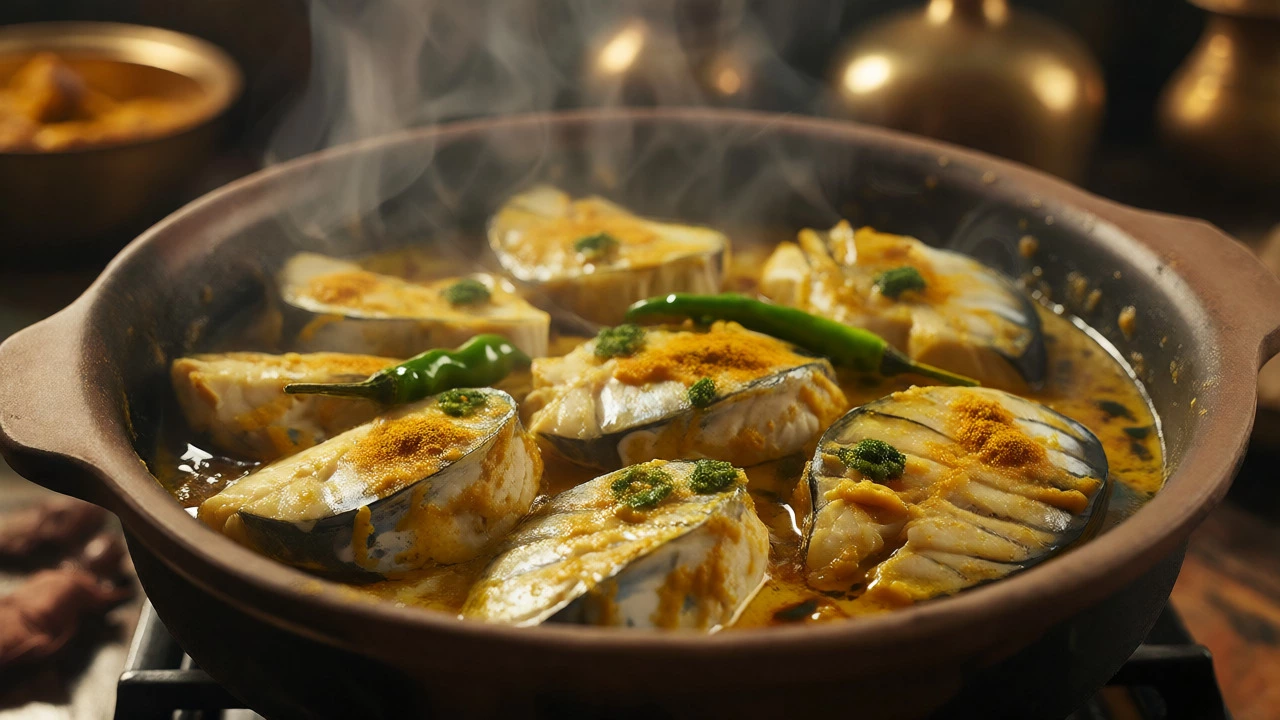
If you eat only one thing in Bengal, make it Hilsa (Ilish). Known scientifically as Tenualosa ilisha, this migratory fish is not just food; it is a cultural obsession. During the monsoon season, prices skyrocket because demand outstrips supply. People argue over the best way to cook it, but two preparations stand out. First, there is Ilish Bhapa, where the fish is steamed with mustard paste, green chilies, and turmeric. The steam keeps the flesh tender while the mustard paste penetrates the layers. Second, there is Shorshe Ilish, where the fish is cooked in a thick gravy made from ground mustard seeds. The bitterness of the mustard balances the oily richness of the Hilsa perfectly.
But Hilsa isn't the only star. Rui (Rohu) and Katla are everyday heroes. You will find them in almost every household. A common home-style preparation is Machher Jhol, a thin, soupy curry made with potatoes, tomatoes, and minimal spices. It’s light, hydrating, and perfect for hot afternoons. Then there is the controversial favorite: Chingri Malai Curry. Giant prawns simmered in coconut milk and poppy seed paste. It sounds rich, and it is, but the sweetness of the coconut cuts through the heat of the green chilies. If you visit during winter, try Prawn Bora, tiny fried prawns mixed with rice, served alongside dal.
| Dish Name | Main Ingredient | Key Flavor Profile | Best Season |
|---|---|---|---|
| Ilish Bhapa | Hilsa Fish | Mustard, Steamed, Pungent | Monsoon |
| Chingri Malai Curry | Giant Prawns | Coconut, Creamy, Mild Heat | All Year |
| Machher Jhol | Rohu/Katla | Light, Soupy, Turmeric | Summer |
| Shorshe Ilish | Hilsa Fish | Thick Mustard Gravy, Spicy | Winter/Spring |
Sweetness Beyond Dessert
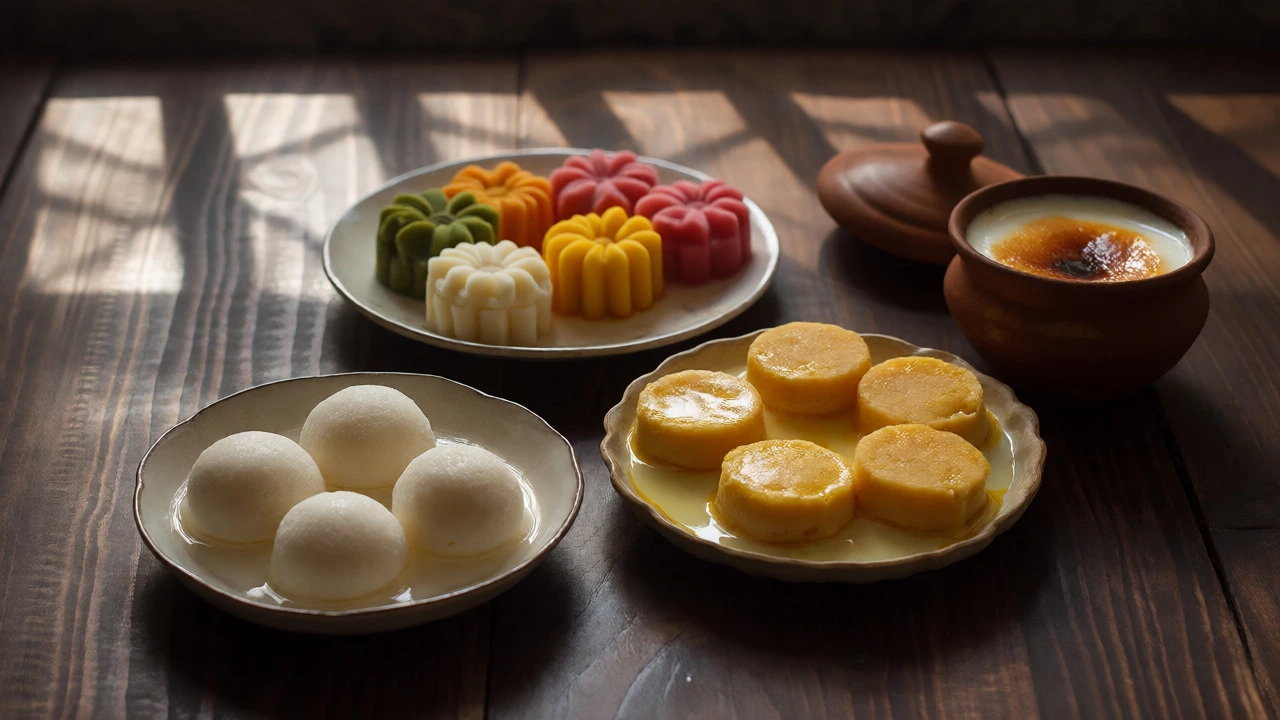
In many cultures, dessert is an afterthought. In Bengal, it is a main event. The word Mishti literally means "sweet," but it refers to a specific category of confectionery made primarily from cottage cheese (chhana) and sugar syrup. You cannot talk about Bengali food without talking about Rosogolla. These spongy balls of chhana soaked in light sugar syrup are iconic. While their origin is debated between Odisha and West Bengal, their popularity is undeniable across the subcontinent. But locals know that Rosogolla is just the gateway drug. Try Roshmalai, which is essentially a flattened chhana disc soaked in thickened, saffron-infused milk. It is richer, denser, and far more indulgent.
Then there is Mishti Doi, sweetened fermented yogurt. Served in clay pots, it has a caramelized top layer that tastes like burnt sugar and cream. It is often eaten after meals to aid digestion, though most people eat it simply because it tastes amazing. For something lighter, try Sandesh. Made from fresh chhana kneaded with sugar and flavored with cardamom or pistachio, Sandesh comes in various shapes and colors. Some versions are soft and moist, while others are dry and crumbly. Each neighborhood sweet shop in Kolkata guards its Sandesh recipe jealously.
Street Food That Rules the Night
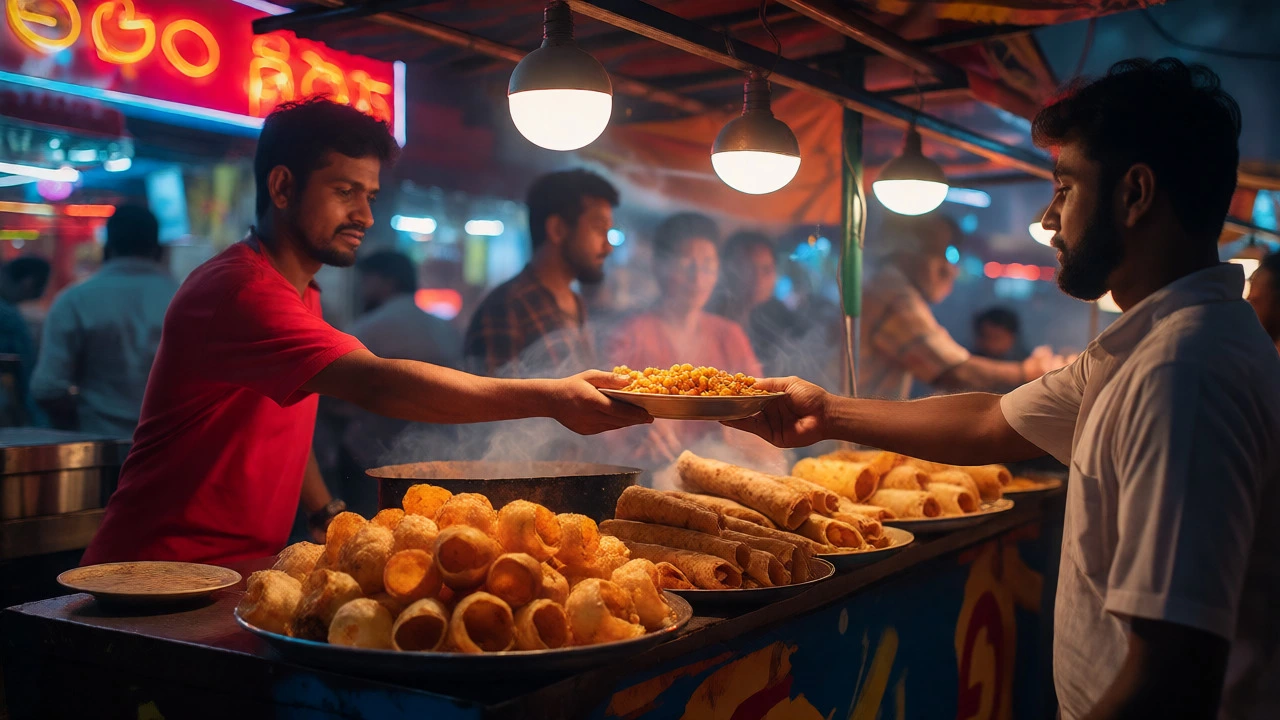
Kolkata’s streets come alive after sunset, and the air fills with the smell of frying oil and spices. Street food here isn’t just cheap fuel; it is a social ritual. Start with Phuchka. Similar to Pani Puri found elsewhere in India, Phuchka features hollow semolina shells filled with spiced potato and chickpeas, then cracked open and filled with tamarind water. The key difference? Bengali phuchkas use boiled potatoes rather than mashed ones, giving them a chunkier texture. The tamarind water is often spiced with mint and cumin, offering a sharp, refreshing contrast to the crunch.
Next up is Kathi Rolls. Originated in Kolkata, these wraps consist of paratha (flatbread) wrapped around fillings like egg, chicken, or paneer. The name comes from the bamboo skewers (kathi) used to grill the fillings originally. Today, they are a global phenomenon, but nothing beats eating one from a stall near Park Street, dripping with sauce and served with a side of pickled onions. Don’t skip Jhal Muri, too. It’s a mix of puffed rice, chopped onions, green chilies, lemon juice, and mustard oil. It’s messy, loud, and incredibly addictive. Vendors sell it in paper cones, making it the perfect walking snack.
The Winter Comfort: Pitha and Payesh
When the temperature drops, Bengalis switch gears. Winter brings Pitha, traditional rice cakes that vary by region and family recipe. There are dozens of types, but three dominate the scene. Patishapta is a crepe-like roll stuffed with khoya (reduced milk solids), coconut, and jaggery. Chitai Pitha is a simple pancake made from rice flour, often eaten with molasses. And Bhapa Pitha is a steamed dumpling filled with lentil paste. These aren't just snacks; they are staples of the winter harvest festival, Makar Sankranti.
Pair your Pitha with Payesh, a slow-cooked rice pudding made with full-fat milk, sugar, and cardamom. Unlike Western puddings, Payesh relies on the reduction of milk to achieve thickness, resulting in a deep, caramelized flavor. It is typically served warm in winter and cold in summer. Another winter favorite is Nolen Gur-based sweets. Nolen Gur is date palm jaggery harvested in winter. Its smoky, earthy sweetness transforms everything it touches, from ice cream to cake. If you see a sign for "Nolen Gurer Ice Cream," buy it immediately. It tastes like autumn in a cup.
Vegetarian Gems You Can't Ignore
While fish gets the headlines, Bengali vegetarian food is equally sophisticated. Many households observe non-fish days, leading to a rich repertoire of vegetable dishes. Aloo Posto is a prime example. Potatoes are cooked with ground poppy seeds, which add a nutty, creamy texture without any dairy. It’s simple, humble, and deeply satisfying. Similarly, Alur Dom involves potatoes slow-cooked in a spicy tomato-onion gravy, often with peas. The secret is patience; letting the potatoes absorb the masala takes time, but the result is worth it.
For greens, try Shukto. Often misunderstood as a bitter salad, Shukto is actually a complex medley of vegetables like bitter gourd, drumstick, eggplant, and radish, tempered with mustard seeds and dried red chilies. It serves as a palate cleanser at the beginning of a meal. Another standout is Mochar Ghonto, made from banana flower. The flower is cleaned meticulously to remove sap, then cooked with coconut and spices. It has a unique, slightly astringent taste that pairs beautifully with rice. Vegetarians in Bengal rarely feel left out; the cuisine offers depth and complexity that rivals any meat dish.
Spices and Cooking Techniques
What sets Bengali cooking apart technically is the use of Panch Phoron. This five-spice blend consists of equal parts fenugreek, nigella, cumin, fennel, and mustard seeds. Unlike garam masala, which is added at the end, Panch Phoron is usually tempered in hot oil at the start of cooking. The seeds crackle and release aromatic oils that infuse the entire dish. You’ll find it in dal, vegetable stir-fries, and even some fish curries. It provides a subtle warmth rather than intense heat.
Another technique is Bhaja, or shallow frying. Many ingredients, including vegetables and fish, are lightly fried before being added to gravies. This step adds texture and prevents delicate items from breaking apart. Also, pay attention to the use of yogurt. In dishes like Chicken Kosha, yogurt is marinated with the meat to tenderize it and create a tangy base. The balance between sour (yogurt/tamarind), sweet (sugar/jaggery), and pungent (mustard/green chili) is the holy trinity of Bengali flavor profiles.
Where to Experience Authentic Flavors
If you plan to travel, timing matters. Visit during Durga Puja in October for the ultimate street food experience. Every lane turns into a buffet, serving everything from fancy dinners to midnight snacks. Alternatively, go during Poila Boishakh (Bengali New Year) in April for traditional feasts. In Kolkata, head to areas like College Street for student-friendly eats, or New Market for a chaotic but rewarding shopping and dining experience. In Dhaka, Old Dhaka offers historic eateries that have been operating for generations, serving the same recipes since the colonial era.
Remember, authenticity isn't always about luxury. Some of the best meals happen on plastic stools by the roadside. Talk to the vendors. Ask them how they make their Chotpoti (a chickpea-potato-tamarind soup). They might share tips on balancing acidity or why they add a pinch of baking soda to the chickpeas. Food in Bengal is communal. It’s meant to be shared, argued over, and enjoyed slowly. So grab a plate, dig in, and let the flavors tell you the story of the delta.
Why is mustard oil so common in Bengali cooking?
Mustard oil is preferred for its strong pungent flavor, which complements the mild taste of freshwater fish and vegetables. It also has antimicrobial properties, helping preserve food in the humid climate of the Bengal delta. Additionally, it raises the body's internal heat, which is considered beneficial during the cooler months.
Is all Bengali food very spicy?
Not necessarily. While green chilies are used frequently, the heat is often balanced with sugar, jaggery, or yogurt. Many traditional dishes, especially those featuring Hilsa or prawns, lean towards a sweet-sour profile rather than pure heat. However, street foods like Phuchka water can be quite spicy depending on the vendor.
What is the difference between Mishti and regular sweets?
In Bengali context, Mishti specifically refers to sweets made primarily from chhana (cottage cheese) and sugar syrup, such as Rosogolla and Sandesh. Regular sweets might include chocolates, cakes, or halwa made from nuts and milk, which do not follow the traditional chhana-based method.
Can vegetarians find good food in Bengal?
Absolutely. Bengali cuisine has a robust vegetarian tradition, particularly among certain communities and during religious observances. Dishes like Aloo Posto, Mochar Ghonto, Shukto, and various Dal preparations offer complex flavors using poppy seeds, banana flowers, and mixed vegetables, proving that vegetarian food here is anything but bland.
When is the best time to eat Hilsa fish?
The peak season for Hilsa (Ilish) is during the monsoon months (June to September) when the fish migrates upstream to spawn. During this time, the flesh is richest in fat and flavor. Winter also sees high quality Hilsa, but the monsoon catch is traditionally considered the most authentic and delicious.