Hindustani Music Style Identifier
Describe What You Hear
Analysis Result
Select options and click "Identify Genre" to discover the specific Hindustani music style.
--
--
Key Features:
--
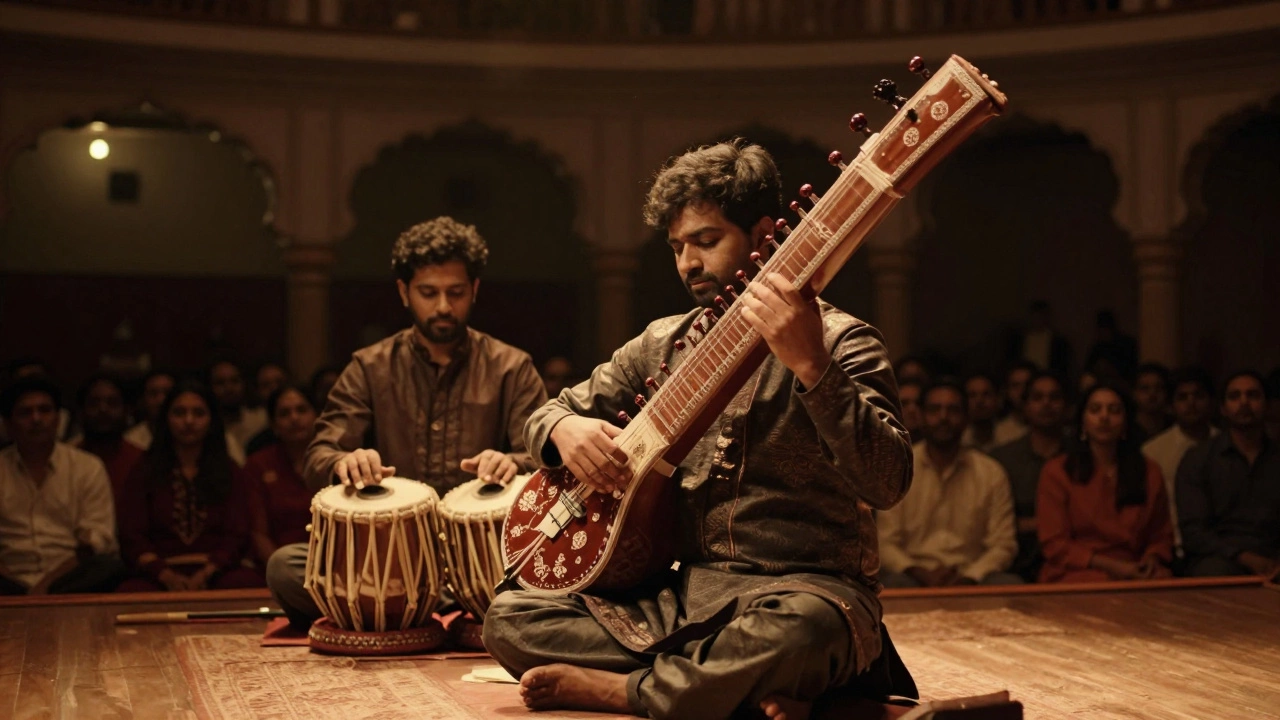
If you’ve ever sat in a concert hall listening to the soulful strains of a sitar or the rhythmic complexity of tabla drums, you might have heard the term Hindustani music thrown around. It’s not a different genre entirely-it is, in fact, another name for North Indian classical music. While "North Indian classical music" describes the geography, "Hindustani" refers to the cultural and historical roots that define this ancient art form.
Understanding this distinction matters more than just semantics. It helps you navigate recordings, choose concerts, and appreciate the rich lineage that connects modern artists to centuries-old traditions. Whether you are a beginner curious about Indian culture or a seasoned listener looking to deepen your knowledge, knowing what Hindustani music is-and how it differs from its southern counterpart-is essential.
The Origins of the Term "Hindustani"
To understand why we call it Hindustani music, we have to look at history. The word "Hindustan" historically referred to the northern part of the Indian subcontinent. As Persian and Islamic influences blended with indigenous Hindu musical traditions between the 13th and 16th centuries, a new style emerged. This fusion created the Hindustani tradition.
Unlike the purely Sanskrit-rooted terminology found in South India, Hindustani music absorbed vocabulary from Persian, Arabic, and Urdu. You’ll notice this in terms like "khayal" (meaning imagination), which comes from Persian, replacing older Sanskrit terms for improvisation. This linguistic shift mirrors the musical evolution itself-a meeting of cultures that produced something unique.
So, when someone asks for another name for North Indian classical music, "Hindustani" is the most accurate answer because it reflects this specific historical synthesis. It isn’t just "Indian" music; it is distinctly "Hindustani" due to its regional and cultural heritage.
Hindustani vs. Carnatic: The Two Pillars
India has two distinct classical music systems. If Hindustani is the north, then Carnatic music is the classical music tradition of South India is the south. Confusing them is common, but they are as different as jazz is to bluegrass. Knowing the difference helps you identify what you’re hearing.
| Feature | Hindustani (North) | Carnatic (South) |
|---|---|---|
| Geography | Northern India (Uttar Pradesh, Rajasthan, Punjab) | Southern India (Tamil Nadu, Kerala, Karnataka) |
| Influences | Persian, Arabic, Central Asian | Dravidian, Sanskrit, Temple traditions |
| Primary Improvisation Style | Khayal (vocal), instrumental solos | Ragam Talapayanam (structured improvisation) |
| Key Instruments | Sitar, Tabla, Sarod, Bansuri | Vinayana Veena, Mridangam, Flute |
| Performance Setting | Courts, concert halls, intimate gatherings | Temples, religious festivals |
The biggest takeaway? Hindustani music places a higher emphasis on long, free-flowing improvisations where the artist explores a melody deeply. Carnatic music tends to be more structured, with complex rhythmic compositions set against a steady beat. Both use ragas, but they approach them differently.
The Core Elements: Raga and Tala
You can’t talk about Hindustani music without mentioning its two pillars: Raga is a melodic framework for improvisation and Tala is the rhythmic cycle. These aren’t just scales or beats; they are living entities with moods, times of day, and emotional associations.
A raga is like a color palette for a painter. It defines which notes you can use, how you must move between them, and what feeling you should evoke. For example, the raga Bhairav is traditionally performed at dawn and carries a serious, devotional mood. Playing it at night would be considered incorrect by purists. In Hindustani music, the exploration of the raga is the main event. The musician starts slowly, often without rhythm, allowing the melody to breathe before introducing percussion.
Tala provides the grid. Unlike Western time signatures (like 4/4), talas are cyclical patterns of beats. A common tala is Teental, which has 16 beats divided into four groups. The interplay between the melody (raga) and the rhythm (tala) creates a tension-and-release dynamic that keeps listeners engaged. The drummer doesn’t just keep time; they converse with the soloist, challenging them and responding to their phrases.
Major Genres Within Hindustani Music
Hindustani music isn’t a monolith. It has evolved over centuries, creating distinct genres that serve different purposes. Here are the ones you will encounter most often:
- Dhrupad: The oldest surviving form. It is solemn, meditative, and highly disciplined. Dhrupad focuses on the purity of the raga with minimal ornamentation. Instruments like the Surbahar is a larger, deeper-toned relative of the sitar and the Mohan Veena is a fretless string instrument used primarily for Dhrupad are associated with this style.
- Khayal: The most popular vocal form today. "Khayal" means imagination, and this style allows for greater freedom in improvisation. It is emotive, flexible, and showcases the vocalist’s technical skill. Most famous Hindustani singers, like Bade Ghulam Ali Khan, were Khayal exponents.
- Gat: This is the instrumental equivalent of Khayal. When you hear a sitar or sarod player perform a composed piece followed by improvisation, they are playing a gat. It follows a strict tempo and structure before opening up for creative exploration.
- Tappa: A lighter, faster style that originated among camel drivers in Punjab. It features rapid oscillations of notes and is often performed as an encore to showcase virtuosity.
Each genre offers a different window into the Hindustani tradition. If you want depth and spirituality, start with Dhrupad. If you prefer emotion and variety, Khayal is your best bet.
Iconic Instruments of the North
While voice is considered the primary instrument in Indian classical music, several instruments have become synonymous with the Hindustani tradition. Their design reflects the need to replicate the nuances of the human voice, particularly the subtle pitch bends known as meend.
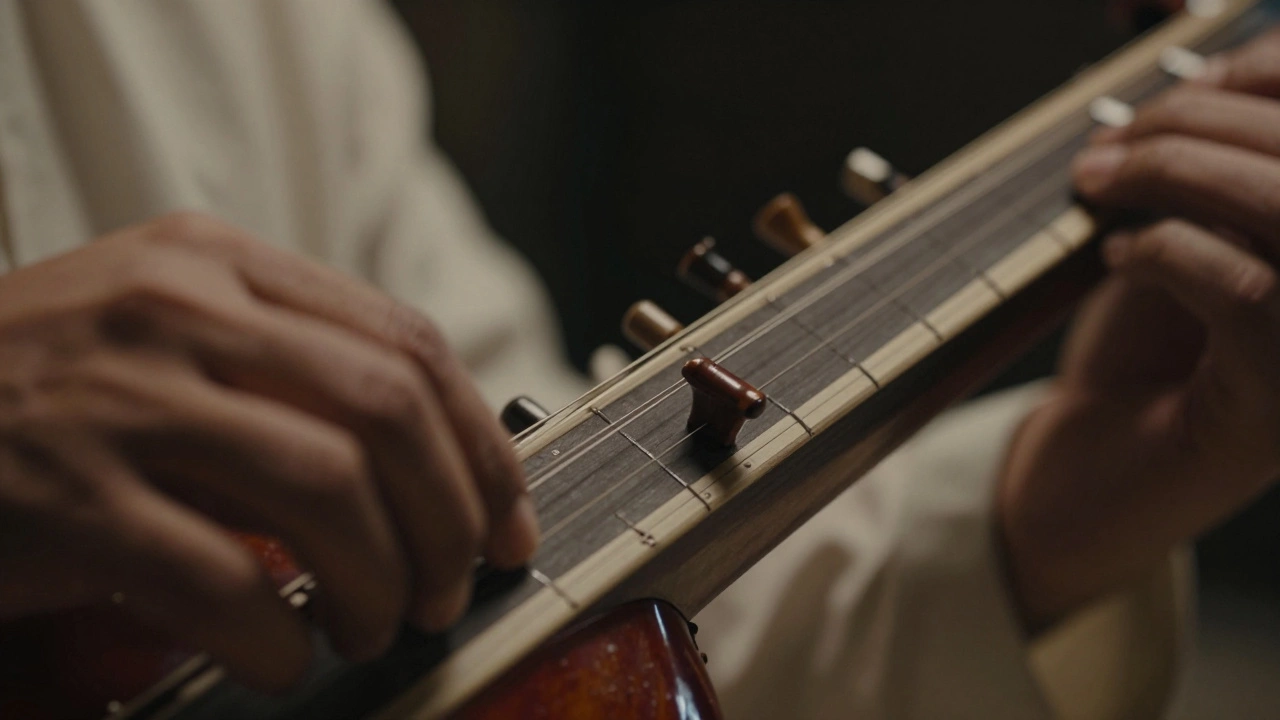
The Sitar is a plucked string instrument with sympathetic strings is perhaps the most recognizable globally. Popularized by Ravi Shankar in the 1960s, the sitar produces a shimmering sound thanks to its bridge shape and resonating strings. It allows for intricate glides between notes, mimicking vocal techniques.
The Tabla is a pair of hand-played drums serves as the rhythmic backbone. The smaller drum (dayan) plays melodies and fast patterns, while the larger one (baya) provides bass tones. A skilled tabla player can create entire conversations using only these two drums, interacting with the soloist in real-time.
Other notable instruments include the Sarod is a fretless lute with a metallic sound, which offers a darker, more sustained tone than the sitar, and the Bansuri is a bamboo flute, celebrated for its breath-like quality and association with Lord Krishna.
How to Listen Like a Local
If you are new to Hindustani music, starting with a full-length album can be overwhelming. Performances can last hours, with slow beginnings that gradually build in speed and intensity. Here is how to get started:
- Start with Vocal Music: Even if you don’t understand Hindi or Urdu, the human voice conveys emotion more directly than instruments. Listen to legends like Bhimsen Joshi or Begum Akhtar. Focus on the texture of the voice rather than the lyrics initially.
- Focus on the Alap: The beginning of a performance is called the alap. It is unaccompanied, unmetered, and slow. This is where the musician introduces the raga’s essence. Don’t rush through it; let yourself sink into the mood.
- Watch the Hands: If watching a video, observe the left hand of the sitar or sarod player. They slide along the neck to create microtones-notes that fall between the standard piano keys. This sliding motion is crucial to the Hindustani aesthetic.
- Listen for the Call and Response: Pay attention to the interaction between the soloist and the accompanist. The harmonium or tanpura provides drone, while the tabla responds to the soloist’s phrases. Look for moments where the tabla seems to echo or challenge the melody.
Remember, there is no "wrong" way to listen. Your personal connection to the music matters more than academic precision. Over time, you will begin to recognize specific ragas and anticipate rhythmic cycles.
Is Hindustani music the same as Bollywood music?
No, they are distinct. Hindustani music is a classical tradition focused on improvisation within strict frameworks (ragas and talas). Bollywood music is film music that often borrows melodies or rhythms from classical, folk, or pop sources but prioritizes storytelling and entertainment over traditional discipline. However, many Bollywood composers study Hindustani music to enrich their scores.
Why is it called Hindustani instead of Indian?
The term "Hindustani" specifically refers to the cultural region of Northern India and acknowledges the Persian-Islamic influence that shaped this style. Using "Indian" alone is ambiguous because it could refer to either the North (Hindustani) or South (Carnatic) traditions. "Hindustani" provides precise geographical and historical context.
Can I learn Hindustani music online?
You can learn theory and basic concepts online, but traditional Hindustani music relies heavily on the "guru-shishya parampara" (teacher-student tradition). Live guidance is essential for mastering vocal techniques, finger placement on instruments, and the subtle nuances of raga expression. Online resources are great supplements, but not replacements for live mentorship.
What is the difference between a Raga and a scale?
A scale is just a collection of notes (like C-D-E-F-G). A Raga is much more complex. It includes specific rules for ascending and descending, mandatory notes, forbidden notes, and characteristic phrases. A Raga also has an emotional identity and is often associated with a specific time of day or season. It is a complete artistic universe, not just a sequence of pitches.
Who are some famous Hindustani musicians?
Some legendary figures include Pandit Ravi Shankar (sitar), Ustad Alla Rakha (tabla), Bhimsen Joshi (vocal), Amir Khusrau (historical figure credited with developing khayal), and Pandit Hariprasad Chaurasia (flute). Listening to their recordings is the best way to understand the breadth of the Hindustani tradition.