When your body feels dry, restless, or scattered-when you can’t sleep well, your digestion is off, or you’re constantly cold-you’re likely dealing with excess vata. In Ayurveda, vata is one of the three doshas, made up of air and space. It governs movement: breathing, blinking, circulation, nerve impulses, and even thought patterns. But when vata gets out of balance, it doesn’t just cause discomfort-it can lead to anxiety, insomnia, constipation, joint pain, and even weight loss despite eating enough.
What Causes Vata to Go Out of Balance?
Vata rises when your lifestyle clashes with nature’s rhythm. Skipping meals, eating cold or raw food, staying up past 10 p.m., traveling often, or sitting in front of screens for hours all push vata higher. Cold weather, wind, and dry climates-like Brisbane’s winter-make it worse. People with a naturally vata-dominant constitution (thin frame, quick mind, sensitive nerves) are especially prone. But anyone can get vata imbalance if they ignore the signs long enough.
Think of vata like a loose rope. When it’s taut and steady, everything runs smoothly. When it’s frayed and loose, things fall apart. The goal isn’t to eliminate vata-it’s to calm it down and bring it back into rhythm.
Start With Warm, Cooked, and Oily Foods
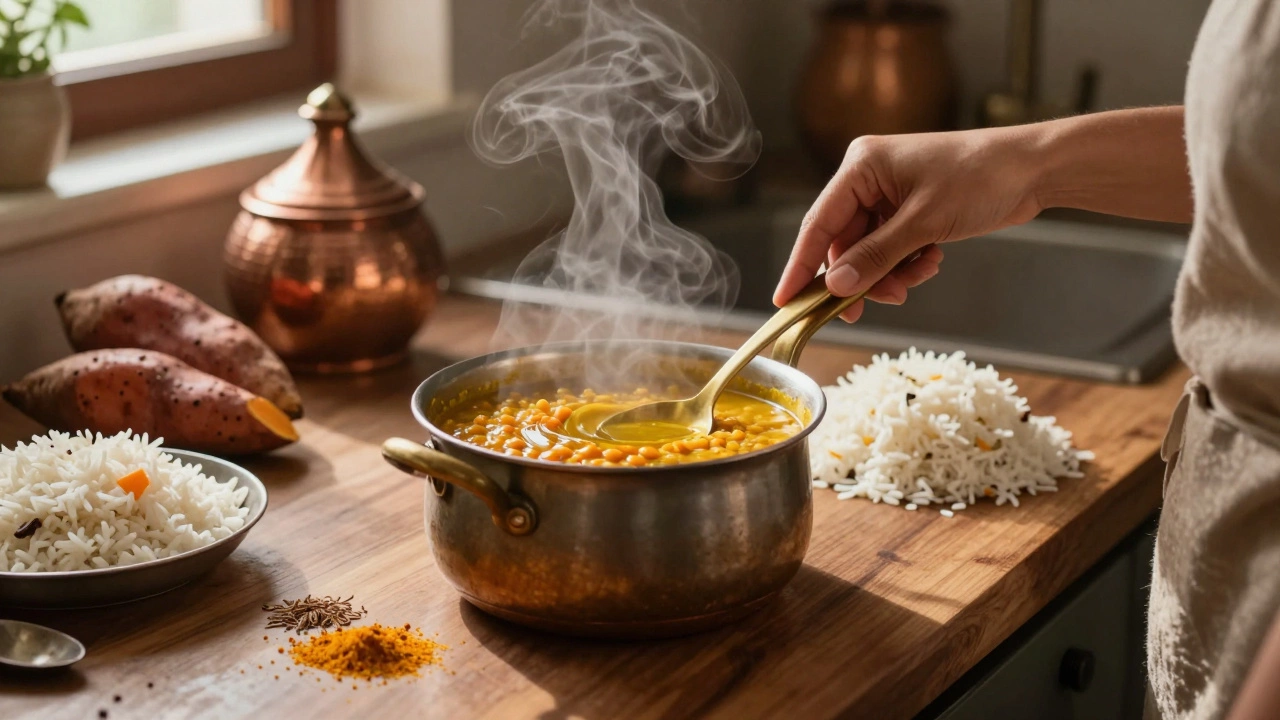
The best way to calm vata is through food that’s warm, moist, and grounding. Avoid salads, raw veggies, crackers, and cold smoothies-even if they’re healthy. Instead, eat kitchari (a mix of rice and mung beans cooked with cumin, turmeric, and ginger), warm soups, stews, and porridges. Add ghee or coconut oil to every meal. These fats lubricate the digestive tract and soothe the nervous system.
Spices matter too. Cumin, coriander, fennel, ginger, and cardamom help digest food and reduce gas. A pinch of asafoetida (hing) in lentils prevents bloating. Drink warm water with lemon first thing in the morning. Herbal teas like ginger-cinnamon or licorice-root are better than coffee or black tea, which dry you out.
Try this simple daily meal plan:
- Breakfast: Warm oatmeal with raisins, almonds, and a drizzle of honey
- Lunch: Lentil dal with basmati rice, steamed carrots, and ghee
- Dinner: Vegetable stew with quinoa and a side of roasted sweet potato
Eat at regular times-ideally, lunch between 12 and 1 p.m., when digestive fire is strongest. Never skip meals. Even a small bowl of warm soup counts.
Oil Massage: The Secret Weapon Against Vata
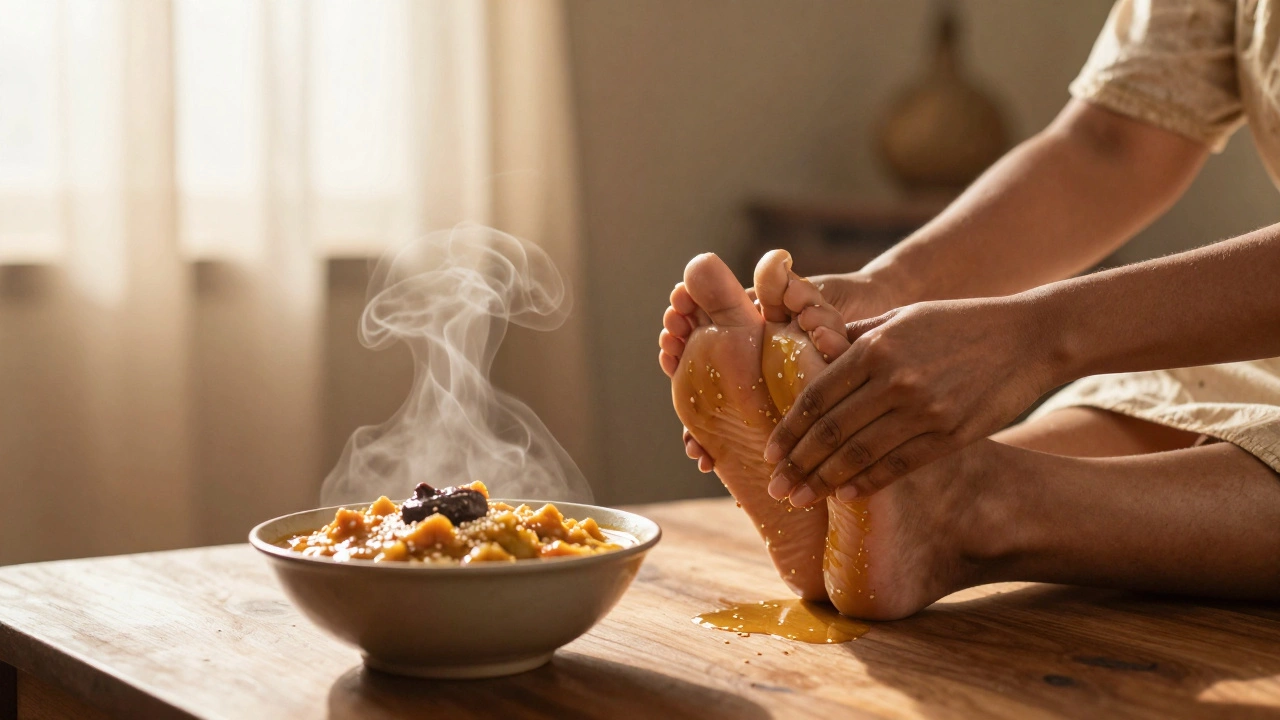
Abhyanga, or self-oil massage, is one of the most powerful vata-balancing tools. You don’t need to go to a spa. Just warm a quarter cup of sesame oil (or almond oil if you’re allergic to sesame) and rub it into your skin for 10-15 minutes every morning before showering.
Focus on your feet, scalp, ears, and joints. These areas hold the most vata. Use circular motions on your limbs and long strokes on your spine. Let the oil sit for 10 minutes before rinsing off with warm (not hot) water. This practice hydrates your skin, calms your nerves, and improves circulation. Studies show that regular abhyanga reduces cortisol levels and improves sleep quality-both critical for vata balance.
Do this for just 7 days and you’ll notice a difference: less restlessness, deeper sleep, and smoother digestion.
Slow Down Your Routine
Vata thrives on speed. It’s the dosha that loves multitasking, jumping from one thing to the next. But that’s exactly what makes it unstable. To bring vata back, you need rhythm, not rush.
Start your day slowly. Don’t check your phone the moment you wake up. Sit quietly for five minutes. Breathe. Stretch. Drink warm water. Walk barefoot on grass or soil if you can-grounding helps anchor vata energy.
Take breaks between tasks. Even five minutes of stillness between meetings or chores makes a difference. Avoid rushing meals. Chew each bite 20-30 times. Put your fork down between bites. These small pauses signal your body to switch from ‘fight or flight’ to ‘rest and digest’ mode.
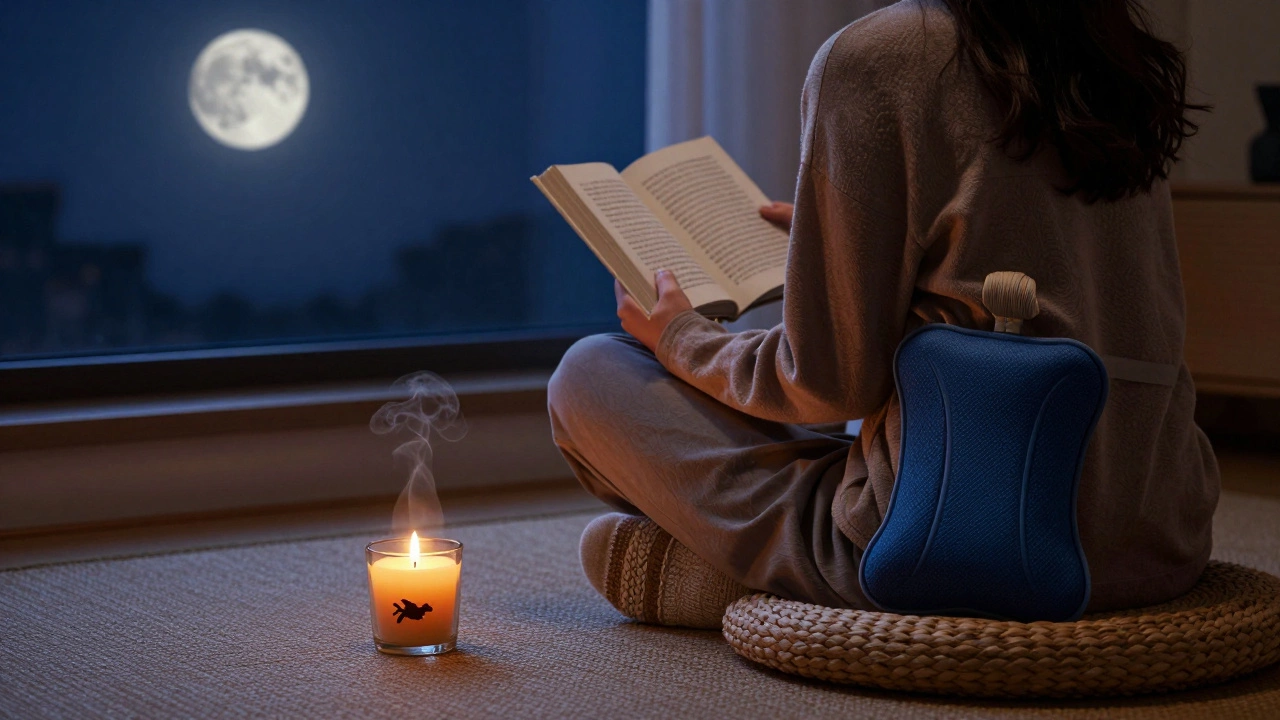
Wind down before bed. No screens after 8 p.m. Read a physical book. Listen to soft music. Light a candle. Go to bed by 10 p.m. Vata is most active between 2 a.m. and 6 a.m.-if you’re awake then, your system is out of sync.
Use Heat and Routine to Ground Yourself
Vata is cold, dry, and light. Counter it with warmth, moisture, and heaviness.
Wear layers in cool weather. Keep your feet covered. Use a heating pad on your lower back or abdomen if you feel chilly. Drink warm water throughout the day. Keep your home warm and cozy. Use humidifiers if the air is dry.
Establish a daily routine. Ayurveda calls this dinacharya. Wake up, eat, work, rest, and sleep at the same time every day-even on weekends. Your body thrives on predictability. When vata is high, routine is your anchor.
Try this: Set alarms for your main daily actions-waking up, eating lunch, starting your evening wind-down. Stick to them for 21 days. You’ll feel more stable, less scattered.
Herbs That Calm Vata
Some herbs are specifically used in Ayurveda to pacify vata:
- Ashwagandha - An adaptogen that reduces stress and improves sleep. Take 300 mg daily in capsule form or as a powder mixed with warm milk.
- Shatavari - Cooling and nourishing, great for dryness and anxiety. Often taken as a powder or tonic.
- Triphala - A gentle laxative blend of three fruits. Helps with constipation without dependency. Take one teaspoon at night in warm water.
- Brahmi - Supports mental clarity and calms racing thoughts. Use in tea or capsule form.
Always choose organic, high-quality herbs. Start with low doses. If you’re on medication or pregnant, check with an Ayurvedic practitioner before using herbs.
What Not to Do When Vata Is High
Some habits make vata worse. Avoid these:
- Drinking iced water or cold drinks
- Eating frozen desserts or raw salads daily
- Traveling too much, especially by air
- Over-exercising-yoga is fine, but avoid power vinyasa or intense cardio
- Listening to loud music or fast-paced media
- Trying to ‘push through’ fatigue
Vata doesn’t respond to force. It responds to gentleness. Rest is not laziness-it’s medicine.
Signs You’re Getting Better
After 2-4 weeks of following these steps, you’ll notice:
- More regular bowel movements
- Deeper, uninterrupted sleep
- Less anxiety and mental chatter
- Warmer hands and feet
- Improved appetite and digestion
- More stability in mood and energy
These aren’t just symptoms-they’re signs your body is returning to balance. Vata doesn’t vanish. It settles. And when it does, you feel like yourself again-not wired, not worn out, but steady and calm.
Can vata imbalance cause weight loss?
Yes. Excess vata speeds up metabolism and reduces digestive fire, leading to poor nutrient absorption. This often causes unintentional weight loss, even if you’re eating enough. The solution isn’t to eat more-it’s to eat the right foods: warm, oily, and easily digestible. Adding ghee, nuts, and cooked root vegetables helps rebuild tissue.
Is yoga good for vata imbalance?
Yes, but not all types. Slow, grounding styles like Hatha, Yin, or Restorative yoga are ideal. Avoid fast-paced Vinyasa or Ashtanga. Focus on poses that ground you-Child’s Pose, Legs-Up-the-Wall, and Seated Forward Bend. Always end with 5 minutes of Savasana (corpse pose) to calm the nervous system.
Does caffeine make vata worse?
Absolutely. Caffeine is stimulating and drying-two things vata already has too much of. It increases anxiety, disrupts sleep, and worsens digestion. Switch to warm herbal teas like chamomile, licorice, or fennel. If you must have coffee, limit it to one small cup in the morning and always drink it with milk and a pinch of cinnamon.
How long does it take to balance vata?
You’ll feel calmer in 7-10 days with consistent practice. Full balance usually takes 4-8 weeks. It depends on how long you’ve been out of sync. The longer vata has been high, the more patience it takes. But even small changes-like drinking warm water or going to bed early-make a measurable difference.
Can I still eat fruit if I have vata imbalance?
Yes, but choose wisely. Avoid dry fruits like raisins in excess and raw apples or pears. Opt for ripe bananas, cooked apples, stewed pears, mangoes, and cherries. Warm them slightly if possible. Fruit is best eaten alone, not with meals, to avoid fermentation and bloating.
Next Steps: Build Your Vata-Balancing Routine
Start with one change today. Pick the easiest one: drink warm water in the morning. Or do a 5-minute oil massage. Or go to bed 30 minutes earlier. Don’t try to overhaul everything at once. Ayurveda isn’t about perfection-it’s about consistency.
After a week, add another. Then another. In a month, you won’t just feel better-you’ll feel like you’ve returned to a version of yourself you’d forgotten existed. Calm. Grounded. Present. That’s what vata balance looks like.