Indian Wedding Outfit Planner
Answer a few questions to find your perfect look for the celebration!
Your Recommended Look:
Quick Tips for Your Outfit:
- Avoid white, cream, and black.
- Choose bright, saturated colors (pinks, yellows, blues).
- Opt for modest cuts; keep shoulders and chests covered.
- Prioritize comfort for long hours of dancing and sitting.
- Don't be afraid of "too much" glitter or embroidery.
The Big Three: Choosing Your Silhouette
You don't need to be an expert in textiles to look great. Most guests stick to one of three main styles. Depending on the event-be it the Mehndi, the Sangeet, or the main wedding ceremony-your choice will change.
Saree is a traditional garment consisting of a long piece of fabric-usually five to nine yards-draped elegantly around the body and over the shoulder. It is the gold standard of Indian grace. However, for a first-timer, it's the most challenging to wear. It requires a blouse (a cropped, fitted top) and a petticoat (an underskirt). If you've never worn one, don't try to drape it yourself ten minutes before the taxi arrives. Get a professional to pleat it or look for "pre-stitched sarees" that zip up like a skirt.
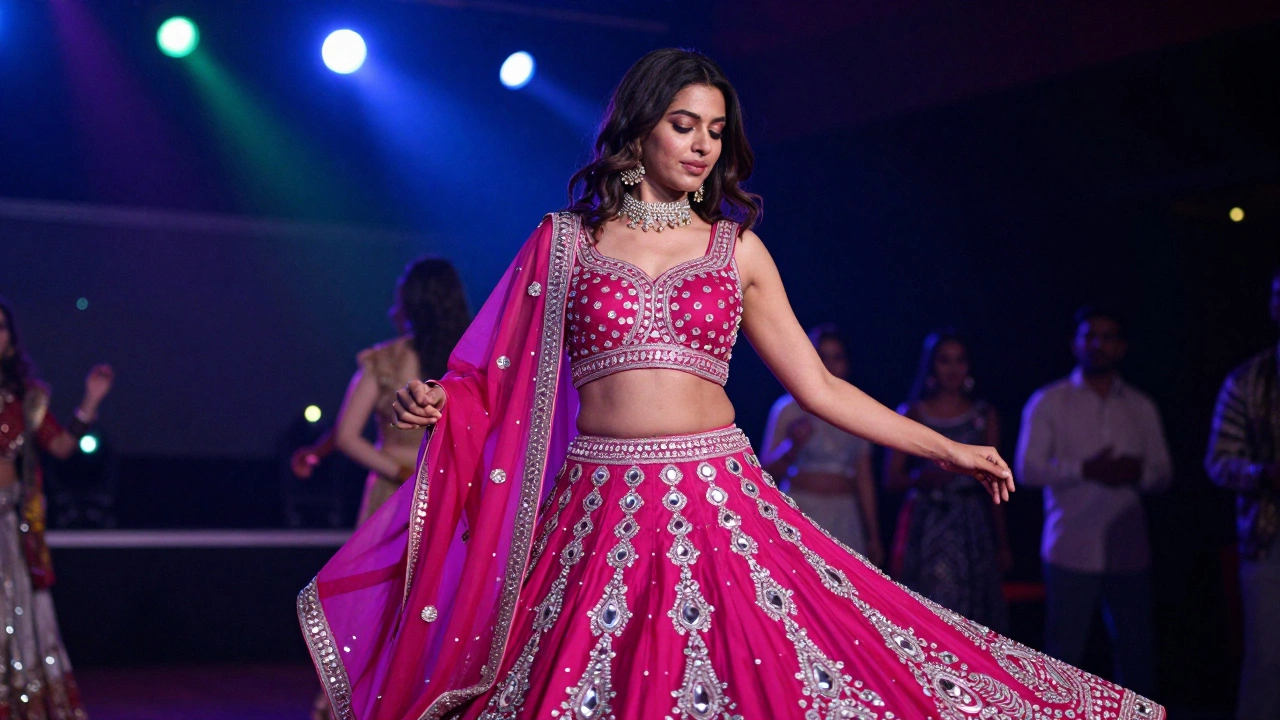
Lehenga Choli is a three-piece ensemble consisting of a long, flared skirt (the lehenga), a fitted blouse (the choli), and a long scarf (the dupatta). This is often the favorite for American guests because it feels more like a gown. It's easier to move in than a saree and looks stunning in photos. Just remember that the Dupatta isn't just an accessory; it's part of the outfit. You can drape it over one shoulder or carry it over your arms.
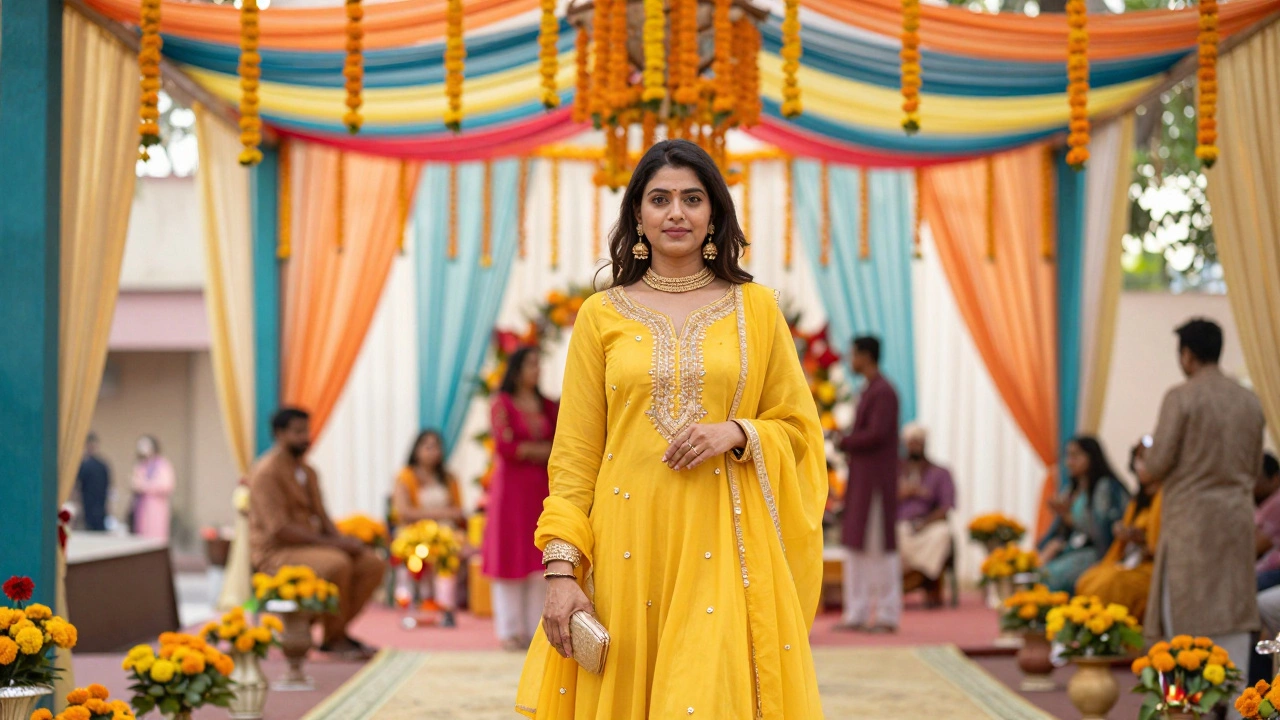
Anarkali is a long, frock-style top that flares from the waist, paired with slim-fit trousers called churidars. Think of it as a floor-length gown with a bit of a twist. It's the most "safe" and comfortable option. It's forgiving on the midsection and requires zero draping skills. If you're attending a pre-wedding event like a Haldi ceremony, an Anarkali is a great choice because it's breezy and effortless.
| Outfit Type | Difficulty to Wear | Formality Level | Best For... |
|---|---|---|---|
| Saree | High | Very High | Main Wedding / Reception |
| Lehenga Choli | Medium | High | Sangeet / Cocktail Party |
| Anarkali | Low | Medium to High | Mehndi / Welcome Lunch |
Matching the Vibe to the Event
Indian weddings aren't just one day; they are marathons of celebration. You'll likely need a few different looks. First is the Mehndi, where guests get henna on their hands. This is usually a more relaxed, daytime affair. Go for a bright yellow or green Anarkali. Avoid long, sweeping sleeves that might get dipped in wet henna. Keep it playful and light.
Then comes the Sangeet. This is the party night-lots of dancing, music, and food. This is the time to bring out the Indian wedding guest attire that sparkles. A Lehenga Choli with plenty of mirror work (known as Abhala Bharat) is perfect here. Since you'll be dancing, make sure your skirt isn't so long that you trip over it, and choose a blouse that allows you to breathe.
The main wedding ceremony is where you go full glam. This is the time for a rich Saree or a heavily embroidered Lehenga. Deep reds, royal blues, and emerald greens are stunning, but stay away from bright red unless you're sure it's acceptable-traditionally, red is the bride's color. Think of it like wearing a white dress to a Western wedding; it's usually better to steer clear of the primary bridal shade.
The Art of Accessories and Jewelry
In Indian fashion, the clothes are only half the story. The jewelry does the heavy lifting. If your outfit is very busy with embroidery, keep the jewelry simple. If your outfit is a plain silk Saree, go bold with the accessories.
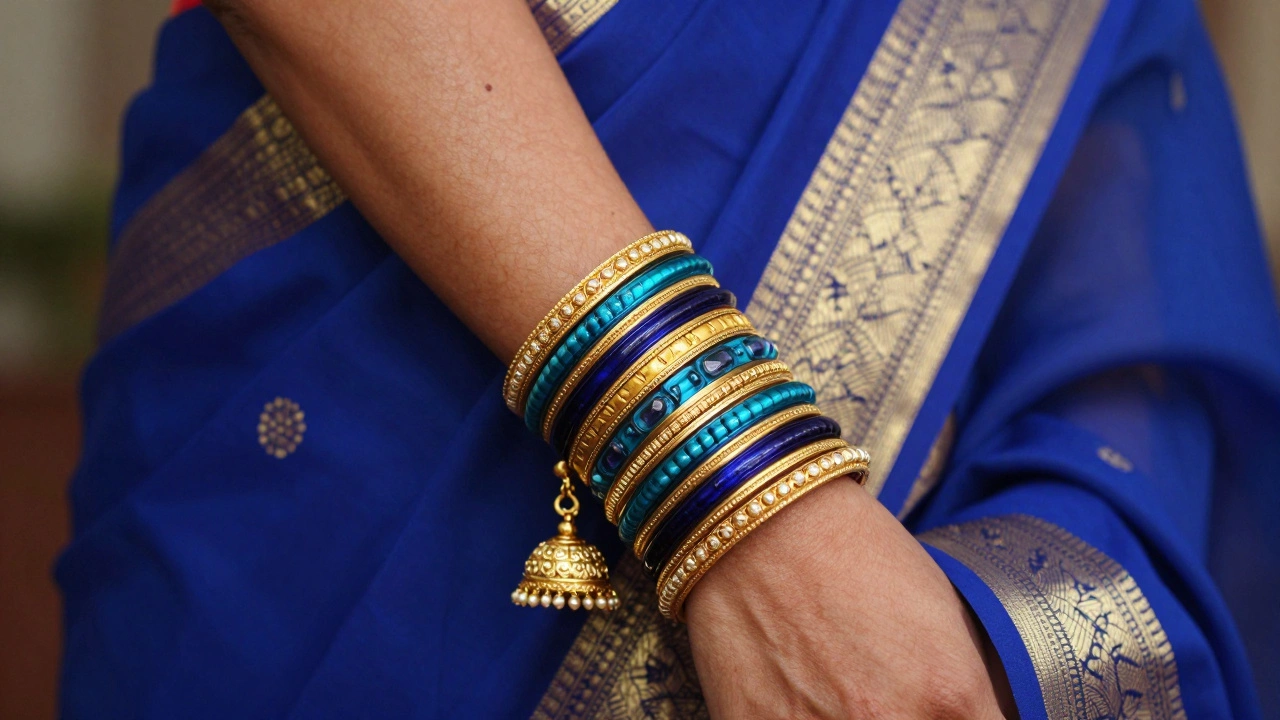
Start with the earrings. Jhumkas are bell-shaped earrings that add an instant ethnic touch. They are generally lightweight enough to wear for hours. For your wrists, skip the dainty gold chain and go for Bangles. A stack of colorful glass or metal bangles that clink when you move is a classic look. If you want to go all out, a Maang Tikka (a piece of jewelry that hangs on the forehead) can be a fun way to embrace the culture, though it's usually reserved for very close family or very festive events.
Don't forget the shoes. You will be on your feet for a long time. While Juttis (traditional flat leather shoes) are beautiful and authentic, they can cause blisters if they aren't broken in. If you aren't used to flats, a block heel is your best friend. Avoid stilettos, especially if any part of the wedding is outdoors on grass or sand.
Common Pitfalls to Avoid
One of the biggest mistakes guests make is forgetting the "modesty rule." While American party wear can be daring, Indian weddings are generally more conservative, especially when elders are present. Ensure your neckline isn't too low and that your midriff isn't overly exposed if you're wearing a Saree or Lehenga. When in doubt, use your dupatta to cover your shoulders. It's a subtle way to show respect to the family's traditions.
Another trap is over-buying. You don't need to spend a fortune on a high-end designer piece that you'll wear once. Many American women find success visiting boutiques in "Little India" districts or using trusted online retailers. Look for fabrics like Georgette or Chiffon-they are lighter, easier to drape, and don't wrinkle as easily as heavy raw silk.
Finally, consider the weather. If the wedding is in India during the summer, the humidity is no joke. Synthetic fabrics will make you sweat. Stick to cotton blends or light silks. If the wedding is in the US during winter, remember that the ceremony might be in a drafty hall, but the dance floor will be scorching. Layer your jewelry, but keep your base fabric breathable.
Can I wear a Western dress to an Indian wedding?
Yes, you can, but it's not recommended for the main ceremonies. If you must wear a Western outfit, choose a long, colorful maxi dress. Avoid black, white, or anything too revealing. However, wearing traditional Indian clothing is a huge sign of respect and appreciation for the culture, and you'll find that most Indian families love seeing their guests embrace the tradition.
Do I need to wear a Saree if I've never worn one?
Absolutely not. Saree draping is an art and can be stressful for a beginner. An Anarkali or a Lehenga is much more manageable and just as festive. If you really want the Saree look, buy a pre-stitched version that works like a wrap-around skirt.
Is it okay to wear red?
In many Indian cultures, red is the traditional color for the bride. While it's not strictly forbidden for guests, it's generally better to choose other bright colors like magenta, orange, turquoise, or yellow to ensure the bride remains the center of attention.
What is the best way to handle a dupatta?
The dupatta can be pinned to your shoulder with a safety pin to keep it from sliding off while you dance. Alternatively, you can drape it across your arms like a shawl or pin it on one side and let it hang. If you feel overwhelmed by it, just drape it over one shoulder and secure it firmly.
How much jewelry is too much?
In an Indian wedding, "too much" is rarely the case. However, a good rule of thumb is to balance your pieces. If you're wearing a massive necklace, go for smaller earrings. If you have huge Jhumkas, you can skip the necklace. Always prioritize comfort so you aren't fidgeting with your jewelry all night.
Next Steps for Your Shopping Trip
If you're feeling overwhelmed, start by asking the couple if there's a specific color theme for the events. Some weddings have a "Yellow' theme for the Haldi or a "White/Gold" theme for a specific puja. Once you have a color palette, head to a local boutique or a reputable online store. Don't forget to order your outfit at least 6-8 weeks in advance, as Indian clothing often requires custom tailoring to fit your specific measurements. When you arrive at the wedding, don't be surprised if people compliment your outfit-it's a common part of the social experience, and a simple "thank you, I love the culture!" goes a long way.