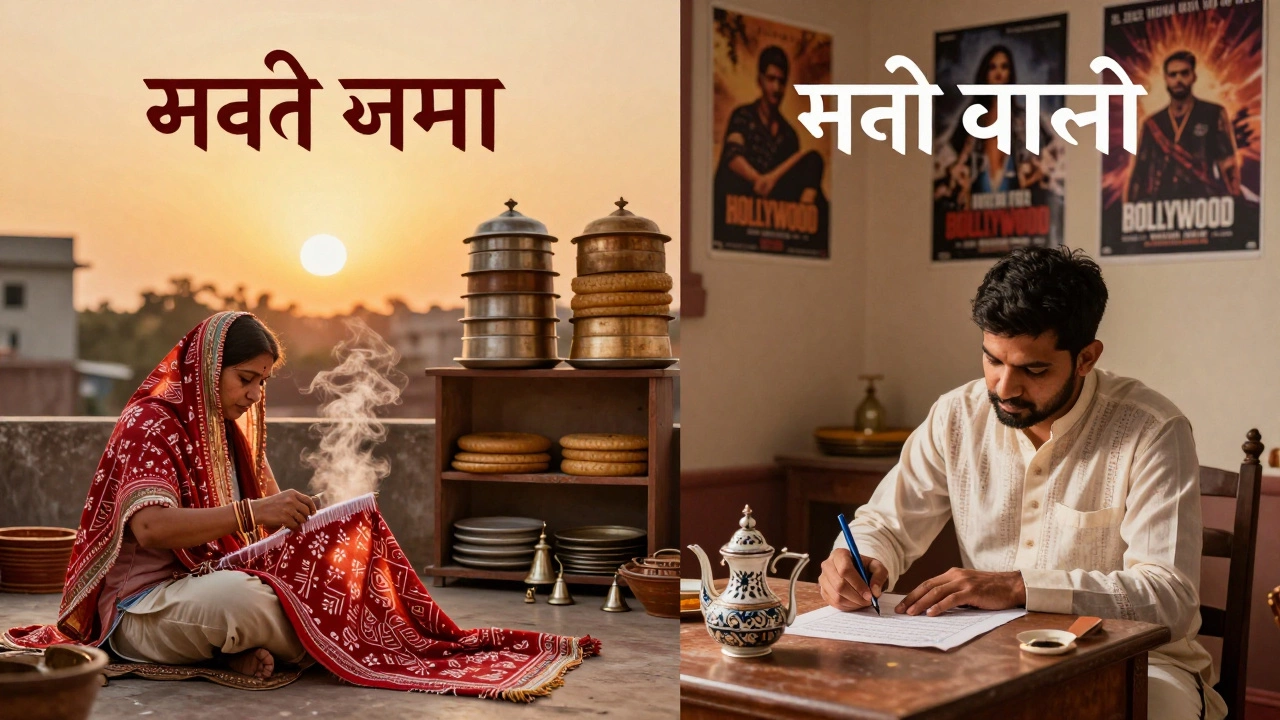
People often assume Gujarati and Hindi are just two versions of the same language. After all, both are spoken in India, use similar scripts, and share a lot of vocabulary. But if you’ve ever listened to someone speak Gujarati and then Hindi side by side, you know they feel different - like two cousins who grew up in different houses. The truth is, Gujarati and Hindi aren’t dialects of each other. They’re separate languages with their own histories, grammar, sounds, and cultural roots - even if they look alike on paper.
Where They Come From
Gujarati and Hindi both trace back to Sanskrit, the ancient language of India. But they branched off in different directions. Hindi evolved from the Khariboli dialect spoken around Delhi and the western Uttar Pradesh region. It absorbed heavy influences from Persian and Arabic during the Mughal era, which is why you hear words like daftar (office), shahar (city), or kitab (book) in Hindi. Gujarati, on the other hand, developed from the Apabhramsha dialects of western India - mainly in what’s now Gujarat and parts of Maharashtra. It kept more of its Sanskrit roots and picked up fewer Persian words.
That’s why a Gujarati speaker might say ghar (house) or pani (water), just like Hindi - but they’ll also say chhe (is) instead of hai, or mane (to me) instead of mujhe. These aren’t just accents. They’re grammatical differences.
Grammar That Doesn’t Match
One of the biggest surprises for Hindi speakers learning Gujarati is the verb system. In Hindi, you say Main ja raha hoon (I am going). In Gujarati, it’s Mene jata hoon. The structure is completely different. Gujarati uses a subject-object-verb order more often, while Hindi leans toward subject-verb-object. Also, Gujarati has a unique way of marking gender in verbs. For example, the verb "to come" changes based on whether the subject is male or female: avto (he comes), avi (she comes). Hindi doesn’t do that.
Then there’s the use of postpositions. Gujarati uses ne to mark the direct object, like in Mene khana khayu (I ate food). Hindi uses ne too, but only for subjects in the past tense - not objects. So even when the words look similar, their rules don’t line up.
Sound and Pronunciation
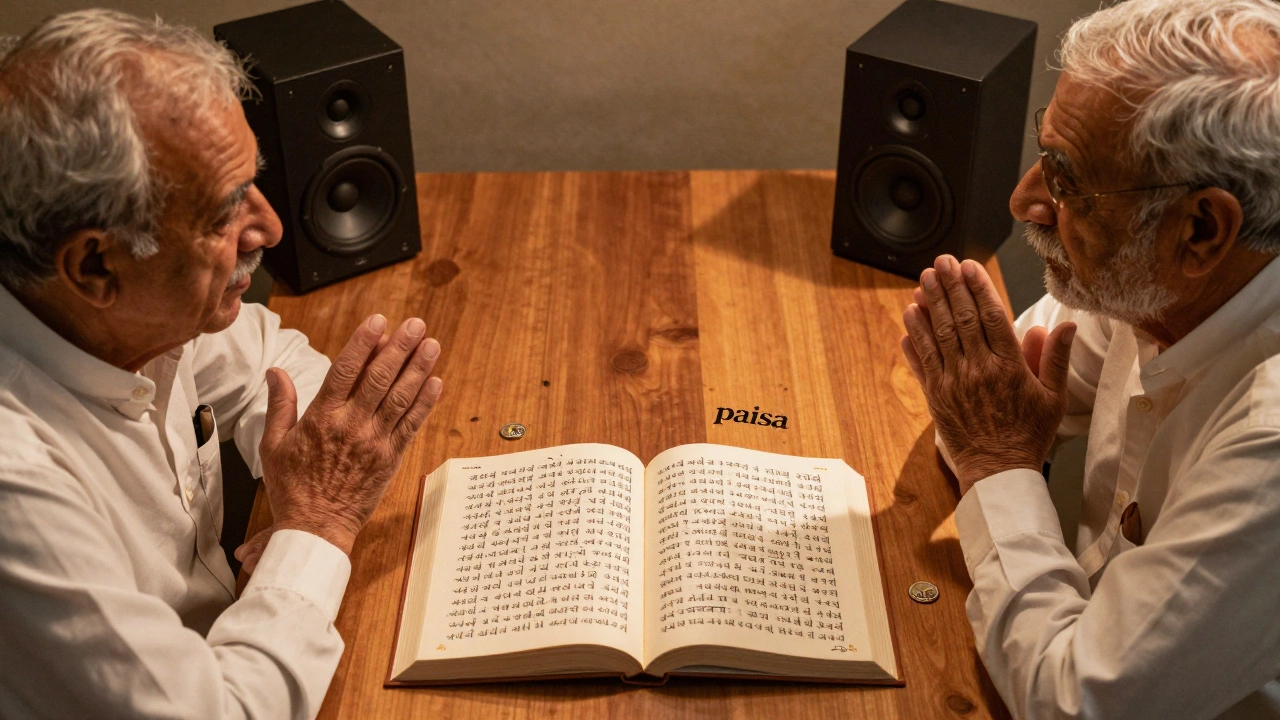
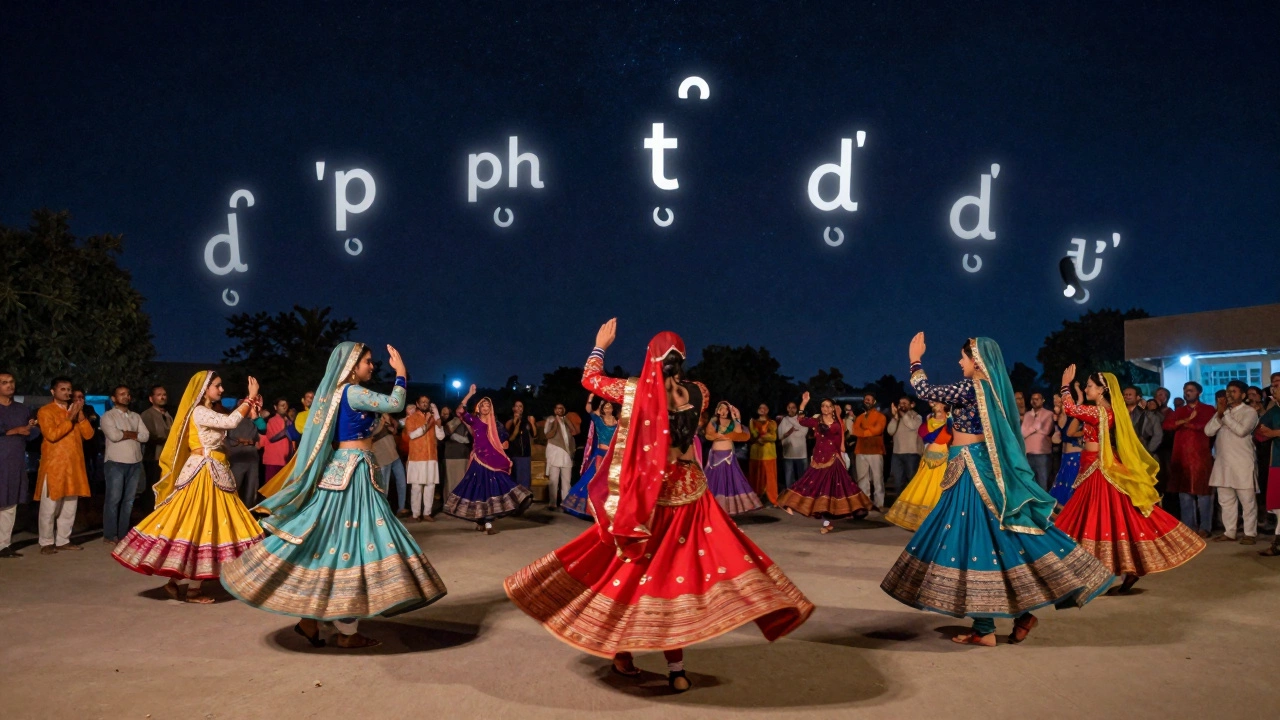
If you’ve heard both languages spoken, you’ve probably noticed how Gujarati sounds softer, almost musical. That’s because it has a set of sounds Hindi doesn’t. Gujarati has aspirated and unaspirated consonants that Hindi doesn’t distinguish - like ફ (ph) vs પ (p). In Hindi, you’d say paisa (money), but in Gujarati, it’s પૈસો (paiso), with a lighter "p" sound. Also, Gujarati doesn’t use the retroflex "ड" (ḍa) and "ढ" (ḍha) sounds as much as Hindi does. Instead, it leans into dental sounds - making "d" and "t" sound more like the "th" in "think".
And then there’s the vowel system. Gujarati has 11 vowel sounds, while Hindi has around 10. But the way they’re pronounced? Totally different. The Gujarati "ઊ" (ū) is longer and more rounded than Hindi’s "ऊ". Even small differences like that can make it hard for Hindi speakers to understand spoken Gujarati - even if they recognize most of the words.
Script: Same Look, Different Rules
Both languages use a version of the Devanagari script. At first glance, they look almost identical. But look closer. Gujarati drops the horizontal line (shirorekha) that runs across the top of Hindi letters. That’s why you’ll see क in Hindi, but ક in Gujarati. The shapes are simplified. Also, some letters have different pronunciations. The Gujarati letter શ is pronounced "sha" like in Hindi, but ષ and स are both pronounced "sa" - whereas in Hindi, they’re distinct. So the script isn’t just a different font. It’s a different system with its own logic.
Cultural Identity in Words
Language isn’t just grammar and sounds. It carries culture. Gujarati has words for things that matter deeply in its community - like khadi (hand-spun cloth), dhokla (a steamed savory snack), or garba (the traditional dance). Hindi has borrowed some of these, especially in urban areas, but they’re not native to Hindi. Similarly, Hindi has words like zindagi (life), pyaar (love), or shukriya (thank you) that came from Persian and are rarely used in Gujarati, which prefers આભાર (abhar).
Even idioms are different. A Gujarati might say અન્ન પાણી કરી લેવું (to make food and water your own) to mean "to settle in." Hindi speakers wouldn’t understand that. And if you told a Gujarati person mera dil bhi toh yehi kehta hai (my heart says the same), they’d think you were quoting a Bollywood song - not speaking naturally.
Who Speaks What?
Over 55 million people speak Gujarati as their first language, mostly in Gujarat, Mumbai, and among the Indian diaspora in the U.S., U.K., and East Africa. Hindi is spoken by over 600 million people across northern and central India - and it’s the official language of the Indian government. That’s why Hindi is taught in schools everywhere. But in Gujarat, children learn Gujarati at home and Hindi in school. Many Gujaratis are bilingual, but they don’t confuse the two. They switch based on context - Gujarati with family, Hindi with coworkers or in cities.
Even in places like Mumbai, where both languages mix, people don’t treat them as the same. A Gujarati shopkeeper might use Hindi to talk to customers from UP, but switch to Gujarati to chat with a neighbor. It’s not about convenience - it’s about identity.
Why the Confusion?
There’s a reason people mix them up. Bollywood movies use Hindi, but they often feature Gujarati actors, songs, and settings. TV shows set in Gujarat use Hindi dialogue with a Gujarati accent. Newspapers in Gujarat sometimes print headlines in Hindi script. And because both languages use similar alphabets, many assume they’re interchangeable.
But that’s like saying English and Dutch are the same because they both use the Latin alphabet. They share some words, sure - but their grammar, rhythm, and soul are different.
Learning One Doesn’t Mean You Know the Other
If you’ve learned Hindi, you might think you can pick up Gujarati quickly. You’ll recognize some words. You’ll feel comfortable with the script. But you’ll still struggle. You won’t know how to form questions. You won’t understand the verb conjugations. You’ll mispronounce words because the sounds don’t match. And you’ll miss the cultural weight behind the phrases.
There’s no shortcut. Learning Gujarati means learning its unique rhythm - the way the last syllable drops in questions, how the tone rises in polite requests, how silence is used differently. It’s not about vocabulary. It’s about listening differently.
What This Means for Handicrafts and Culture
This distinction matters when you’re talking about handicrafts. A bandhani dupatta from Kutch isn’t just a textile - it’s tied to Gujarati poetry, songs, and rituals. The patterns mean something specific to Gujarati women. If you hear someone call it a "Hindi craft," you’re not just wrong - you’re erasing its roots. The same goes for patola silk weaving, embroidered chaniya cholis, or metalwork from Bhuj. These aren’t "Indian crafts." They’re Gujarati crafts - shaped by a language, a history, and a way of speaking that’s not Hindi.
When you buy a handicraft, you’re not just buying an object. You’re buying a story. And that story is told in Gujarati - not Hindi.