Heritage Adaptation Explorer
Explore Cultural Adaptation
India's heritage isn't frozen in time. It's a living system that adapts while keeping its core values. Enter a traditional practice to see how it might evolve today.
Adaptation Analysis
Enter a traditional Indian practice above to see how it might adapt while preserving its core values.
Ask someone what the biggest heritage of India is, and you’ll get a hundred answers. Taj Mahal? Yoga? Bollywood? Spice trade? All of these are part of the story-but none of them capture the full weight of what India has passed down, not as a monument, but as a living rhythm in everyday life.
The heritage that never stops breathing
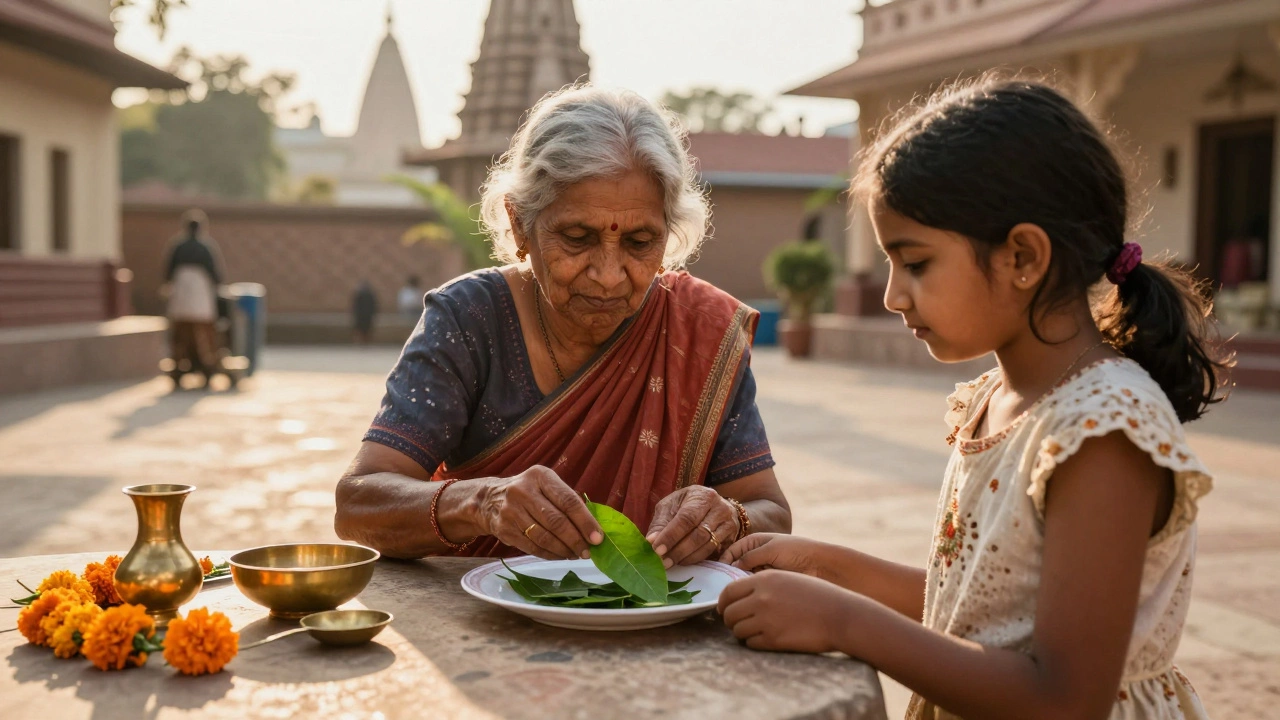
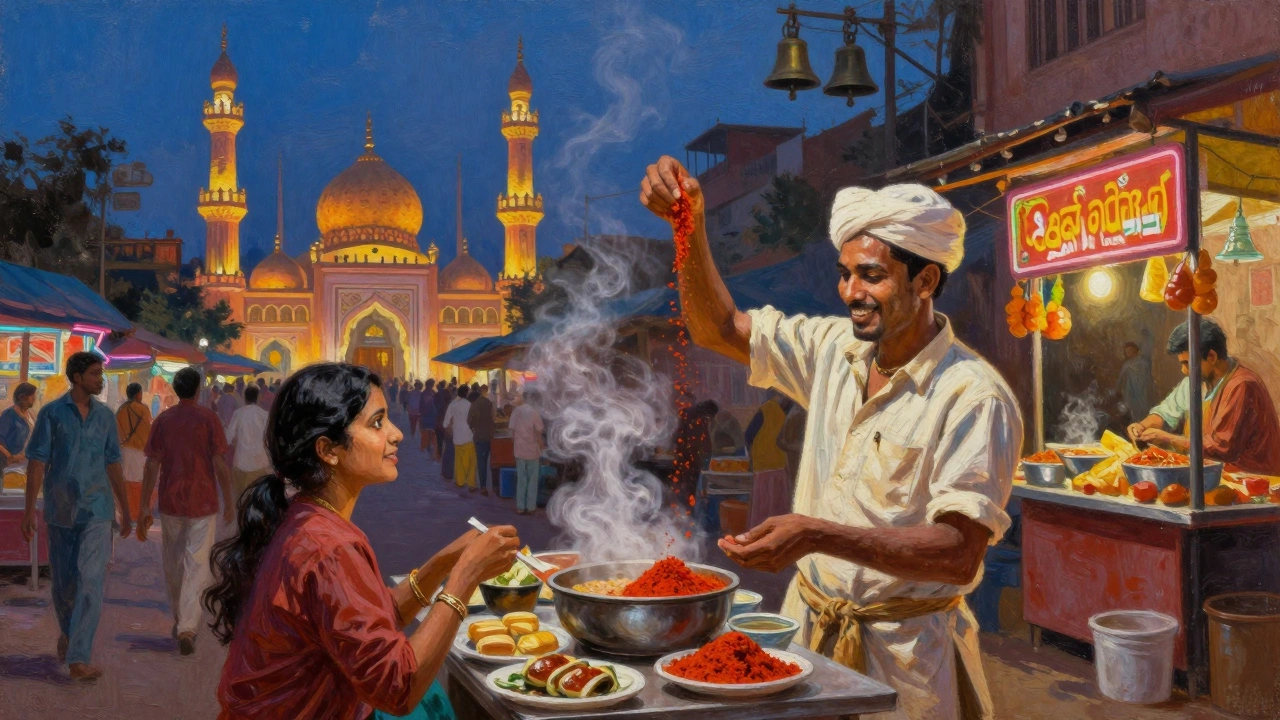
The biggest heritage of India isn’t carved in marble or written in ancient texts. It’s the way a grandmother teaches her granddaughter to fold a leaf into a plate for offering food to the gods. It’s the call to prayer from a mosque in Kerala blending with the bells of a temple in Varanasi. It’s the silence before a raga begins, the way a street vendor in Mumbai knows exactly how much chili to add to your chaat based on your face.
This isn’t folklore. This is culture that survives because it’s used. Every day. By over a billion people.
India’s heritage isn’t frozen in museums. It’s in the way families gather for Diwali, not just to light lamps, but to settle old grudges, share sweets, and remind each other who they are. It’s in the way a farmer in Punjab sings folk songs while plowing, songs passed down for centuries, unchanged in melody but rewritten in every generation’s voice.
It’s not one thing-it’s a thousand threads
People often look for a single answer: the oldest temple? The most ancient language? The most copied dance? But India’s heritage doesn’t work like that. It’s a tapestry. Pull one thread, and the whole thing shifts.
Take language. Sanskrit may be the root of many Indian languages, but it’s not the living heart. Hindi, Bengali, Tamil, Telugu, Marathi-each carries its own history, poetry, and worldview. A Tamil poem from 2,000 years ago still echoes in modern Chennai street poetry. A 15th-century Sufi song in Punjabi is now a viral TikTok trend. Language here isn’t preserved-it’s reinvented.
Same with food. Curry isn’t one dish. It’s thousands. Each village has its own version of dal, its own way of roasting spices, its own rules for when to eat what. The heritage isn’t in the recipe book. It’s in the grandmother who refuses to use a pressure cooker because ‘the flavor won’t come out right.’
The invisible infrastructure of culture
What makes India’s heritage so powerful isn’t just what it is-but how it’s organized. You don’t need a government to keep it alive. It runs on social contracts, not laws.
Think about the caste system. Yes, it’s broken. Yes, it’s unjust. But even today, in small towns, you’ll see how it shapes who cooks your food, who performs your wedding rituals, who sings at your funeral. It’s not about hierarchy alone-it’s about roles. And those roles, however flawed, carry centuries of knowledge: who knows which hymn for a monsoon birth, who remembers the exact time to plant rice based on star positions, who can tie a wedding knot in 12 different styles depending on the family’s origin.
This isn’t tradition for show. It’s a functional system. It’s how knowledge survived without books. It’s how skills were passed down when formal education didn’t exist. Even now, in remote villages, you’ll find artisans who can make a brass lamp using techniques unchanged since the Mughal era-because their grandfather taught them, and their grandfather before that.
Religion isn’t the heritage-it’s the container
Many assume India’s heritage is Hinduism. Or Islam. Or Sikhism. But that’s backwards. It’s the other way around.
India’s heritage gave birth to its religions, not the other way around. The idea of karma? Came from ancient Vedic thought, long before Hinduism was named. The practice of meditation? Existed in forest hermitages before the Buddha. The concept of ahimsa? Was practiced by Jain monks centuries before Gandhi made it famous.
Religions in India didn’t replace older traditions-they absorbed them. That’s why you’ll find Muslim women in Kerala offering coconuts at Hindu shrines. Why Sikhs in Punjab celebrate Holi. Why Buddhist monks in Ladakh chant mantras in Tibetan that sound like ancient Sanskrit hymns.
The heritage isn’t in the doctrine. It’s in the shared rituals, the common symbols, the same way people light lamps, offer water to trees, or bow to elders.
What’s missing from the tourist brochures
When you see pictures of India online, you see tigers, temples, and turbaned men on camels. But the real heritage? It’s in the cracks.
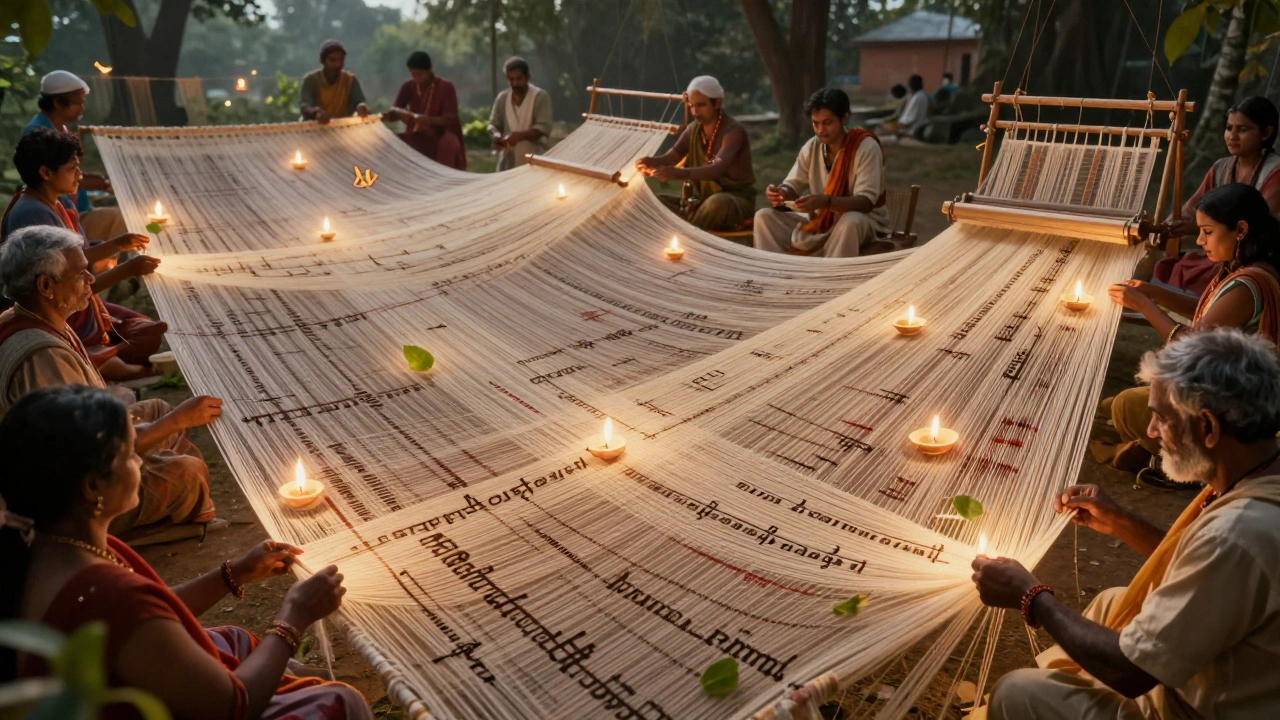
It’s in the 12-year-old girl in Odisha who spends two hours every evening learning classical dance-not because her parents want her to be famous, but because her village believes dance is how you honor the earth. It’s in the old man in Assam who still weaves muga silk using a loom his great-grandfather built. It’s in the way a family in Rajasthan refuses to throw away broken pottery, because ‘it still holds memory.’
These aren’t tourist attractions. They’re acts of survival.
India’s heritage isn’t about grandeur. It’s about persistence. It’s about choosing to keep doing something, even when the world says it’s outdated. Even when the money’s gone. Even when the children want to move to the city.
Why this matters now
Globalization is erasing local traditions everywhere. In India, it’s happening too. But here, something different is happening.
Young people are going back.
Not to romanticize the past-but to reclaim tools that still work. A 24-year-old from Bangalore started a business making hand-spun cotton clothes using 18th-century spinning techniques. A group of students in Hyderabad revived a nearly extinct folk theatre form by turning it into a podcast. A woman in Tamil Nadu recorded 300 different ways her grandmother said ‘thank you’-each tied to a different emotion, a different season, a different relationship.
This isn’t nostalgia. It’s adaptation.
India’s biggest heritage isn’t what it saved from the past. It’s what it keeps changing to survive.
The real test of heritage
How do you know something is truly a heritage? Not because it’s old. Not because it’s famous. But because it still changes you.
When you eat a meal in India and feel full not just in your stomach, but in your chest-that’s heritage.
When you hear a song you’ve never heard before, but it feels like it’s always been inside you-that’s heritage.
When you see a child learning to tie a knot in a sari, and you realize you’re watching a thousand years of women teaching their daughters how to carry weight-that’s heritage.
India’s biggest heritage isn’t the Taj Mahal. It’s not yoga. It’s not even the concept of dharma.
It’s the quiet, stubborn belief that some things are worth keeping-even if no one else understands why.
And that belief? It’s still alive.