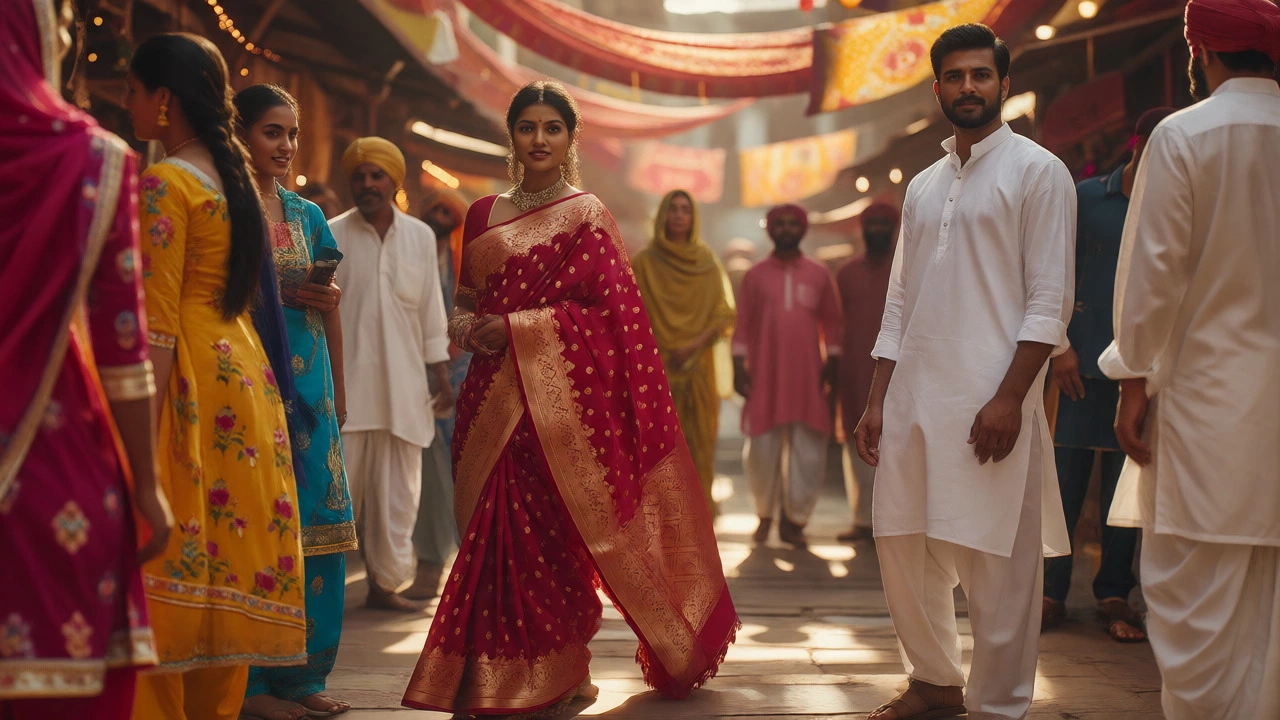
Indian Traditional Attire Explorer
India does not have a single national costume but a rich tapestry of regional identities. Explore the most iconic garments below.
Cultural Significance
Regional Variations & Draping
Key Takeaway
While the Sari and Kurta-Pajama are globally recognized as symbols of Indian identity, the true essence of Indian fashion lies in its adaptability to climate, occasion, and local tradition across 28 states and 8 union territories.
Here is a fact that trips up most people: India does not have one single national costume. Unlike Japan with its kimono or Scotland with its kilt, India is a patchwork of hundreds of distinct regional identities. If you walk into a government office in Delhi, you might see a man in a crisp white Kurta Pajama and a woman in a silk saree. Drive two hours south to Tamil Nadu, and the styles shift slightly. Fly west to Gujarat, and you are looking at completely different draping techniques and embroidery patterns.
So, when someone asks what the national dress is, they are usually asking about the garments that have become synonymous with Indian identity on the global stage. For men, this is generally the Kurta-Pajama or Sherwani. For women, it is undeniably the Sari (or Saree). But understanding why these specific outfits hold such weight requires digging into history, geography, and culture.
The Myth of a Single National Dress
You might wonder, "Why doesn't India just pick one?" The answer lies in diversity. India has 28 states and 8 union territories, each with its own climate, language, and tradition. A heavy woolen shawl makes sense in the freezing Himalayas of Ladakh but would be unbearable in the humid heat of Kerala. A lightweight cotton lungi works perfectly for fishermen in Bengal but looks out of place in a corporate boardroom in Mumbai.
Instead of a uniform, India celebrates variety. However, certain garments have transcended their local origins to become national symbols. These are the clothes you see in movies, worn by politicians during Republic Day parades, and recognized internationally as "Indian." Let's break down the top contenders for this unofficial title.
The Sari: The Ultimate Symbol of Womanhood
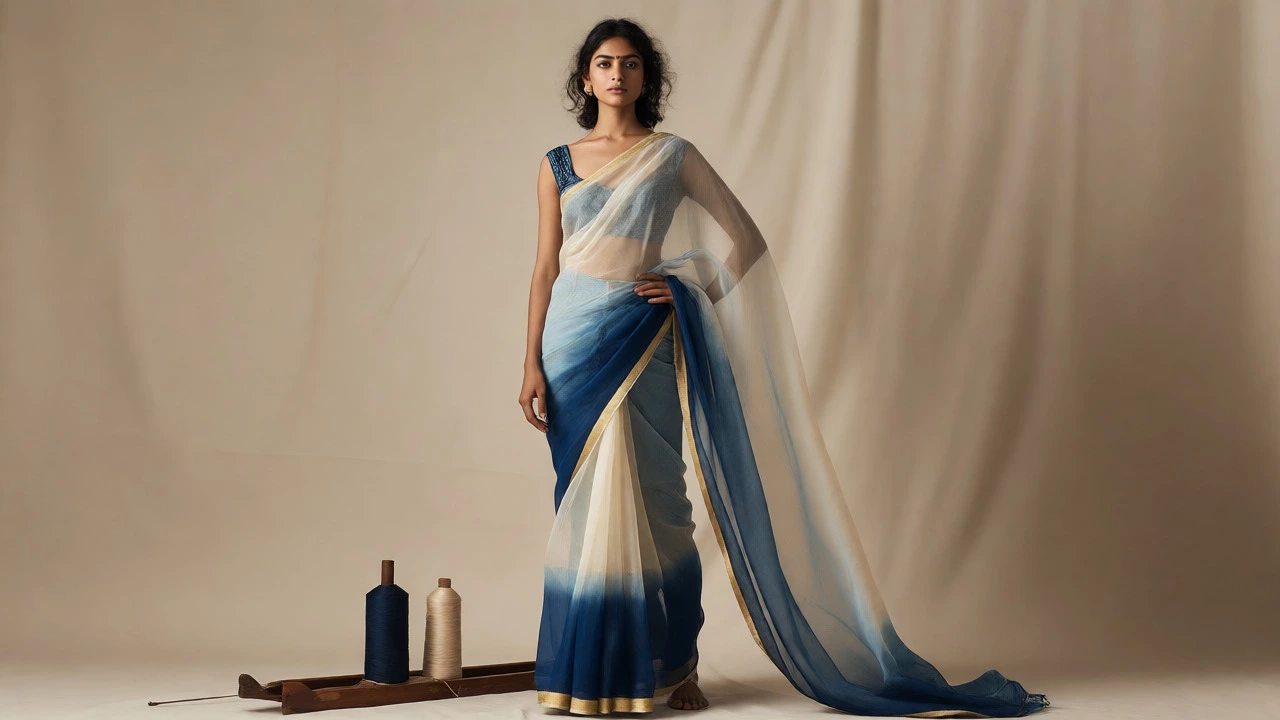
If there is one garment that defines Indian femininity globally, it is the Sari. It is a long piece of unstitched cloth, typically ranging from 4.5 to 9 meters in length. The beauty of the sari lies in its versatility. You can wear it as a professional outfit, a wedding ensemble, or casual daily wear, depending entirely on the fabric and how you drape it.
There are over 100 ways to drape a sari across the subcontinent. The Nivi style, popularized in Andhra Pradesh, is the most common modern form. In Maharashtra, women wear the Nauvari style, which allows for greater freedom of movement. In West Bengal, the traditional drape involves pleats in the front and a distinctive border pattern. Despite these variations, the core concept remains the same: elegance through simplicity.
Why has the sari survived centuries of fashion trends? Because it adapts. During the British Raj, Indian women modified the sari to accommodate blouses and petticoats, creating a hybrid look that was both modest and stylish. Today, designers like Sabyasachi and Manish Malhotra reinvent the sari every season, proving it is not a relic of the past but a living, breathing part of contemporary culture.
The Kurta and Dhoti: Men’s Traditional Attire
For men, the story is similar but less visually dramatic. The Kurta, a loose collarless shirt, paired with a Pajama (drawstring trousers) or Churidar (tight-fitting trousers), serves as the standard formal wear for millions of Indian men. It is comfortable, breathable, and culturally respectful.
In rural areas and religious contexts, the Dhoti-a rectangular piece of cloth wrapped around the waist and legs-remains prevalent. While urban professionals often swap the Dhoti for trousers, the combination of Kurta and Pyjama remains the go-to choice for festivals like Diwali or Eid. It strikes a balance between comfort and tradition that Western suits often fail to achieve in India's tropical climate.
| Garment | Gender | Primary Region | Occasion | Fabric Types |
|---|---|---|---|---|
| Sari | Women | Pan-India | Silk, Cotton, Georgette | |
| Kurta Pajama | Men | Pan-India | Festivals/Casual Formal | Cotton, Linen, Silk |
| Sherwani | Men | North India | Weddings/State Functions | Velvet, Brocade |
| Salwar Kameez | Women | North India/Punjab | Daily Wear/Semi-Formal | Cotton, Chiffon |
| Lungi | Men | South/East India | Casual/Home | Cotton |
Regional Variations That Define Identity
While the Sari and Kurta dominate the narrative, ignoring regional specifics misses the point of Indian culture. Your location dictates your wardrobe more than any national decree ever could.
In Punjab, the Salwar Kameez is king. This three-piece suit consisting of a tunic, trousers, and a dupatta (scarf) offers practicality and style. Punjabi phulkari embroidery, known for its vibrant floral patterns, adds a layer of cultural pride to these outfits.
Move to the Northeast, specifically Assam, and you encounter the Mekhela Chador. This two-piece garment resembles a skirt and a shawl draped over the shoulder. Made primarily from Muga silk, it is lighter and more structured than a typical sari. The craftsmanship involved in weaving Muga silk is so intricate that UNESCO has recognized it as an Intangible Cultural Heritage.
In the South, particularly in Karnataka and Tamil Nadu, the Kasavu saree (white with gold borders) is reserved for temple visits and major festivals. Meanwhile, in Rajasthan, women wear Ghagras-long skirts paired with short blouses called Cholis. The bright colors and mirror work reflect the desert landscape and the region's festive spirit.
The Influence of History and Politics
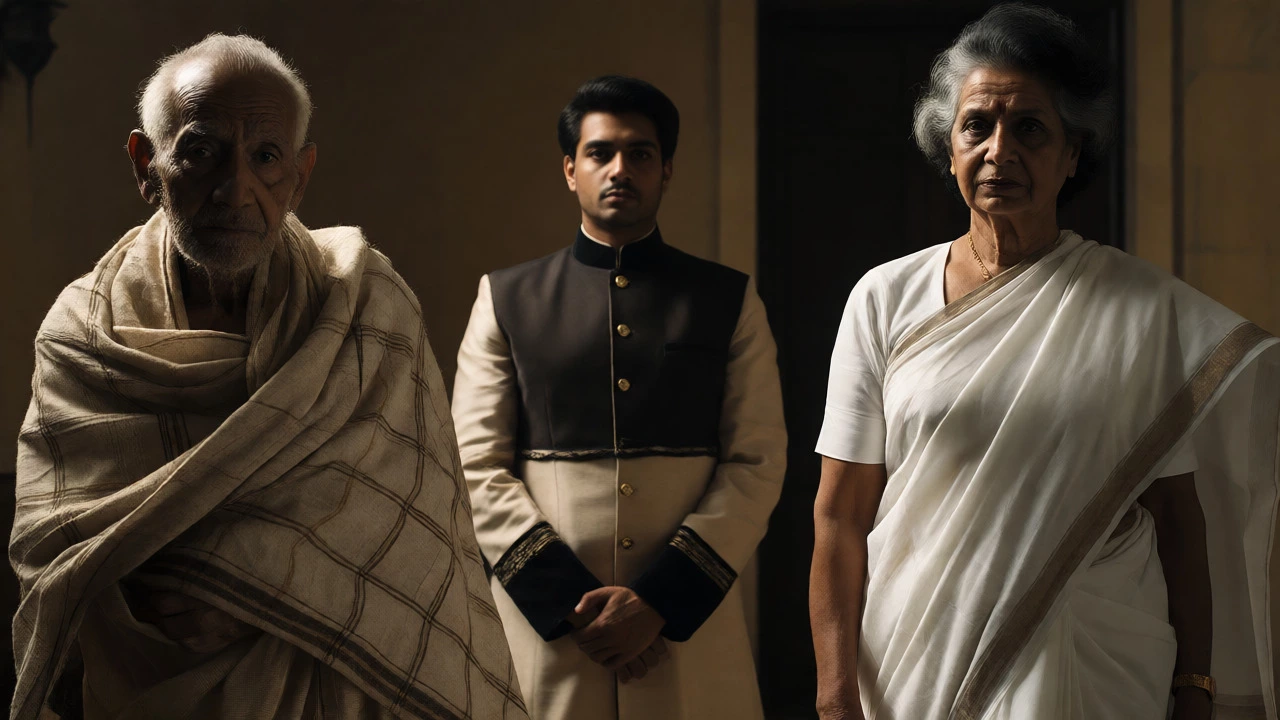
You might ask, "Did politics shape these choices?" Absolutely. Mahatma Gandhi played a massive role in defining modern Indian dress. By promoting Khadi (hand-spun cotton), he turned simple clothing into a symbol of resistance against British colonial rule. Wearing Khadi wasn't just about comfort; it was a political statement. This era cemented the association between handloom fabrics and national pride.
Later, Indira Gandhi popularized the white cotton sari as a power dressing choice for female leaders. Her style influenced generations of Indian women in politics and business, making the sari a tool for asserting authority in male-dominated spaces. Even today, seeing a female minister in a crisp sari sends a message of continuity and strength.
Modern Interpretations and Global Fashion
Is traditional clothing dying out among the youth? Not really-it is evolving. Young Indians are blending traditional elements with western cuts. Imagine a denim jacket embroidered with Zardozi work, or a sari draped over jeans instead of a petticoat. This fusion trend keeps traditional textiles relevant without forcing young people to abandon their comfort zones.
International fashion houses also play a role. Designers like Ralph Lauren and Giorgio Armani have incorporated Indian block prints and embroidery into their collections. This global appreciation validates local artisans and helps sustain the handicraft industry. When you buy a hand-block printed Kurti from Jaipur, you are supporting a lineage of craftsmen who have practiced this art for centuries.
How to Choose the Right Outfit for Yourself
If you are planning to wear traditional Indian clothing, here are some practical tips:
- Consider the Climate: If you are visiting in summer, stick to cotton and linen. Silk can be incredibly hot and sticky in temperatures above 30°C.
- Respect the Occasion: Bright colors and heavy embroidery are perfect for weddings. For temples or religious sites, opt for modest cuts and subdued colors.
- Learn Basic Draping: If you choose a sari, practice draping it at home before the event. There are plenty of online tutorials, but nothing beats hands-on experience.
- Accessories Matter: Traditional clothing relies heavily on jewelry. Jhumkas (earrings), bangles, and kolhapuri sandals can elevate a simple outfit to something special.
Is the Sari considered the national dress of India?
While India has no official national dress, the Sari is widely regarded as the de facto national garment for women due to its pan-Indian presence and historical significance. It is recognized globally as a symbol of Indian culture.
What do Indian men wear traditionally?
The most common traditional attire for Indian men is the Kurta Pajama. For formal occasions like weddings, many men prefer the Sherwani, which is a longer, coat-like version of the Kurta. In southern regions, the Lungi is also commonly worn for casual comfort.
Why are there so many types of saris?
India's vast geographical and climatic diversity necessitates different fabrics and drapes. Coastal regions favor light cottons like Tant, while colder northern areas use heavier silks like Banarasi. Each region developed unique weaving techniques and dyeing methods over centuries.
Can foreigners wear Indian traditional clothes?
Absolutely. Indians generally welcome foreigners wearing traditional attire, viewing it as a sign of respect and interest in the culture. Just ensure the outfit is appropriate for the occasion-for example, avoid overly revealing cuts in conservative settings.
What is the difference between a Salwar Kameez and a Kurta?
A Salwar Kameez is a three-piece set including a tunic (Kameez), trousers (Salwar), and a scarf (Dupatta). A Kurta is typically a standalone tunic worn with separate bottoms like Pajamas or Churidars. The Salwar Kameez is often seen as more structured and complete for women's wear.