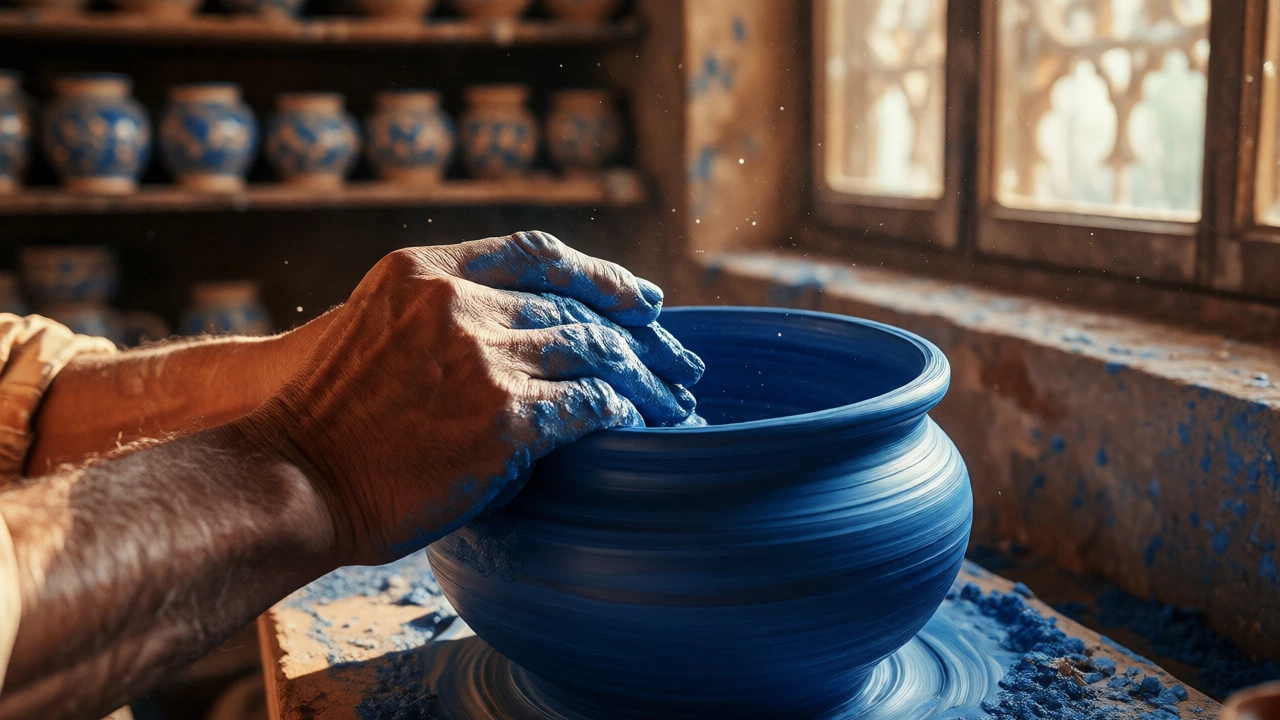
Indian Handicraft Authenticity Checker
Are you looking at a genuine piece of Indian heritage or a mass-produced imitation? Use this checklist to evaluate the authenticity of a product based on regional techniques, materials, and certification standards.
Verdict
Score: 0/6Why this score?
Pro Tip for Buyers:
Remember: "Handmade" doesn't always mean high durability. Always ask for care instructions specific to the craft type (e.g., dry cleaning for Banarasi silk, gentle washing for Khadi). Supporting direct-trade brands ensures your money reaches the artisans in places like Kutch or Varanasi.
You are standing in a bustling market in Jaipur or browsing an online store from your living room in Brisbane. You see a vibrant blue pottery bowl or a intricately woven silk scarf. But how do you know if it is truly a handicraft product of India? Is it mass-produced in a factory with plastic dyes, or was it shaped by the hands of an artisan using techniques passed down for generations? This distinction matters more than just price; it touches on cultural preservation, economic fairness, and environmental sustainability.
Defining what constitutes an authentic Indian handicraft isn't as simple as checking a label. It involves understanding the raw materials, the specific regional techniques, and the legal protections like Geographical Indication (GI) tags that safeguard these items. In this guide, we will break down exactly what makes a product a genuine piece of Indian heritage, helping you distinguish between souvenir-grade imitations and true artisanal masterpieces.
The Core Definition: Hand vs. Machine
At its simplest, a handicraft product is an item made primarily by hand rather than by machinery. However, in the context of India, the definition goes deeper. The Government of India and various craft councils define these products based on three pillars: manual skill, traditional knowledge, and local resources.
Think about a brass statue from Tamil Nadu. If it were cast entirely by a machine in a high-volume factory, it might look similar, but it lacks the subtle imperfections and spiritual significance embedded in the lost-wax casting process used by artisans in Swamimalai. The "hand" in handicraft refers not just to physical labor, but to the cognitive engagement of the maker. When an artisan chooses a specific clay mixture because their grandfather taught them it prevents cracking during firing, they are applying intangible cultural heritage. That decision-making process is part of the product's identity.
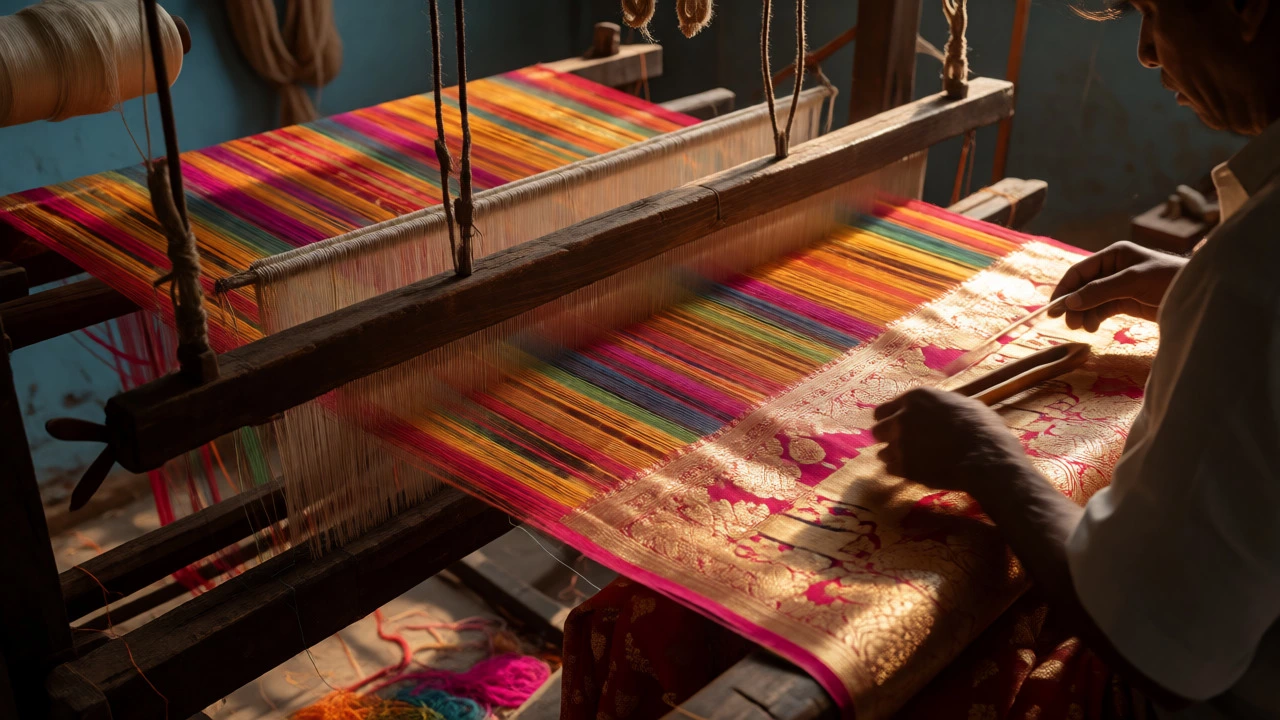
It is crucial to recognize that "handmade" does not mean "primitive." Many Indian crafts involve sophisticated tools-like the jacquard looms used in Varanasi brocade weaving-that assist the human hand but do not replace it. The key differentiator is control. If a computer controls the pattern without human intervention during the creation phase, it is likely a manufactured good. If the artisan adjusts the tension, selects the yarn, and corrects errors in real-time, it remains a handicraft.
Regional Diversity and Key Categories
India is not a monolith when it comes to crafts. Each region has specialized over centuries due to climate, available resources, and local traditions. Understanding these categories helps you identify what you are looking at.
| Craft Category | Primary Regions | Key Characteristics | Notable Examples |
|---|---|---|---|
| Textiles | Varanasi, Kutch, Bengaluru | Natural fibers, complex weaving patterns, natural dyes | Banarasi Silk, Bandhani, Chanderi |
| Pottery & Ceramics | Jaipur, Khurja, Bishnupur | Earthenware, terracotta, distinctive glazes | Blue Pottery, Terracotta Horses |
| Metalwork | Tamil Nadu, Moradabad, Jodhpur | Lost-wax casting, filigree, enamel work | Chola Bronzes, Meenakari |
| Wood Carving | Kerala, Rajasthan, Odisha | Intricate relief, use of teak/sandalwood, lacquer finish | Sandakan Art, Wooden Toys |
| Jewelry & Adornment | Rajasthan, Hyderabad | Kundan setting, beadwork, silver filigree | Meenakari Jewelry, Silver Anklets |
For instance, Blue Pottery from Jaipur is unique because it uses no clay. Instead, artisans mix quartz stone powder, glass frit, and gum. This technique, influenced by Persian styles, results in a lightweight, porous material distinct from standard earthenware. Knowing this attribute helps you verify authenticity-if a "Blue Pottery" item feels heavy like regular ceramic, it might be a mass-produced imitation.
The Role of Geographical Indication (GI) Tags
How do you prove origin? Enter the Geographical Indication (GI), a certification mark issued by the Controller General of Patents, Designs, and Trade Marks in India. A GI tag certifies that a product originates from a specific geographical territory and possesses qualities or reputation essentially attributable to that place of origin.
As of 2026, India has registered hundreds of GI-tagged handicrafts. These tags act like a passport for the product. For example, only silk sarees woven in specific districts of Varanasi can legally be sold as "Banarasi Brocade." If you buy a Banarasi saree without a GI tag, you risk purchasing a power-loom copy printed in Surat. The GI tag ensures that the raw silk came from approved sources and the weaving was done in the designated zone.
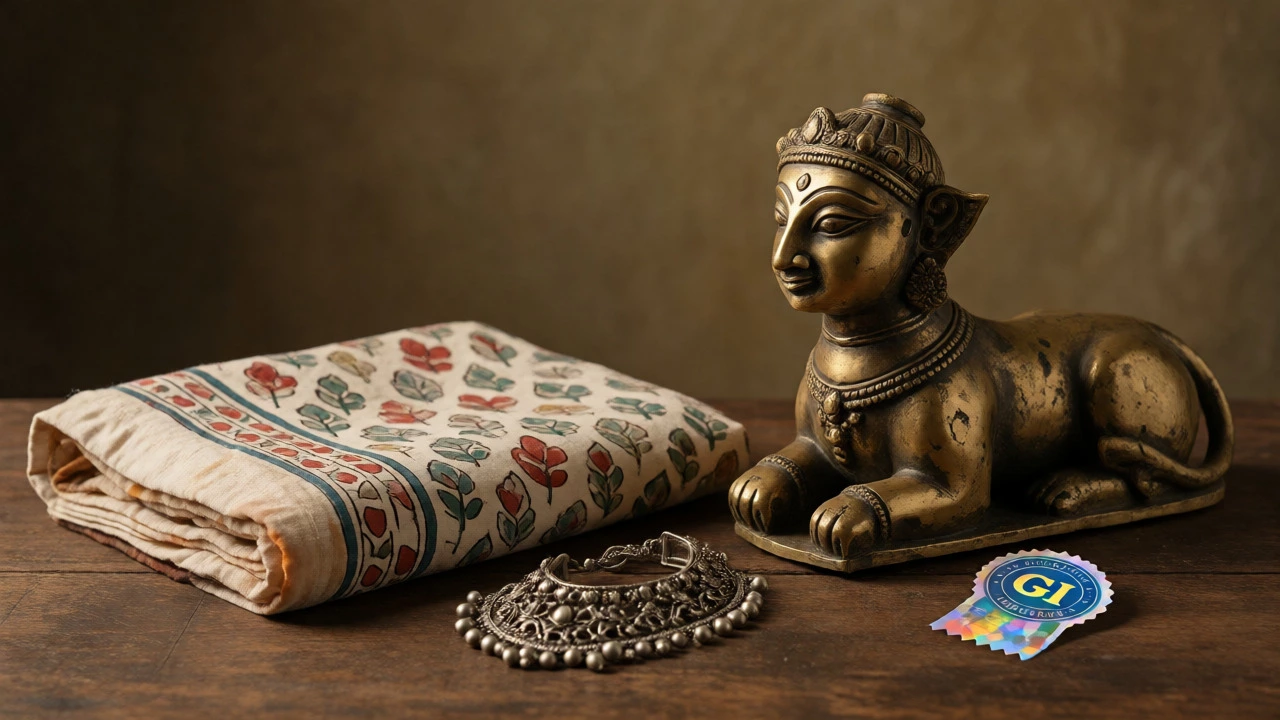
Why should you care about GI tags as a consumer? They provide traceability. Most certified products come with a holographic seal or a QR code that links back to the artisan cluster. This transparency protects you from fraud and ensures your money supports the correct community. When shopping online, always check for the GI logo in the product description. If a seller cannot explain why a product deserves a GI tag, be skeptical.
Economic Impact and the Artisan Economy
Behind every handicraft product is a livelihood. The Indian handicraft sector employs millions of people, many of whom work in rural areas where alternative employment is scarce. When you choose an authentic handmade item over a machine-made replica, you directly impact the income of families in places like Kutch in Gujarat or Bhuj.
However, the supply chain is often fragmented. Middlemen frequently take a large cut of the profit, leaving artisans with minimal earnings. Ethical buying practices have emerged to address this. Look for brands that practice direct trade or partner with non-governmental organizations (NGOs) like SEWA (Self-Employed Women's Association). These entities ensure fair wages and safe working conditions.
Consider the cost difference. A machine-printed cotton throw might cost $15, while a hand-block printed one costs $45. The extra $30 isn't just for aesthetics; it pays for the time required to carve wooden blocks, prepare natural dyes, and manually stamp each fabric section. Recognizing this value proposition changes how you view the price tag. You aren't just buying an object; you are funding a sustainable livelihood model.
Identifying Authenticity: A Buyer’s Checklist
So, how do you spot the real deal? Here are practical heuristics to apply when evaluating a potential purchase:
- Imperfections are Good: Look for slight variations in color, alignment, or texture. Machines produce perfection; humans produce character. A perfectly symmetrical Madhubani painting is likely a print.
- Smell the Materials: Natural dyes often have an earthy scent. Synthetic chemical dyes smell sharp or like plastic. Real sandalwood carving smells distinctively woody, unlike synthetic fragrances added later.
- Check the Backside: In embroidery, the back should show the complexity of the stitching. In textiles, the reverse side of a handwoven silk saree will show the float threads clearly, whereas printed fabrics look identical on both sides.
- Ask About the Process: Engage the seller. Ask, "Who made this?" or "What is the raw material source?" Genuine sellers are proud to explain the craft. Vague answers are red flags.
- Weight and Feel: Handmade metalwork often has uneven thickness. Hand-thrown pottery feels organic and slightly irregular compared to the uniform smoothness of slip-cast ceramics.
Remember, "handmade" doesn't always mean "high quality" in terms of durability. Some traditional crafts use delicate materials like bamboo or jute that require careful maintenance. Always ask for care instructions specific to the craft type.
Preserving Heritage Through Consumption
The survival of these crafts depends on demand. As younger generations migrate to cities for IT jobs, traditional skills face extinction. Buying authentic handicrafts keeps these skills alive. It encourages young artisans to stay in their villages and learn from elders. Your purchase acts as a vote for cultural continuity.
Furthermore, many Indian crafts are inherently eco-friendly. They rely on biodegradable materials like cotton, wool, clay, and wood. Unlike fast fashion or plastic decor, these items decompose naturally or can be repurposed. Choosing a Khadi garment, which is hand-spun and hand-woven cloth, reduces carbon footprint significantly compared to mill-made polyester blends.
By understanding what defines a handicraft product of India, you move from being a passive shopper to an active participant in preserving global heritage. It is about respecting the time, skill, and history embedded in every thread and stroke.
What is the difference between handicraft and cottage industry?
While related, they are not identical. A cottage industry refers to small-scale manufacturing conducted in homes, which may include some mechanical assistance. Handicraft specifically emphasizes production by hand using traditional skills. All handicrafts are typically cottage industries, but not all cottage industry products are purely handmade (some may use semi-automated machines).
Are all Indian handicrafts expensive?
No, there is a wide range. Simple items like jute bags or basic terracotta pots are affordable. High-end pieces involving rare materials (like pure gold thread) or immense labor hours (like intricate Pattachitra paintings) command higher prices. Price reflects the labor intensity and material rarity.
How can I verify a GI tag on a product?
Look for the official GI logo on the packaging or hangtag. Many certified products also feature a QR code that directs you to the government database where you can enter the registration number to verify the product's authenticity and origin details.
Can machine-made products be considered handicrafts?
Generally, no. If the primary shaping, designing, or finishing is done by machine without significant human intervention, it is classified as a manufactured good. However, some crafts use machines for auxiliary tasks (like spinning thread) while keeping the main creative process manual, which still qualifies as handicraft.
Which state is known for the most diverse handicrafts?
Rajasthan and Gujarat are among the most prominent states for variety, offering everything from block printing and leather goods to metalwork and jewelry. Uttar Pradesh is also major, particularly for textiles like Banarasi silk and wood carving.