Daily Tirukkural Wisdom Generator
Filter by Patham (Section)
The Tirukkural is divided into three sections covering human life.
"It is better to die than to tell a lie."
Reflection:
This Kural emphasizes the supreme importance of truthfulness. Even in the face of death, maintaining one's integrity and honesty is considered the highest virtue. It reminds us that character is more valuable than life itself.
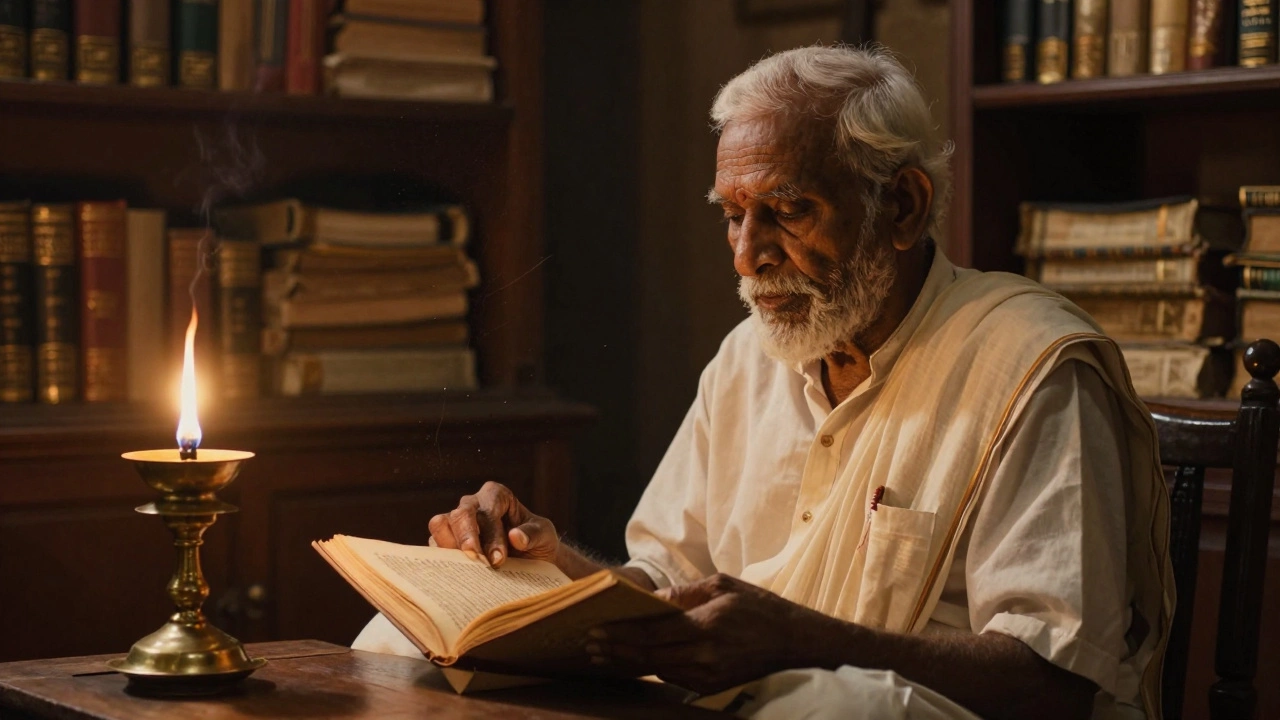
Walk into any traditional home in Tamil Nadu, or sit with a scholar in Madurai, and you will often hear a specific question: "What is the moral compass of this land?" While Christians have the Bible and Muslims have the Quran, the Tamil people look to a single text for universal wisdom. It is not a book of dogma or divine commandments from a sky-god. Instead, it is a collection of couplets on love, wealth, and virtue. This text is the Tirukkural by Thiruvalluvar.
When people ask, "Which is the Bible of Tamil Nadu?", they are usually looking for the secular equivalent of ultimate truth. The answer is almost always the Tirukkural. Written around 100-200 CE (though some scholars argue for earlier dates), it stands apart because it does not preach any specific religion. You don’t need to be Hindu, Buddhist, Jain, or Christian to find value in its 1,330 couplets. It speaks to the human condition itself.
The Structure of Universal Wisdom
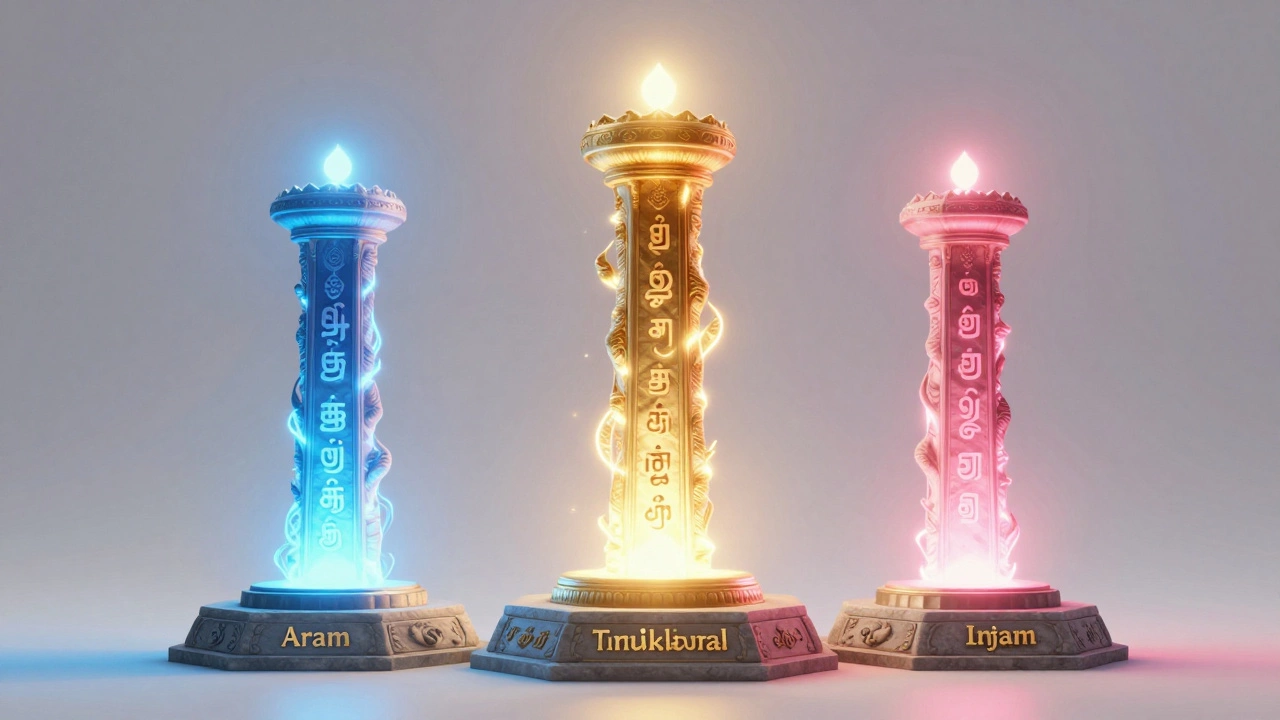
To understand why the Tirukkural holds such a sacred place, you have to look at how it is built. Unlike many ancient texts that mix mythology with law, the Tirukkural is strictly organized into three distinct sections, known as Patham. These sections cover the entirety of human life.
- Aram (Virtue): This section deals with ethics, non-violence, truthfulness, and self-control. It argues that a good character is the foundation of all success.
- Porul (Wealth): Here, the text shifts to practical governance, economics, and social conduct. It offers advice on how to rule, how to earn money honestly, and how to manage resources.
- Inbam (Love): The final section explores relationships, romance, and the emotional bonds between partners. It treats love not just as passion, but as a duty and a joy.
This tripartite structure makes it unique. Most religious texts focus heavily on ritual or afterlife. The Tirukkural focuses on *this* life. If you want to know how to treat your neighbor, check Aram. If you want to know how to run a business, check Porul. If you want to understand intimacy, check Inbam. That practicality is why it feels like a "Bible" to millions-it provides answers for every daily situation.
Thiruvalluvar: The Saint Without a Sect
The author, Thiruvalluvar, remains somewhat mysterious. We do not know his exact birthplace or death date. However, his legacy is monumental. In Tamil Nadu, he is revered not as a prophet who received messages from heaven, but as a sage who observed human nature deeply.
Unlike figures associated with specific temples or sects, Valluvar belongs to everyone. His statue stands tall in Kanyakumari, overlooking the confluence of three seas, symbolizing the universality of his message. He wrote in pure, classical Tamil (Senthamizh), avoiding Sanskritized terms. This was a conscious choice to make wisdom accessible to common people, not just the elite Brahmin class. This linguistic purity contributed to its status as a cultural cornerstone.
Why It Is Called the "Tamil Veda"
You might hear the Tirukkural referred to as the "Tamil Veda" or the "Universal Book of Ethics." Why these comparisons?
The Vedas are considered the oldest and most authoritative scriptures in Hinduism. By calling the Tirukkural the "Tamil Veda," locals emphasize its age and authority within Tamil culture. However, there is a crucial difference. The Vedas are largely ritualistic and priestly. The Tirukkural is democratic. Any person, regardless of caste, creed, or gender, can read it and apply its lessons.
Consider this famous Kural:
"A man who knows how to respect others will be respected by them; one who fails to do so will not be respected even if he has great power."
This isn't a commandment from a deity. It’s a social observation. It’s cause and effect. This rational approach resonates strongly in modern times, making the text feel fresh rather than archaic.
Other Contenders for the Title
While the Tirukkural is the primary answer, it is worth noting that Tamil Nadu has a rich tapestry of sacred texts. Depending on who you ask, other books might claim the title of "spiritual guide."
| Text Name | Primary Focus | Religious Affiliation | Role in Daily Life |
|---|---|---|---|
| Tirukkural | Ethics, Governance, Love | Secular / Universal | Moral decision-making |
| Tiruvaymoli | Devotion to Vishnu | Vaishnavism (Hindu) | Prayer and ritual |
| Tiruppavai | Dedication to Krishna | Vaishnavism (Hindu) | Festival observance (Margazhi) |
| Tirumantiram | Shaiva Siddhanta Philosophy | Shaivism (Hindu) | Yoga and metaphysics |
| Sangam Literature | Poetry, Nature, War | Cultural / Historical | Literary heritage |
If you are a devout Vaishnava Hindu, the Tiruvaymoli might feel more like your Bible. Composed by Nammalvar, it is a deep dive into devotion. Similarly, for Shaivites, the works of the Nayanars hold supreme importance. But these texts are sectarian. They require you to accept a specific theological framework. The Tirukkural does not. It asks only that you be a good human being.
The Global Reach of Tamil Wisdom
One reason the Tirukkural feels like a global "Bible" for Tamils is its translation history. It has been translated into more languages than perhaps any other Indian text. From French and German to Russian and Chinese, scholars worldwide have studied it.
In the early 20th century, European orientals were fascinated by its lack of religious bias. A French scholar once called it the "Book of Five Hundred Books" because each couplet could generate an entire volume of commentary. Today, you can find quotes from the Kural on billboards in Chennai, in school textbooks across India, and even in corporate training manuals for leadership.
This adaptability is key. A CEO might quote a Kural about honesty in business. A mother might quote another about raising children with kindness. A politician might use one about public service. The text bends to fit the context without breaking.

Living Tradition vs. Static Text
Is the Tirukkural still relevant in 2026? Absolutely. In fact, its relevance grows as society becomes more complex. In an era of digital misinformation and ethical gray areas, the clear, concise moral guidelines of the Kural offer stability.
For example, Kural 325 states: "It is better to die than to tell a lie." In a world where fake news spreads instantly, this blunt advice cuts through the noise. Or consider Kural 400: "The earth supports those who support others." This aligns perfectly with modern concepts of sustainability and community aid.
However, critics sometimes point out that some verses reflect the social norms of their time, which may seem outdated today. Scholars debate certain lines regarding gender roles or caste. Yet, the majority of the text transcends these limitations, focusing on universal virtues like compassion, patience, and integrity.
How to Read the Tirukkural Today
If you want to explore this "Bible of Tamil Nadu," you don’t need a degree in Sanskrit or Tamil. There are excellent English translations available. I recommend starting with the version by K. Subramania Iyer or S. M. Srikanthakavi, as they balance literal meaning with poetic flow.
Don’t try to read it cover-to-cover in one sitting. Treat it like a daily dose of wisdom. Read one couplet in the morning. Reflect on it during the day. Apply it when you face a dilemma. This method turns reading into practice, which is exactly what Valluvar intended.
Ultimately, the Tirukkural is not just a book. It is a mirror. When you read it, you see your own actions reflected back. If you act with virtue, the text validates you. If you act with greed, it corrects you. That is why, after centuries, it remains the spiritual anchor for millions of people in Tamil Nadu and beyond.
Is the Tirukkural a religious text?
No, the Tirukkural is considered a secular text. While it respects religious sentiments, it does not promote any specific god, ritual, or doctrine. Its focus is on universal ethics, governance, and human relationships, making it applicable to people of all faiths and no faith.
Who wrote the Tirukkural?
The Tirukkural was written by the sage Thiruvalluvar. The exact dates of his life are debated among historians, but most place him between the 1st and 5th centuries CE. He is celebrated for writing in pure Tamil without Sanskrit influence.
What are the three parts of the Tirukkural?
The Tirukkural is divided into three sections: Aram (Virtue/Ethics), Porul (Wealth/Governance), and Inbam (Love/Relationships). Together, they cover the complete spectrum of human life and societal duties.
Why is it called the Tamil Veda?
It is called the Tamil Veda because of its immense authority and antiquity in Tamil culture. However, unlike the Vedas, which are ritualistic and priestly, the Tirukkural is accessible to all people and focuses on practical morality rather than religious rites.
Can non-Tamil speakers understand the Tirukkural?
Yes. The Tirukkural has been translated into over 70 languages, including English, French, German, and Chinese. Many English translations capture the essence and poetic beauty of the original couplets, allowing global readers to appreciate its wisdom.
Is the Tirukkural still taught in schools in Tamil Nadu?
Yes, the Tirukkural is a mandatory subject in Tamil Nadu schools up to the secondary level. Students memorize selected couplets and study their meanings, ensuring that every generation is exposed to its ethical teachings.
How does the Tirukkural differ from the Bhagavad Gita?
The Bhagavad Gita is a dialogue within a epic poem focused on dharma (duty) and devotion to God (Krishna). The Tirukkural is a standalone collection of aphorisms focused on practical ethics and social conduct without referencing deities. The Gita is theological; the Kural is philosophical and secular.
Where can I read the Tirukkural online?
There are several reputable websites and apps dedicated to the Tirukkural, such as kural.net and thirukkural.in. These platforms offer the original Tamil text alongside multiple English translations and commentaries for easy access.