Indian Marriage Age Estimator
Input Parameters
Estimated Average Age Range
Key Influencing Factors:
- Select your details to see insights.
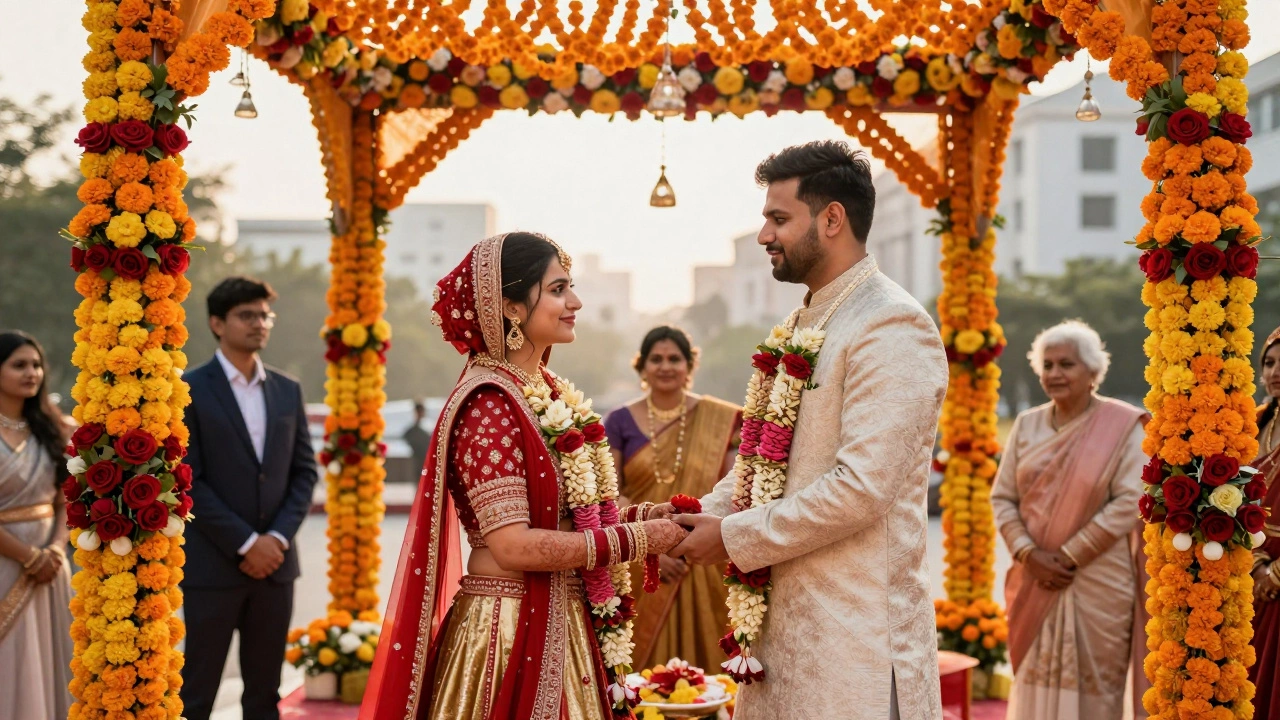
You might have a picture in your head of an Indian wedding: vibrant colors, huge crowds, and young couples exchanging garlands. For decades, that image held true. But if you look at the numbers today, that picture is changing fast. The question "what age do Indians get married?" doesn't have a single simple answer anymore. It depends on where you live, your gender, your income, and how much you value higher education.
In the past, getting married by eighteen or twenty was the norm for most families. Today, especially in cities like Mumbai, Bangalore, and Delhi, it is common to see brides and grooms in their late twenties or even early thirties. This shift isn't just a trend; it's a massive social transformation driven by laws, economics, and changing mindsets about career and independence.
The Legal Baseline: What the Law Says
To understand the current landscape, we first need to look at the rules. For years, the legal framework in India was split. Under the Hindu Marriage Act, men had to be at least 21 and women at least 18. This gap created a long-standing debate about gender equality in marriage rights.
That changed significantly with recent legislative moves. The government has been pushing to raise the minimum legal age for marriage for women from 18 to 21, aiming to align it with men’s age. While this law has faced political hurdles and judicial reviews, the intent is clear: the state wants to delay marriage to improve health outcomes and educational attainment for women. Even if the specific bill faces delays, the cultural pressure to wait until at least 18 (and ideally older) is stronger than ever.
Is there a difference between legal and actual marriage ages?
Yes. While the legal age sets a floor, the actual average age is often higher due to social and economic factors. In urban areas, the gap can be five to ten years above the legal minimum.
The Numbers: Average Ages by Gender and Region
If you dig into the data from the National Family Health Survey (NFHS-5), which covers thousands of households across the country, a clear pattern emerges. The national average age at first marriage for women is roughly 21.9 years, while for men, it is around 24.6 years. These numbers are averages, meaning they hide a lot of variation.
Consider the contrast between states. In Kerala, known for its high literacy rates and strong social development indicators, women often marry closer to 24 or 25. In contrast, in states like Bihar or Uttar Pradesh, despite national progress, the average age remains lower, sometimes dipping below 20 for rural women. This isn't just about tradition; it's tied to access to schools, colleges, and job markets. When a girl stays in school longer, she marries later. Simple as that.
| Demographic Group | Women | Men |
|---|---|---|
| Urban Areas (National Avg) | 23 - 25 years | 26 - 28 years |
| Rural Areas (National Avg) | 20 - 22 years | 23 - 25 years |
| Kerala / Tamil Nadu | 24+ years | 27+ years |
| Bihar / Uttar Pradesh | 19 - 21 years | 22 - 24 years |
Why Are People Waiting Longer?
So, why is the clock ticking slower? It’s not just one reason. It’s a mix of three powerful forces: education, careers, and money.
Higher Education is the primary driver delaying marriages in modern India. A decade ago, a bachelor's degree was a big deal. Now, many young people pursue master's degrees, MBAs, or professional certifications. If you start college at 18, you finish undergrad at 22. Add two years for a master's, and you're 24. By then, you might want to work for a year or two before settling down. Suddenly, you're looking at marrying at 25 or 26.
Career aspirations play a huge role too. Women, in particular, are entering the workforce in record numbers. Getting married young often meant pausing or ending a career. Today, many women want to establish themselves professionally before taking on family responsibilities. Men also feel the pressure to be financially stable-buying a house, saving for a wedding, and securing a good job takes time. The cost of living in major Indian cities has skyrocketed, making early financial independence harder to achieve.

The Urban vs. Rural Divide
You cannot talk about Indian marriage ages without acknowledging the stark divide between city life and village life. In metropolitan hubs like Bangalore, Hyderabad, and Pune, the culture is shifting rapidly. Here, love matches are more common, and parents often encourage their children to focus on studies first. Dating apps and social media have also changed how people meet, leading to relationships that develop over years rather than days.
In rural areas, the dynamics are different. Economic pressures, such as the need for labor on farms or smaller household sizes, can push families toward earlier marriages. Social norms also run deeper here. A daughter marrying young is still seen by some traditional communities as a way to reduce the financial burden on the family or to secure alliances. However, even in villages, the spread of smartphones and digital education is slowly bringing these timelines forward.
How Traditions Are Adapting
Does waiting longer mean traditions are dying? Not at all. It means they are adapting. An Indian wedding is still a grand affair, but the participants are different. You’ll see more working professionals in the wedding party. You’ll see pre-wedding rituals like the Sangeet or Mehendi happening alongside busy schedules, requiring careful planning.
There’s also a rise in "destination weddings" among the urban elite, where couples marry in exotic locations abroad or in hill stations, further delaying the process due to logistics and costs. Meanwhile, simpler, community-led weddings are gaining traction among those who want to avoid the debt associated with lavish ceremonies. The core values-family unity, religious blessing, and celebration-remain intact, but the timeline stretches to accommodate modern life.

The Impact on Society
This delay in marriage has profound effects. On the positive side, it leads to smaller family sizes. Couples who marry later tend to have fewer children, which helps with population stabilization. It also improves maternal and child health, as women who marry after 21 are physically more mature and better prepared for pregnancy.
Economically, it boosts productivity. More years spent in education and the workforce mean higher earning potential for individuals and greater contribution to the national GDP. However, there are challenges. Delayed marriage can lead to a "marriage squeeze," where there are more eligible men than women in certain age brackets, particularly in urban areas. This can cause stress for families trying to find matches within their community or caste preferences.
What Does the Future Hold?
Looking ahead to 2030 and beyond, expect the average age to creep up further. As India’s middle class expands, more families will prioritize education and career stability over early union. The gap between urban and rural ages will likely narrow, though it won’t disappear entirely. Government policies focusing on girls' education and women's employment will continue to push the needle.
For anyone navigating this landscape, whether you’re a young person planning your future or a parent guiding your child, the key takeaway is flexibility. There is no "right" age anymore. The right age is when you feel ready-emotionally, financially, and socially-to build a life with someone else. The old rulebook is being rewritten, one couple at a time.
Is it common for Indians to marry after 30?
Yes, increasingly so in urban areas. Among IT professionals and other white-collar workers in cities like Bangalore and Gurgaon, marrying in the early 30s is becoming a standard milestone rather than an exception.
Do arranged marriages happen later than love marriages?
Not necessarily. Arranged marriages often align with career milestones. If a person finishes their MBA at 24, their parents might start looking for matches immediately. Love marriages might take longer to develop but often result in similar age ranges once the decision is made.
How does religion affect marriage age in India?
Religion plays a minor role compared to region and economy. However, some conservative communities within any religion may prefer earlier marriages. Generally, secular laws apply to all, but personal laws vary slightly in interpretation.
What is the most popular age for weddings in metros?
In major metros, the sweet spot is currently 25-28 for women and 27-30 for men. This allows enough time for higher education and initial career establishment.
Are inter-caste marriages affecting age trends?
Inter-caste marriages are rising but remain a small percentage. They often involve couples who marry later because they face more societal scrutiny and may choose to establish independence before marrying outside their community.