Indian Art Form Explorer
Discover the rich diversity of Indian art. Select an art form below to learn about its history, techniques, and cultural significance.
Prehistoric & Rock-Cut
Cave paintings, Ajanta, Ellora
Folk Traditions
Madhubani, Pattachitra, Warli
Miniature Paintings
Mughal, Rajasthani, Pahari
Temple Sculpture
Khajuraho, Chola Bronzes
Modern & Contemporary
Tagore, Subodh Gupta, Jitish Bhatia
Compare Styles
Side-by-side analysis
When you think of ancient Indian art, a vast visual heritage spanning thousands of years, characterized by spiritual symbolism, intricate craftsmanship, and diverse regional styles, what comes to mind? Is it the serene Buddha statues in stone, the vibrant colors of a wedding invitation, or the detailed stories painted on temple walls? India’s artistic history is not just one thing. It is a loud, colorful, and deeply layered conversation between gods, kings, farmers, and merchants that has been going on for millennia.
You might have seen images of the Taj Mahal or heard about Bollywood, but those are only parts of the story. The real heart of Indian art beats in the caves of Ajanta, the villages of Bihar, and the studios of Varanasi. If you want to understand what makes Indian art famous globally, you have to look at how these traditions survived empires, colonization, and modernization to stay alive today.
The Roots: Prehistoric and Rock-Cut Art
Before there were palaces or temples, there were caves. The earliest famous Indian art isn’t found in museums; it’s carved into rock faces in remote forests. Take the Bhimbetka rock shelters, prehistoric archaeological sites in Madhya Pradesh featuring some of the oldest known cave paintings in India, dating back over 30,000 years. These aren’t just drawings of animals. They show hunting scenes, dances, and daily life from the Stone Age. This tells us that storytelling through image is woven into the DNA of Indian culture.
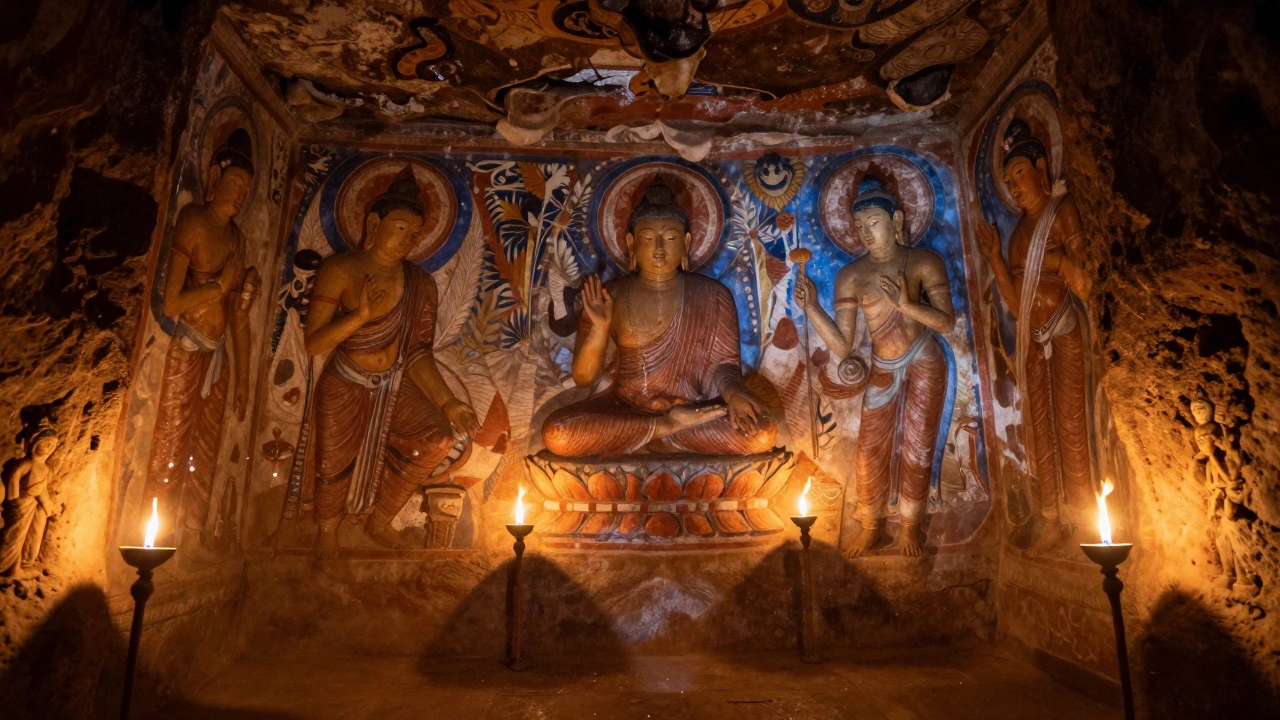
Fast forward a few thousand years, and you hit the Ajanta Caves, a series of 30 Buddhist cave monuments in Maharashtra, famous for their stunning murals and sculptures dating from the 2nd century BCE to the 6th century CE. Here, artists used natural pigments like ochre and indigo to paint scenes from the Jataka tales (stories of the Buddha’s past lives). The technique they used involved applying wet plaster and painting directly onto it, creating a fresco-like effect. What’s impressive isn’t just the beauty, but the perspective. These painters understood depth and emotion long before European Renaissance artists did.
Then there are the Ellora Caves, a group of 34 monastic caves in Maharashtra representing Buddhism, Hinduism, and Jainism, including the massive Kailasa Temple carved from a single rock face. The Kailasa Temple alone is mind-blowing. Workers carved it from the top down, removing millions of tons of rock. That’s not just art; that’s engineering with spiritual intent. These sites prove that ancient Indian art was never separate from architecture or religion.
Folk Traditions: Art as Daily Life
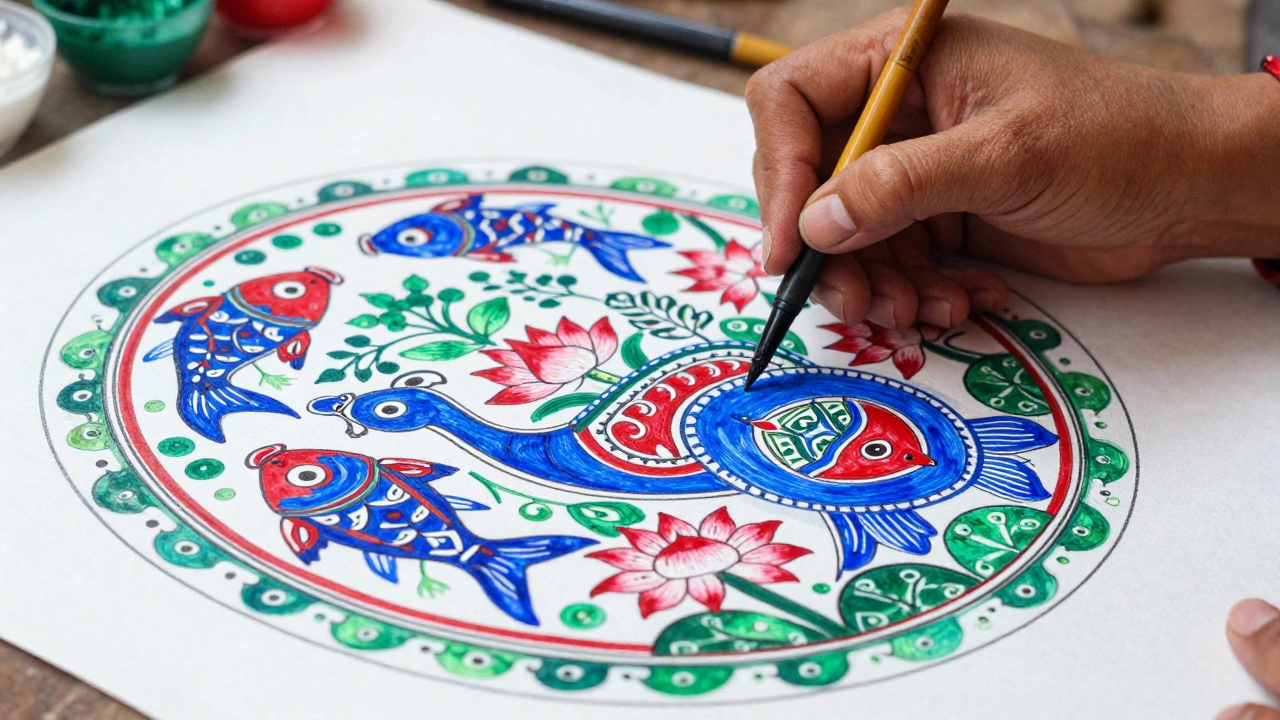
If classical art is about perfection, folk art is about pulse. In many Indian villages, art isn’t something you go to a gallery to see. It’s on the walls of your house, your pots, and your clothes. One of the most famous examples is Madhubani painting, a traditional folk art form from the Mithila region of Bihar and Nepal, characterized by intricate patterns, bright colors, and themes from Hindu epics and nature.
Originally, women painted these designs on newly constructed mud houses during festivals like weddings. Today, they paint on paper and cloth, selling them worldwide. But the rules remain strict. You don’t leave empty spaces. Every gap is filled with flowers, fish, or peacocks. Why? Because in this worldview, emptiness invites bad energy. The art protects the home. This connection between function and beauty is key to understanding why Madhubani remains so popular.
Another heavyweight is Pattachitra, a traditional scroll painting style from Odisha and West Bengal, known for its vivid colors derived from natural sources and detailed depictions of mythological stories. Artists use brushes made from squirrel hair and paints ground from stones, leaves, and even cow dung. The process takes weeks. A single panel can take months. The subject matter is usually Krishna or Jagannath. But here’s the twist: Pattachitra artists also perform. They travel with scrolls, unrolling them while singing ballads. The art is meant to be experienced, not just looked at.
- Warli Painting: From Maharashtra, using simple geometric shapes to depict village life.
- Kalamkari: Hand-block printed or hand-painted cotton textiles from Andhra Pradesh, often depicting Persian-inspired motifs.
- Aipan: Ritualistic floor art from Uttarakhand, created during festivals using rice paste.
Courtly Elegance: Miniature Paintings
While villagers painted on walls, kings commissioned tiny masterpieces. Indian miniature paintings, small-scale artworks developed under royal patronage, known for fine detail, flat perspective, and vibrant colors, divided into major schools like Mughal, Rajput, and Deccan are arguably the most recognizable form of historical Indian art outside India. These weren’t just decorations. They were records of court life, love affairs, battles, and religious devotion.
The Mughal miniatures, a style of painting developed under the Mughal Empire, blending Persian techniques with Indian sensibilities, known for realism, portraiture, and intricate detailing stand out for their realism. Under Emperor Akbar, painters from Persia and India worked together. The result? Portraits that capture individual personalities, not just types. Notice the way light falls on a prince’s face or the texture of his silk robe. These artists studied nature closely. Birds, flowers, and trees are rendered with botanical accuracy.
In contrast, Rajasthani miniatures, paintings from the royal courts of Rajasthan, characterized by bold colors, stylized figures, and themes centered on Krishna’s love life and heroic legends lean more into fantasy. The eyes are large and almond-shaped. Colors are intense-deep reds, blues, and greens. The focus is on emotion and poetry rather than physical reality. If Mughal art shows you who someone was, Rajasthani art shows you how they felt.
| School | Key Characteristics | Common Themes |
|---|---|---|
| Mughal | Realism, fine brushwork, naturalistic backgrounds | Court life, hunting, portraits |
| Rajasthani | Bold colors, stylized figures, emotional intensity | Krishna leelas, romance, mythology |
| Pahari | Soft hues, mountain landscapes, lyrical mood | Seasons, divine love, nature |
Temple Sculpture: Stone That Breathes
You can’t talk about famous Indian art without mentioning stone. For centuries, Indians didn’t build churches or mosques first; they built temples. And these temples are covered in sculpture. The Khajuraho Group of Monuments, a collection of Hindu and Jain temples in Madhya Pradesh, renowned for their erotic sculptures and intricate carvings from the 10th to 12th centuries gets all the attention because of the erotic statues. But that’s misleading. Only about 10% of the sculptures are sexual. The rest depict gods, musicians, dancers, and everyday people buying vegetables or combing their hair.
The skill here is incredible. Artists carved sandstone so finely that you can see the weave of clothing or the jewelry on a deity’s wrist. The pose matters too. Every gesture (mudra) has meaning. A raised hand means protection. A pointing finger indicates teaching. The sculptures aren’t static; they’re frozen dance moves.
Similarly, the Chola Bronze Statues, masterpieces of South Indian metalwork from the 9th to 13th centuries, known for their dynamic poses and ritual significance, particularly Nataraja (Shiva as Lord of Dance) show another side of Indian artistry. Using the lost-wax casting method, artisans created bronze figures that seem to balance on one leg yet feel stable. The Nataraja statue, showing Shiva dancing the cosmic dance, is perhaps the most iconic symbol of Indian art globally. It represents creation and destruction happening simultaneously.
Modern and Contemporary Voices
Does Indian art stop at tradition? Absolutely not. In the 20th century, artists began mixing Western techniques with Indian themes. Rabindranath Tagore, Nobel laureate poet and painter who founded Visva-Bharati University, influencing modern Indian art through his emphasis on rural crafts and global cultural exchange played a huge role. He encouraged artists to look beyond colonial imitation and find their own voice.
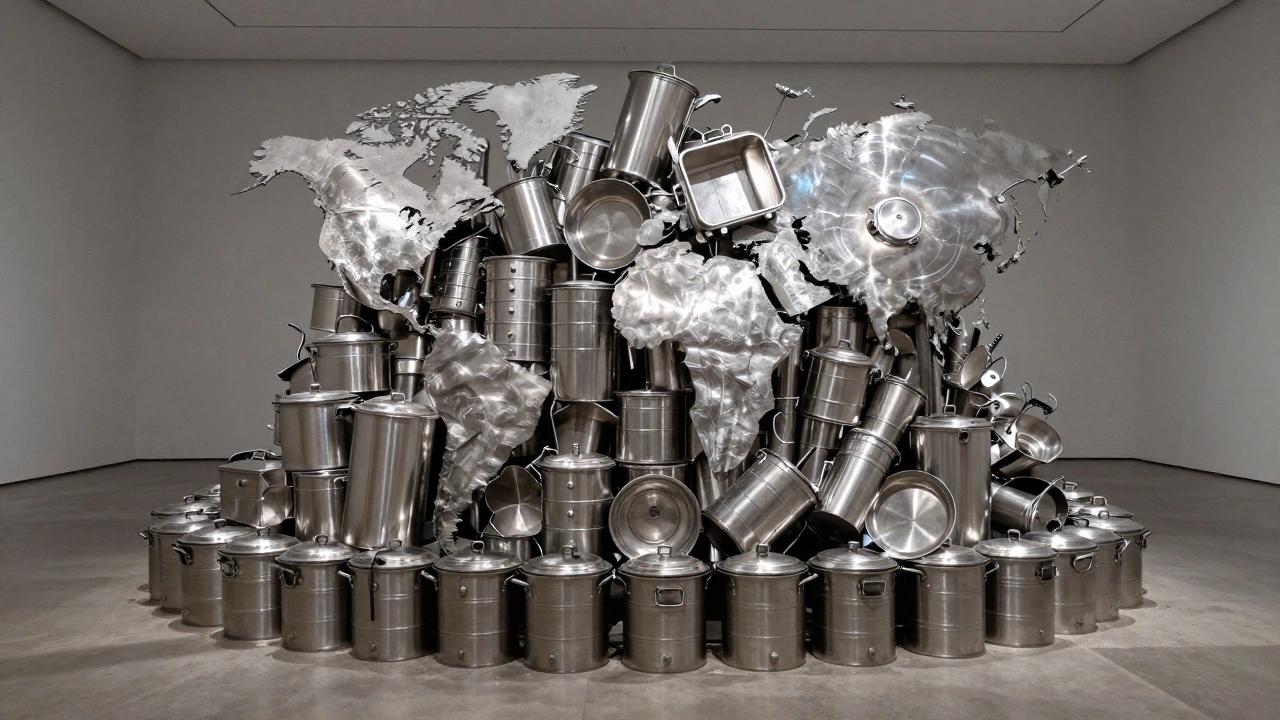
Today, contemporary Indian art is booming. Artists like Subodh Gupta, contemporary artist known for using everyday stainless steel objects like pressure cookers and tumblers to create large-scale installations commenting on consumerism and globalization use kitchen utensils to make giant sculptures. Others, like Jitish Bhatia, artist known for photorealistic paintings exploring identity, memory, and the intersection of technology and humanity, blend photography and painting to question what is real. Galleries in Mumbai, Delhi, and Bangalore now compete with New York and London.
What makes modern Indian art interesting is its duality. An artist might paint a traditional goddess using pop-art techniques. Or they might use digital media to tell ancient myths. The past isn’t gone; it’s being remixed.
Why Does This Matter?
So, why should you care about these different types of art? Because they reveal how Indians see the world. Whether it’s a cave painting, a temple carving, or a modern installation, there’s always a connection between the human and the divine. There’s no separation between art and life. Art is prayer, art is protest, art is play.
Next time you see an Indian artwork, don’t just look at the colors. Look at the hands that made it. Think about the story it’s trying to tell. You’ll realize that famous Indian art isn’t just about aesthetics. It’s about survival, faith, and joy expressed in visual form.
What is the oldest form of art in India?
The oldest known forms are the prehistoric cave paintings at Bhimbetka, dating back over 30,000 years. These depict hunting scenes and daily life from the Stone Age era.
Is Madhubani painting still practiced today?
Yes, Madhubani painting is very much alive. Originally done on house walls by women in Bihar, it is now widely practiced on paper and sold internationally as a major folk art form.
What distinguishes Mughal from Rajasthani miniature paintings?
Mughal miniatures focus on realism, naturalistic details, and court life, influenced by Persian styles. Rajasthani miniatures are more stylized, using bold colors and focusing on emotional and mythological themes like Krishna's love stories.
Why are the Khajuraho temples famous?
They are famous for their intricate erotic sculptures, though these make up only a small portion of the carvings. The temples are also renowned for their architectural precision and depictions of daily life and deities.
Who are some famous contemporary Indian artists?
Notable contemporary artists include Subodh Gupta, known for his stainless steel installations, and Jitish Bhatia, recognized for his photorealistic works exploring identity and technology.
What materials are used in traditional Pattachitra painting?
Artists use natural pigments made from stones, leaves, flowers, and even cow dung. Brushes are traditionally crafted from squirrel hair, ensuring fine detail work on cloth or palm leaf scrolls.