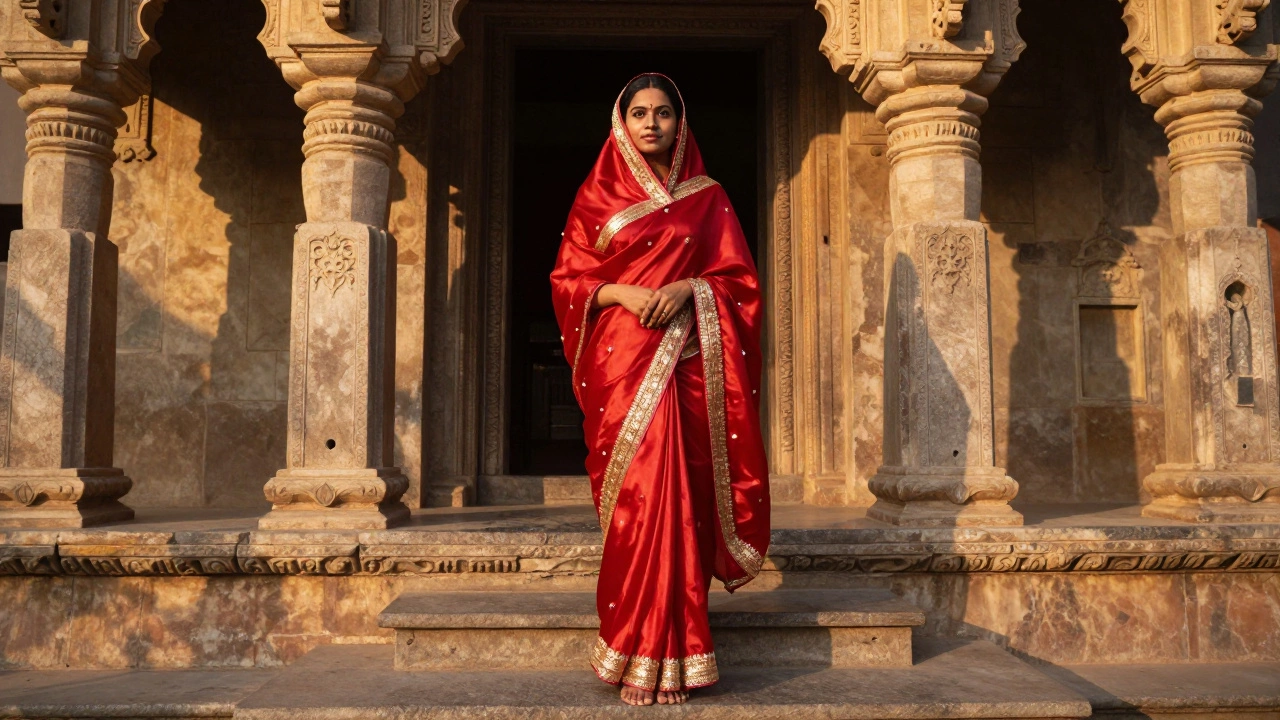
Indian Dress Code Checker
Check Your Outfit Appropriateness
Enter details about your location and clothing to see if your outfit is appropriate for Indian cultural norms.
Enter your details to check if your outfit is appropriate.
India isn't a country with one dress code-it's a patchwork of hundreds of cultures, climates, and centuries of tradition. What you wear in a village in Rajasthan might be completely out of place in a temple in Varanasi, or even in a corporate office in Bangalore. The truth? There's no single answer to what’s appropriate. But there are clear patterns, deep-rooted norms, and simple rules that help you avoid awkward moments and show respect.
Modesty Is the Universal Standard
No matter where you go in India, modesty is the quiet rule that holds everything together. This doesn’t mean covering up like you’re in a strict religious zone-it means avoiding skin that’s too exposed. For women, that usually means skipping shorts, crop tops, or tank tops that reveal the midriff or shoulders. For men, sleeveless shirts or very short shorts are frowned upon in most public or religious spaces. Even in beach towns like Goa, you’ll see locals wearing light cotton kurtas or tunics over swimwear. The local vibe is relaxed, but the expectation is still: cover up.
Why? It’s not about shame. It’s about context. In India, clothing often signals respect-for elders, for sacred spaces, for social norms. A woman wearing a saree or salwar kameez to a wedding isn’t just dressed up-she’s honoring tradition. A man in a kurta at a temple isn’t just being casual-he’s showing reverence. When you dress modestly, you’re not just following rules. You’re signaling that you understand the space you’re in.
Regional Differences Matter More Than You Think
India’s size means clothing varies wildly from state to state. In Kerala, women wear the traditional kasavu saree-a cream-colored drape with golden borders. In Punjab, women wear colorful salwar kameez with heavy embroidery, and men wear the lungi or kurta-pajama. In the northeast, tribal patterns dominate, with intricate beadwork and woven fabrics that tell stories.
What works in Mumbai might not fly in Jaipur. In urban centers like Delhi or Hyderabad, you’ll see a mix-western jeans and t-shirts are common among young professionals. But step into a temple, and suddenly everyone is covered. In rural areas, even in cities, traditional clothing is still the norm for daily life. A foreigner in a miniskirt in a village near Bhopal will attract stares-not because people are rude, but because it breaks an unspoken rhythm.
The safest bet? When in doubt, cover your shoulders and knees. In temples, mosques, and gurudwaras, you’ll often be asked to remove your shoes and cover your head. Women may be given a dupatta (a light scarf) to drape over their head. Men may be given a small cloth to tie around the waist. Don’t resist. It’s not a restriction-it’s a ritual.
Religious Spaces Have Their Own Rules
Temples, mosques, and gurudwaras aren’t just buildings-they’re living spaces of worship. Each has its own dress code, and ignoring it can be seen as disrespectful.
- Temples (Hindu): No leather belts, wallets, or shoes inside. Women should avoid wearing pants or shorts. A saree, lehenga, or long skirt with a blouse is ideal. Men should wear dhoti, kurta, or at least long pants and a shirt.
- Mosques (Muslim): Women need to cover their hair with a scarf and wear loose clothing that covers arms and legs. Men should wear long pants and avoid sleeveless tops. Shoes are always left outside.
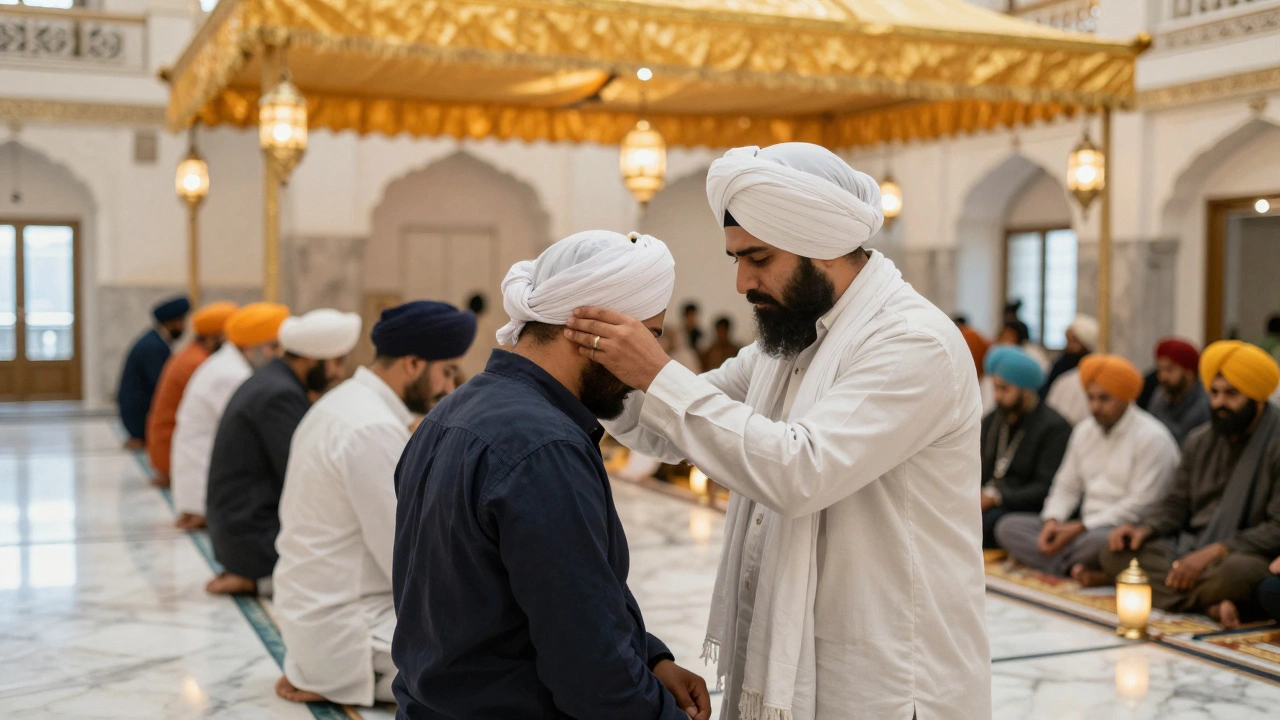
- Gurudwaras (Sikh): Everyone must cover their head with a scarf or bandana (they’re often provided). No leather items are allowed inside. Shoes are removed before entering. Both men and women wear modest clothing-no shorts, tank tops, or revealing outfits.
These aren’t arbitrary rules. They come from centuries of practice. In a gurudwara, for example, the langar (free community meal) is served to everyone, rich or poor, regardless of religion. The dress code ensures everyone enters the space with equal humility. When you follow it, you’re not just obeying a rule-you’re stepping into a shared tradition.
Weddings Are a Fashion Show-But Still Follow the Rules
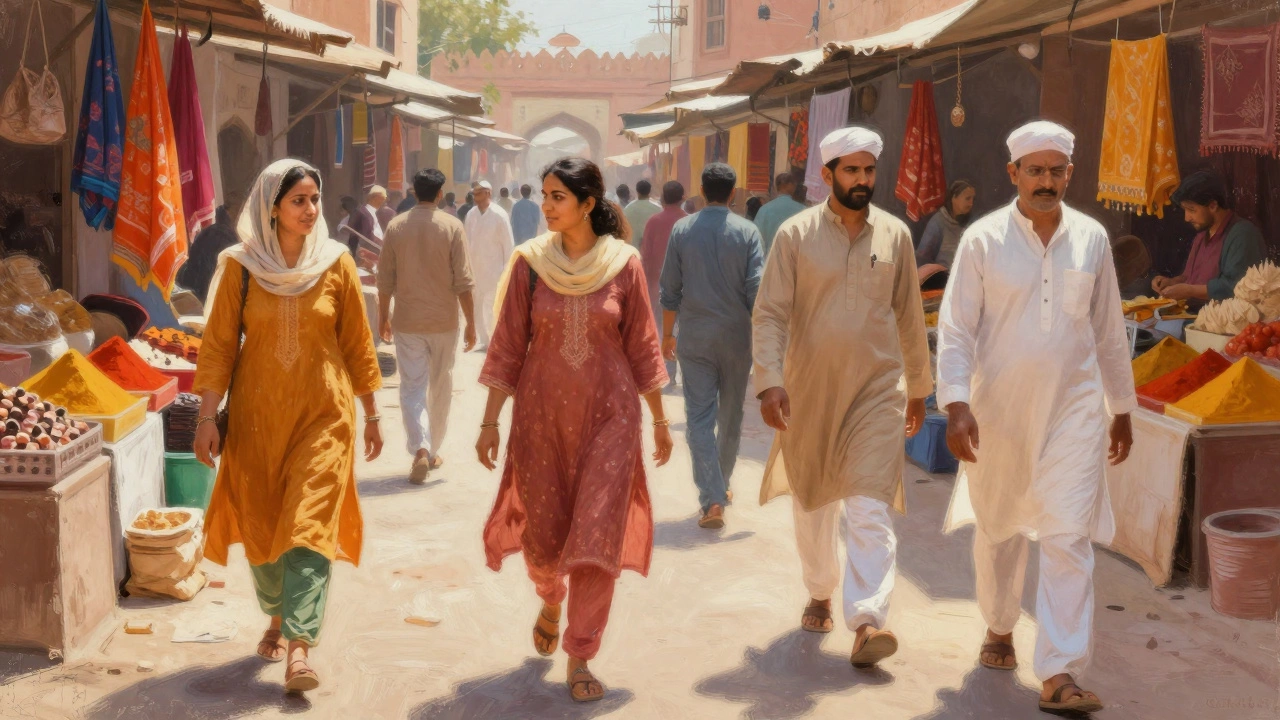
Indian weddings are legendary for their color, glitter, and drama. Guests often wear their best traditional outfits. Women show up in bright lehengas, silk sarees, or heavily embroidered suits. Men wear sherwanis, bandhgala jackets, or richly woven kurtas.
But here’s the catch: even at weddings, modesty still matters. A guest wearing a low-cut dress or thigh-high slit might get whispered about-not because people are judgmental, but because it breaks the cultural rhythm of celebration. The focus is on joy, not attention-grabbing fashion.
If you’re invited to an Indian wedding and aren’t sure what to wear, ask. Most hosts will be happy to guide you. A simple saree drape or a long kurta with pants is always safe. You don’t need to buy something expensive. Borrow, rent, or even buy a ready-made outfit from a local market. The effort matters more than the price tag.
Workplaces Are Changing-But Still Respect Tradition
In big cities, you’ll see women in business suits and men in shirts and ties. But even there, tradition lingers. Many Indian women in corporate jobs wear salwar kameez or sarees with blazers. Men often wear kurtas with jeans or chinos. It’s a blend-modern structure with cultural comfort.
Startups and tech companies are more relaxed. But in government offices, banks, or schools, conservative dress is still the norm. A woman in a sleeveless top might be asked to cover up. A man in shorts might be told it’s inappropriate for the workplace.
Why? Because India’s work culture still values formality as a sign of professionalism. It’s not about controlling people-it’s about maintaining a shared sense of decorum. In a country where family and community are central, how you present yourself matters.
What to Avoid
Some things are universally frowned upon:
- Wearing shoes indoors-especially in homes, temples, and some shops.
- Showing too much skin-no crop tops, short shorts, or spaghetti straps in public.
- Wearing leather in religious sites-especially in Hindu temples and Sikh gurudwaras.
- Wearing white or black to weddings-white is for mourning, black is for funerals. Bright colors are preferred.
- Pointing your feet at religious idols or elders-it’s considered disrespectful.
These aren’t laws. They’re social cues. And when you notice them, you start to see how deeply culture is woven into everyday life.
What to Wear Instead
You don’t need to buy a full traditional outfit to fit in. Here are simple, practical choices:
- For women: A long cotton kurti with leggings or palazzo pants. A light scarf to cover shoulders if needed. A simple saree or lehenga if you want to go all in.
- For men: A kurta with jeans or chinos. Loose cotton pants and a shirt. A traditional dhoti or lungi if you’re visiting rural areas.
- For everyone: Light, breathable fabrics-cotton, linen, silk. Avoid synthetic materials that trap heat. Carry a scarf or dupatta in your bag-it’s your emergency modesty tool.
These items are affordable, easy to find in markets, and comfortable in India’s heat. You’ll also find that locals appreciate the effort. A foreigner wearing a kurta might get a smile, a compliment, or even an invitation to join a tea break.
It’s Not About Perfection-It’s About Respect
India is forgiving. If you make a mistake-like wearing shorts to a temple-people won’t yell. They might gently guide you. But they’ll notice. And they’ll remember.
The goal isn’t to dress like an Indian. It’s to dress with awareness. To honor the culture you’re stepping into. To show that you understand this isn’t just about fabric-it’s about history, belief, and community.
When you wear a simple cotton kurta or drape a scarf over your shoulders, you’re not just covering up. You’re opening a door. A door to deeper conversations, unexpected invitations, and real connections.
Is it okay for tourists to wear traditional Indian clothing?
Yes, absolutely. Many tourists wear kurtas, sarees, or lehengas during visits, and locals often appreciate the gesture. It shows respect and interest in the culture. Just make sure the outfit is modest-avoid overly tight or revealing styles. You don’t need to wear it every day, but wearing it for festivals, temples, or weddings is a thoughtful touch.
Do I need to cover my head in India?
You only need to cover your head in religious places like Sikh gurudwaras, some mosques, and a few temples. In Sikh places, it’s mandatory. In others, it’s often optional but appreciated. Carry a light scarf-it’s useful for sun protection, modesty, and unexpected situations. You’ll be offered one if needed.
Can I wear jeans in India?
Yes, jeans are common in cities and widely accepted. But pair them with a long tunic, blouse, or shirt that covers your midriff. Avoid ripped jeans in religious or conservative areas. In rural villages or temples, long pants are better than tight jeans. The key is balance-jeans are fine, but pair them with modest tops.
What colors should I avoid in India?
White and black are traditionally linked to mourning and funerals, so avoid wearing them to weddings or festive events. Bright colors-red, yellow, green, orange-are preferred because they symbolize joy and celebration. In temples, white is acceptable and even common for pilgrims. Context matters more than the color itself.
Is it okay to wear sandals or flip-flops in India?
Yes, sandals are common and practical, especially in hot weather. But you must remove them before entering temples, mosques, gurudwaras, and most homes. Keep them easy to slip on and off. Avoid wearing flip-flops in formal settings like weddings or business meetings-closed shoes or simple leather sandals are better.
If you’re visiting India, remember this: the clothes you wear aren’t just fabric. They’re a conversation. And when you choose wisely, that conversation becomes a bridge.