Gujarati Fasting Guide Calculator
During festivals like Navratri and Ekadashi, Gujarati families observe religious fasts. This tool helps identify what ingredients and dishes are allowed during these fasts, based on traditional practices described in the article.
Permitted Ingredients
Recommended Dishes
If you’ve ever sat down to a Gujarati thali, you know it’s not just a meal-it’s a celebration on a plate. Sweet, spicy, tangy, and savory all in one go, Gujarati food is unlike anything else in India. It’s not about bold heat like in the south or rich creaminess like in the north. It’s balanced. It’s thoughtful. And it’s deeply tied to religion, seasons, and family rituals.
The Sweet-Savory Balance That Defines Gujarati Food
What makes Gujarati food stand out? It’s the sweet-savory combo you won’t find anywhere else. A dish like dhokla-a steamed, spongy snack made from fermented chickpea batter-is often served with a tamarind-chili chutney that’s both sour and sweet. Even the main curries, like undhiyu (a mixed vegetable stew from Surat), include jaggery to round out the flavors. This isn’t a trend. It’s a tradition passed down for generations.
Why sweet in a savory dish? It comes from Ayurvedic principles. Gujaratis believe food should balance the body’s energies. Sweetness cools the system, while spices stimulate digestion. That’s why even a simple dal has a hint of jaggery. It’s not sugar for taste-it’s medicine for balance.
Everyday Meals: The Gujarati Thali
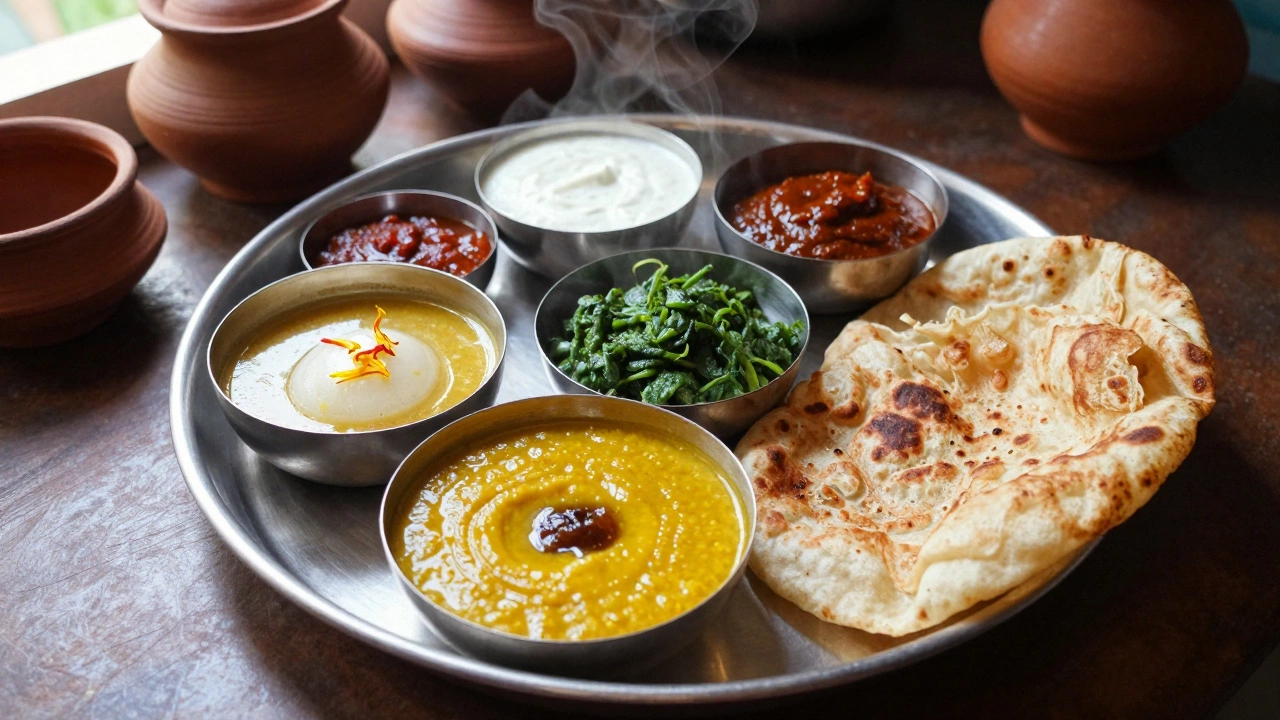
Most Gujarati households eat the same structure for lunch and dinner: the thali. It’s not random. Each component has a role. A typical thali includes:
- Roti or bhakri (flatbread made from wheat or bajra)
- Dal (lentils, often with jaggery and turmeric)
- Shaak (a vegetable curry, usually mild)
- Khichdi (rice and lentils, often eaten on rest days)
- Raw salad (cucumber, tomato, onion)
- Chutney (sweet tamarind or coriander-mint)
- Dahi (yogurt, always served)
- One sweet dish (like shrikhand or gulab jamun)
The order matters too. You start with the savory items, then move to the sweet. It’s not just tradition-it’s digestion science. Eating sweet last helps slow down sugar absorption and keeps blood sugar steady.
Breakfasts That Are More Than Just a Quick Bite
Gujarati breakfasts are anything but simple. Dhokla and khandvi (rolled savory snacks made from gram flour and yogurt) are common. But don’t think they’re just snacks. These are daily staples, often made fresh in the morning. Many families prepare them in batches and steam them in clay pots for better flavor.
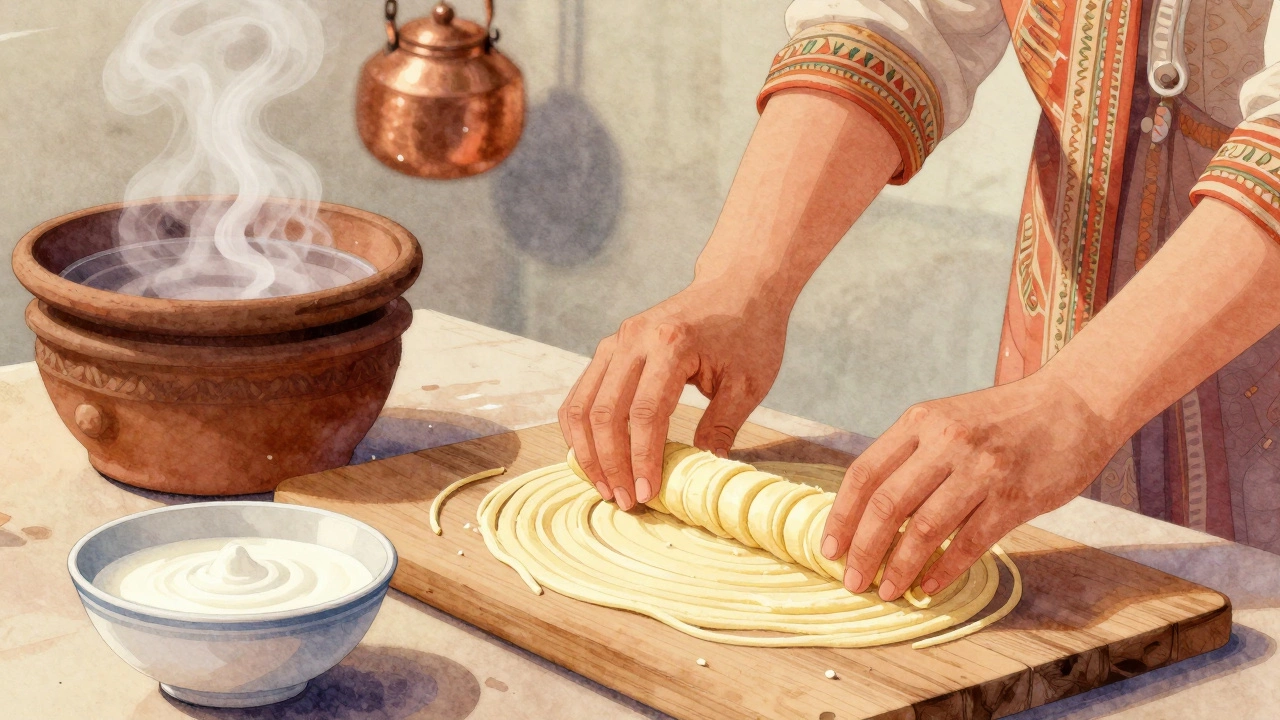
Another favorite is thepla-thin, spiced flatbreads made with fenugreek leaves and whole wheat flour. They’re stored for days and eaten cold with yogurt. That’s how you know they’re good: they don’t need reheating.
And yes, tea is always there. But it’s not just chai. It’s usually masala chai with a pinch of cardamom and ginger, served in small cups. No sugar. Just the spice and the warmth.
Snacks That Travel Well
Gujaratis are known for their portable food. Whether it’s for a long train ride, a temple visit, or a picnic, snacks are packed with care. Sev puri-crispy fried dough topped with potatoes, chutneys, and sev (thin chickpea noodles)-is a street food classic. But you’ll also find it in homes, made with homemade sev.
Patra is another gem. Colocasia leaves are smeared with a spicy gram flour paste, rolled up, steamed, and sliced. Served with mint chutney, it’s crunchy, earthy, and slightly sweet. You won’t find this dish anywhere else in India.
And then there’s fafda-crispy, spicy gram flour strips. Eaten with jalebi (deep-fried syrup-soaked spirals), it’s the ultimate sweet-and-salty combo. It’s not a dessert. It’s a snack. And it’s eaten at 5 p.m., not after dinner.
Festive Food: When Tradition Takes Center Stage
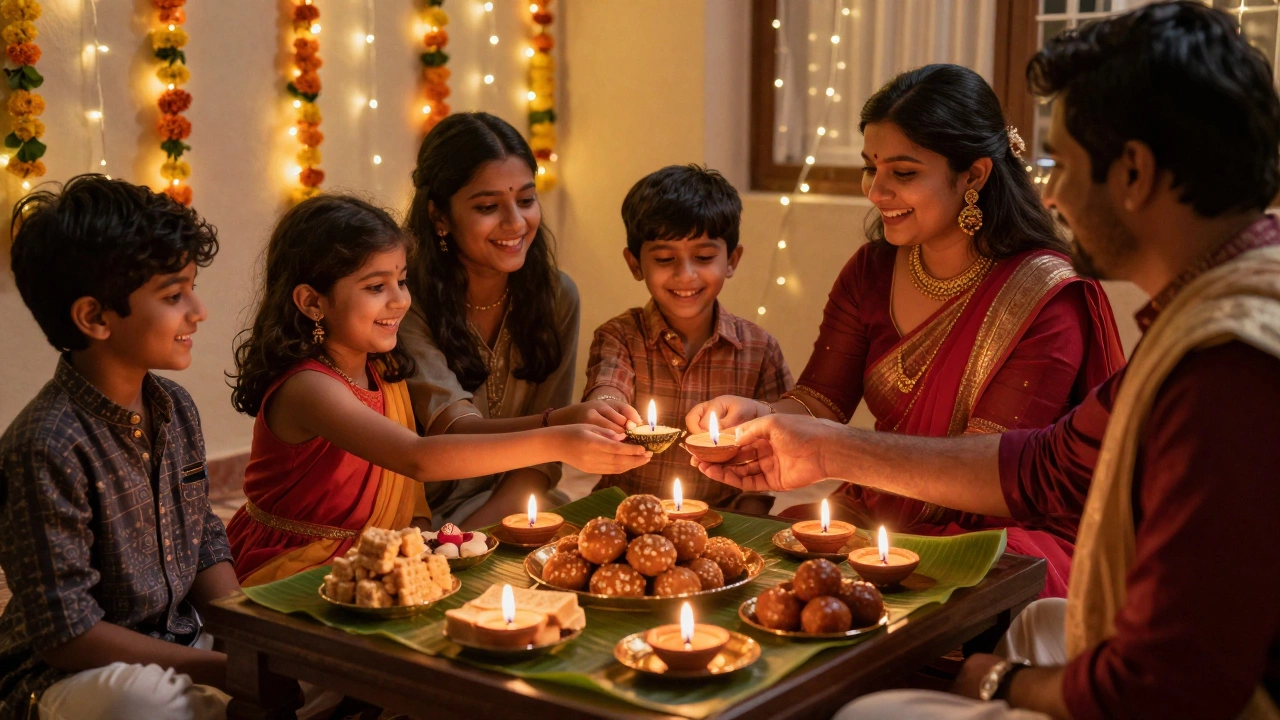
During festivals like Diwali or Navratri, Gujarati kitchens go into overdrive. But the food doesn’t get heavier-it gets more symbolic. During Navratri, many families fast. But fasting doesn’t mean eating less. It means eating differently.
Instead of wheat or rice, they use sabudana (tapioca pearls), kuttu (buckwheat flour), and singhara (water chestnut flour). Dishes like sabudana khichdi and kuttu ki puri are made with rock salt and cumin. No onion. No garlic. Just purity and flavor.
At Diwali, sweets dominate. But even here, Gujaratis avoid overly sugary treats. Chikki (jaggery and peanut brittle), laddoos made with besan and ghee, and shankarpali (crispy diamond-shaped cookies) are the stars. Each is made in large batches and shared with neighbors, not just family.
What’s Missing? Meat and Onions
Many Gujaratis are vegetarian-not because they can’t afford meat, but because of religious and cultural values. Jainism, which originated in Gujarat, strongly influences eating habits. Many avoid root vegetables like onions and garlic because they’re believed to harm microorganisms in the soil.
That doesn’t mean the food is bland. It means creativity thrives. Ginger, cumin, asafoetida, and dried mango powder (amchoor) are used to build depth. Turmeric, coriander, and chili give color and heat. The absence of meat and onions isn’t a limitation-it’s a challenge that led to some of India’s most inventive vegetarian cooking.
Drinks and Desserts That Tie It All Together
After a meal, you might be offered buttermilk with roasted cumin and mint. It’s cooling, probiotic, and helps with digestion. It’s not a drink. It’s medicine.
Desserts are light but meaningful. Shrikhand-strained yogurt sweetened with sugar and flavored with cardamom and saffron-is served chilled. Gulab jamun is common, but it’s often made with milk solids and soaked in a light syrup, not heavy sugar syrup.
And then there’s lassi. But not the sweet kind. Gujaratis prefer salted lassi, especially in summer. It’s thick, cool, and served with a pinch of black salt. It’s not a trend. It’s survival.
Why This Food Still Matters Today
In a world of fast food and imported snacks, Gujarati food holds on because it’s practical, healthy, and deeply personal. It’s not trendy. It’s timeless. You won’t find a Gujarati family that doesn’t have a recipe passed down from their grandmother. These aren’t just dishes-they’re memories.
Even in places like Brisbane or Toronto, where Gujarati communities have settled, the food hasn’t changed. It’s still made with the same spices, the same balance, the same care. Because for Gujaratis, eating isn’t just about filling the stomach. It’s about honoring home, even when you’re far away.
Is Gujarati food always vegetarian?
Most Gujarati food is vegetarian due to religious and cultural traditions, especially Jain and Hindu influences. Many families avoid meat, eggs, and even root vegetables like onions and garlic. However, coastal Gujaratis do eat fish, and some communities have non-vegetarian dishes, but these are the exception, not the rule.
Why is Gujarati food so sweet?
The sweetness in Gujarati food comes from jaggery or sugar, added to balance spicy, sour, and salty flavors. This isn’t just for taste-it’s based on Ayurvedic principles that suggest sweet foods calm the body and aid digestion. Even savory dishes like dal and curries often have a hint of sweetness to create harmony.
What’s the difference between Gujarati and Rajasthani food?
Both are vegetarian and use similar spices, but Gujarati food is known for its sweet-savory balance and use of tamarind and jaggery. Rajasthani food is drier, saltier, and uses more dairy like ghee and paneer. It also relies heavily on millet and dried lentils due to the arid climate. Gujarati meals are more varied and include steamed snacks like dhokla, while Rajasthan favors fried and baked breads like bajra roti.
Can you eat Gujarati food if you’re on a low-sugar diet?
Yes, but you’ll need to be selective. Many dishes like dhokla, thepla, and shaak are naturally low in sugar. Avoid sweets like shrikhand, gulab jamun, and jalebi. Ask for no jaggery in dal or curries-it’s often optional. Traditional Gujarati meals are balanced, so you can still enjoy the savory parts without the sweet.
What’s the best Gujarati dish to try first?
Start with dhokla. It’s light, tangy, and slightly sweet-perfect for first-timers. It’s also gluten-free, vegan, and easy to digest. Pair it with green chutney and a cup of masala chai. Once you get used to the sweet-savory mix, try undhiyu or thepla for a deeper experience.
If you want to taste real Gujarati food, don’t look for restaurants with neon signs. Look for the quiet kitchen where a grandmother is rolling thetas by hand, or the local shop where dhokla is steamed fresh every morning. That’s where the flavor lives.