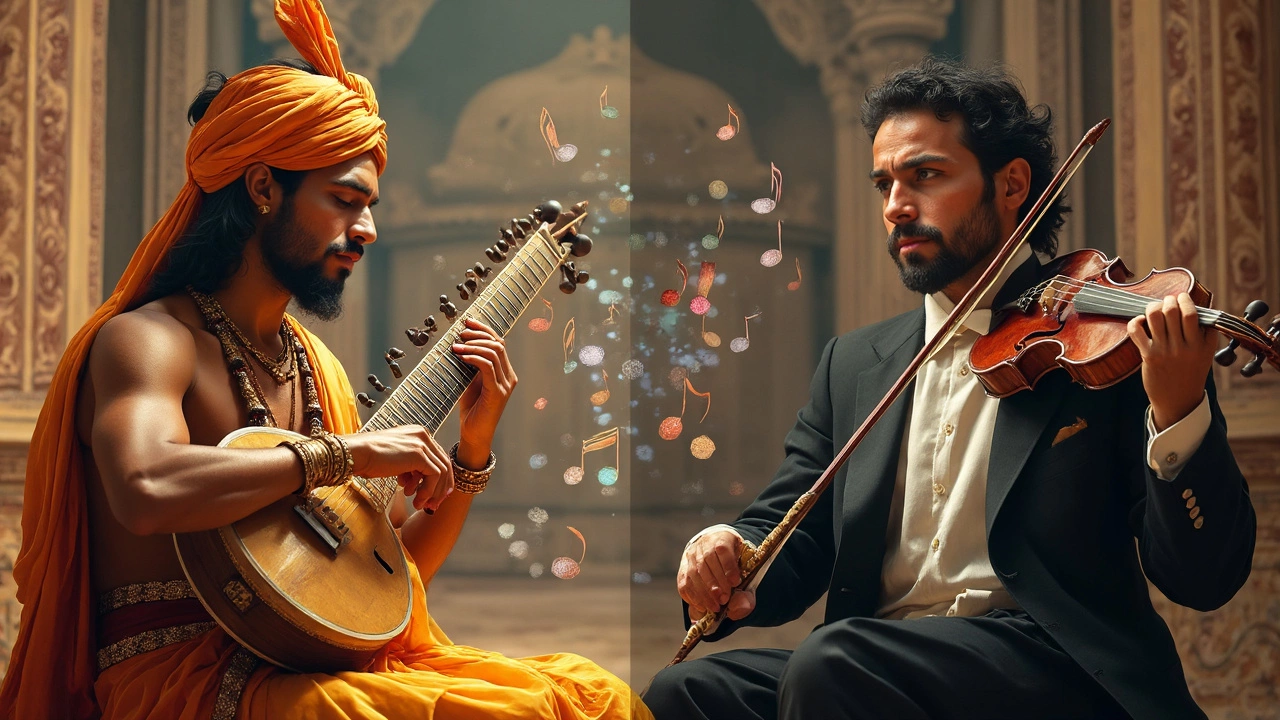
Ragas: The Soul of Indian Classical Music
When you hear a single note stretch into a wave of emotion in Indian classical music, you’re listening to a raga, a melodic framework in Indian classical music that defines specific notes, patterns, and emotional moods. Also known as melodic mode, it’s not just a scale—it’s a living structure that changes with time of day, season, and mood. Unlike Western scales that repeat predictably, a raga is a journey. It has rules: which notes to use, which to avoid, how to ascend, how to descend, and even when to sing it. A morning raga feels different from a night raga. A rainy season raga carries the weight of monsoon clouds. This isn’t theory—it’s lived experience, passed down through generations.
There are two main branches of Indian classical music where ragas come alive: Carnatic music, the classical tradition of South India, deeply rooted in temple rituals and devotional expression, and Hindustani music, the North Indian style shaped by Mughal courts and Persian influences. While both use ragas, they handle them differently. Carnatic ragas often have more complex structures and are named after ancient deities or natural elements. Hindustani ragas lean into improvisation, letting the musician breathe life into each phrase. In Tamil Nadu, you’ll hear ragas like Mohanam and Kalyani in temple chants and violin solos. In Punjab or Delhi, you’ll find Bhairavi and Yaman in sitar recitals. The same note, played differently, becomes a different emotion.
What makes ragas powerful isn’t just their structure—it’s how they connect to daily life. A mother hums a raga to soothe her child. A musician spends years mastering just one raga. A festival might open with a raga that welcomes dawn. Even when music moves into modern spaces—film scores, fusion bands, or meditation apps—the soul of the raga remains. You’ll find traces of it in songs that make you pause, in background scores that feel deeper than words. The posts here explore how ragas show up in Tamil folk traditions, how they compare to Western scales, and why some ragas are considered sacred while others are playful. You’ll also see how they’re taught, how they’ve changed over time, and why a single raga can move a crowd to tears or silence. Whether you’re new to Indian music or have listened for years, this collection reveals the hidden rules behind the beauty you already feel.