Indian Formal Attire Guide
Find Your Appropriate Formal Attire
Select your situation to see recommended Indian formal dress based on region, occasion, gender, and community.
Recommended Attire
When someone asks about the Indian formal dress code, they’re not just asking about fabric or color-they’re asking about identity, respect, and centuries of cultural tradition. Unlike Western formalwear, where a tuxedo or suit might be the universal answer, India’s formal dress code varies wildly by region, religion, occasion, and even the time of day. There’s no single rule, but there are clear patterns that have held steady for generations.
Why There’s No Single Answer
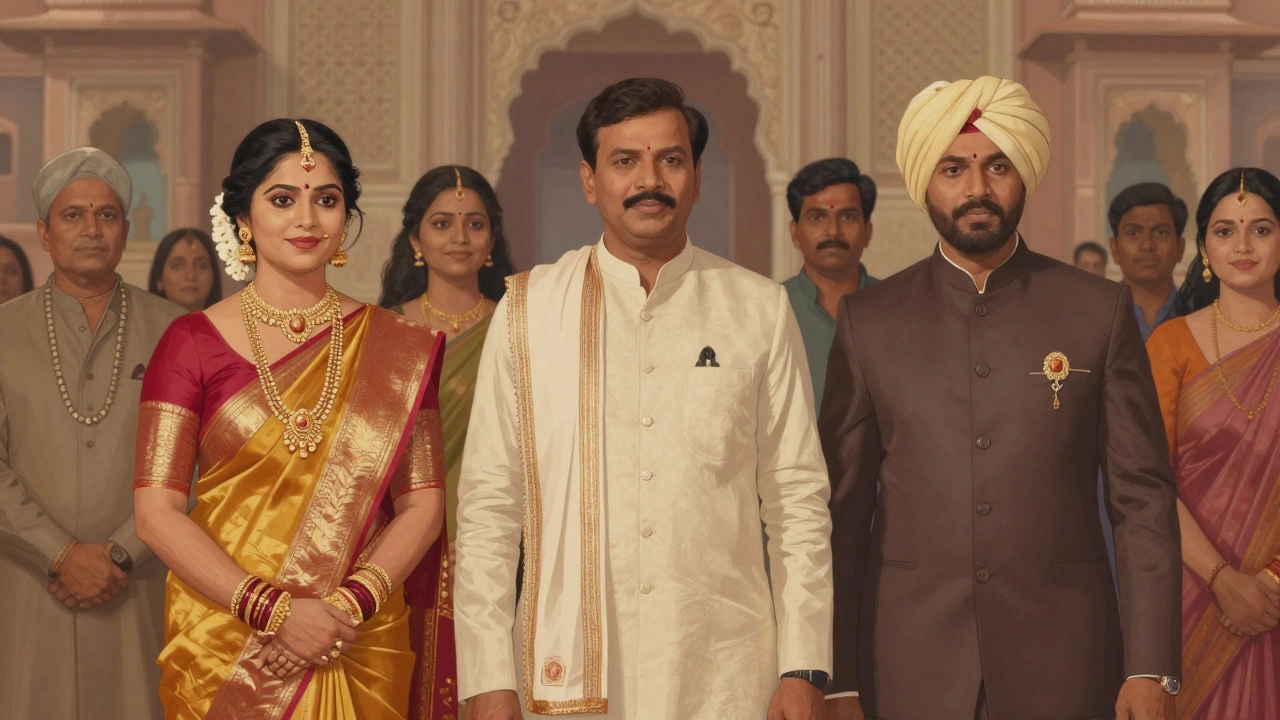
India isn’t one country when it comes to clothing-it’s over 28 states, 22 officially recognized languages, and dozens of distinct cultural practices. A man in Punjab might wear a kurta paired with a churidar and a turban for a wedding, while a woman in Tamil Nadu would choose a silk saree with gold zari borders for the same event. In Kerala, men wear a Mundu with a shirt, and women wear a Kasavu saree, plain white with a golden border. These aren’t fashion choices-they’re social codes.
Formal dress in India isn’t about looking fancy. It’s about honoring tradition, showing respect to elders, and aligning with community expectations. Wearing the wrong outfit to a religious ceremony or a family gathering can unintentionally send the wrong message. That’s why understanding regional norms matters more than following trends.
Women’s Formal Attire: The Saree and Lehenga
The saree remains the most widely recognized formal garment for women across India. But not all sarees are the same. For formal events like weddings, religious ceremonies, or state functions, women typically choose heavy silk-Banarasi from Uttar Pradesh, Kanchipuram from Tamil Nadu, or Chanderi from Madhya Pradesh. These are woven with gold or silver thread, often featuring intricate floral or peacock motifs.
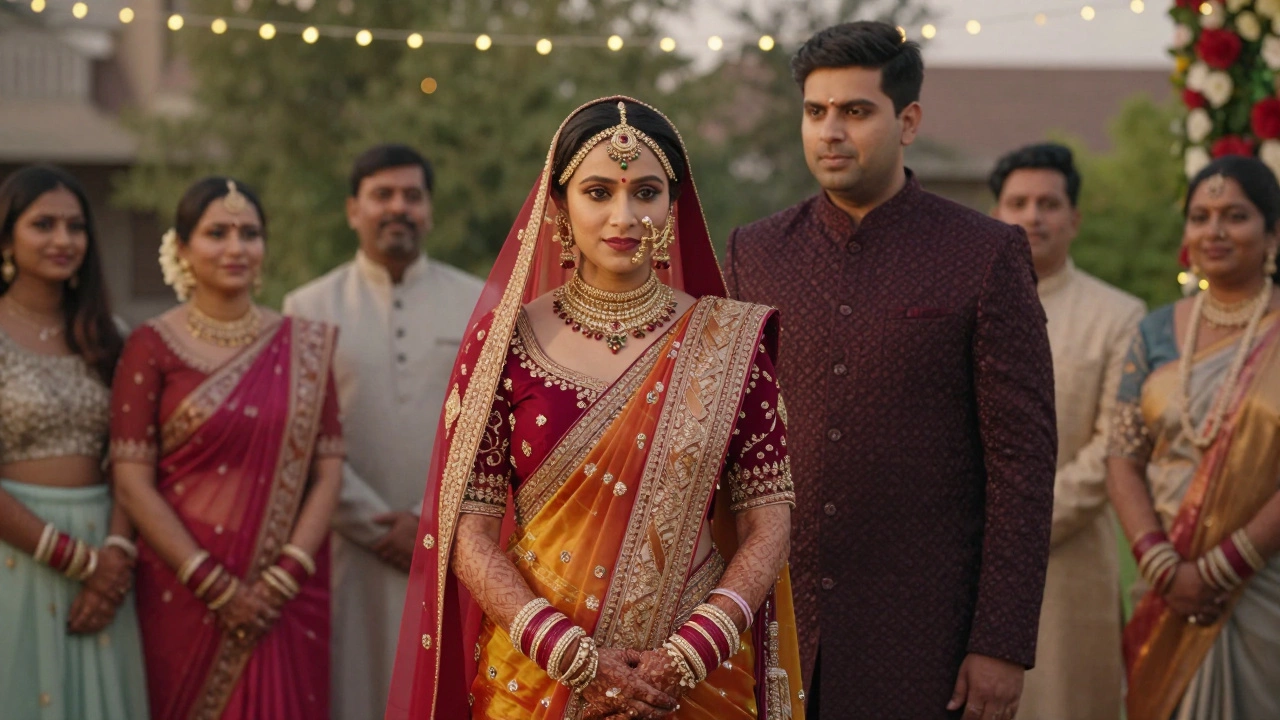
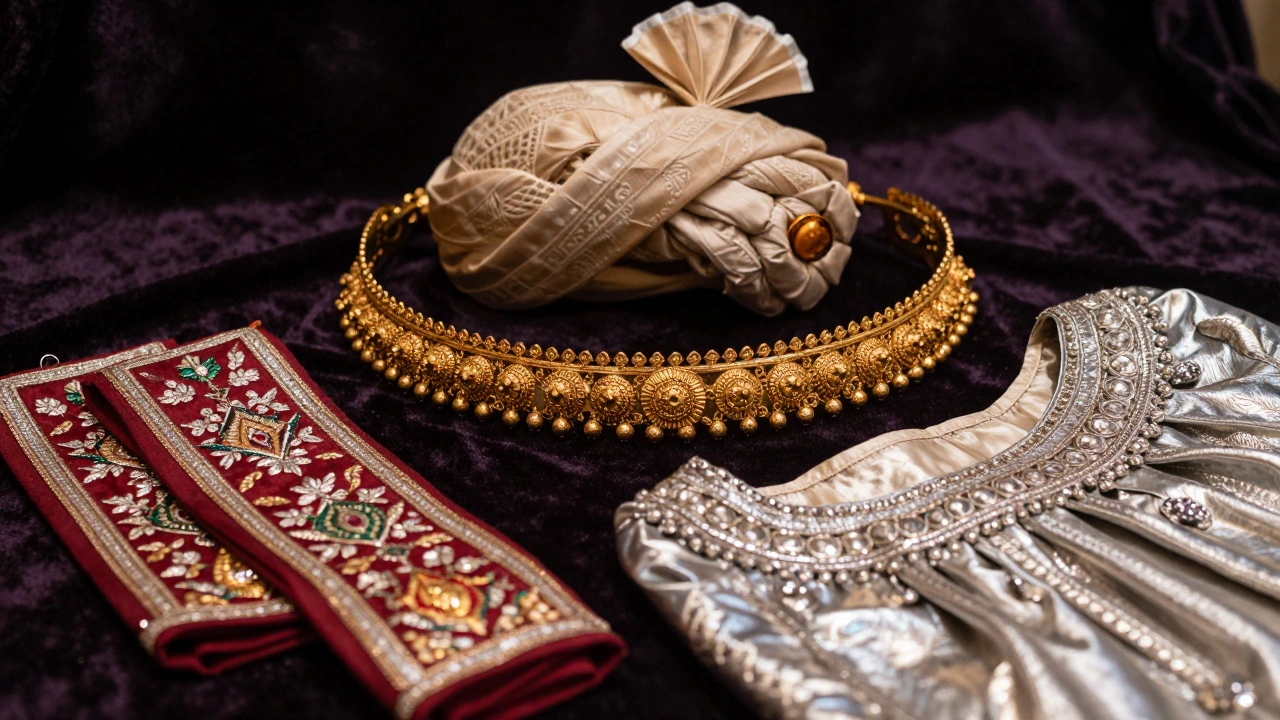
A Banarasi silk saree with a matching blouse and a jeweled maang tikka is the gold standard for brides in North India. In South India, the Kanchipuram silk saree, often in deep red or maroon, is worn with temple jewelry-large gold earrings, bangles, and a waistband called a nethi chutti.
For non-wedding formal occasions, many women now opt for a lehenga choli. This three-piece ensemble-a flared skirt, a fitted top, and a dupatta-has become popular for receptions, festivals like Diwali, and even corporate events where cultural pride is emphasized. The lehenga’s structure allows for bold embroidery, mirror work, and heavy embellishments that signal importance.
Men’s Formal Attire: Sherwani, Kurta, and Dhoti
For men, the sherwani is the pinnacle of formal wear. Originating from the Mughal courts, it’s a long, coat-like garment buttoned from neck to ankle, usually worn over a kurta and paired with churidar pants. Sherwanis are made from brocade, velvet, or silk, often in rich colors like maroon, gold, navy, or emerald. Gold or silver threadwork is common, especially for weddings.
In North India, a groom might wear a heavily embroidered sherwani with a safa (turban) and mojris (embroidered leather shoes). In Bengal, men often wear a panjabi with a dhoti and a gamchha (cotton towel) draped over the shoulder for more traditional ceremonies. In Maharashtra, the dhoti-kurta combo is still common for temple visits and family functions.
The kurta-pajama is another formal option, especially for daytime events or less religious occasions. A well-tailored, hand-embroidered kurta in silk or cotton, paired with fitted pajamas, is perfectly acceptable at formal dinners or cultural award ceremonies. It’s less ornate than a sherwani but still carries weight.
Regional Variations You Can’t Ignore
What’s formal in one state might be casual in another. In Gujarat, women wear a chaniya choli-a flared skirt with a cropped blouse-for formal events like Garba nights during Navratri. It’s colorful, sparkly, and often worn with heavy silver jewelry. In Assam, the Mekhela Chador-a two-piece draped outfit made of Assam silk-is the formal choice for weddings and government functions.
In Rajasthan, men wear a kedua (long coat) over a kurta, paired with a pagri (turban) that’s tied in a specific style depending on the family or region. In Odisha, women wear a Sambalpuri silk saree with intricate ikat patterns, often in deep reds and blacks.
These aren’t just aesthetics-they’re heritage. Each pattern, color, and fabric has meaning. For example, red in North Indian bridal wear symbolizes prosperity and fertility. White in South Indian widow’s attire signifies purity and renunciation. Black is avoided in most formal wear because it’s associated with mourning.
Modern Adaptations and What’s Acceptable Today
Today, formal Indian dress has evolved. Younger generations blend tradition with modernity. A woman might wear a silk saree with a cropped jacket and heels for a corporate gala. A man might wear a slim-fit sherwani without the traditional turban, opting for a stylish brooch instead.
But even these adaptations follow rules. The fabric must still be rich. The embroidery must still be intentional. The fit must still be respectful-not too tight, not too loose. The goal isn’t to be trendy. It’s to be appropriate.
Western suits are sometimes worn at urban weddings, especially in mixed-cultural families. But even then, they’re often paired with Indian accessories-a brooch shaped like a peacock, a pocket square with a traditional motif, or a pair of juttis instead of dress shoes.
What to Avoid
There are clear no-nos in formal Indian dress. Avoid synthetic fabrics like polyester for weddings or religious events-they look cheap and don’t drape well. Avoid overly casual prints like cartoon characters or slogans. Don’t wear white to a Hindu wedding unless you’re the bride’s mother (and even then, it’s rare). Don’t wear open-toed sandals to a temple ceremony.
Accessories matter. A woman should never wear dangling earrings to a formal event if she’s already wearing a heavy maang tikka-it’s considered too much. Men should never wear a watch with a leather strap to a traditional ceremony; a gold or silver band is preferred.
When in Doubt: Ask, Observe, Respect
If you’re invited to a formal Indian event and aren’t sure what to wear, the best move is simple: ask a family member or host. Watch what others wear. Don’t guess. Don’t assume.
Indian formal dress isn’t about impressing-it’s about belonging. It’s about honoring the people who invited you. Wearing the right outfit shows you understand that this isn’t just an event-it’s a cultural moment.
Is a saree always formal for women in India?
Not always. While a silk saree with heavy embroidery is formal, a cotton or printed saree worn at home or for casual outings isn’t. Formal sarees are made from silk, Banarasi, Kanchipuram, or Chanderi, with gold or silver thread. They’re paired with matching jewelry and a well-tailored blouse. The fabric and embellishment determine the formality.
Can men wear suits at Indian weddings?
Yes, but it’s not traditional. Suits are common in urban, interfaith, or Western-influenced weddings. However, even then, men often add Indian touches-a brooch, juttis, or a pocket square with a traditional pattern. A sherwani is still the expected formal choice for close family and religious ceremonies.
What colors are considered formal in Indian dress?
Rich, deep colors are formal: maroon, gold, navy, emerald, and deep red. White is reserved for widows or specific regional customs. Black is avoided at weddings and celebrations. Bright pastels like light pink or baby blue are considered casual. Gold and silver embroidery are standard for formal wear, regardless of the base color.
Are there formal dress codes for non-Hindu communities in India?
Yes. Muslim men wear a sherwani or achkan with a topi (cap) for weddings. Sikh men wear a kurta with a dhoti or churidar and a turban. Christian women in Goa might wear a white lace gown with a traditional veil for church ceremonies. Each community has its own formal norms, often blending local traditions with religious customs.
Do accessories matter as much as the outfit?
Absolutely. In Indian formal dress, accessories complete the look. A woman without a maang tikka or bangles might look incomplete, even in a perfect saree. A man without juttis or a turban can appear underdressed, even in a sherwani. Jewelry isn’t optional-it’s part of the code. The right accessories show attention to detail and cultural awareness.