Cultural Wealth Calculator
Define Your Song
Analysis Report
Enter details to calculate the "Richness Score" of your selected folk tradition.
When you hear the phrase "the richest song in the world," your mind might jump to chart-topping pop hits or blockbuster movie soundtracks. You might think of Taylor Swift, The Beatles, or perhaps a massive Bollywood anthem that dominated radio waves for years. But what if I told you that true wealth isn’t measured in streaming numbers or royalty checks alone? What if the richest song is one that has survived centuries, united millions, and preserved an entire culture’s soul?
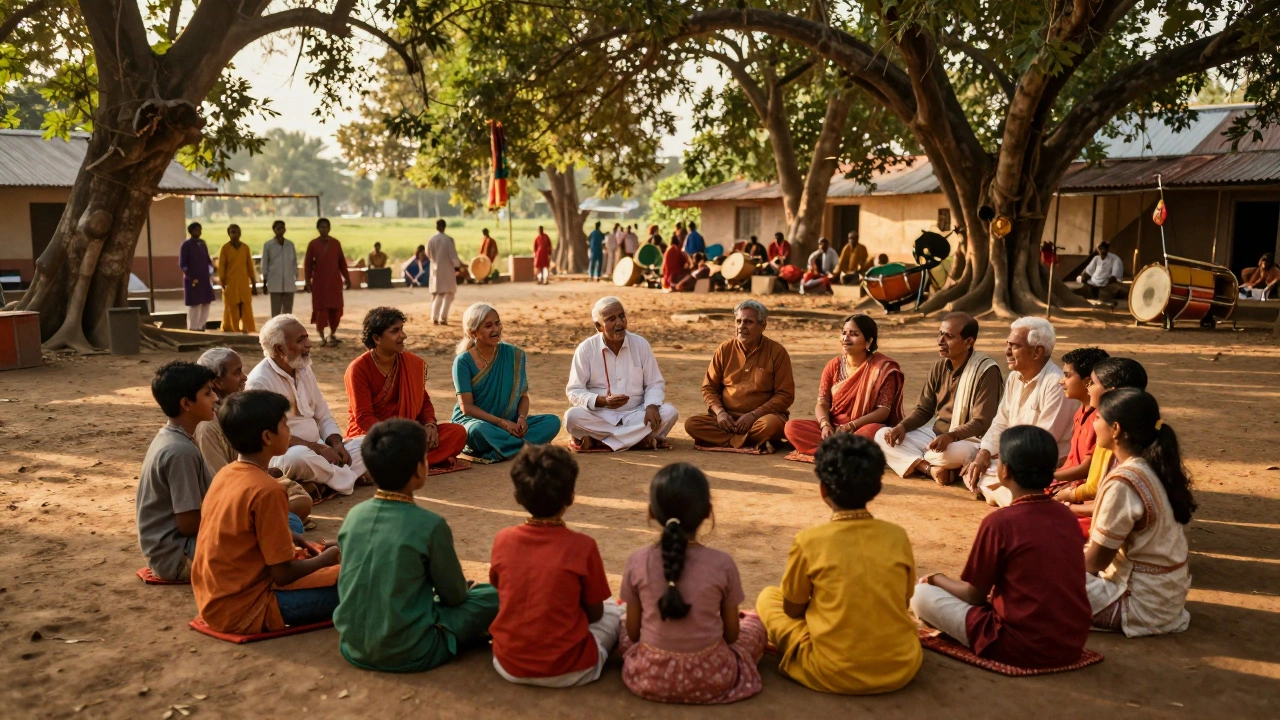
In the context of Indian folk songs are traditional musical expressions passed down through generations, reflecting local customs, languages, and lifestyles, the concept of "richness" takes on a completely different meaning. These songs aren’t just melodies; they are living histories, economic lifelines for rural communities, and powerful tools for social change. They carry a wealth that no bank account can match.
Redefining Wealth in Music
We need to shift our perspective on what makes a song "rich." In the modern music industry, wealth is often calculated by streams, downloads, and concert ticket sales. A hit single might generate millions of dollars for its creators. But this financial metric ignores the deeper value of music as a cultural artifact.
Consider the difference between a viral TikTok track and a folk hymn sung at every wedding in a village for three hundred years. The former might make its creator wealthy overnight, but it may be forgotten in six months. The latter, however, sustains an entire community’s identity. It teaches children their language, connects them to their ancestors, and provides a sense of belonging. This kind of endurance is a form of richness that transcends currency.
In India, where diversity is not just a buzzword but a daily reality, folk music serves as a bridge across linguistic and regional divides. Each state, and often each district, has its own distinct folk traditions. From the Bhangra beats of Punjab to the Lavani rhythms of Maharashtra, these songs are embedded in the fabric of everyday life. They are performed during harvest festivals, religious ceremonies, and seasonal celebrations. Their continuity ensures that cultural knowledge is not lost but actively practiced and renewed.
The Economic Reality of Folk Artists
While we celebrate the cultural wealth of folk music, we must also address the economic reality faced by many folk artists. Unlike mainstream musicians who benefit from global distribution networks and digital platforms, folk performers often rely on local patronage and live performances. Their income can be unpredictable, especially in rural areas where economic opportunities are limited.
This disparity highlights a critical issue: how do we ensure that the creators of our most valuable cultural heritage are fairly compensated? In recent years, there have been efforts to digitize folk music and bring it to wider audiences. Platforms like Spotify and Apple Music now feature curated playlists of Indian folk songs, exposing them to listeners worldwide. However, the revenue generated from these streams rarely reaches the original artists due to complex copyright issues and lack of formal registration.
For example, many folk songs are considered "public domain" because they were never copyrighted when they were first created. This means that anyone can record and sell versions of these songs without paying royalties to the communities that originated them. While this allows for greater accessibility, it also perpetuates a system where the cultural wealth of marginalized groups is exploited for commercial gain.
Cases of Cultural Richness: Iconic Folk Traditions
To understand the depth of richness in Indian folk music, let’s look at specific examples. One such tradition is Dhrupad, a classical singing style that has roots in ancient Vedic chants. Though technically classified as classical, Dhrupad shares many characteristics with folk music, including its emphasis on spiritual devotion and oral transmission. Its influence can be seen in various regional folk styles, demonstrating how interconnected these musical forms are.
Another example is the Sufi Kalam of Sindh and Rajasthan. These mystical poems set to music explore themes of love, longing, and divine union. They transcend religious boundaries, appealing to Hindus, Muslims, and Sikhs alike. The universality of Sufi Kalam makes it incredibly rich in terms of social cohesion and interfaith harmony.
Then there is Baul music from West Bengal and Bangladesh, known for its philosophical lyrics and unique instrumentation. Baul singers, often wandering minstrels, use their songs to question societal norms and seek spiritual truth. Their music is deeply personal yet universally resonant, offering insights into the human condition that remain relevant today.
| Tradition | Region | Key Characteristics | Cultural Impact |
|---|---|---|---|
| Bhangra | Punjab | High-energy dance, dhol drum | Celebrates harvest, promotes unity |
| Lavani | Maharashtra | Rhythmic footwork, expressive gestures | Empowers women, tells historical stories |
| Sufi Kalam | Sindh/Rajasthan | Mystical poetry, cross-religious appeal | Fosters interfaith dialogue |
| Baul | West Bengal/Bangladesh | Philosophical lyrics, ektara instrument | Challenges social norms, seeks spirituality |
The Role of Technology in Preserving Folk Heritage
Technology plays a dual role in the preservation and dissemination of folk music. On one hand, it offers unprecedented opportunities to document and share these traditions with a global audience. Digital archives, online courses, and virtual concerts allow people who are far removed from their roots to connect with their heritage. For instance, initiatives by organizations like the National Institute of Design in India have created comprehensive databases of folk songs, complete with audio recordings, transcriptions, and contextual information.
On the other hand, technology can also lead to the dilution of authentic folk practices. When folk songs are remixed with electronic beats or adapted for commercial purposes, they risk losing their original meaning and context. This phenomenon, often referred to as "cultural appropriation," raises ethical questions about who benefits from the popularity of these songs and whether the source communities are respected and credited.
To strike a balance, it is essential to involve folk artists in the digitalization process. By giving them control over how their music is presented and monetized, we can ensure that technological advancements serve to empower rather than exploit. Collaborative projects between tech companies and grassroots artists can create sustainable models for preserving and promoting folk music.
Why This Matters Today
In a rapidly changing world, where globalization threatens to homogenize cultures, the richness of folk music becomes even more significant. It reminds us of our shared humanity and the diverse ways in which people express joy, sorrow, hope, and resistance. It challenges us to value intangible heritage as much as tangible assets.
As consumers of music, we have a responsibility to support artists who keep these traditions alive. This means seeking out authentic recordings, attending live performances, and advocating for policies that protect intellectual property rights for traditional knowledge holders. It also means educating ourselves about the origins and meanings behind the songs we listen to.
Ultimately, the richest song in the world is not defined by its price tag but by its ability to enrich lives. Whether it’s a Bhangra beat that brings people together in celebration or a Sufi verse that offers solace in times of trouble, these songs hold a treasure trove of wisdom and emotion. They are the heartbeat of our collective memory, beating strong despite the odds.
Is there a single "richest" song in the world?
No, there is no single song that can be definitively called the "richest" because wealth in music is multifaceted. Financially, some pop songs earn billions, but culturally, folk songs like those from India’s diverse traditions hold immeasurable value through their longevity, social impact, and role in preserving heritage.
How do Indian folk songs contribute to cultural wealth?
Indian folk songs preserve local languages, histories, and values. They are performed during key life events and festivals, reinforcing community bonds and transmitting knowledge across generations. This continuity creates a deep, non-monetary wealth that strengthens cultural identity.
Are folk artists financially compensated for their work?
Often, no. Many folk songs are in the public domain or lack formal copyright protection, meaning artists receive little to no royalties even when their music is widely streamed or used commercially. Efforts are underway to improve compensation through better legal frameworks and direct artist partnerships.
What is the difference between folk music and classical music in India?
Classical music in India, such as Hindustani or Carnatic, follows strict rules of ragas and talas and is often taught formally. Folk music is more flexible, rooted in local traditions, and passed down orally. It reflects everyday life, regional dialects, and communal experiences rather than abstract musical theory.
How can I support Indian folk music?
You can support folk music by purchasing authentic recordings directly from artists, attending live performances, sharing their work on social media, and supporting NGOs or institutions dedicated to preserving indigenous arts. Educating yourself about the cultural context of the music also helps honor its origins.