Explore Tamil Culture: Festivals, Food & Traditions
Select a category to discover key aspects of Tamil heritage, from ancient languages to vibrant festivals.
Imagine a civilization that has been writing poetry, building temples, and debating philosophy for over two thousand years. That is Tamil culture, which is the living heritage of the Tamil people, rooted in one of the world's oldest classical languages and a distinct Dravidian identity. It isn't just about wearing bright silk sarees or eating rice with curry. It is a complex web of linguistic pride, spiritual depth, artistic expression, and social rituals that have survived empires, colonization, and modernization.
If you’ve ever wondered why a festival like Pongal feels different from Diwali, or why the music at a temple sounds so ancient yet familiar, you are touching the edges of this rich tradition. Today, we’re going to peel back the layers to understand what actually makes Tamil culture tick, beyond the stereotypes.
The Backbone: The Tamil Language
You cannot talk about Tamil culture without talking about Tamil language, which is a Dravidian language with a continuous literary tradition spanning over 2,000 years. In fact, for many Tamils, the language is not just a tool for communication; it is an ancestor. They call it "Thaai" (Mother). This reverence shapes every aspect of daily life.
Unlike many other cultures where language evolves rapidly with slang and pop culture, Tamil speakers often maintain a strong connection to their classical roots. You will hear phrases from Sangam literature, which is ancient Tamil poetry dating back to 300 BCE to 300 CE, known for its secular themes and emotional depth. quoted in everyday conversations. This creates a unique cultural continuity. When a grandmother tells a story using metaphors from 1,500-year-old poems, she isn't being pretentious; she is keeping the lineage alive.
This linguistic pride also means that Tamil culture is fiercely protective of its script and vocabulary. While English is widely spoken in urban centers like Chennai, there is a constant push to preserve pure Tamil terms in education and media. This tension between modernity and tradition is a defining feature of contemporary Tamil identity.
Festivals: More Than Just Celebrations
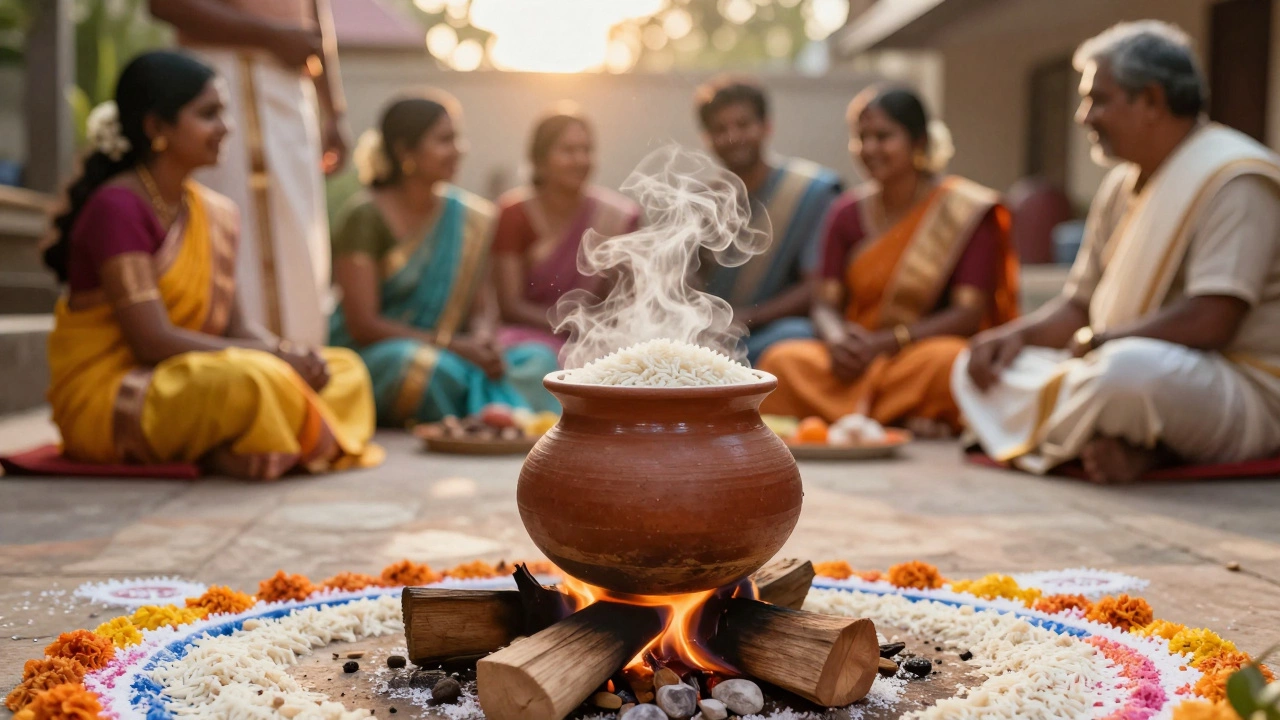
Festivals in Tamil Nadu are not just breaks from work; they are structured events that reinforce community bonds and agricultural cycles. The most prominent is Pongal, which is a four-day harvest festival celebrated in January, marking the sun's transition into Capricorn. Unlike religious festivals that focus on deities, Pongal is deeply tied to nature and gratitude.
| Festival | Timing | Core Meaning |
|---|---|---|
| Pongal | January 14-17 | Harvest gratitude, honoring the Sun God and cattle |
| Thai Pongal | January 14 | Cooking the first new rice of the season in a new pot |
| Kanum Pongal | January 17 | Family gatherings and kite flying |
| Tamil New Year (Puthandu) | April 14 | Renewal, prosperity, and viewing auspicious items first |
During Pongal, families clean their homes, draw colorful Kolam (rangoli) patterns at the entrance, and cook the titular dish-rice boiled in milk with jaggery. The act of letting the milk overflow symbolizes abundance. If you miss this moment, it’s considered bad luck. This attention to ritual detail shows how deeply superstition and hope are woven into the fabric of the culture.
Another key event is Tamil New Year, which is celebrated in mid-April, marking the beginning of the traditional Tamil calendar year. On this day, people wake up early and look at nine auspicious items (like gold, coins, and fruits) before leaving the house. It’s a psychological reset button for the year ahead.
Food: The Heart of Hospitality
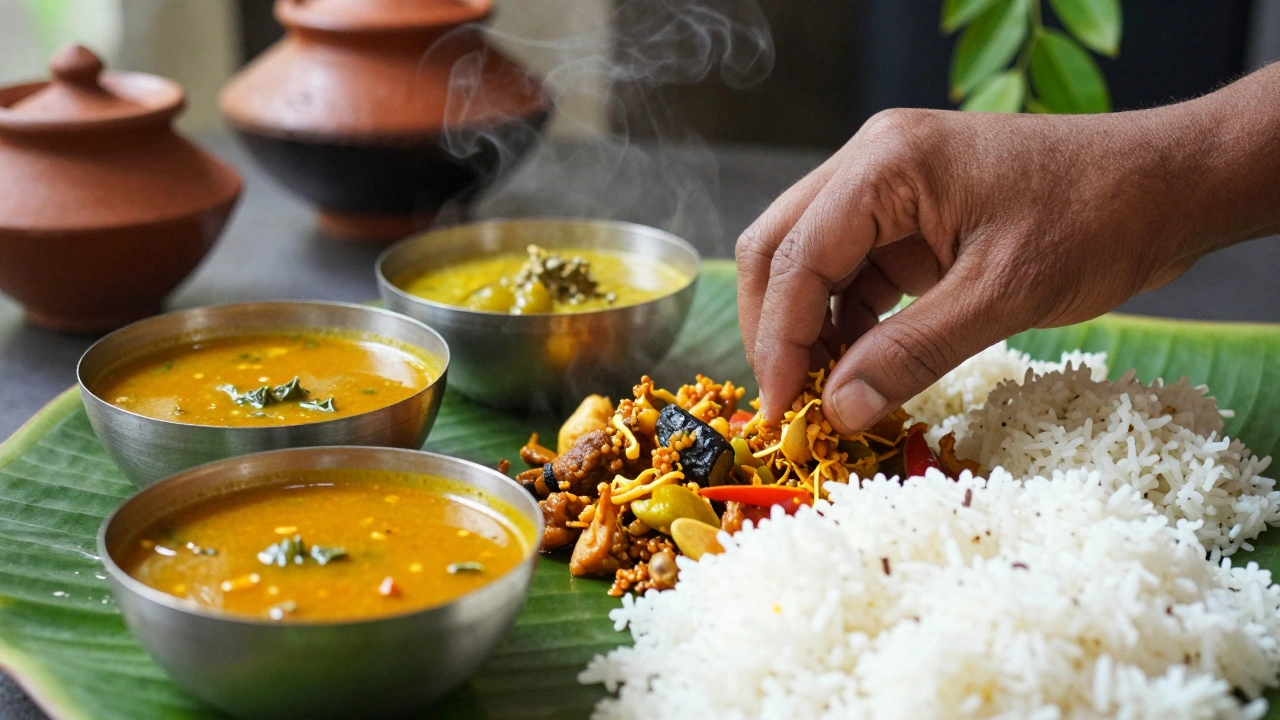
In Tamil culture, food is love, medicine, and status all rolled into one. The staple diet revolves around rice, but the magic lies in the accompaniments. A typical meal includes sambar (a lentil-based stew), rasam (a tangy soup), kootu (vegetable and lentil mix), and poriyal (dry vegetable stir-fry).
One thing that sets Tamil cuisine apart is the emphasis on fermentation. Idli, dosa, and appam are made from fermented rice and lentil batter. This process not only improves digestibility but also adds a distinct sour taste that Tamils crave. If you serve non-fermented idlis to a Tamil person, they might politely say they prefer them "crispy" or "soft," but internally, they are mourning the lack of proper fermentation.
Feeding guests is a sacred duty. If someone comes to your home, you don’t ask if they want food; you assume they are hungry and feed them. Refusing food can be seen as rejecting hospitality. This extends to weddings and funerals, where large-scale community cooking takes place. The smell of tamarind and curry leaves frying in coconut oil is the scent of home for millions.
Arts: From Temple Walls to Stage Lights
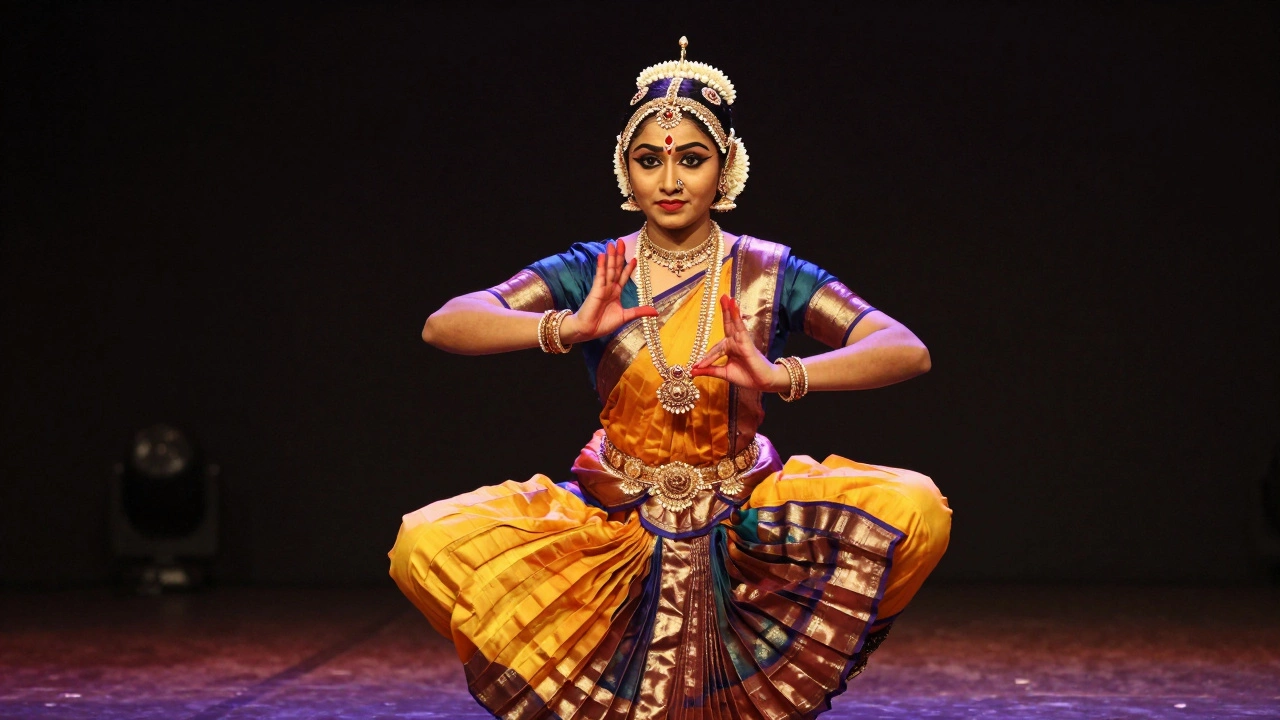
Tamil culture has produced some of India’s most sophisticated art forms. Bharatanatyam, which is a classical dance form originating in Tamil Nadu, characterized by fixed upper torso posture, bent knees, and intricate footwork. is perhaps the most famous. Originally performed in temples by devadasis (temple dancers), it has evolved into a global stage performance. The dance is not just movement; it is storytelling through mudras (hand gestures) and abhinaya (expression).
Then there is Carnatic music, which is a system of Hindu music prevalent in Southern India, known for its improvisational complexity and devotion. While shared across South India, Tamil Nadu is its heartland. Concerts are held regularly, especially during weekends and festivals. The music is deeply spiritual, often dedicated to gods like Shiva and Vishnu, but it also explores human emotions like love and separation.
Don’t overlook folk arts. Therukoothu (street theater) and Karagattam (balancing pots on head while dancing) are vibrant, raw expressions of rural life. These performances are often linked to local deities and involve intense physical endurance. They remind us that Tamil culture is not monolithic; it varies greatly between urban elites and rural communities.
Social Structure and Values
Traditionally, Tamil society was organized around joint families, where multiple generations lived under one roof. Elders commanded respect, and decisions were made collectively. While nuclear families are now common in cities, the value of respecting elders remains strong. Greeting an elder by touching their feet is still a common practice, symbolizing humility and seeking blessings.
Education is highly prized. There is a saying: "A house without books is like a body without a soul." Families invest heavily in schooling, often prioritizing engineering, medicine, or IT careers. This drive for academic excellence has led to a significant Tamil diaspora worldwide, from Singapore to Canada.
However, caste dynamics still play a role, though less overtly than in the past. Social interactions, marriage alliances, and even political affiliations can be influenced by caste backgrounds. Efforts to promote social equality continue, but the shadow of historical hierarchy persists in subtle ways.
Modern Challenges and Evolution
Like any living culture, Tamil culture is changing. Globalization brings both threats and opportunities. Younger generations are more exposed to Western media, leading to shifts in language use and social norms. English is increasingly dominant in professional settings, raising concerns about language erosion.
Yet, there is also a resurgence of interest in traditional values. Yoga, meditation, and Ayurveda are gaining popularity globally, and Tamils are proud to claim these as part of their heritage. Digital platforms are helping preserve folk songs, dances, and stories that might otherwise have been lost.
The challenge lies in balancing progress with preservation. How do you keep the spirit of Sangam poetry alive in the age of TikTok? How do you maintain the sanctity of temple rituals while adapting to modern hygiene standards? These are questions every Tamil family grapples with today.
Is Tamil culture the same as Indian culture?
No, Tamil culture is a distinct subset of Indian culture. While it shares some pan-Indian elements like Hinduism and yoga, it has unique features such as the Tamil language, specific festivals like Pongal, and art forms like Bharatanatyam. It belongs to the Dravidian cultural sphere, which differs significantly from the Indo-Aryan cultures of North India.
Why is the Tamil language so important to the culture?
The Tamil language is seen as a symbol of identity and pride. With a literary history dating back over 2,000 years, it is considered one of the world's oldest living languages. For Tamils, preserving the language is equivalent to preserving their ancestors' legacy and resisting cultural assimilation.
What is the difference between Pongal and Diwali?
Diwali is primarily a festival of lights celebrating the victory of good over evil, with strong religious significance. Pongal, on the other hand, is a harvest festival focused on gratitude towards nature, the sun, and cattle. It is more secular and agrarian in origin, centered around cooking and sharing food rather than lighting lamps.
Are Tamils vegetarian?
Dietary habits vary widely among Tamils. Many are vegetarian, especially those from Brahmin and certain non-Brahmin communities who follow strict Hindu dietary codes. However, meat-eating is also common, particularly chicken, mutton, and seafood, depending on regional and community traditions. There is no single "Tamil diet."
How does Tamil culture influence daily life in cities like Chennai?
Even in metropolitan areas, Tamil culture influences daily routines through language, food, and festivals. People greet each other in Tamil, eat traditional meals, and celebrate Pongal and New Year. Temples remain central to community life, and classical music concerts are popular weekend activities. However, urban life also introduces faster paces and greater exposure to global trends.