Indian Family Traditions Quiz
How Well Do You Know Indian Family Traditions?
Answer these 5 questions based on the article about Indian family values and daily rituals.
1. What do most Indian families do every morning before anyone leaves the house?
2. How is respect demonstrated during mealtimes according to the article?
3. What is a common practice for children when greeting elders?
4. Why do Indian families maintain multiple languages at home?
5. How do Indian families abroad maintain traditions?
Your Score:
Indian family traditions aren’t just about festivals or arranged marriages. They’re the quiet routines that happen every morning before sunrise, the way grandparents tell stories over steaming chai, and how dinner is never eaten until everyone is seated-even if it means waiting ten extra minutes. These aren’t customs from ancient texts. They’re alive, practiced in tiny apartments in Mumbai, farmhouses in Punjab, and even in Brisbane suburbs where Indian families live thousands of miles from home.
The Home Is the Temple
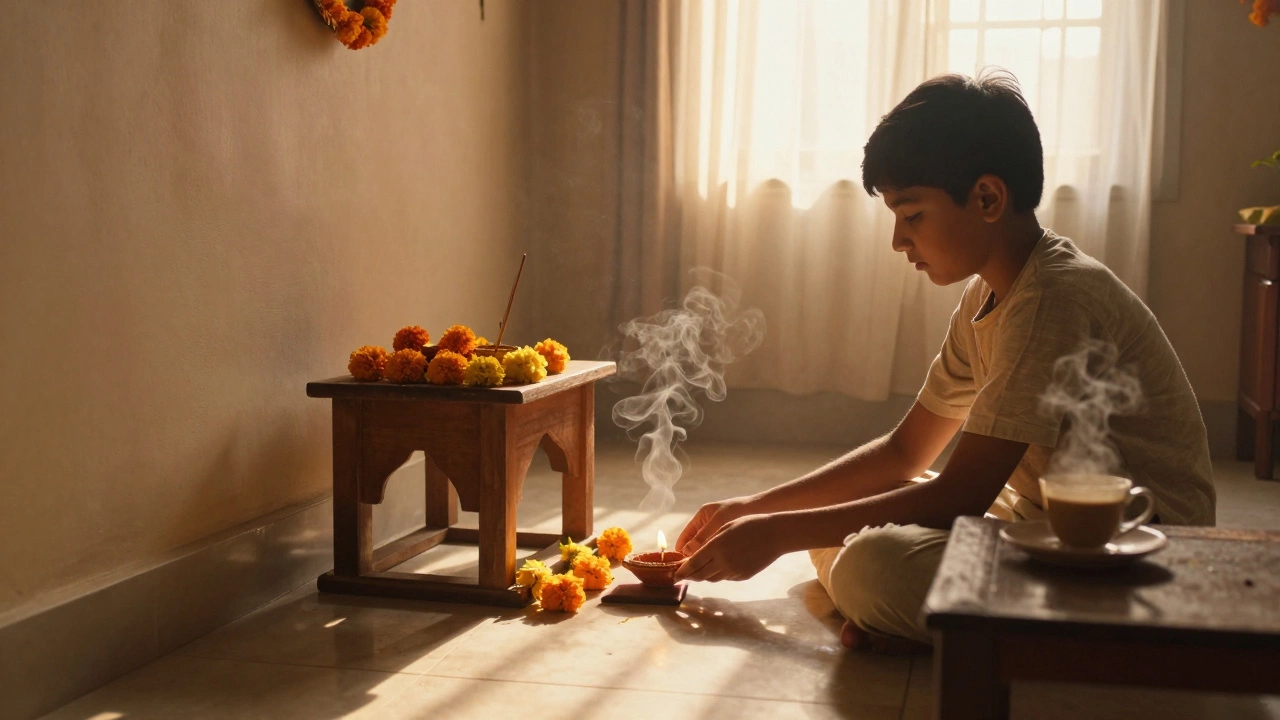
In most Indian households, the home isn’t just a place to sleep and eat. It’s a sacred space. Every morning, before anyone leaves the house, someone lights a diya near the altar. It might be the mother, the eldest daughter, or even the teenage boy who’s been assigned the task this week. The flame isn’t just symbolic-it’s a promise. A promise that the day starts with respect, gratitude, and awareness of something bigger than the self.
This ritual isn’t limited to Hindu families. Muslim families in Kerala place a copy of the Quran on a clean cloth before breakfast. Christian families in Goa say grace before meals. Sikh families in Delhi recite a short prayer from the Guru Granth Sahib. The form changes, but the intention doesn’t: the home is where the divine is welcomed daily.
Mealtimes Are Sacred
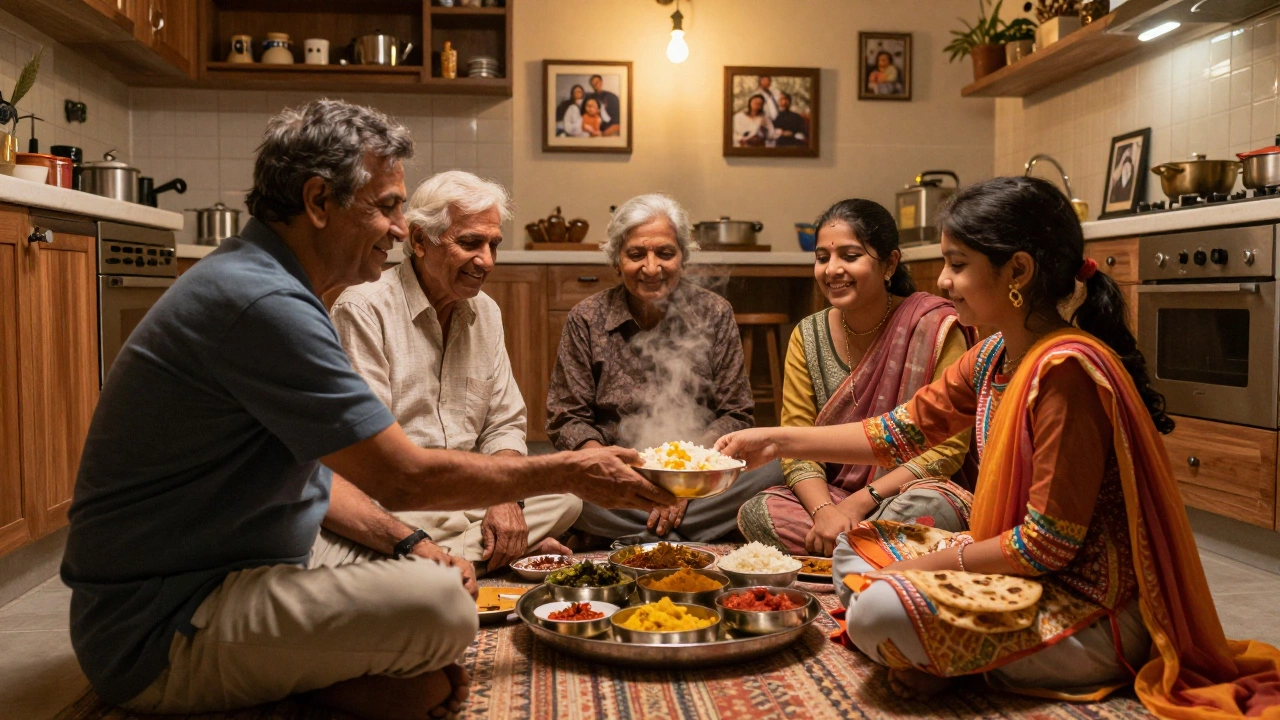
Food in Indian homes isn’t just fuel. It’s connection. Eating together isn’t optional-it’s non-negotiable. Even if someone is working late, they’ll eat after the rest, but they’ll still eat with the family. No one sits down until the elders are served. The youngest child serves the oldest first. This isn’t about hierarchy. It’s about honoring experience.
On Sundays, many families prepare a special meal-maybe khichdi in Uttar Pradesh, fish curry in Bengal, or dal chawal in Rajasthan. The recipe is passed down, but the way it’s made changes slightly each time. One grandmother adds a pinch of jaggery. Another uses homemade ghee. These small differences aren’t mistakes. They’re memories. Each bite carries a story.
Leftovers? They’re never thrown out. They’re saved for the next day. Or given to a neighbor. Or packed for someone who couldn’t make it to dinner. Waste is seen as disrespect-not just to food, but to the effort that went into making it.
Respect Isn’t a Rule. It’s a Habit.
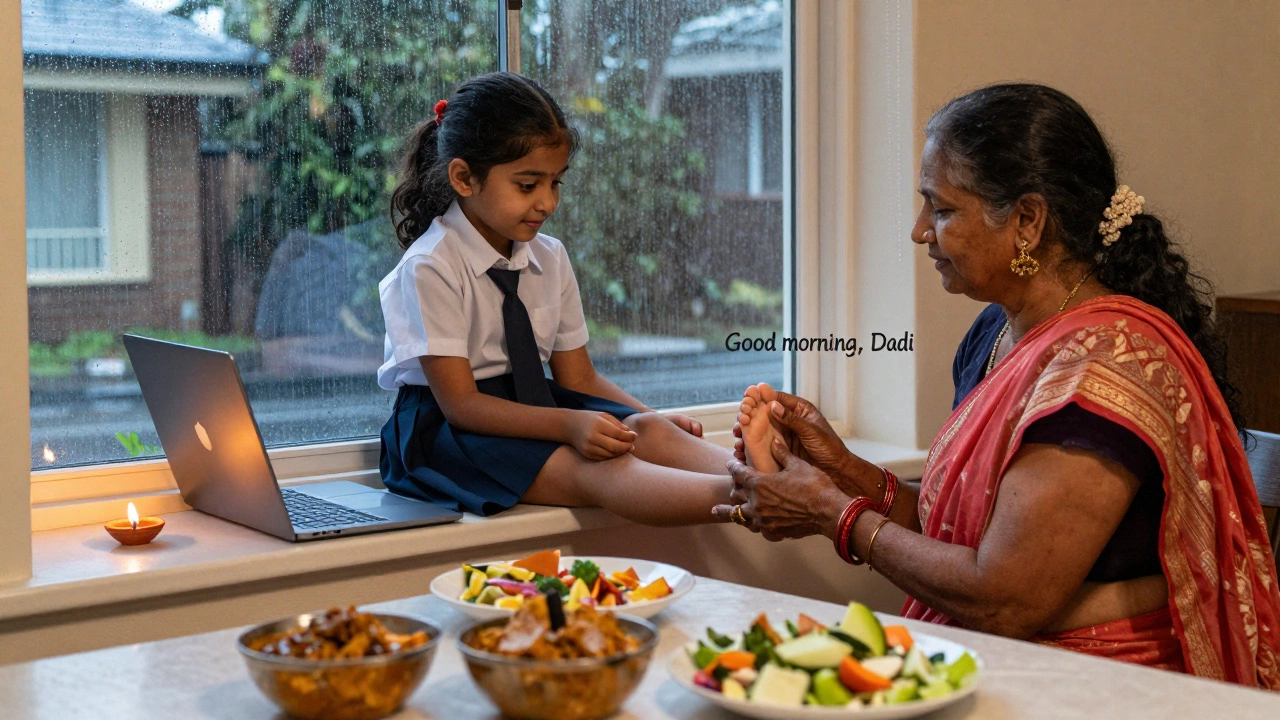
Touching feet isn’t just for weddings or festivals. In many homes, children still touch the feet of parents, grandparents, and even uncles and aunts when they come home or before leaving for school. It’s not performative. It’s automatic. Like saying hello.
Younger family members don’t interrupt elders. They wait. They listen. They respond with ‘ji’-a word that means yes, I hear you, I respect you. It’s not a formality. It’s a way of being. In cities, this is fading a little. But in homes where grandparents live with their children, it’s still the norm.
Even in Australia, Indian families keep this alive. A 12-year-old in Brisbane will still say ‘Good morning, Dadi’ before turning on her laptop. She won’t call her mother by her first name. She’ll say ‘Amma’ or ‘Mummy ji’. The language isn’t outdated. It’s armor. It keeps identity intact.
Marriage Isn’t Just Two People
When an Indian family plans a wedding, they’re not just arranging a ceremony. They’re merging two families. The bride’s family doesn’t just hand over a daughter. They welcome a new son or daughter-in-law. The groom’s family doesn’t just gain a wife. They gain a daughter.
That’s why the pre-wedding rituals are so detailed. The engagement isn’t just a ring exchange. It’s a formal meeting with both families, where gifts are exchanged, and expectations are discussed. The bride’s mother might give the groom’s mother a set of handmade saris. The groom’s father might gift the bride’s father a framed family photo.
After the wedding, the bride doesn’t just move to a new house. She moves into a new role. She learns the family’s cooking style, their prayer habits, how they celebrate Diwali. It’s not about changing who she is. It’s about adding to her identity.
Grandparents Are the Living Library
Most Indian children grow up with at least one grandparent living in the same house. That’s not a luxury. It’s the norm. And those grandparents aren’t just babysitters. They’re storytellers, teachers, and emotional anchors.
They teach children how to make pickles from scratch. They tell them about the Partition, the monsoons of their childhood, the first time they saw a train. They sing old folk songs that aren’t on Spotify. They correct pronunciation-not to be harsh, but to preserve the language.
In many homes, bedtime isn’t about reading a book. It’s about hearing a myth. Not the sanitized version from school. The real one-the one where the demon isn’t just defeated, but forgiven. Where gods cry. Where heroes make mistakes.
These stories aren’t just entertainment. They’re moral lessons wrapped in metaphor. And they stick. A child who hears the story of King Harishchandra, who gave up everything for truth, won’t forget what honesty means-even when no one’s watching.
Language Is a Lifeline
Most Indian families speak more than one language at home. Hindi, Tamil, Punjabi, Bengali, Marathi-the list goes on. But even in cities where English is the default, families make sure their children know the mother tongue.
Why? Because language carries culture. The word ‘pyaar’ isn’t just ‘love’. It’s deeper. It’s sacrifice. It’s patience. The word ‘dharma’ isn’t just ‘duty’. It’s responsibility to family, community, and self.
Many families don’t allow English at dinner. Not to be strict. But to keep the heart language alive. A child might reply in English, but the parent replies in Hindi. Slowly, the child learns to switch. Not because they were told to. But because they want to be understood.
Traditions Change-But the Core Doesn’t
Indian family traditions aren’t frozen in time. They evolve. Younger generations are choosing careers over arranged marriages. Women are working outside the home. Men are helping with cooking and cleaning. But the underlying values? They’re stronger than ever.
It’s not about following rituals perfectly. It’s about keeping the spirit alive. A family might skip the morning puja on a busy Tuesday. But they’ll still eat together. They’ll still ask about the day. They’ll still save the last piece of roti for someone who’s late.
That’s the real tradition. Not the ceremony. The care.
What Happens When You Live Outside India?
Indian families in Australia, the UK, or Canada don’t have the same environment. No temple down the street. No auntie next door to drop by. But they create their own rituals.
They celebrate Diwali with neighbors. They host monthly family dinners where everyone brings a dish from their childhood. They teach their kids to say ‘Namaste’ before video calls with grandparents in Chennai or Lucknow.
Some families start new traditions. Like a ‘Family Story Night’ every Sunday. Or a ‘No Phone Dinner’ rule. These aren’t replacements. They’re adaptations. The goal remains the same: to stay connected, grounded, and rooted-even when the soil is far away.