Ancient Indian Art Explorer
Select an art form below to discover its unique beauty, timeline, and historical significance.
Ajanta & Ellora
Whispering Walls
Chola Bronzes
Sculpting Divine
Khajuraho
Sensual Stone
Indus Valley
Urban Aesthetics
The Whispering Walls: Ajanta & Ellora
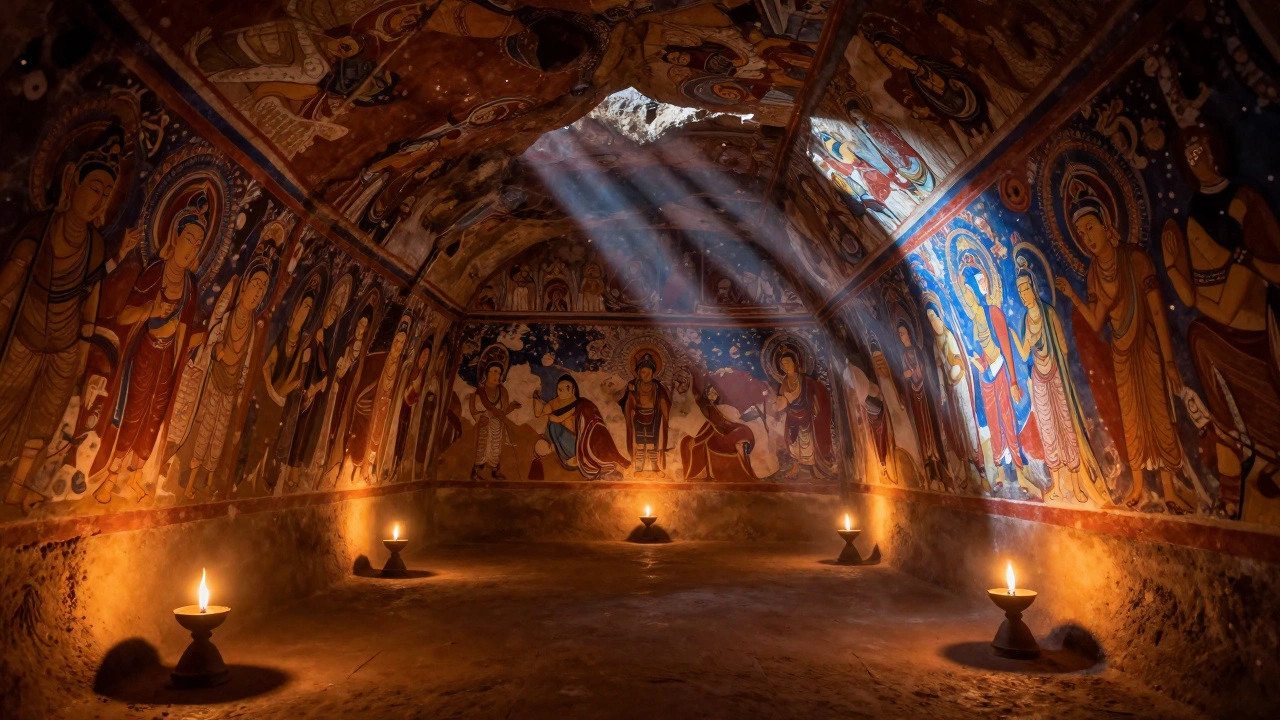
The Ajanta Caves are a collection of Buddhist cave monuments dating from the second century BCE to about 480 CE. Artists worked by torchlight, painting murals on wet plaster using natural pigments made from plants, minerals, and even insects. The result? Colors that have stayed vibrant for over fifteen centuries.
Key Characteristics
- Technique: Fresco-secco painting (Ajanta) and monolithic rock-cut architecture (Ellora).
- Key Feature: Emotional depth in facial expressions and intricate narrative scenes.
Quick Facts
Timeline of Creation
c. 2500 BCE
Indus Valley
2nd c. BCE
Ajanta/Ellora
950 CE
Khajuraho
9th c. CE
Chola Bronzes
Ask ten people what the most beautiful thing in India is, and you’ll get ten different answers. Some will say the Taj Mahal. Others might point to the backwaters of Kerala or the snow-capped Himalayas. But if we look past the postcard-perfect landscapes and focus on human creation, the answer points somewhere deeper. It points to ancient Indian art. This isn’t just about pretty pictures or shiny statues. It is a visual language that has survived for thousands of years, telling stories of gods, kings, lovers, and everyday life with a level of detail and emotion that still feels fresh today.
Beauty in ancient Indian art is not accidental. It follows strict rules of proportion, symbolism, and spiritual intent. When you stand before a 1,500-year-old mural or a bronze statue cast over a millennium ago, you aren’t just looking at an object. You are looking at a window into how ancient Indians saw the universe. So, what exactly makes this art so stunning? Let’s break it down by exploring the masterpieces that define this legacy.
The Whispering Walls: Ajanta and Ellora Caves
If you want to see beauty that breathes, start with the caves of Maharashtra. The Ajanta Caves are a collection of Buddhist cave monuments dating from the second century BCE to about 480 CE. These aren’t just dark holes in the rock; they are galleries of light and color. Artists worked by torchlight, painting murals on wet plaster using natural pigments made from plants, minerals, and even insects. The result? Colors that have stayed vibrant for over fifteen centuries.
What makes Ajanta special is the emotion. Look at the face of a Bodhisattva or a grieving mother, and you feel their pain or peace. The artists didn’t just draw bodies; they drew souls. Nearby, the Ellora Caves take stone carving to another level. Here, entire mountains were carved downwards to create massive monolithic temples. Cave 16, the Kailasa Temple, is a masterpiece of negative space. Imagine carving a temple out of solid rock without moving the stone away, but instead removing everything around it. That is the scale of ambition and skill involved.
- Technique: Fresco-secco painting (Ajanta) and monolithic rock-cut architecture (Ellora).
- Key Feature: Emotional depth in facial expressions and intricate narrative scenes.
- Time Period: 2nd century BCE to 10th century CE.
Sculpting the Divine: The Chola Bronzes
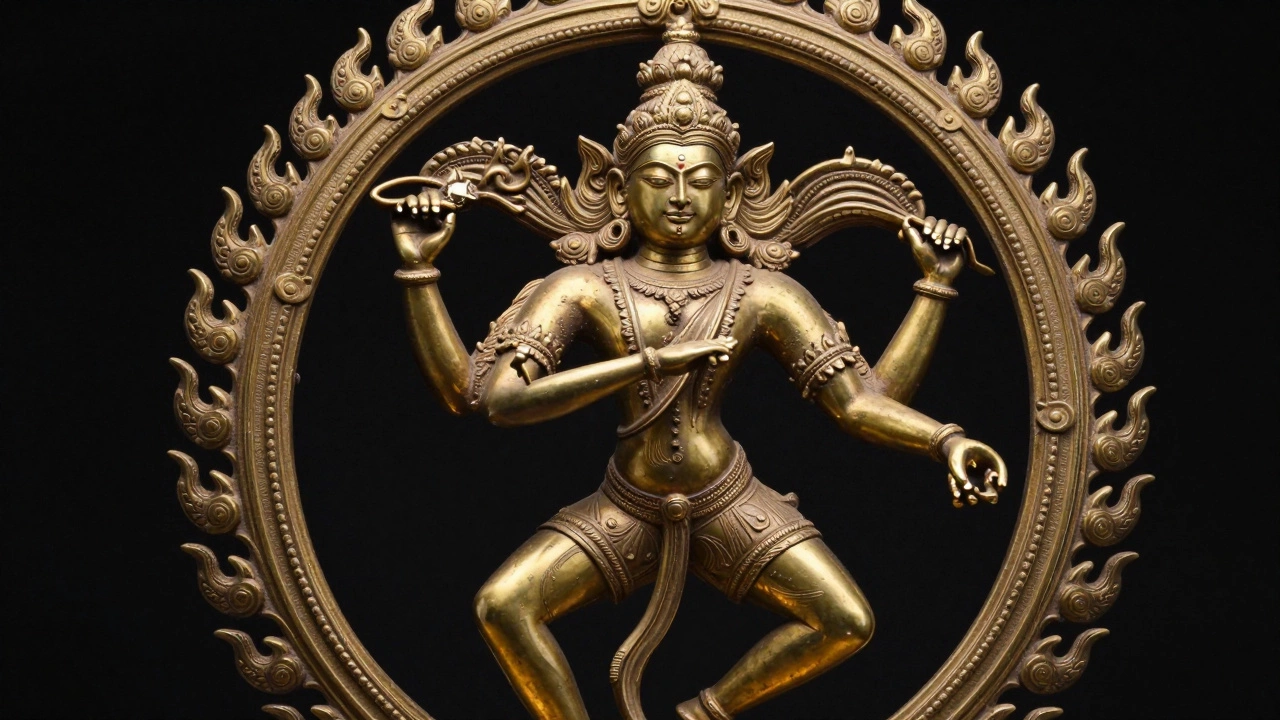
While the north had stone, the south had metal. During the Chola dynasty (9th to 13th century), bronze casting reached its peak. These aren’t heavy, clunky statues. They are delicate, balanced, and alive. The most famous example is the dancing Shiva, known as Nataraja. This small bronze figure captures infinite motion. Shiva dances within a ring of fire, crushing ignorance under his foot while blessing devotees with his hands. Every gesture, every curve of the body, has a specific meaning.
The technique used was lost-wax casting, which required incredible precision. If the wax model had a flaw, the final bronze would fail. Yet, hundreds of these statues survive today. Why are they considered some of the most beautiful things in India? Because they balance perfection with grace. A Chola bronze doesn’t shout for attention; it glows. The gold leaf often applied to them enhances this effect, making the divine seem tangible.
| Art Form | Material | Primary Region | Key Characteristic |
|---|---|---|---|
| Ajanta Murals | Plaster & Natural Pigments | Maharashtra | Emotional realism & narrative flow |
| Chola Bronzes | Bronze (Lost-wax) | Tamil Nadu | Dynamic movement & spiritual symbolism |
| Khajuraho Sculptures | Sandstone | Madhya Pradesh | Erotic realism & architectural integration |
| Mohenjo-Daro Artifacts | Steatite & Terracotta | Sindh (Pakistan/India border) | Urban sophistication & standardized weights |
The Sensual Stone: Khajuraho Temples
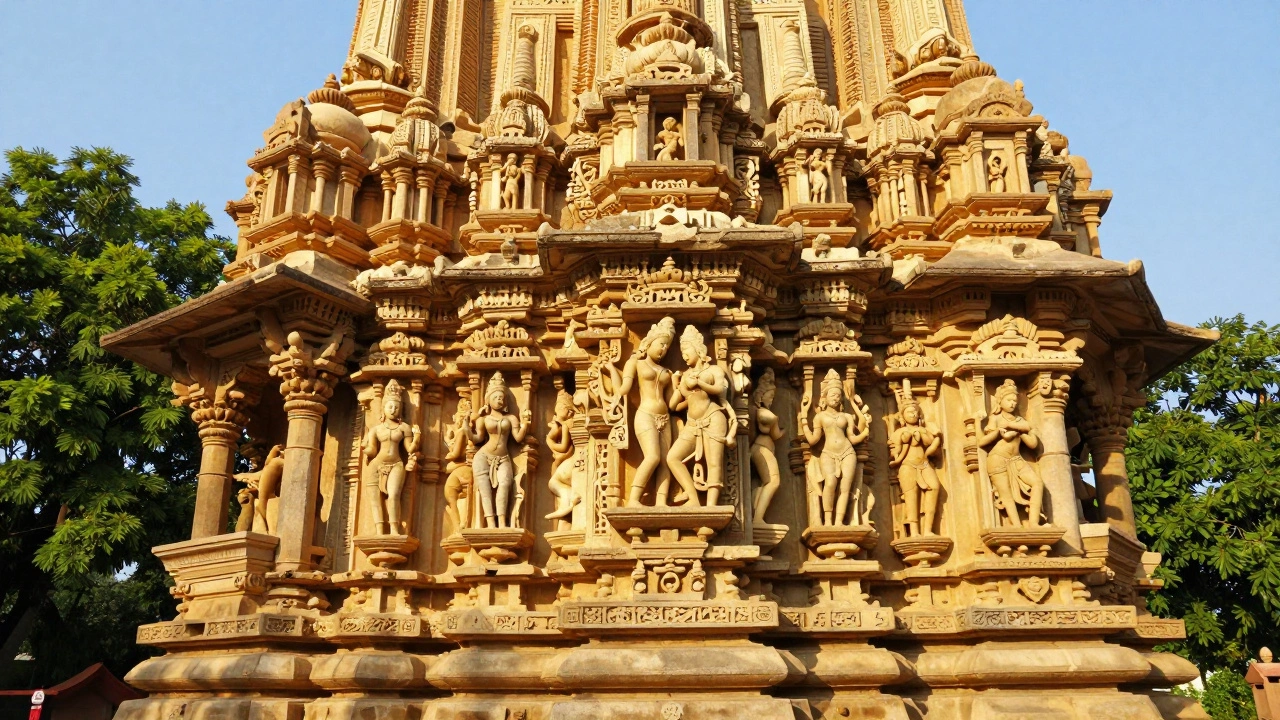
No discussion of ancient Indian beauty is complete without mentioning Khajuraho. Built between 950 and 1050 CE by the Chandela dynasty, these temples in Madhya Pradesh are famous for two things: their towering spires and their erotic sculptures. People often focus only on the latter, missing the broader point. The sculptures are part of a larger philosophical statement about life. In Hindu thought, pleasure (*kama*) is one of the four goals of life, alongside duty (*dharma*), wealth (*artha*), and liberation (*moksha*). Ignoring any one of them leads to imbalance.
The carvings show couples embracing, musicians playing, soldiers marching, and animals grazing. They are incredibly detailed. You can see jewelry, hairstyles, and clothing textures that historians use to understand daily life in medieval India. The sandstone used here is soft enough to carve fine details but hard enough to withstand weather. For centuries, jungle growth hid these temples, preserving them from vandalism. When they were rediscovered in the 19th century, the world was shocked by their openness and beauty.
Indus Valley: The First Urban Aesthetics
Going back further, to around 2500 BCE, we find the Indus Valley Civilization. Sites like Mohenjo-Daro and Harappa show us that beauty was already important in urban planning. While we don’t have grand palaces like in Egypt, we have exquisite small-scale art. The "Dancing Girl" bronze from Mohenjo-Daro is a standout. She stands confidently, one hand on her hip, her arm raised. Her posture suggests ease and confidence, qualities rarely seen in earlier prehistoric art.
Also significant are the steatite seals, often featuring a unicorn-like creature or a bull. These weren’t just decorative; they were likely used for trade and identification. The craftsmanship is precise, showing that even 4,500 years ago, artisans valued symmetry and clarity. This early focus on order and aesthetics laid the groundwork for later artistic traditions.
Why Does This Matter Today?
In a world dominated by digital screens and fast fashion, ancient Indian art reminds us of slowness and intention. Each brushstroke in Ajanta took time. Each bronze pour in Thanjavur required patience. These artworks were not made for quick consumption; they were made to last forever. They connect us to a lineage of creativity that values harmony between form and function, spirit and matter.
When you visit these sites, you aren’t just seeing old rocks. You are experiencing a conversation across time. The artists who created these works wanted to inspire awe, devotion, and reflection. And more than a thousand years later, they still do. That enduring power is perhaps the most beautiful thing of all.
What is the oldest surviving art in India?
The oldest surviving art comes from the Indus Valley Civilization (c. 2500 BCE), including terracotta figurines and steatite seals. However, cave paintings in sites like Bhimbetka date back much further, to the Paleolithic era (over 30,000 years ago), depicting hunting scenes and animals.
Why are the Khajuraho temples controversial?
They are often misunderstood due to their erotic sculptures. However, these carvings represent the holistic view of life in Hindu philosophy, where physical pleasure is acknowledged as a valid aspect of human experience alongside spiritual pursuit. Only a small percentage of the total sculptures are erotic.
How were the Ajanta murals preserved for so long?
The caves remained sealed and hidden in dense jungle for centuries after being abandoned. This protected them from sunlight, rain, and human interference. The natural pigments used, such as lapis lazuli and malachite, are also chemically stable, contributing to their longevity.
What is the significance of the Nataraja statue?
Nataraja represents Shiva as the cosmic dancer. The dance symbolizes the cycle of creation and destruction in the universe. The ring of fire signifies the cosmos, while the demon underfoot represents ignorance. It is a complex metaphor for the dynamic nature of reality.
Where can I see authentic Chola bronzes today?
Major collections are found in the Government Museum in Chennai, the National Museum in New Delhi, and international institutions like the Metropolitan Museum of Art in New York and the British Museum in London. Many temples in Tamil Nadu also house original bronzes.