Dhanvantari & Ayurveda Interactive Guide
Lord Dhanvantari
The Divine Physician
Click a symbol below to learn its meaning.
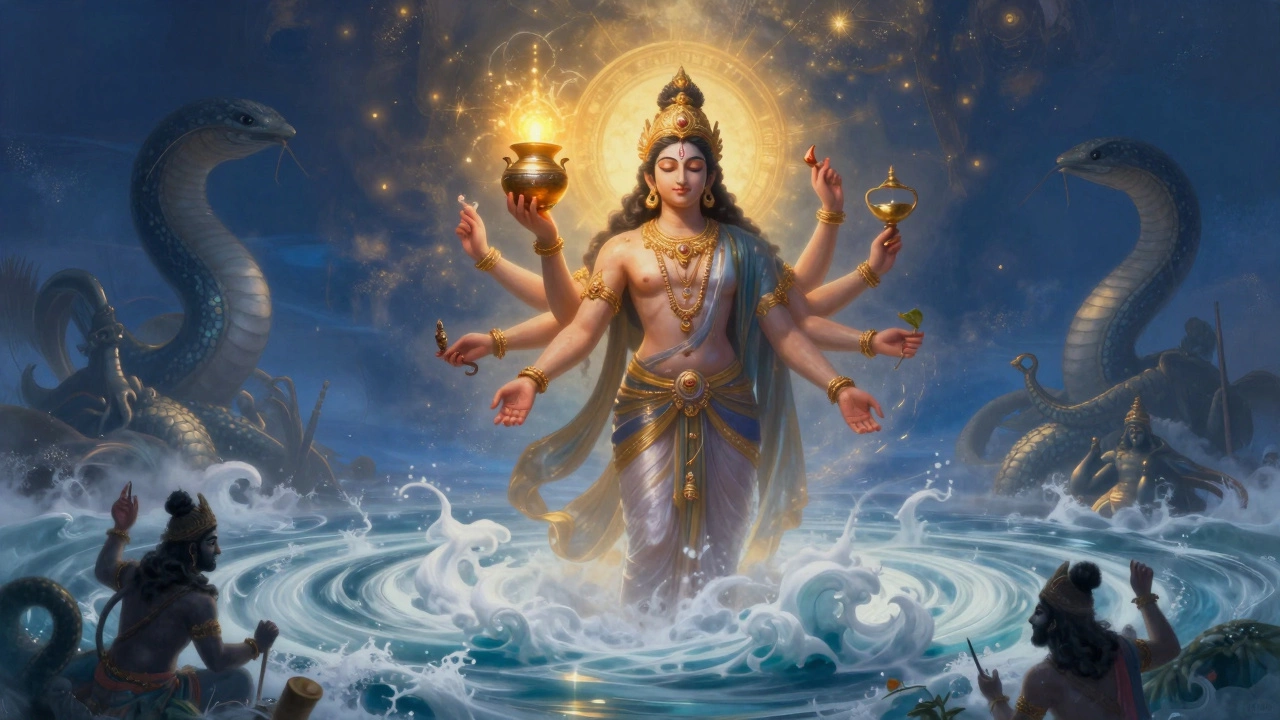
Imagine a figure rising from the churning ocean of milk, holding a pot of nectar that grants immortality. He isn't just a mythological character; he is the very foundation of one of the world's oldest medical systems. When people ask, "Who is the God of Ayurveda?" the answer is almost always Dhanvantari. But there is more to him than just a title. He represents the bridge between divine knowledge and practical healing.
In India, Ayurveda is not seen merely as a set of treatments but as a sacred science. To understand who protects this science, we have to look at the stories, the rituals, and the daily practices that keep his legacy alive today. This article breaks down who Dhanvantari is, why he matters, and how you might encounter his influence in modern wellness routines.
The Divine Physician: Who Is Dhanvantari?
Dhanvantari is the Hindu god of medicine and the patron deity of Ayurveda. He is often described as an avatar (incarnation) of Vishnu, the preserver among the Trimurti. In many traditions, he is considered the first physician, the one who brought the knowledge of healing to humanity.
His name itself tells a story. It comes from two Sanskrit words: Dhanvan, meaning "arrow," and Tari, meaning "crossed" or "passed." Some interpretations suggest it means "one who crosses with arrows," referring to his ability to pierce through disease. Others interpret it as "bestower of wealth," where wealth refers to health and longevity. Either way, the name signals protection and provision.
Visually, Dhanvantari is depicted in a very specific way. He usually has four arms. In one hand, he holds the Kamadhenu (the wish-fulfilling cow), symbolizing nourishment. In another, he holds a bowl of Amrita (nectar of immortality). The third hand often holds a sword or a mace, representing the power to cut through ignorance and disease. The fourth hand is in a gesture of blessing or reassurance.
This imagery is not random. Each element corresponds to a principle in Ayurvedic practice: nourishment, vitality, precision in treatment, and compassion for the patient.
The Churning of the Ocean: How Ayurveda Emerged
To understand Dhanvantari's role, you need to know the context of his appearance. According to Hindu mythology, the gods (Devas) and demons (Asuras) were locked in a conflict over control of the universe. Both sides had grown weak from their battles. They decided to team up for a massive task: churning the cosmic ocean of milk, known as Samudra Manthan.
They used Mount Mandara as the churning rod and the serpent Vasuki as the rope. As they churned, various treasures emerged from the ocean. First came poison (Halahala), which Shiva consumed to save the world. Then came other gems, horses, and elephants. Finally, Dhanvantari appeared, holding the pot of Amrita.
Here is the key point: The Amrita wasn't just physical nectar. It represented the ultimate knowledge of life and health. By bringing this pot to the surface, Dhanvantari delivered the foundational texts and principles of Ayurveda to the world. This event marks the origin of Ayurvedic medicine in spiritual tradition.
It’s important to note that while Vishnu is the preserver, Dhanvantari is the specialized aspect focused on preservation of life through health. This distinction helps explain why he is worshipped specifically by doctors and healers.
Dhanvantari vs. Other Healing Deities
You might wonder if Dhanvantari is the only god associated with health. Not exactly. There are other figures in Indian mythology connected to healing, but their roles differ significantly.
| Deity | Primary Domain | Connection to Medicine | Key Symbol |
|---|---|---|---|
| Dhanvantari | Ayurveda & Longevity | Founder/Patron of Ayurveda | Pot of Amrita |
| Sushruta | Surgery | Sage who wrote Sushruta Samhita | Surgical tools |
| Vagbhata | Comprehensive Medicine | Sage who wrote Ashtanga Hridayam | Medical text |
| Shiva | Poison & Transformation | Consumed Halahala poison | Blue throat (Neelakantha) |
Notice the difference. Sushruta and Vagbhata are revered sages, historical figures who compiled medical texts. They are respected as teachers. Dhanvantari, however, is divine. He is the source from which that knowledge flowed. Shiva is involved because he neutralized the poison that emerged before the nectar, making the environment safe for healing to begin. But when it comes to the systematic practice of Ayurveda, Dhanvantari stands alone at the top.
Dhanvantari Trayodashi: The Festival of Healing
If you want to see Dhanvantari in action, look at the calendar. Every year, during the Kartik month (usually October or November), Hindus celebrate Dhanvantari Trayodashi. This falls on the 13th day of the waxing moon phase.
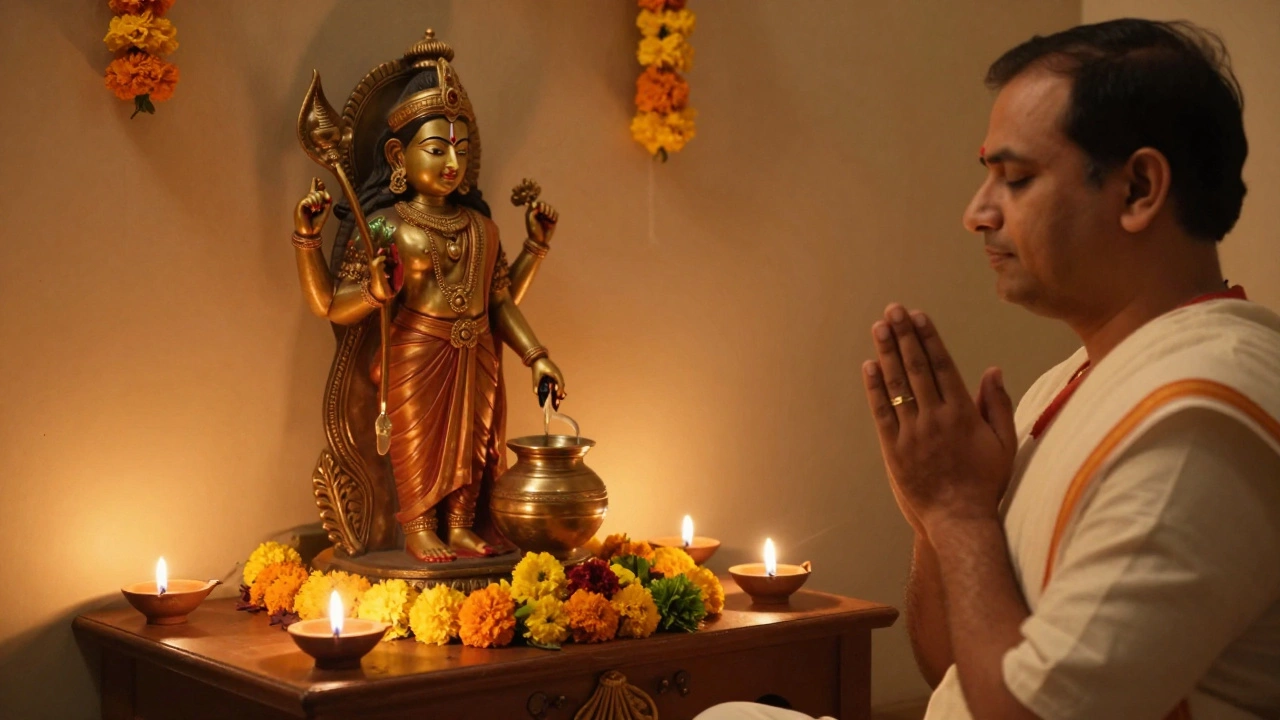
On this day, many Ayurvedic practitioners do not treat patients. Instead, they observe a fast, chant mantras, and perform prayers. Why? Because it is believed that on this day, Dhanvantari descended to Earth to give the gift of Ayurveda. It is a day of gratitude and renewal for the profession.
Hospitals and clinics across India often hold special ceremonies. Doctors may offer flowers and lamps to images of Dhanvantari. Patients might visit temples seeking blessings for recovery. For laypeople, it is a reminder to take care of their bodies, as health is considered a divine gift.
In some regions, particularly in South India, this day also marks the beginning of the harvest season. This connection makes sense: good health allows you to reap the rewards of your labor. The link between physical well-being and agricultural abundance is strong in rural traditions.
How Dhanvantari Influences Modern Ayurveda
You don’t have to be a priest to feel Dhanvantari’s presence. If you’ve ever visited an Ayurvedic clinic, you’ve likely seen his image on the wall. Many centers start consultations with a short prayer to him. This isn’t just superstition; it sets a tone of respect and mindfulness.
Consider the concept of Swasthya (health). In Ayurveda, health is balance. Dhanvantari teaches that true healing requires addressing the root cause, not just symptoms. This holistic approach mirrors his divine nature-he doesn’t just fix broken bones; he restores harmony to the entire being.
Modern practitioners often cite Dhanvantari when discussing ethical standards. Just as he brought pure nectar, doctors are expected to provide pure, effective treatments without greed or harm. This moral framework keeps the practice grounded in service rather than profit.
Even in Australia, where I live, Ayurvedic centers honor these traditions. During Dhanvantari Jayanti, local communities organize yoga sessions and herb walks. It shows that the reverence for the God of Ayurveda transcends borders.
Practical Ways to Honor the God of Ayurveda
If you are interested in integrating this spiritual aspect into your life, here are simple steps:
- Start your routine with intention. Before taking any herbal supplement or starting a new diet, pause and acknowledge the source of this knowledge. A moment of silence can center your mind.
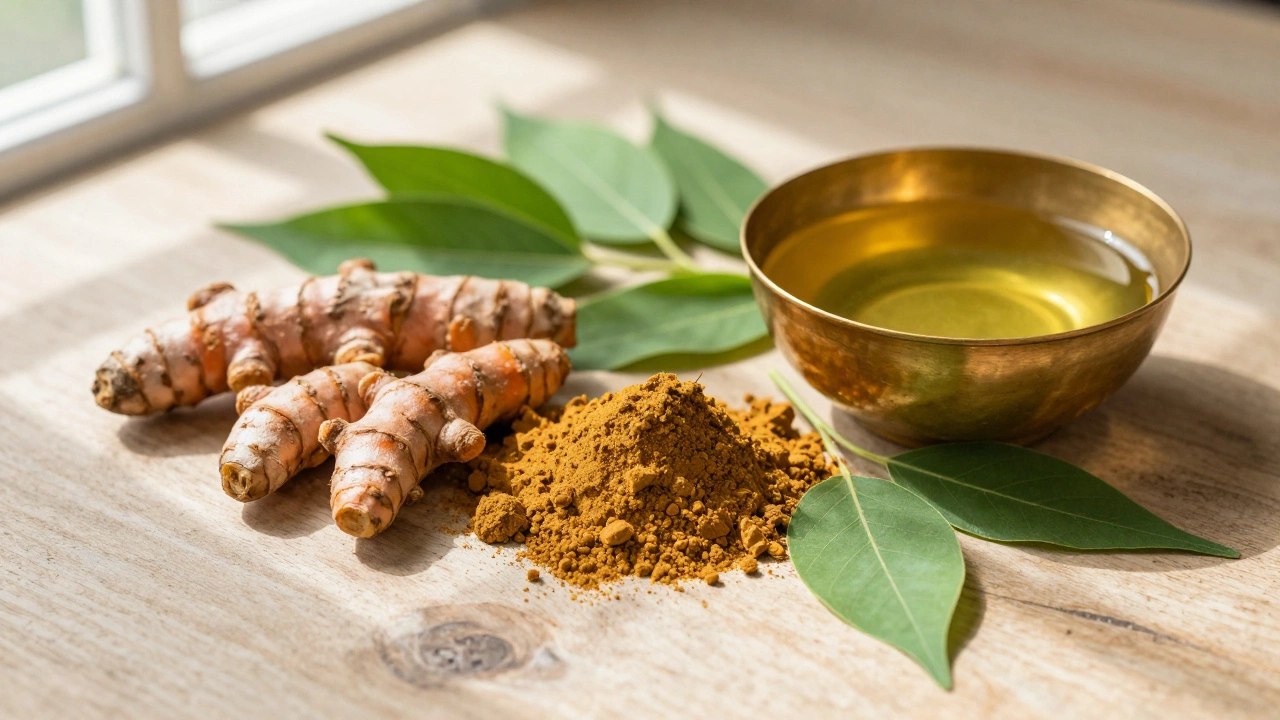
- Respect natural ingredients. Ayurveda relies on herbs, minerals, and foods. Treat them with care. Store them properly, use them fully, and avoid waste. This honors the gift of Amrita.
- Practice self-care as worship. Getting enough sleep, eating seasonal food, and managing stress are acts of devotion to your body’s health. You are preserving the vessel Dhanvantari helped create.
- Learn about the origins. Read stories of Samudra Manthan. Understanding the myth deepens your appreciation for the science. It reminds you that healing is both an art and a discipline.
These actions aren’t mandatory, but they add depth to your practice. They transform routine habits into meaningful rituals.
Common Misconceptions About Dhanvantari
There are a few myths that need clearing up. First, Dhanvantari is not a healer who performs miracles overnight. He provides the *knowledge* to heal. The work still requires effort from the practitioner and the patient. Second, he is not exclusive to one religion. While rooted in Hinduism, the principles of Ayurveda are universal. People of all backgrounds benefit from his teachings.
Another misconception is that Ayurveda is only about ancient remedies. In reality, it evolves. Modern research validates many traditional claims. Dhanvantari’s legacy includes adaptation. He gave us a framework, not a rigid rulebook.
Why This Matters Today
In a world obsessed with quick fixes, remembering Dhanvantari is refreshing. He reminds us that health is a journey, not a destination. It requires patience, wisdom, and respect for nature. Whether you are a doctor, a student, or someone looking to improve their well-being, connecting with this heritage adds value.
The next time you take a dose of turmeric or try oil pulling, think of the pot of nectar. Think of the churning ocean. And remember the God of Ayurveda who brought it all to light.
Is Dhanvantari the same as Vishnu?
Dhanvantari is considered an avatar (incarnation) of Vishnu. While Vishnu is the overall preserver of the universe, Dhanvantari is the specific manifestation focused on preserving life through medicine and healing.
When is Dhanvantari Jayanti celebrated?
Dhanvantari Jayanti is celebrated on the 13th day (Trayodashi) of the bright half of the lunar month of Kartik. This usually falls in October or November in the Gregorian calendar.
What does the pot held by Dhanvantari contain?
The pot contains Amrita, the nectar of immortality. Symbolically, it represents the knowledge of Ayurveda and the secret to long, healthy life.
Do Ayurvedic doctors pray to Dhanvantari?
Yes, many Ayurvedic practitioners pay homage to Dhanvantari before starting their clinical work. It is a tradition that acknowledges the divine origin of their medical knowledge and seeks guidance for ethical practice.
Can non-Hindus benefit from worshipping Dhanvantari?
Absolutely. Ayurveda is a universal science. Honoring its founder can be done through gratitude and respectful practice, regardless of religious background. The focus is on health and well-being, which are human concerns.
What is the significance of Samudra Manthan in Ayurveda?
Samudra Manthan is the mythological event where Dhanvantari emerged from the ocean with the nectar of immortality. This event marks the birth of Ayurvedic knowledge, making it central to the tradition's history.
Are there any specific mantras for Dhanvantari?
Yes, common mantras include "Om Namo Bhagavate Vasudevaya Dhanvantare Sarva Rog Haraye Tame Nama". These chants are used to invoke his blessings for healing and wisdom.