Taj Mahal Visit Planner
Your Profile
Trip Recommendations
Select your preferences to generate a customized itinerary.
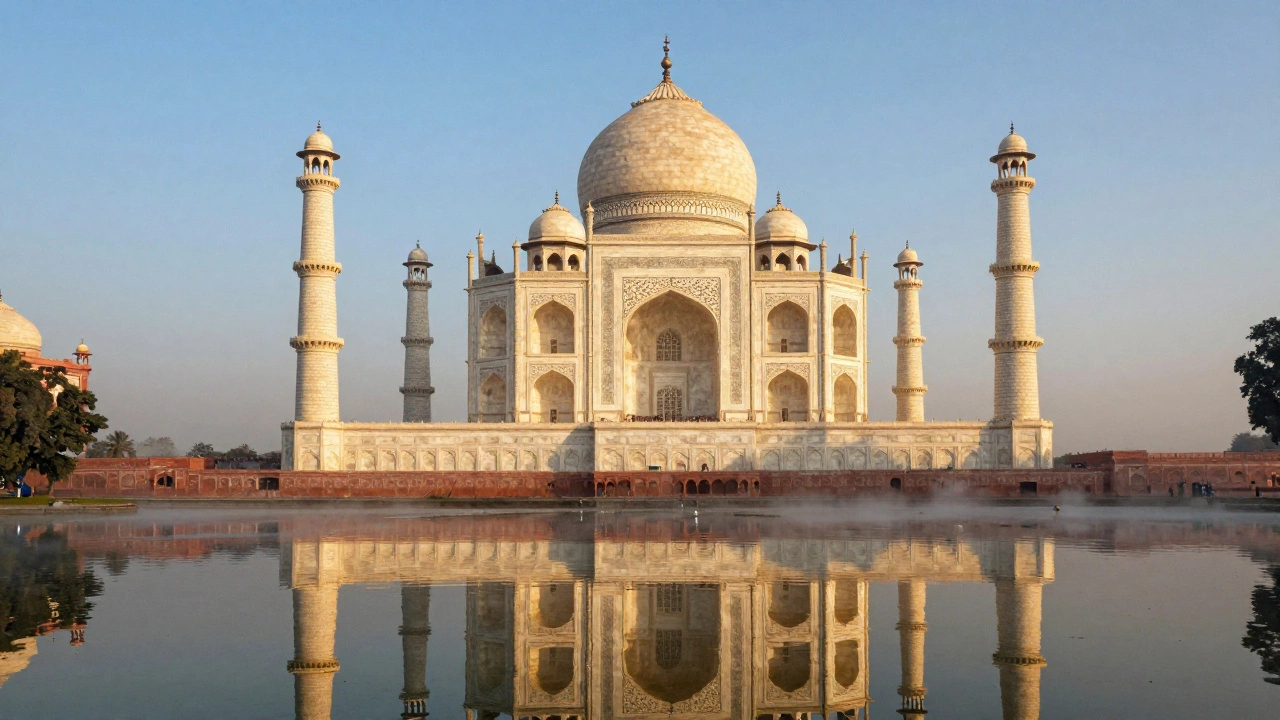
When people talk about romance in stone, one structure always comes to mind first. You are looking for the Taj Mahal. It sits right there on the banks of the Yamuna River in Agra, glowing white under the sun and reflecting in the water at sunset. But calling it a "symbol of love" feels almost too simple for what this place actually is. It is a mausoleum, yes, built by an emperor who lost his wife. However, the way it was designed tells us more about obsession than typical affection.
The Taj Mahal is a mausoleum located in Agra, India, that was commissioned by the Mughal Emperor Shah Jahan in memory of his favorite wife Mumtaz Mahal. Built between 1632 and 1653 using ivory-white marble, this iconic monument has stood as one of the Seven Wonders of the World since 2007. The complex spans 17 hectares and includes gates, gardens, and a mosque.
The Heartbreak Behind the Masterpiece
To understand why this monument screams love, we have to look back at the tragic end of a marriage in 1631. Shah Jahan reigned as the Mughal Emperor, but his personal life took a hit when his beloved wife died during childbirth. Her name was Mumtaz Mahal, which translates to "the jewel of the palace." She was not just a consort; she was his constant companion on military campaigns and court sessions. When she passed away in Burhanpur, he reportedly lost the ability to function normally. He wanted to build something so grand that it would rival her beauty forever.
This wasn't the first tomb they had made together, but it was certainly the biggest investment in human history relative to the era. Imagine ordering thousands of laborers to work day and night for twenty years. It cost an estimated Rs. 32 million (at that time) to construct. That number is staggering when you consider inflation and historical value. This isn't just art; it is grief frozen in time. Every carving and every block of marble represents a wish for eternity.
Architecture That Tells a Story
If you walk inside the courtyard, you notice something distinct. Everything is perfectly symmetrical. The central dome rises high above four smaller domes, creating a silhouette that looks different depending on where you stand. Architects from Persia and Turkey were brought in to design it. They combined styles from the Islamic world, but kept the core structural engineering rooted in Indian traditions.
| Feature | Details |
|---|---|
| Dome Height | Approximately 73 meters (240 ft) |
| Material | White Makrana marble |
| Minarets | Four leaning slightly outward |
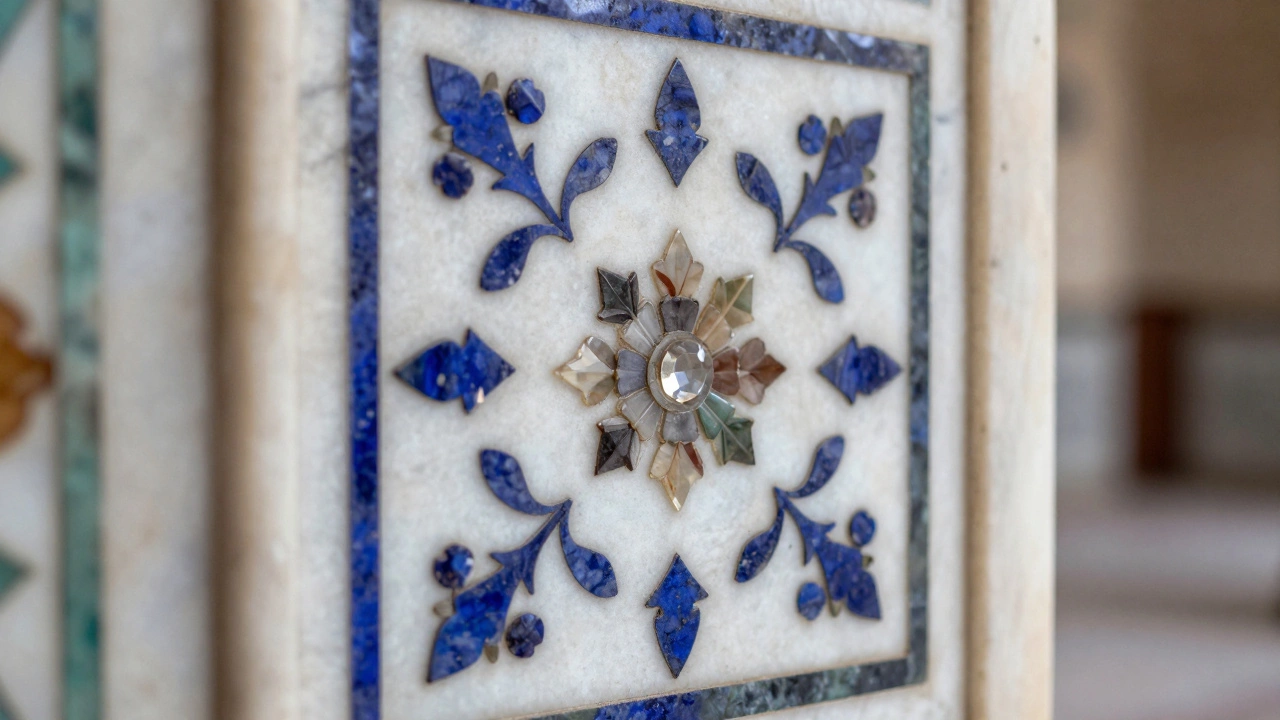
| Pietra Dura | Embedded semi-precious stones |
The symmetry is deliberate. If you draw a line down the middle of the main building, both sides are identical. Even the layout of the charbagh garden follows a quartered pattern representing paradise. However, the grave itself breaks the rule. While the cenotaphs of Mumtaz and Shah Jahan lie on top, their real graves are down below. His final resting place is next to hers, even though it was originally meant to be strictly hers. This small detail adds layers to the narrative of devotion.
The Material Matters
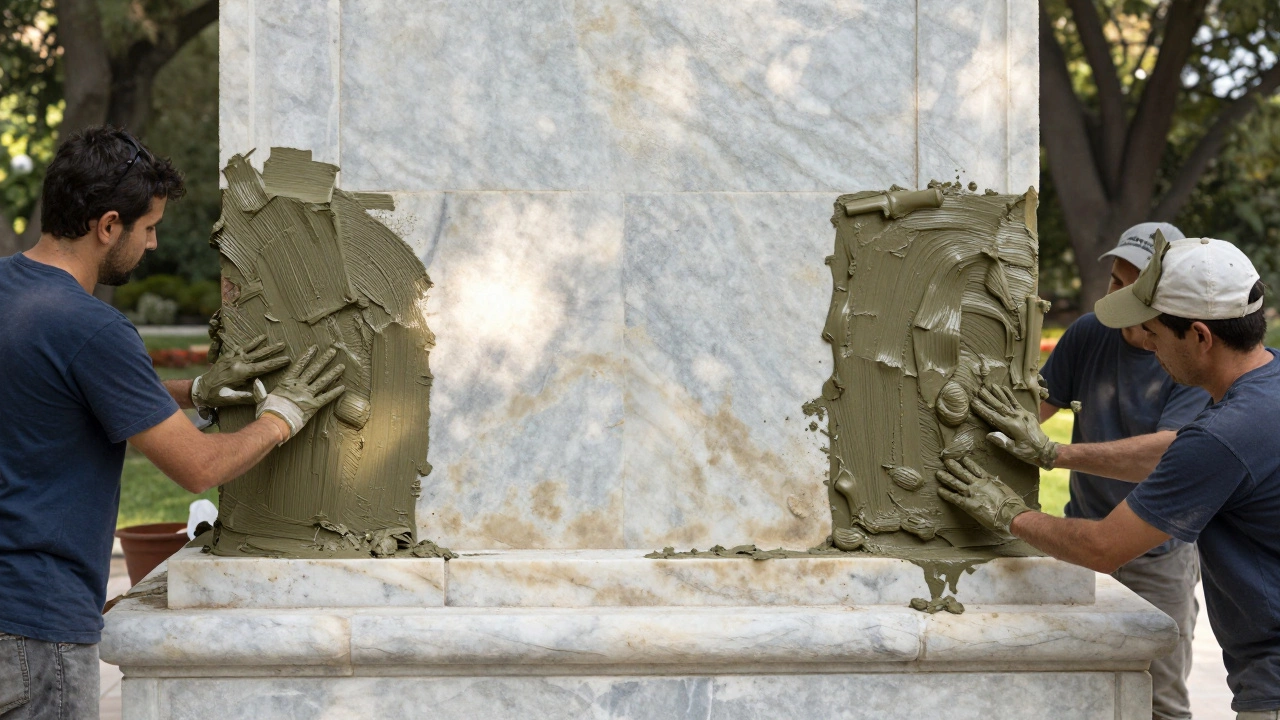
You cannot build a monument that changes color without choosing your materials carefully. The builders used Makrana marble from Rajasthan. It has veining patterns that shimmer in moonlight. But it also stains easily. During British colonial times, the white exterior was covered in lime wash to protect it. In later years, pollution turned it yellow and brown. In recent times, specifically around 2015, authorities started using traditional mud packs to clean the surface.
Pietra Dura is an artistic technique involving inlay of hard-stones into marble to create floral designs. Artists spent hours fitting pieces of lapis lazuli, jasper, and crystal into tiny grooves carved into the stone walls. They worked with such precision that they left no grout lines visible.
Maintenance Challenges in Modern Times
Cleaning a monument isn't just about scrubbing. It involves science. The Supreme Court of India has intervened multiple times over the last decade regarding air quality around the site. Local industries near Agra often release smoke that settles on the marble. In 2025, stricter norms were enforced again to preserve the heritage. There is a balance between allowing tourism and keeping the structure safe.
Honeybees nearby are actually helping. Studies show that bee colonies produce honey and wax which naturally absorb pollutants. Scientists found that honey produced within the buffer zone contains less pollution than outside zones. It sounds unusual, but nature provides data points here. The Yamuna River acts as a natural body of water flowing past the monument. Its reflection doubles the visual impact of the building, especially at sunrise. Unfortunately, water levels drop sometimes due to seasonal changes, affecting the reflection view.
Visiting the Iconic Site
Standing there today, you feel the scale differently than looking at photos. The queues can be long during peak months, particularly between November and February. The morning entry opens early, giving you the best chance to see the golden light hitting the white facade. At night, the lighting changes to highlight the details against the dark sky, but access is limited compared to daylight hours.
Safety protocols have evolved post-pandemic, but crowd control remains strict. Visitors need security checks similar to airports. Metal detectors scan bags before entry. There are specific rules about food and drinks to prevent vandalism. While you might want to spend all day exploring, respecting these guidelines ensures the site stays open for future generations.
Beyond Just a Tomb
While many visit for selfies, understanding the cultural weight helps the experience. It represents the peak of Mughal power. Around that time, the empire controlled vast lands and wealth. The Mughal Empire utilized powerful political structures that unified diverse cultures across Northern India. Their legacy is seen in language, cuisine, and architecture. After Shah Jahan’s death, his sons fought for the throne. Aurangzeb eventually won but imprisoned Shah Jahan in the Red Fort nearby. From there, the old emperor could see his creation through binoculars until he died. That irony lingers over the complex.
Preserving the Legacy
Future generations rely on decisions made now. Climate change poses new risks to historic stone structures. Moisture levels rising in the region can cause erosion. Experts are constantly monitoring humidity inside the chambers. Technology like laser scanning helps detect cracks invisible to the naked eye. We are moving from purely manual cleaning to digital preservation archives. This digital twin concept allows engineers to study stress fractures virtually without touching the fragile stone.
What is the exact location of the Taj Mahal?
It is situated in the city of Agra, Uttar Pradesh, India, on the south bank of the river Yamuna.
How long did it take to build?
Construction lasted approximately 22 years, completed roughly around 1653.
Who was Mumtaz Mahal?
She was the favorite wife of Mughal Emperor Shah Jahan and the person buried inside the central mausoleum.
Is the Taj Mahal free to enter?
No, visitors must purchase an entry ticket. Separate rates apply for foreign tourists and citizens.
Can I see it lit up at night?
Yes, viewing from the Mehtab Bagh gardens is allowed at night, subject to specific ticket availability.