
Christian Yoga & Meditation Compatibility Checker
Answer these questions about your current or planned yoga/meditation routine to receive personalized guidance based on biblical principles.
You walk into a yoga studio in Brisbane, the air smells like sandalwood, and someone says "Namaste." You feel calm, your shoulders drop, but then that little voice in your head whispers: Is this okay? What does the Bible say about this?
This isn't just about stretching. It's about where your heart is focused when you close your eyes. For many Christians, the line between healthy stress relief and spiritual compromise feels blurry. Some pastors say it's fine; others warn against Eastern mysticism creeping into the church. So, what’s the truth? Is yoga just exercise with a weird name, or does it carry spiritual baggage you need to worry about?
Let’s cut through the noise. We aren't going to give you a vague "it depends." We’re going to look at exactly what Scripture says, how early church fathers viewed meditation, and how you can practice physical wellness without compromising your faith.
The Core Question: Exercise or Worship?
Here is the biggest misunderstanding: people think yoga is inherently religious. It isn’t. But it can be used for religious purposes. Think of it like a hammer. A hammer can build a church, or it can break a window. The tool itself is neutral; the intent matters.
Yoga is an ancient Indian practice involving physical postures, breathing techniques, and mental discipline aimed at uniting body, mind, and spirit. Originating thousands of years ago, it was traditionally tied to Hindu philosophy. However, modern Western yoga often strips away the religious elements, focusing purely on flexibility, strength, and stress reduction.
If you are doing Sun Salutations because they stretch your hamstrings and lower your blood pressure, you are exercising. If you are chanting "Om" to invoke a deity other than Jesus Christ, you are engaging in worship. The Bible doesn't ban stretching. It bans idolatry. That distinction is everything.
What Does the Bible Actually Say About Meditation?
Many Christians avoid meditation because they confuse it with "emptying the mind." But biblical meditation is actually the opposite. It’s about filling your mind.
In the Old Testament, the Hebrew word for meditate is hagah. It means to mutter, speak softly, or muse upon something intensely. Joshua 1:8 tells us to "meditate on [God's law] day and night." This isn't sitting silently waiting for a cosmic vibe. It’s chewing on Scripture until it changes how you think.
| Feature | Biblical Meditation | Eastern/Yogic Meditation |
|---|---|---|
| Goal | To know God and obey His Word | To empty the self or achieve enlightenment |
| Focus | Specific truths (Scripture) | Mantras, breath, or voidness |
| Method | Thinking deeply, praying aloud, studying | Repetition, silence, detachment |
| Outcome | Transformation of character | Detachment from reality or ego dissolution |
See the difference? Biblical meditation is active engagement with truth. Many forms of secular meditation aim for passivity. You don't have to reject stillness; you just have to direct it. Psalm 46:10 says, "Be still, and know that I am God." Stillness is good. Knowing who is speaking is essential.
Is Chanting Mantras Sinful?
This is where things get tricky. In traditional yoga, you might chant "Om" or specific Sanskrit words. These are often considered sacred sounds associated with Hindu deities. If you are a Christian, repeating a mantra that invokes another god can create spiritual confusion.
However, not all mantras are religious. Some are just sounds used to focus attention. If you find yourself humming a tune to stay focused during a plank pose, that’s different from bowing to a picture of Shiva while chanting.
A practical rule of thumb: If the words you are saying honor Jesus, keep them. If they honor another power, swap them out. Try using Psalm verses as your "mantra." Instead of "Om," try "Peace" or "Love" or "Jesus." You get the same rhythmic breathing benefit without the theological hitch.
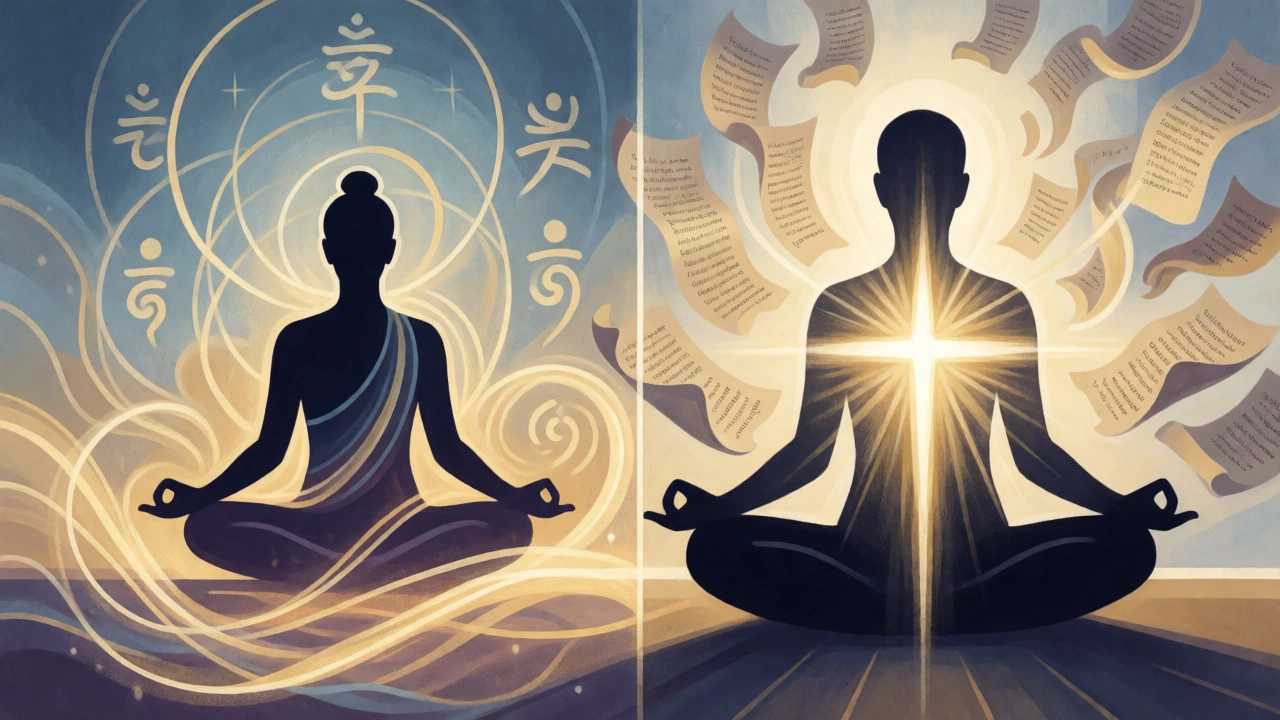
The Danger of "Spiritual Baggage" in Yoga Classes
Not all yoga studios are created equal. Some are strictly fitness centers. Others are deeply rooted in New Age spirituality. How do you tell the difference before you sign up for a 10-class pack?
- Check the Language: Do instructors talk about "energy fields," "raising vibrations," or "connecting to the universe"? Or do they talk about alignment, core strength, and mobility?
- Look at the Altar: Is there a statue of Ganesha or Buddha at the front? If yes, ask if it’s required to bow to it. Usually, it’s not, but it sets the tone.
- Ask the Instructor: Don’t be shy. Ask, "Do we chant anything religious here?" A good instructor will respect your boundaries.
In Australia, many yoga classes are secularized. They are marketed similarly to Pilates or CrossFit. But always trust your gut. If a class ends with everyone raising their hands to the sky thanking the "Great Spirit," and that makes your spirit uneasy, leave. Your conscience is a sensitive instrument-don’t ignore it.
Can Christians Practice Physical Yoga?
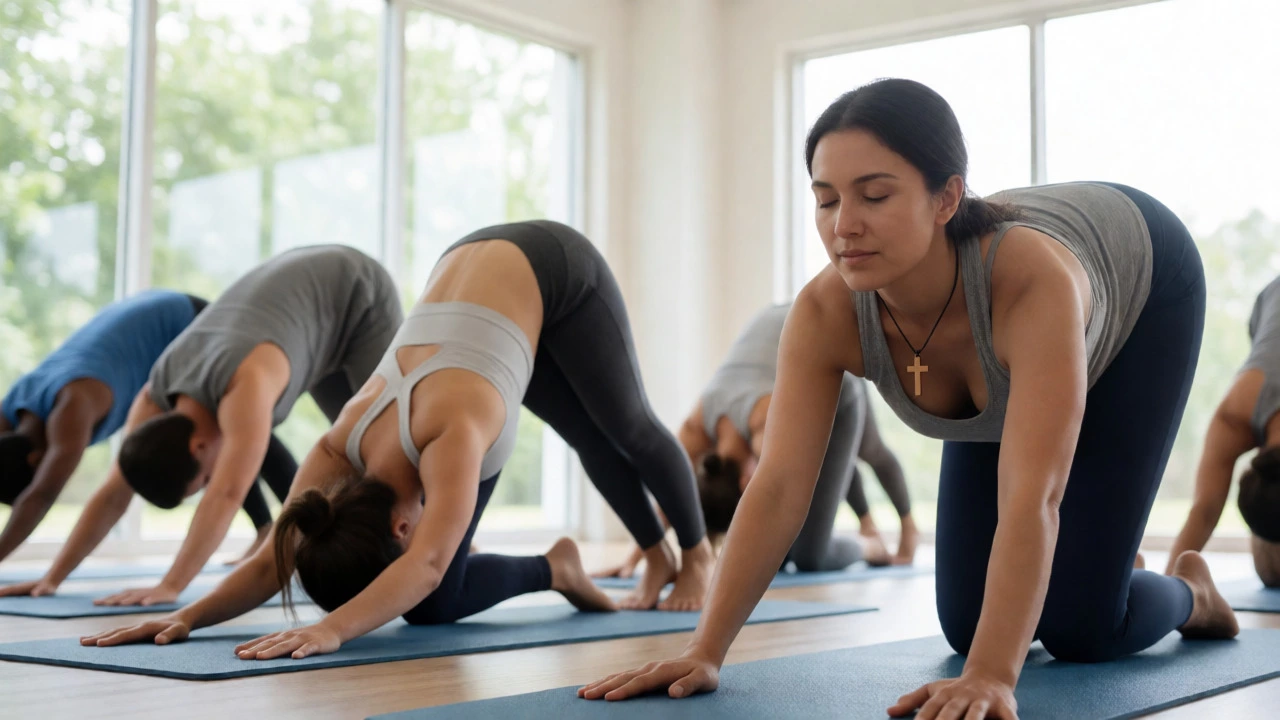
Yes. Absolutely. In fact, taking care of your body is a biblical command. 1 Corinthians 6:19-20 reminds us that our bodies are temples of the Holy Spirit. Keeping that temple functional, flexible, and pain-free is an act of stewardship.
Physical benefits of yoga are well-documented. It improves balance, reduces chronic back pain, and lowers cortisol levels. For a pastor sitting at a desk all week, or a mother chasing toddlers around Brisbane, these physical benefits are real and valuable.
But here is the key: Separate the mechanics from the metaphysics. You can take the poses (asanas) and the breathing (pranayama) without accepting the philosophy behind them. Think of it like eating meat offered to idols in Acts 10. Peter saw a vision where food wasn't unclean because of its origin, but because of how it was received. Similarly, a downward dog isn't evil because it comes from India. It’s good because it stretches your spine.
How to Create a "Christian Yoga" Routine
You don’t need a special studio to start. You can modify any routine to align with your faith. Here is a simple framework for practicing mindful movement without spiritual conflict.
- Start with Prayer: Before you roll out your mat, pray. Ask God to help you use this time to rest and renew your mind.
- Select Secular Music: Avoid tracks with heavy chanting or sitars if they distract you. Choose instrumental piano, nature sounds, or contemporary worship music.
- Replace Mantras with Truth: During deep breathing exercises, inhale while thinking "Grace" and exhale while thinking "Peace." Anchor your breath to Scripture.
- Skip the Namaste: At the end of class, you don’t have to put your palms together and say "The divine in me bows to the divine in you." A simple "Thank you" or a nod is perfectly polite and spiritually clear.
- Reflect on Scripture: Use the final relaxation pose (Savasana) not to drift into nothingness, but to read a short passage or journal about what God showed you during the week.
This approach keeps the physical benefits while guarding your heart. It turns a workout into a time of fellowship with God.
When Should You Avoid Yoga?
While most yoga is safe, there are red flags. If you feel a sense of dread, unease, or spiritual heaviness after a class, stop. Don’t push through it. God gives us discernment (1 John 4:1) for a reason.
Also, be wary of advanced practices like Kundalini yoga, which claims to awaken a "serpent energy" at the base of the spine. This concept is foreign to Christianity and can lead to strange emotional experiences that aren’t necessarily from the Holy Spirit. Stick to Hatha, Vinyasa, or Yin yoga for now-they are generally more straightforward and less esoteric.
If you are new to faith, or if you have experienced trauma, consult your pastor or a mature mentor before diving into intense meditative practices. Community provides accountability. Don’t go it alone.
Frequently Asked Questions
Is yoga considered a sin in Christianity?
No, yoga itself is not listed as a sin in the Bible. It becomes problematic only if it involves worshiping false gods or adopting beliefs that contradict Scripture. When practiced purely as physical exercise and stress relief, it is acceptable for Christians.
Can I chant 'Om' if I am a Christian?
It is best to avoid chanting 'Om' if you believe it has spiritual significance tied to Hinduism. Instead, replace it with a Christian word like 'Amen,' 'Jesus,' or a verse from Psalms. This keeps the focus on Christ rather than Eastern mysticism.
What is the difference between biblical meditation and yoga meditation?
Biblical meditation focuses on actively thinking about God’s Word and attributes. Yoga meditation often aims to empty the mind or detach from thoughts. Biblical meditation fills the mind with truth; yogic meditation seeks inner stillness or voidness.
Should I quit yoga if my pastor says it’s dangerous?
Pastors have different convictions. If your pastor warns against it, consider why. If it’s due to specific rituals he sees, you might switch to a secular gym-based program. If it’s a personal conviction issue, respect his guidance for your own peace of mind, but remember that Scripture allows freedom in non-essential matters.
Are there Christian alternatives to yoga?
Yes. Pilates offers similar core-strengthening benefits without Eastern roots. Stretching routines combined with prayer walks are also excellent alternatives. Some churches even offer "Praise Moves" or dance ministries that combine movement with worship.
Final Thoughts: Guard Your Heart, Keep Your Flexibility
You don’t have to choose between a healthy body and a faithful soul. The enemy loves to make us paranoid, turning every cultural import into a threat. But God gave us minds to test things (Acts 17:11).
Test yoga. Test meditation. See if it brings you closer to God or pulls you away. If you can stretch, breathe, and relax while keeping your eyes fixed on Jesus, then by all means, roll out that mat. Just make sure the only spirit guiding you is the Holy Spirit.