Tamil Festival Calendar
Upcoming Tamil Festivals
See when the major Tamil festivals occur this year and what they mean
When you ask what the Tamil people believe in, you’re not just asking about gods or scriptures. You’re asking about how millions of people live, breathe, and make sense of the world through rituals that have stayed unchanged for over 2,000 years. The Tamil people, mostly concentrated in Tamil Nadu, Sri Lanka, Singapore, and parts of Malaysia, don’t separate faith from daily life. Their beliefs are stitched into the fabric of their homes, festivals, food, and even the way they greet each other.
Rooted in Hinduism, But Not Just Hinduism
Most Tamil people follow Hinduism, but it’s not the textbook version you might find in a textbook. Tamil Hinduism is shaped by ancient texts like the Thirukkural, the devotional poetry of the Nayanars and Alvars, and local temple traditions that predate Sanskrit dominance. Unlike northern Indian Hinduism, which often centers on Vedic rituals, Tamil Hinduism thrives on personal devotion-bhakti-and the belief that the divine is close, accessible, and present in everyday things.
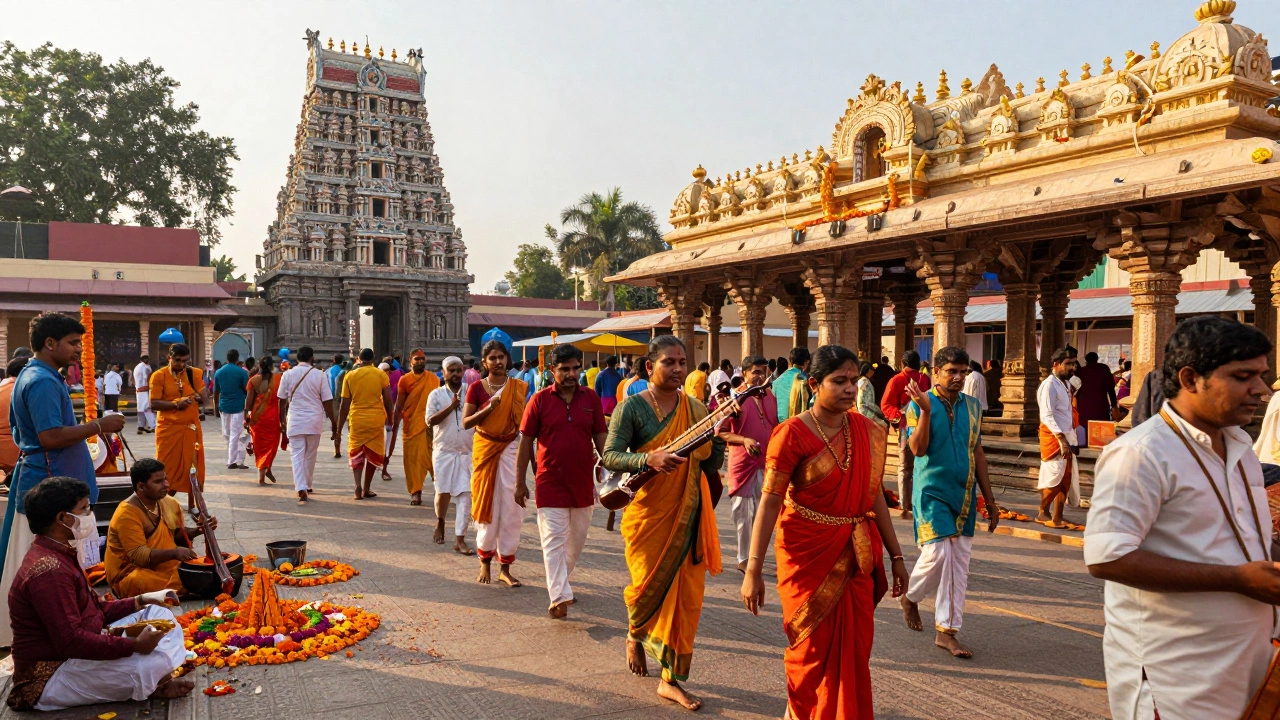
Temples aren’t just places of worship; they’re community hubs. The Meenakshi Amman Temple in Madurai or the Ramanathaswamy Temple in Rameswaram aren’t just architectural wonders-they’re living centers where people come to pray, celebrate, and even settle disputes. These temples have their own calendars, rituals, and musical traditions that are passed down through generations of priests and temple musicians.
The Role of Local Deities
While Shiva and Vishnu are widely worshipped, Tamil belief is deeply personal because of the hundreds of local deities-often called gramadevata or village gods. These aren’t distant figures from ancient epics. They’re protectors of specific neighborhoods, rivers, or even trees. A farmer might offer rice and jaggery to a deity named Kali Amman before planting. A mother might tie a thread around her child’s wrist after praying to Madurai Veeran, a warrior god believed to ward off illness.
These deities don’t always have grand temples. Many are worshipped under banyan trees, near wells, or in small shrines beside roads. Their rituals are simple: a flower, a coconut, a chant. But they’re powerful because they’re real. They respond to daily needs-health, harvests, safe travel. This is why Tamil people often say, “Our gods don’t wait for festivals. They’re here every day.”
Animism and Nature Worship
Beyond gods, Tamil belief holds that nature is sacred. Rivers aren’t just water-they’re goddesses. The Kaveri River, which flows through Tamil Nadu, is called Mother Kaveri. People bathe in it, offer flowers, and believe it cleanses not just the body, but the soul. Even today, you’ll see women placing lamps on the riverbank at dusk, whispering prayers as the flame flickers.
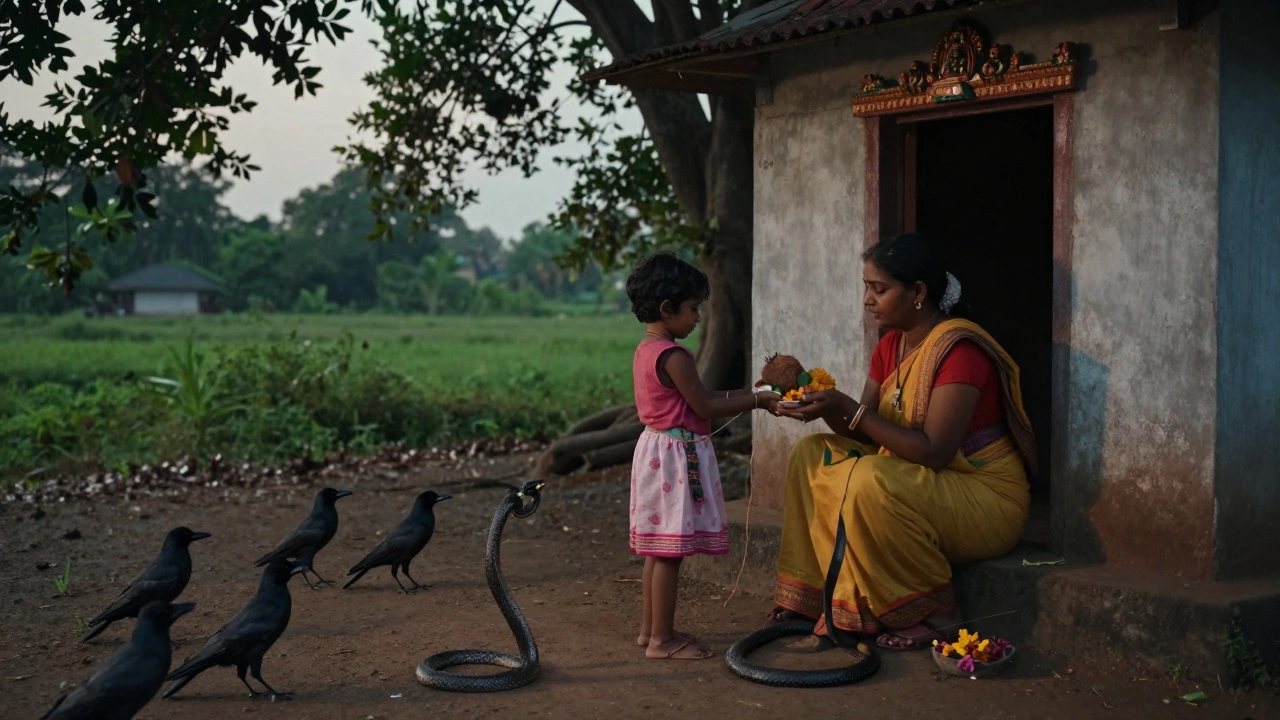
Animals, too, have spiritual meaning. Cows are revered, yes-but so are crows, snakes, and even spiders. In rural Tamil villages, it’s common to leave food for crows, believing they carry messages from ancestors. A black snake near the house isn’t feared-it’s welcomed as a sign of protection. These beliefs come from pre-Vedic traditions that still pulse beneath the surface of modern Tamil life.
Festivals: When Belief Becomes Movement
Festivals aren’t just celebrations. They’re acts of faith. Thai Pongal, the harvest festival in January, is more than rice cooking. It’s a thank-you to the sun, the earth, and the cattle that feed the family. The first bowl of Pongal is offered to the sun god, Surya. Then, the family eats together, and neighbors exchange sweets. No one is left out. That’s the heart of Tamil belief: community as sacred.
Chithirai Thiruvizha in Madurai lasts over 10 days and reenacts the divine wedding of Meenakshi and Sundareswarar. Over a million people walk the streets, carrying torches, drums, and idols. It’s not a performance. It’s a collective prayer. People don’t watch-they participate. Children carry flower baskets. Elders chant hymns. Even tourists are gently invited to join. This isn’t tourism. It’s tradition.
Death, Ancestors, and the Afterlife
Tamil beliefs about death are quiet but deeply held. There’s no single doctrine. Instead, there’s a rhythm: the body is cremated, ashes scattered in a sacred river, and a 13-day mourning period follows. During this time, family members eat simple meals, avoid celebrations, and offer rice balls (parvam) to ancestors.
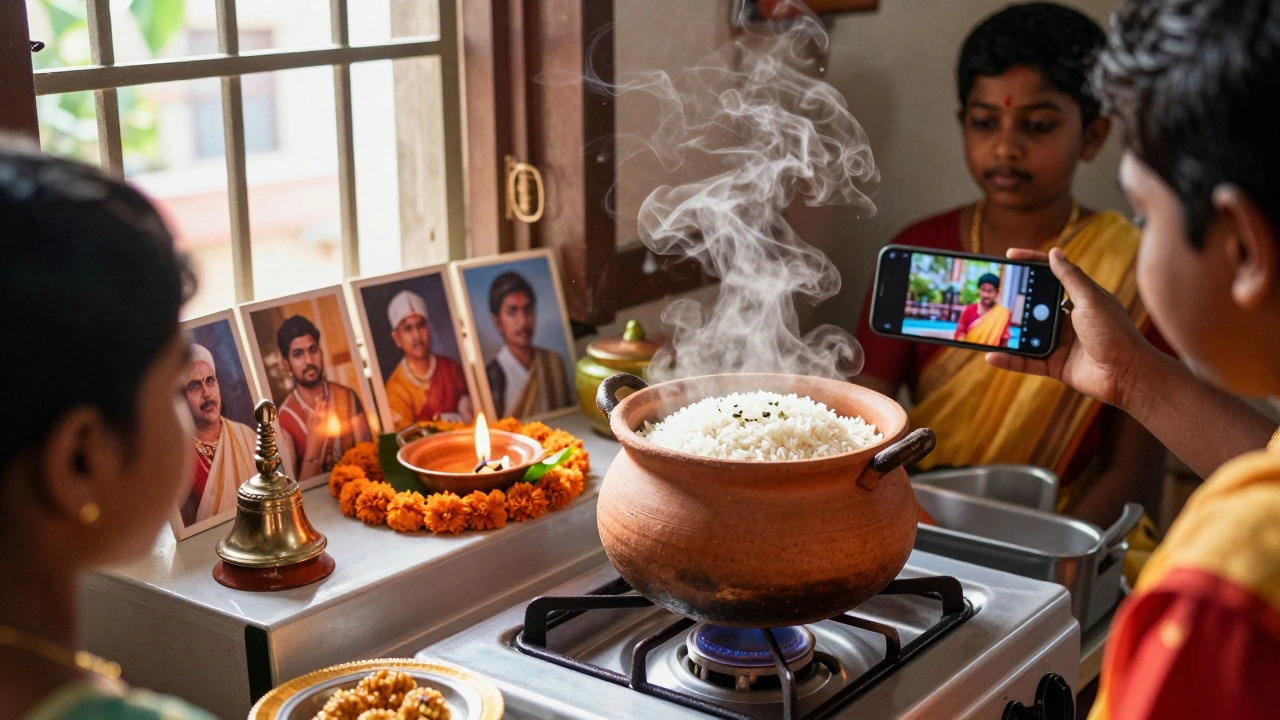
After death, the soul doesn’t vanish. It lingers, waiting to be remembered. That’s why every Tamil home has a small corner-sometimes just a shelf-with photos of grandparents, a lamp, and a bell. Ringing it at dawn is a way of saying, “We still see you.” Some families keep a lamp lit for months. Others feed crows daily. These aren’t superstitions. They’re acts of love.
Modern Life, Ancient Beliefs
Yes, many Tamils now live in cities, use smartphones, and work in tech jobs. But their beliefs haven’t faded-they’ve adapted. A software engineer in Chennai might meditate before work using a Tamil mantra. A Tamil family in Melbourne might celebrate Pongal with a pot of rice on a gas stove and still play traditional music on YouTube. The rituals change form, but not function.
Even in diaspora communities, belief stays strong. In Singapore, Tamil Hindu temples are among the busiest. In Malaysia, families still send offerings to village shrines back home. The internet hasn’t replaced tradition-it’s made it easier to keep alive.
Why It Matters
What the Tamil people believe in isn’t about doctrine. It’s about continuity. It’s about knowing your place in a chain that stretches back to the Sangam era, when poets sang of love, war, and gods who walked among humans. It’s about feeling safe because your ancestors still walk beside you. It’s about knowing that when you offer rice to the earth, you’re not just feeding a god-you’re feeding your own roots.
This is why Tamil beliefs survive. Not because they’re written in stone. But because they’re lived in every meal, every prayer, every sunrise.
Are Tamil beliefs the same as mainstream Hinduism?
No, Tamil Hinduism has its own distinct traditions. While it shares core concepts like karma and reincarnation, it places far more emphasis on local deities, devotional poetry (bhakti), and temple-centered rituals rather than Vedic sacrifices. The Tamil saints-Nayanars and Alvars-helped shape a version of Hinduism that’s deeply personal and emotionally expressive, unlike the more ritualistic forms found in northern India.
Do Tamil people worship only Hindu gods?
Most do, but not all. A small number of Tamils follow Christianity, Islam, or Jainism, especially in urban areas. However, even among non-Hindu Tamils, you’ll often find traces of traditional practices-like lighting lamps during festivals or offering food to ancestors. These customs have become cultural habits, passed down regardless of religious identity.
Why are snakes and crows important in Tamil belief?
Snakes are seen as guardians of the land and protectors of homes. In many villages, a snake near the house is considered a sign of divine presence. Crows are believed to carry messages from ancestors. Feeding them is a way of honoring the dead. These beliefs come from ancient animist traditions that predate Hinduism in the region and are still deeply respected today.
How do Tamil people honor their ancestors?
They do it daily. Families often have a small altar at home with photos of elders, a lamp, and a bell. Ringing the bell at dawn is a quiet way of saying they’re remembered. During death rituals, rice balls (parvam) are offered for 13 days. Many also feed crows or leave food outside, believing the soul may return in animal form. These aren’t rituals for show-they’re acts of ongoing connection.
Is Tamil belief changing with modern life?
Yes, but not in the way you might think. Instead of disappearing, traditions are being reimagined. Urban Tamils might stream temple chants instead of going in person. Diaspora families celebrate Pongal with imported rice and YouTube music. The core belief-honoring the divine in daily life-remains. Technology doesn’t replace tradition; it helps it travel.