India's Oldest Landmark: Discover the Ancient Sanchi Stupa
Explore why Sanchi Stupa, commissioned by Ashoka around 250BCE, is regarded as India's oldest landmark, its history, architecture, visitor tips, and preservation.
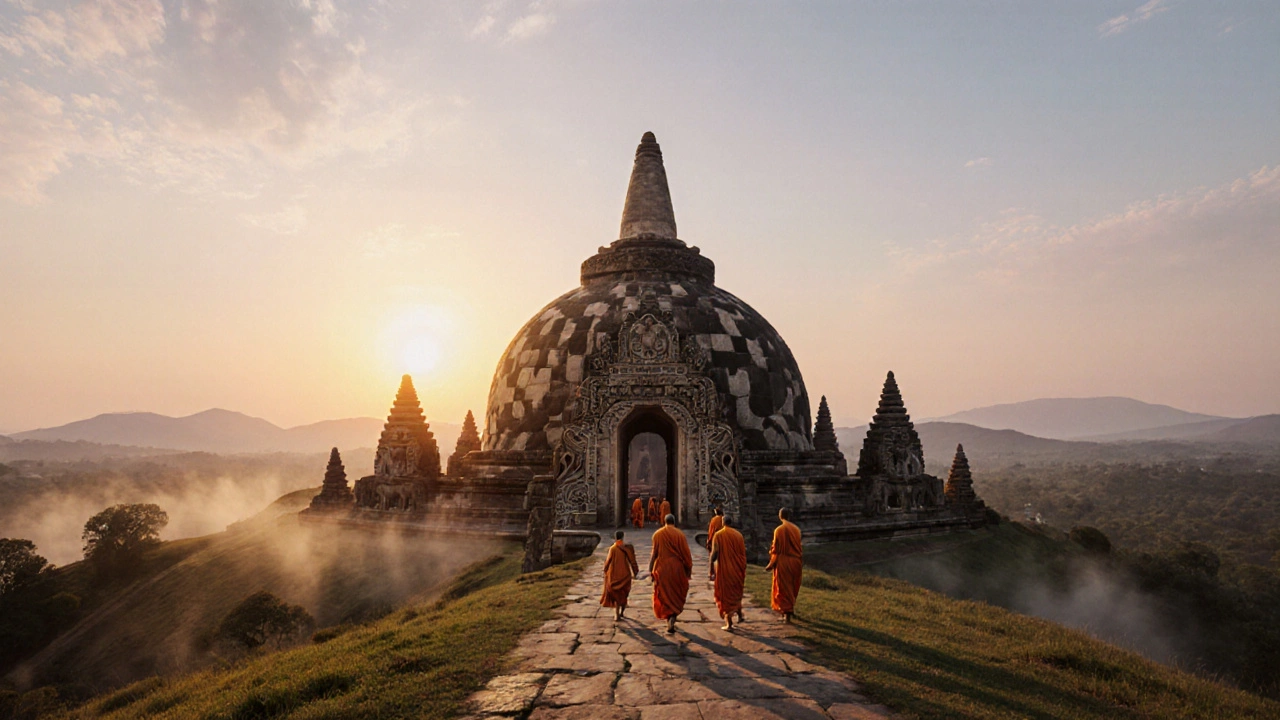
When you think of ancient Indian monuments, the Sanchi Stupa, a massive brick-and-stone dome built over 2,200 years ago to house Buddhist relics. Also known as the Great Stupa of Sanchi, it stands as one of the oldest and best-preserved Buddhist structures in the world. Unlike temples built for worship, stupas like this one were meant to be circled—walked around in reverence—as a physical act of devotion. This wasn’t just architecture; it was a spiritual roadmap carved in stone.
The Sanchi Stupa was commissioned by Emperor Ashoka in the 3rd century BCE, shortly after he embraced Buddhism following the bloody Kalinga War. Ashoka didn’t just build one stupa—he sent missionaries across Asia and erected hundreds of monuments to spread the Buddha’s teachings. But Sanchi became special because it survived wars, invasions, and centuries of neglect. While other stupas crumbled or were rebuilt, Sanchi remained largely untouched until British archaeologists rediscovered it in the 1800s. Its original gateways, or toranas, are masterpieces of early Indian art, carved with scenes from the Buddha’s life—even though he was never shown as a human figure. Instead, his presence was hinted at through symbols: an empty throne, footprints, or a Bodhi tree.
The site didn’t stop with Ashoka’s stupa. Over the next few centuries, rulers from the Shunga and Satavahana dynasties expanded the complex, adding more stupas, monasteries, and pillars. Today, the site includes over 50 structures, but the Great Stupa remains the heart of it all. It’s not just a relic—it’s a living link to the earliest days of Buddhist practice in India. And because it’s a UNESCO World Heritage, a designation given to places of outstanding cultural or natural importance, it’s protected not just by India but by global standards. Even today, monks and pilgrims walk its circumambulatory path, just as they did in 250 BCE.
What makes Sanchi different from other ancient sites like Amaravati or Bharhut? It’s the completeness. Most ruins are fragments. Sanchi gives you the full picture—the gates, the railings, the inscriptions, the layout. You can see how the community gathered, how rituals unfolded, how art and faith intertwined. And unlike later temples filled with gods and elaborate carvings, Sanchi’s silence speaks louder. There are no idols. No priests. Just stone, space, and stillness.
If you’ve ever wondered how Buddhism spread so far so fast, Sanchi holds the answer. It’s not in texts alone—it’s in the stones people walked around, the carvings they studied, the silence they respected. The posts below explore related topics: how Buddhist art evolved, what Ashoka really believed, and why this one site survived when others didn’t. You’ll find deep dives into the carvings, comparisons with other stupas, and stories of the people who preserved it through centuries of change. This isn’t just history. It’s a quiet, enduring witness to faith—and it’s still standing.
Explore why Sanchi Stupa, commissioned by Ashoka around 250BCE, is regarded as India's oldest landmark, its history, architecture, visitor tips, and preservation.