Nonsense Singing: What It Is and Why It Matters in Tamil Folk Music
When you hear someone humming a tune with no real words—nonsense singing, a vocal practice using syllables, sounds, and rhythmic patterns without literal meaning. Also known as jibberish singing, it’s not chaos—it’s a structured, ancient form of expression deeply rooted in Tamil Nadu’s rural traditions. You’ll hear it in village festivals, temple processions, and even during harvest dances. It’s not meant to be understood like a poem. It’s meant to be felt—like the pulse of a drum or the sway of a rice field in the wind.
This isn’t just random noise. In Tamil folk music, the oral and instrumental traditions passed down through generations in rural Tamil communities, nonsense singing carries rhythm, emotion, and spiritual intent. It’s used to invoke spirits in folk rituals, ceremonies tied to agriculture, healing, or ancestral worship in Tamil villages, where clear lyrics might distract from the energy being summoned. Think of it like a chant that bypasses the mind and speaks straight to the body. In Karakattam or Theru Koothu performances, singers use syllables like "hoi hoi," "kattu kattu," or "thiru thiru" not because they mean something, but because they *sound* right—because they match the step, the beat, the breath of the dancer.
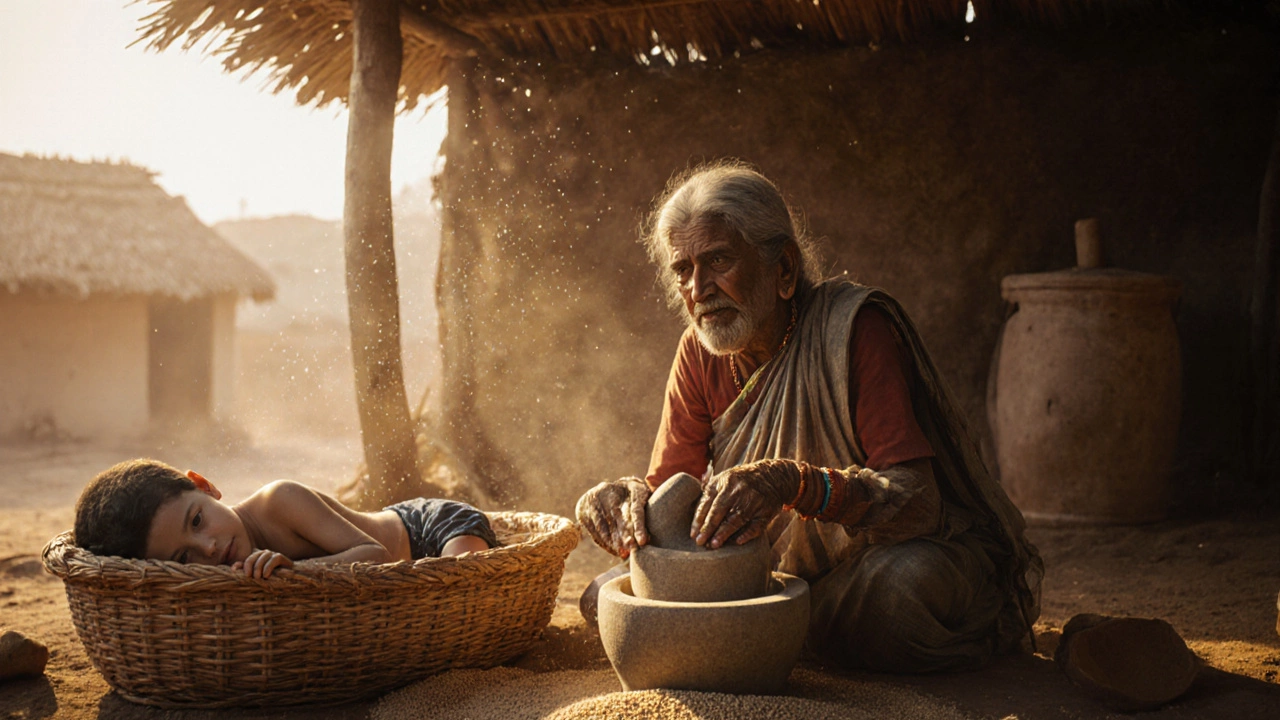
Why does it still exist? Because it works. In communities where literacy wasn’t always common, nonsense singing became a way to preserve rhythm, mood, and cultural memory without needing written words. It’s portable, adaptable, and deeply tied to the land. A mother might sing it to soothe a child. A priest might use it to call the gods during a night ritual. A group of women might chant it while grinding rice, turning labor into song. It’s not about meaning—it’s about motion, memory, and belonging.
You won’t find nonsense singing in classical Carnatic concerts. It doesn’t belong there. But if you walk into a village fair in Madurai, or catch a festival in Thanjavur during the harvest season, you’ll hear it—raw, loud, and alive. It’s the sound of tradition breathing. The posts below show you where this practice shows up, how it’s used, and who keeps it alive today. You’ll see how it connects to dance, to ritual, to everyday life in Tamil Nadu—not as a curiosity, but as a living thread in the culture’s fabric.