Healing Approach Selector
Find Your Healing Path
Answer a few questions to identify which healing approach best matches your goals and needs.
Your Recommended Approach
Why this approach?
People often use the words holistic and
What holistic really means
When someone says ‘holistic,’ they’re talking about treating the whole person-not just the symptom. Think of it like fixing a car that’s making a weird noise. A mechanic who only listens to the sound might replace a belt. A holistic mechanic checks the engine oil, tire pressure, battery life, even how the driver feels behind the wheel. That’s holistic.
In health, holistic means looking at your diet, sleep, stress levels, emotions, environment, and spiritual well-being-all of it. Ayurveda, for example, is a holistic system. It doesn’t just say, ‘You have a headache, take this pill.’ It asks: Are you eating too much spicy food? Are you sleeping late? Are you carrying anger from last week? Is your digestion weak? Then it suggests changes in food, daily routine, herbs, breathing, and even yoga.
Holistic doesn’t come from one system. It’s a philosophy. You can be holistic using Western nutrition, mindfulness practices, acupuncture, or traditional plant medicine. The goal is always balance across body, mind, and spirit.
What homeopathy actually is
Homeopathy is a specific medical system, created in the late 1700s by a German doctor named Samuel Hahnemann. It’s based on one rule: ‘Like cures like.’ That means if a substance causes symptoms in a healthy person, a tiny amount of it can cure those same symptoms in someone who’s sick.
For example, if cutting onions makes your eyes water and nose run, homeopathy might use a super-diluted onion extract (Allium cepa) to treat cold symptoms that look just like that. The dose? So tiny, it’s often diluted to the point where no molecules of the original substance remain. That’s the controversial part. Science says if there’s nothing left, it shouldn’t work. But millions still use it.
Homeopathic remedies come in little sugar pills or liquid drops. They’re labeled with names like ‘Arnica 30C’ or ‘Nux vomica 200.’ These aren’t herbs in the way you think of them. You won’t find actual arnica flowers in the pill. It’s water, alcohol, and a memory-according to homeopathy.
Homeopathy is not a philosophy. It’s a defined system with rules, remedies, and training. You can be a certified homeopath. You can’t be a certified ‘holistic practitioner’-because that’s not a formal system. It’s a mindset.
Ayurveda: the bridge between the two
Ayurveda, the ancient Indian system of medicine, is holistic. It’s also sometimes confused with homeopathy because both are labeled ‘natural’ or ‘alternative.’ But they’re not the same.
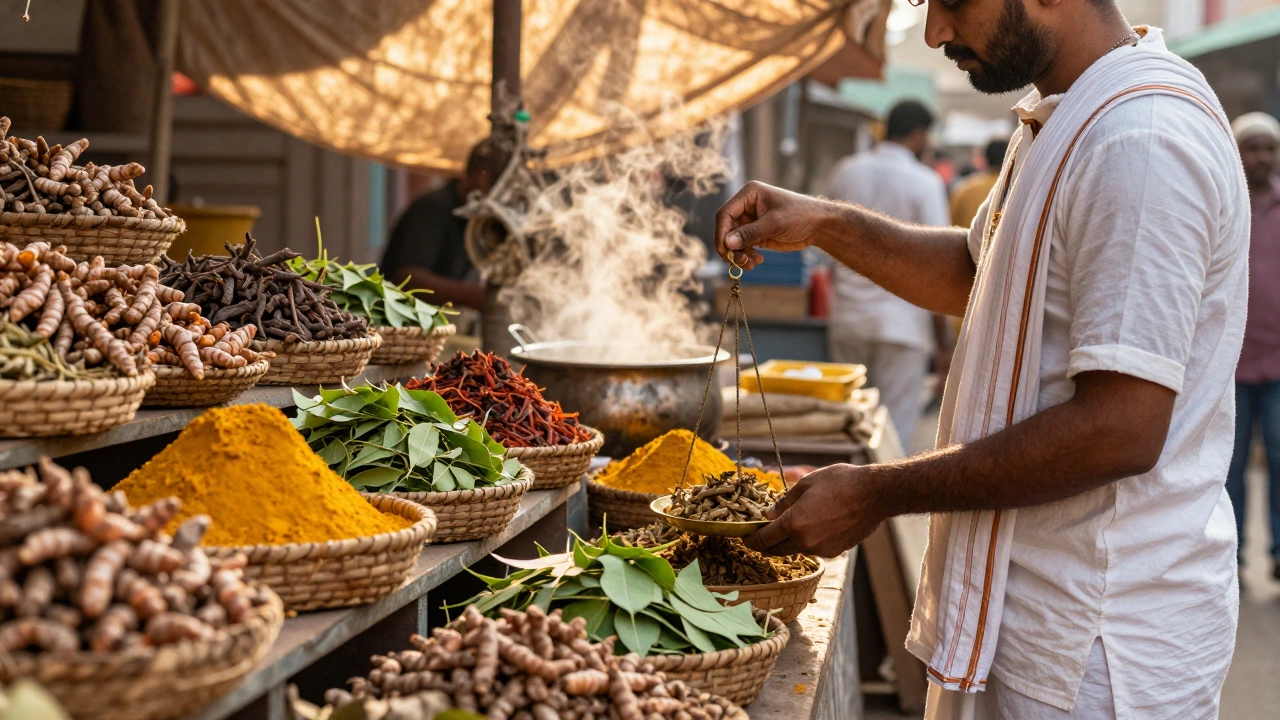
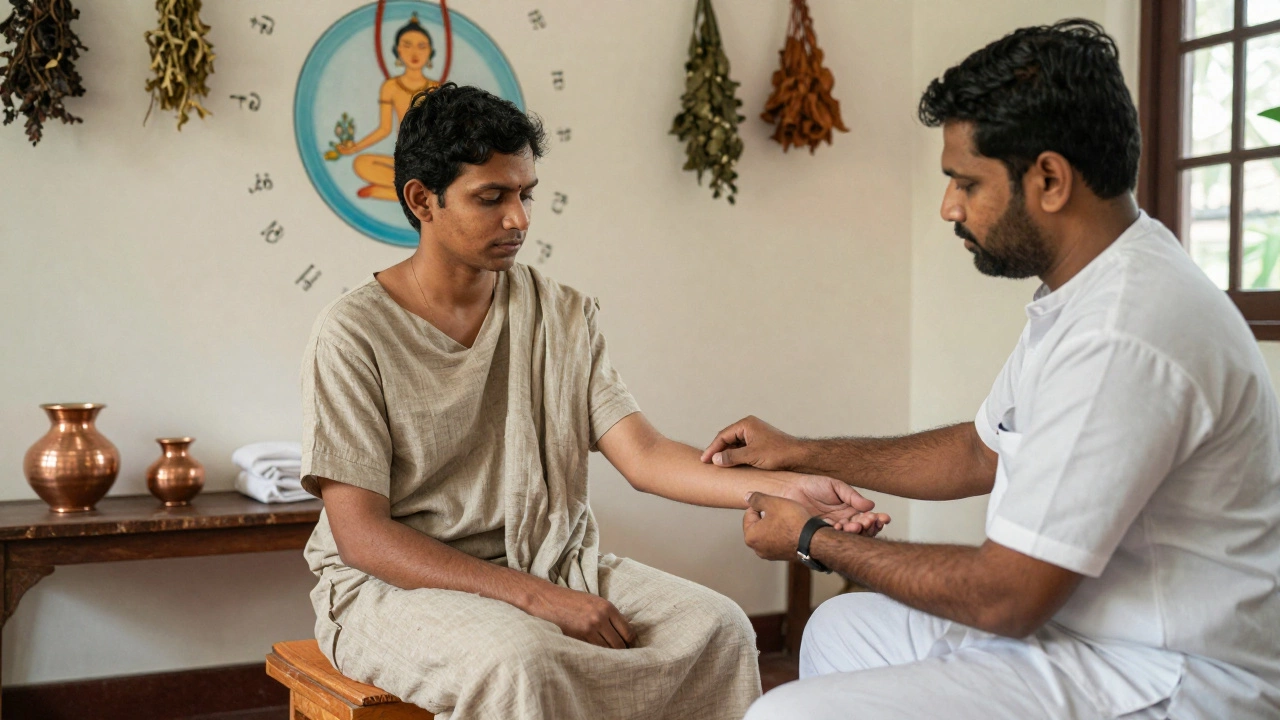
Ayurveda uses real plants-turmeric, ashwagandha, neem, triphala-ground into powders, boiled into teas, or pressed into oils. It uses pulse diagnosis, tongue analysis, and body type classifications (Vata, Pitta, Kapha). It prescribes daily routines, seasonal diets, detoxes, and yoga. It’s based on 5,000 years of observation, not dilution.
Some Ayurvedic clinics in India do offer homeopathic remedies alongside herbal treatments. That’s where the confusion starts. But that doesn’t mean Ayurveda is homeopathy. It just means some practitioners blend tools.
If you go to a traditional Ayurvedic center in Kerala, you’ll get a personalized plan: morning oil massage, warm lemon water, herbal capsules, yoga poses, and meditation. No sugar pills. No ultra-diluted solutions. Just real food, real herbs, and real rhythm.
Why people mix them up
Both holistic and homeopathic approaches reject the ‘one-size-fits-all’ model of modern medicine. Both focus on the body’s ability to heal itself. Both avoid synthetic drugs. Both sound gentle. Both are popular in wellness circles.
But here’s the difference:
- Homeopathy is a fixed system with specific remedies and rules. It’s about tiny doses of substances that mimic symptoms.
- Holistic is a broad approach. It’s about seeing the whole person and using whatever tools help-herbs, diet, talk therapy, movement, or yes, even homeopathy.
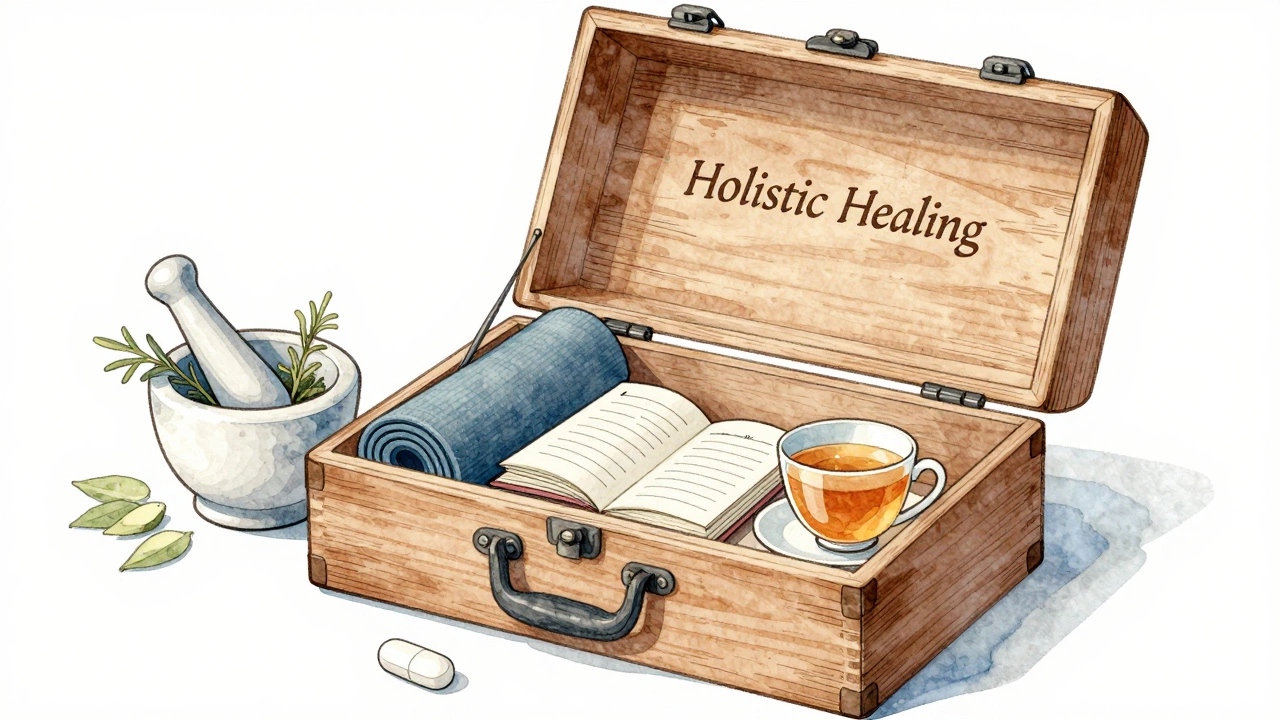
Think of it like this: Homeopathy is a single tool in a toolbox. Holistic is the whole toolbox-and the person using it.
Can you use both together?
Yes. Many people do. Someone with chronic anxiety might use Ayurvedic herbs like Brahmi to calm the nervous system, practice daily meditation (holistic), and take a homeopathic remedy like Ignatia for emotional shock (homeopathic). That’s not a contradiction. It’s practical.
But here’s the catch: If you’re going to combine them, know what each one is doing. Don’t assume a homeopathic pill is ‘natural healing’ because it’s sugar. Don’t assume an Ayurvedic herb is ‘just like homeopathy’ because it’s plant-based.
And always talk to someone who understands both. In India, some Ayurvedic doctors are trained in homeopathy too. In Australia, you’ll find integrative practitioners who know how to blend these safely. But if you’re just buying pills off a shelf labeled ‘natural,’ you’re guessing.
What to look for when choosing
If you want to feel better long-term:
- Choose holistic if you want to change habits, improve digestion, sleep better, reduce stress, and build resilience. Look for Ayurvedic consultants, nutritionists, yoga teachers, or functional medicine practitioners.
- Choose homeopathy if you’re dealing with acute issues-like a sudden cold, a bruise, or emotional upset-and you’re drawn to the idea of tiny doses. Find a certified homeopath with training.
Don’t let the word ‘natural’ fool you. Homeopathic remedies have no active ingredient. Ayurvedic herbs have real chemistry. Holistic care has real lifestyle change. Each has a place. But they’re not the same.
Real-world example: a cold in Delhi
Imagine someone in Delhi gets a cold: runny nose, sore throat, fatigue.
- A holistic approach might mean: drinking ginger-turmeric tea, sleeping early, avoiding dairy, doing gentle breathing exercises, and resting for three days.
- A homeopathic approach might mean: taking a single dose of Allium cepa 30C, based on the idea that the symptoms match onion irritation.
- An Ayurvedic approach might mean: taking Sitopaladi churna (a powdered blend of cinnamon, long pepper, sugar, and vasa), sipping warm water with honey, and avoiding cold air.
All three aim to help the body heal. But the methods? Totally different.
Final clarity
Homeopathy is a specific system of medicine. Holistic is a way of thinking. Ayurveda is a holistic system with its own rules and herbs. They can overlap, but they’re not interchangeable.
When you hear someone say, ‘I’m going holistic,’ ask: What does that look like for you? Is it food? Sleep? Movement? Herbs? Or just a sugar pill?
Understanding the difference isn’t about picking one ‘right’ way. It’s about knowing what you’re actually using-and why.
Is homeopathy part of Ayurveda?
No, homeopathy is not part of Ayurveda. Ayurveda is an ancient Indian system based on herbs, diet, and lifestyle. Homeopathy was developed in Germany in the 1700s and uses ultra-diluted substances. Some clinics in India offer both, but they are separate systems with different theories and practices.
Are holistic and natural the same thing?
Not exactly. ‘Natural’ usually means something derived from plants or minerals without synthetic additives. ‘Holistic’ means treating the whole person-mind, body, emotions, environment. You can have natural remedies that aren’t holistic (like taking a single herb for a headache), and holistic care that includes non-natural tools like talk therapy or meditation.
Can homeopathy cure chronic diseases?
There’s no strong scientific evidence that homeopathy cures chronic diseases like diabetes, hypertension, or autoimmune disorders. While some people report feeling better after using homeopathic remedies, studies show these effects are likely due to placebo or lifestyle changes. For chronic conditions, holistic approaches like Ayurveda, nutrition, and stress management have more research backing their long-term benefits.
Why do people in India use homeopathy if it’s not part of Ayurveda?
Homeopathy became popular in India during British rule and was later adopted into the national healthcare system. It’s widely available, affordable, and perceived as gentle. Many Indians use it alongside Ayurveda, allopathy, or yoga-not because it’s traditional, but because it’s accessible and fits into a culture open to multiple healing systems.
What’s the safest way to start holistic healing?
Start with small, evidence-based changes: drink more water, sleep at the same time every night, walk for 20 minutes daily, cut out processed sugar for a week. Then add Ayurvedic practices like tongue scraping or warm lemon water in the morning. Avoid jumping into expensive supplements or unregulated remedies. Real holistic healing builds slowly, with consistency, not quick fixes.