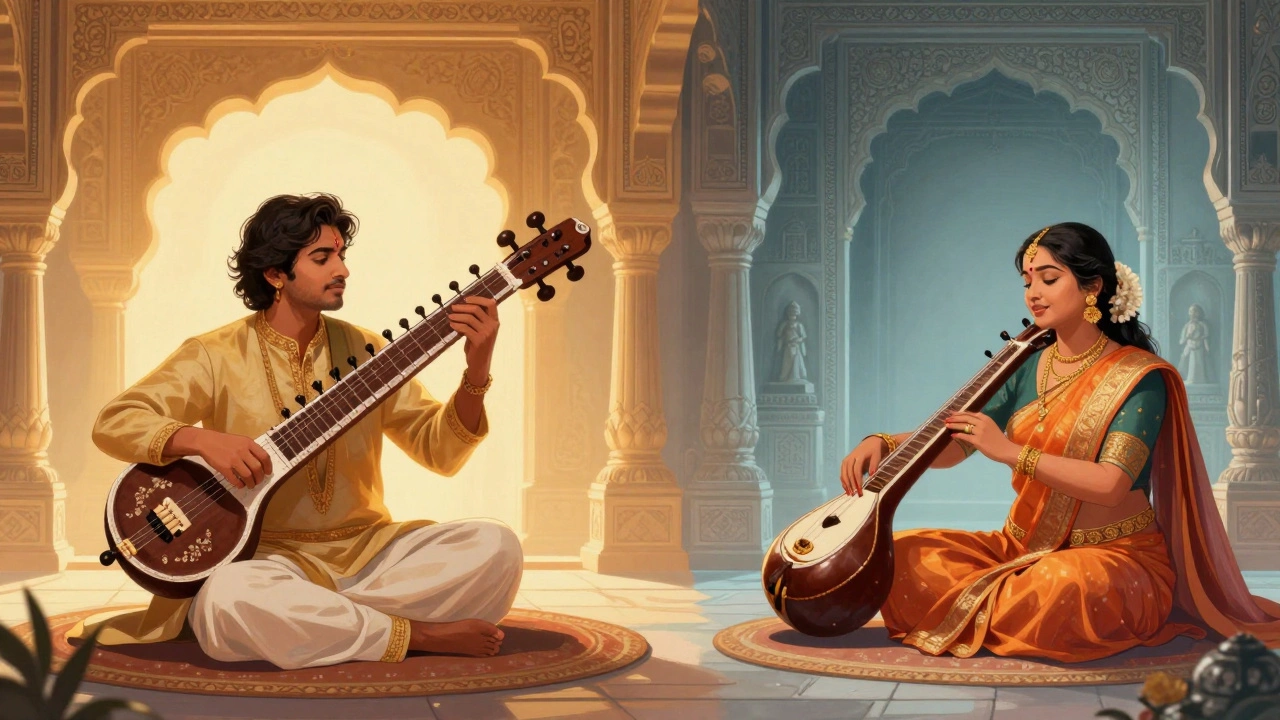
Hindustani vs Carnatic Music: Key Differences Explained
Explore the key differences between Hindustani and Carnatic music, covering history, raga usage, instrumentation, and performance styles in this comprehensive guide.
When you hear the slow, soaring notes of a sitar drifting through a evening concert, you’re listening to Hindustani music, the classical music tradition of North India, shaped by ancient Vedic roots and later influenced by Persian and Islamic court cultures. Also known as North Indian classical music, it’s not just melody—it’s a living system of ragas, talas, and improvisation passed down for centuries.
Hindustani music isn’t played the same way as its southern cousin, Carnatic music. While Carnatic music stays tightly structured and devotional, often rooted in temple rituals, Hindustani music thrives in royal courts and intimate gatherings, with room for personal expression. It uses instruments like the sitar, sarod, tabla, and bansuri—each chosen for how well they can bend notes and build emotion. The concept of raga, a melodic framework that evokes specific moods, times of day, or seasons is central here. A raga isn’t just a scale—it’s a mood you live in for 20 minutes or more. And the tala, the rhythmic cycle that guides the performance can be as simple as a steady 6-beat pattern or as complex as a 16-beat loop that feels like breathing.
What makes Hindustani music so powerful isn’t just its history—it’s how it adapts. You’ll find it in Bollywood film scores, fusion jazz bands, and even yoga sessions. But at its core, it’s still about the guru-shishya parampara—the teacher-student bond where years of listening, copying, and correcting shape a musician’s soul. You won’t find sheet music here. You’ll find recordings, live performances, and decades of whispered corrections in a quiet room.
If you’ve ever wondered why a North Indian classical concert feels different from a South Indian one, it’s because the two traditions grew apart—geographically, culturally, and spiritually. One leans into the mysticism of the desert and the courts of Delhi; the other into the temple bells of Tamil Nadu. Yet both carry the same ancient DNA. The posts below explore this divide in detail, from the instruments that define each style to the singers who pushed boundaries. You’ll also find stories about how ragas are chosen for monsoon nights, why some musicians refuse to record certain pieces, and how Hindustani music quietly lives on in diaspora communities from London to Los Angeles. This isn’t just music—it’s memory, identity, and resistance, note by note.
Explore the key differences between Hindustani and Carnatic music, covering history, raga usage, instrumentation, and performance styles in this comprehensive guide.
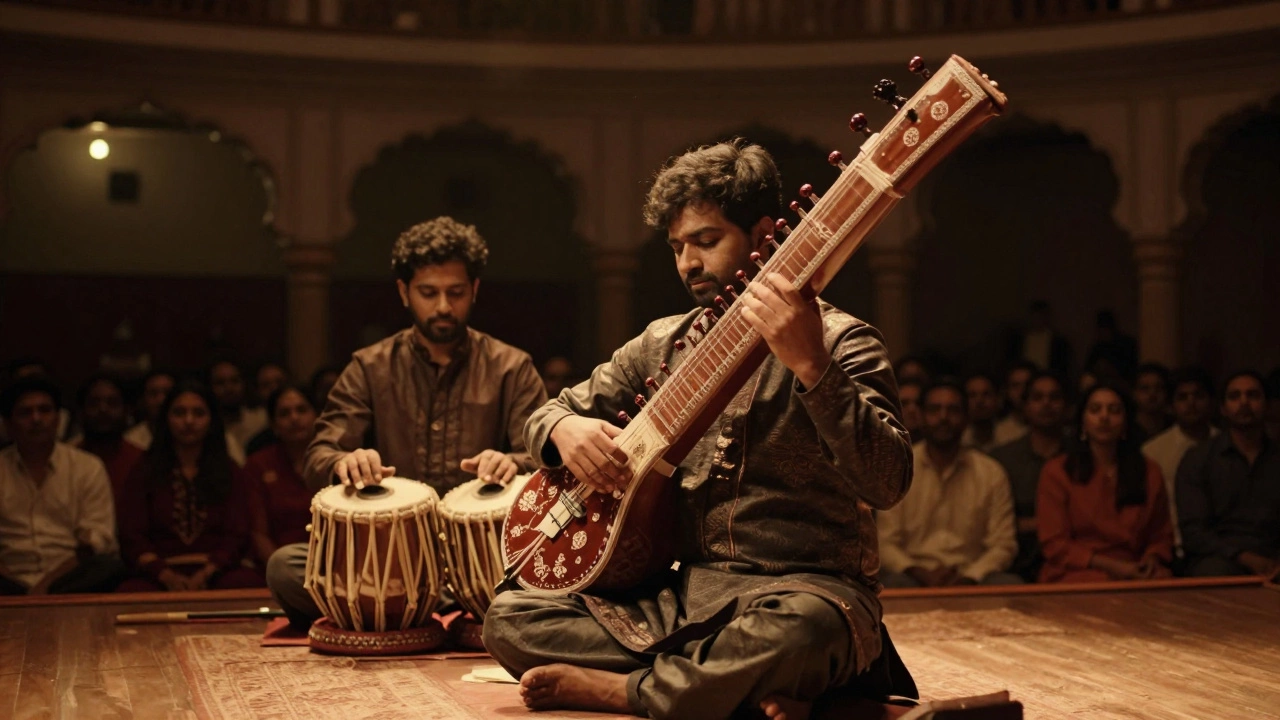
Discover why Hindustani music is the other name for North Indian classical music. Explore its origins, key differences from Carnatic music, core elements like Raga and Tala, and tips for beginners.
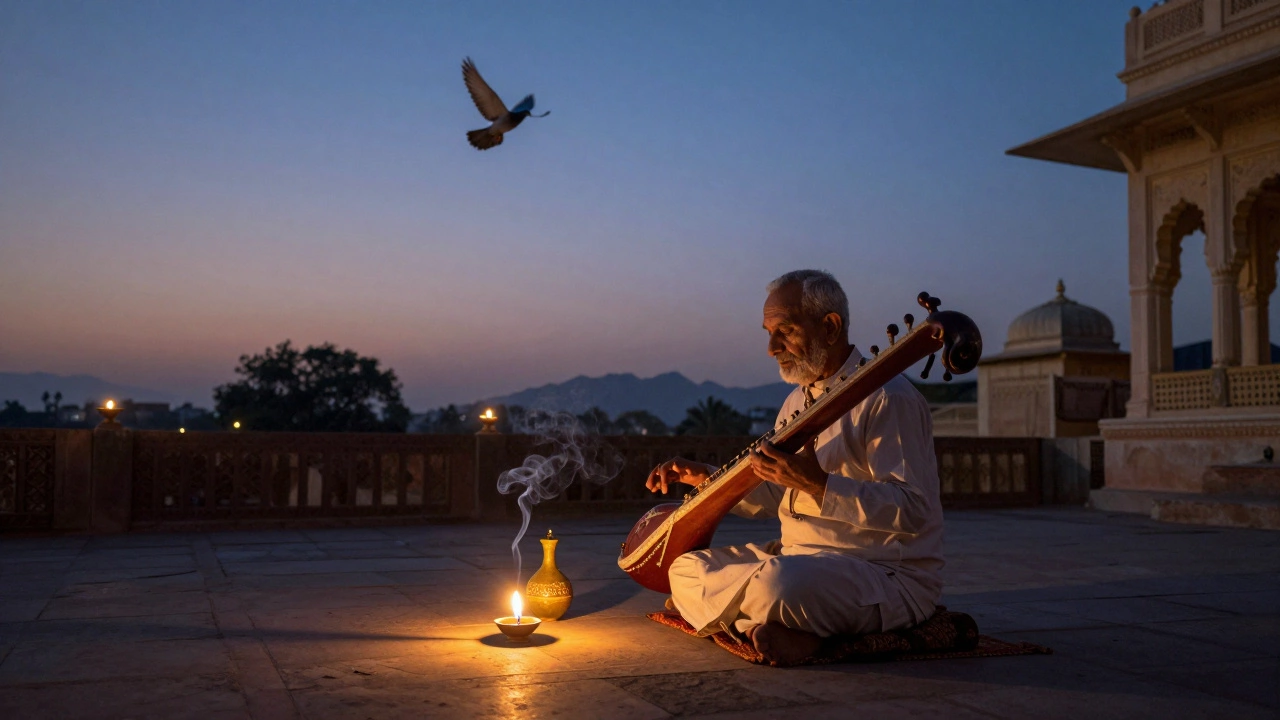
India doesn't have a chart-topping 'No. 1 song,' but Raga Yaman - a timeless Hindustani classical melody - is the closest thing to a national musical soul. Played at sunset, taught to beginners, and perfected by legends like Bhimsen Joshi, it carries centuries of peace, devotion, and tradition.
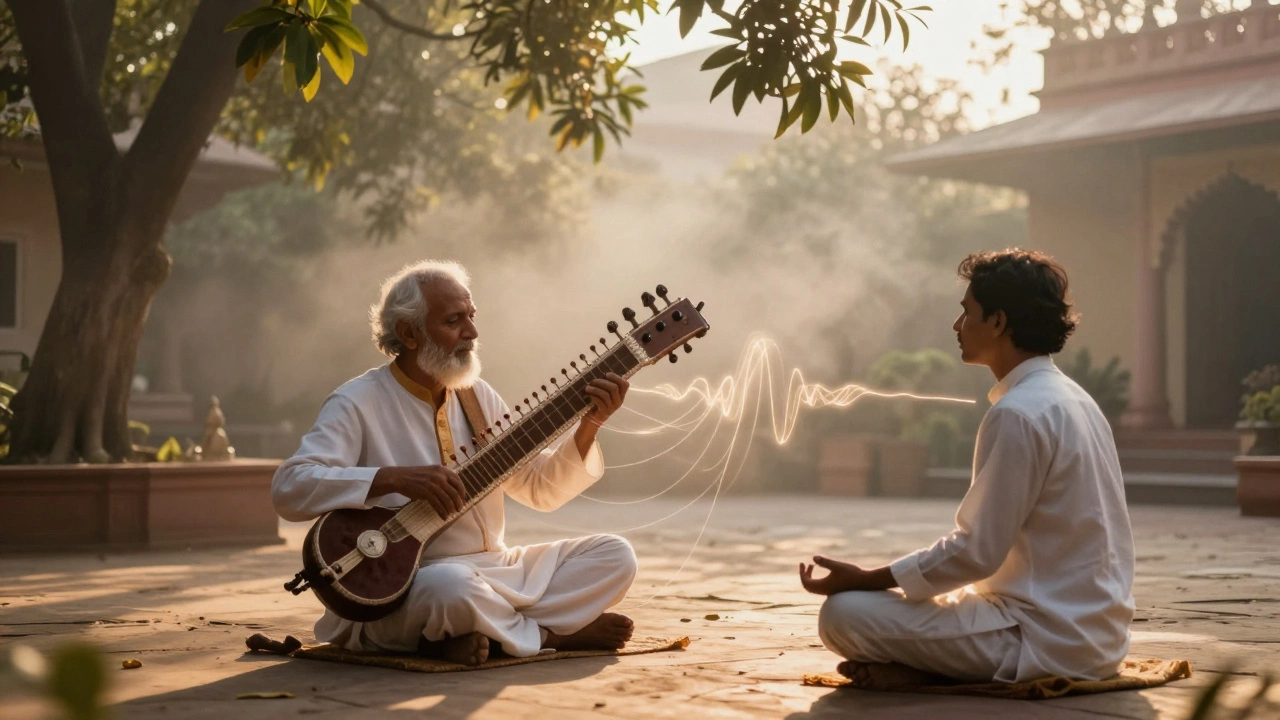
Indian classical music isn't just notes - it's a quiet force that slows the mind, connects to nature, and brings deep calm. Its spirituality comes from structure, not belief.
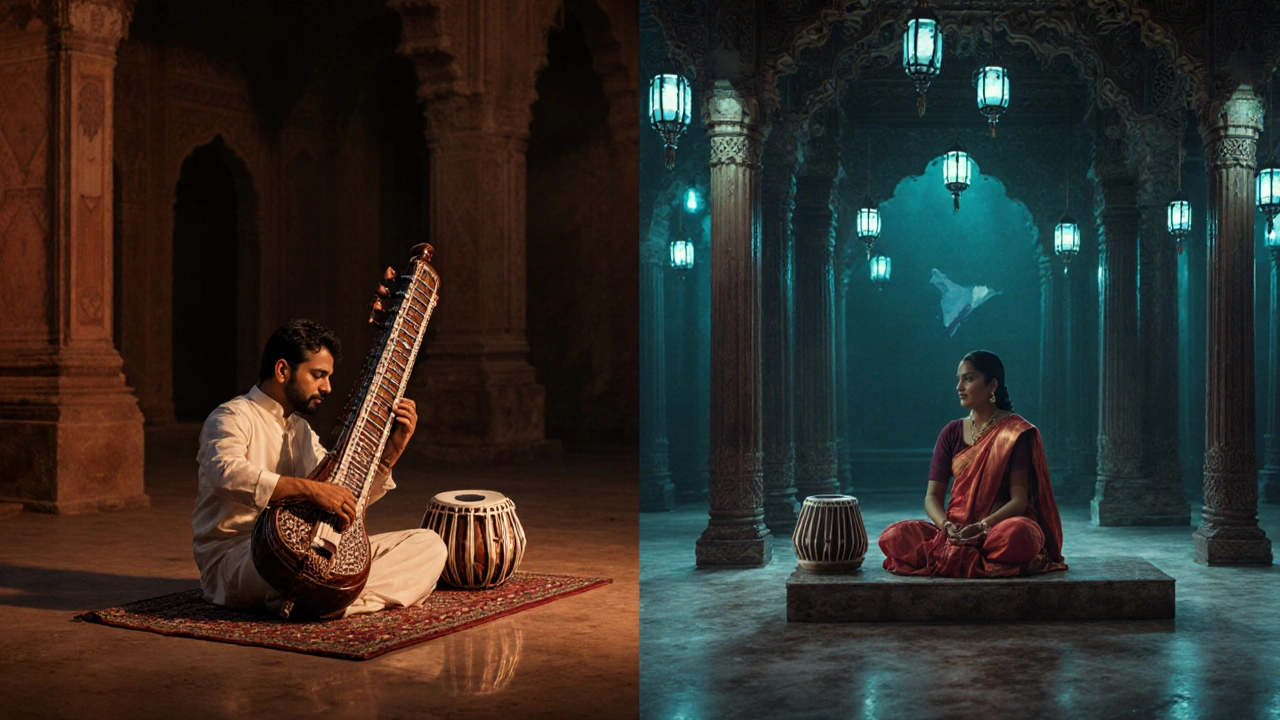
Discover the two main types of Indian classical music-Hindustani and Carnatic-by exploring their history, key elements, instruments, and how they differ.
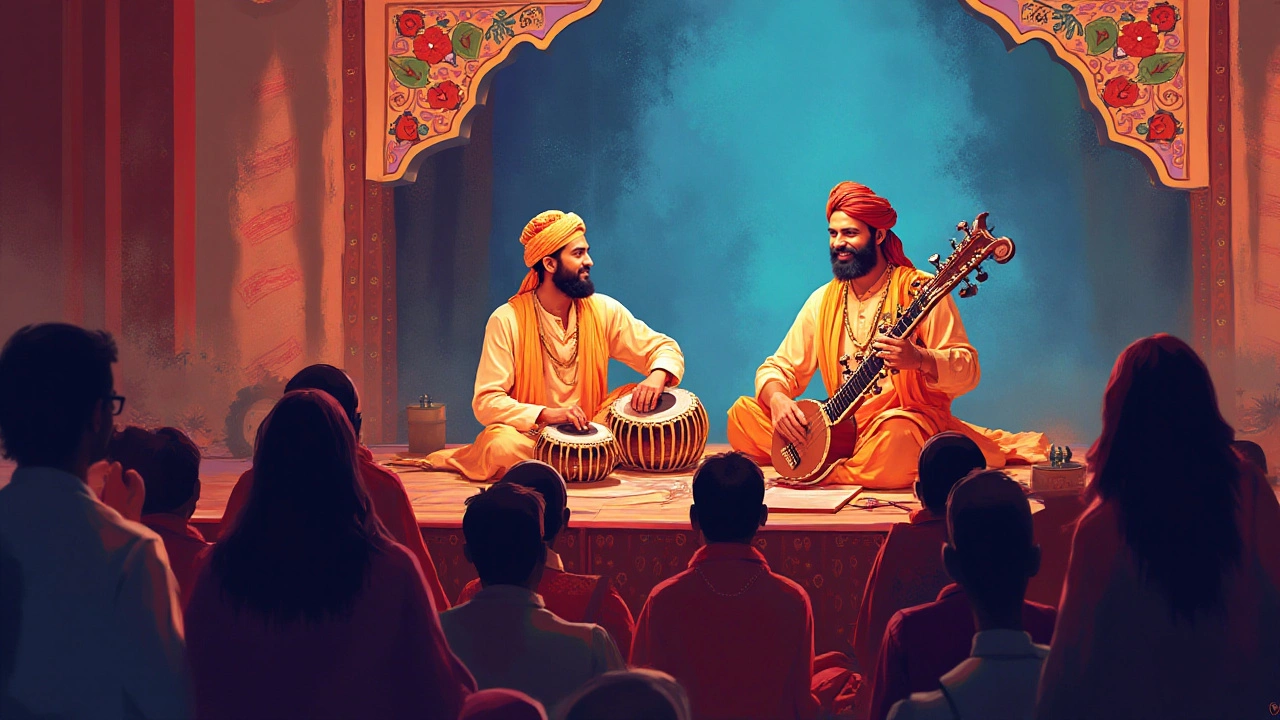
Hindustani classical music, a profound art form from northern India, uses several languages, each lending a unique charm and expression. Predominantly, songs are composed in languages such as Hindi, Urdu, Braj Bhasa, and Awadhi, reflecting the cultural diversity of the region. This musical tradition, deeply intertwined with historical and spiritual elements, serves as a conduit for storytelling and emotional expression. Through this article, we explore the significance of language in this genre, how it influences performances, and its role in preserving cultural heritage.