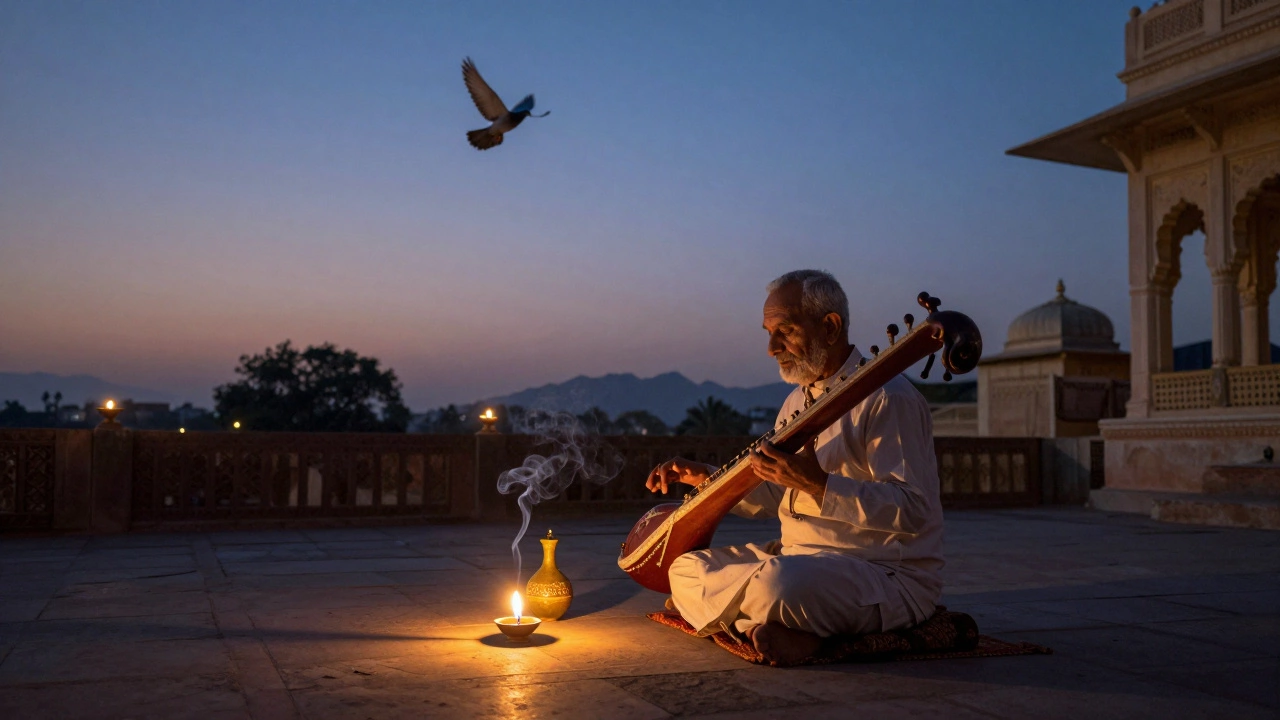
Raga Yaman Time Selector
When is the Best Time to Listen to Raga Yaman?
Raga Yaman is traditionally played during the evening hours. Select your current time to see if it's the right moment for this soulful raga.
Raga Yaman
The most beloved raga in Indian classical music, traditionally played after sunset.
Known for its calming, introspective quality that helps listeners connect with deeper emotions.
Why this time?
In Indian classical theory, ragas are tied to specific times of day. Raga Yaman belongs to the night because its soothing, reflective nature matches the calm after sunset.
When people ask, "Which is India's No. 1 song?" they’re not looking for a chart-topping pop hit. They’re asking about something deeper - a melody that has echoed through temples, homes, and concert halls for centuries. In Indian classical music, there’s no official ranking. But if you ask hundreds of musicians, scholars, and listeners what piece carries the most weight, the answer almost always circles back to one thing: Raga Yaman.
Why Raga Yaman Isn’t Just Another Raga
Raga Yaman isn’t a song in the Western sense. It’s a framework - a system of notes, phrases, and emotional rules that guide improvisation. Think of it like a recipe where the ingredients are fixed, but the cooking is endless. It’s built on a seven-note scale: Sa, Re, Ga, Ma, Pa, Dha, Ni. What makes it special is how those notes are treated. The flat Ni and sharp Ga create a soft, floating quality. It’s not loud. It’s not fast. It’s calm, deep, and full of longing.Every evening, during the hour just after sunset, musicians across India begin to play Raga Yaman. It’s not a rule. It’s a tradition. That’s because, in Indian classical theory, ragas are tied to time. Raga Yaman belongs to the night. It’s meant to be heard when the world slows down. You don’t listen to it to get pumped up. You listen to it to settle your mind.
The Voice Behind the Legend: Bhimsen Joshi
If Raga Yaman is the soul, then Bhimsen Joshi was one of its greatest voices. The late Hindustani vocalist, who passed away in 2011, didn’t just perform this raga - he redefined it. His version, recorded live in the 1970s, is still played in music schools across India. It’s the version students learn first.Joshi’s rendition lasted over 45 minutes. He didn’t rush. He didn’t show off. He let each note breathe. He’d hold a single tone for 12 seconds, letting the resonance sink into the room. Listeners say they felt their heartbeat sync with his voice. That recording became the unofficial standard. Even today, if you ask a student in Delhi, Varanasi, or Chennai what the "perfect" Raga Yaman sounds like, they’ll hum Joshi’s version.
The Instrument That Carries the Melody
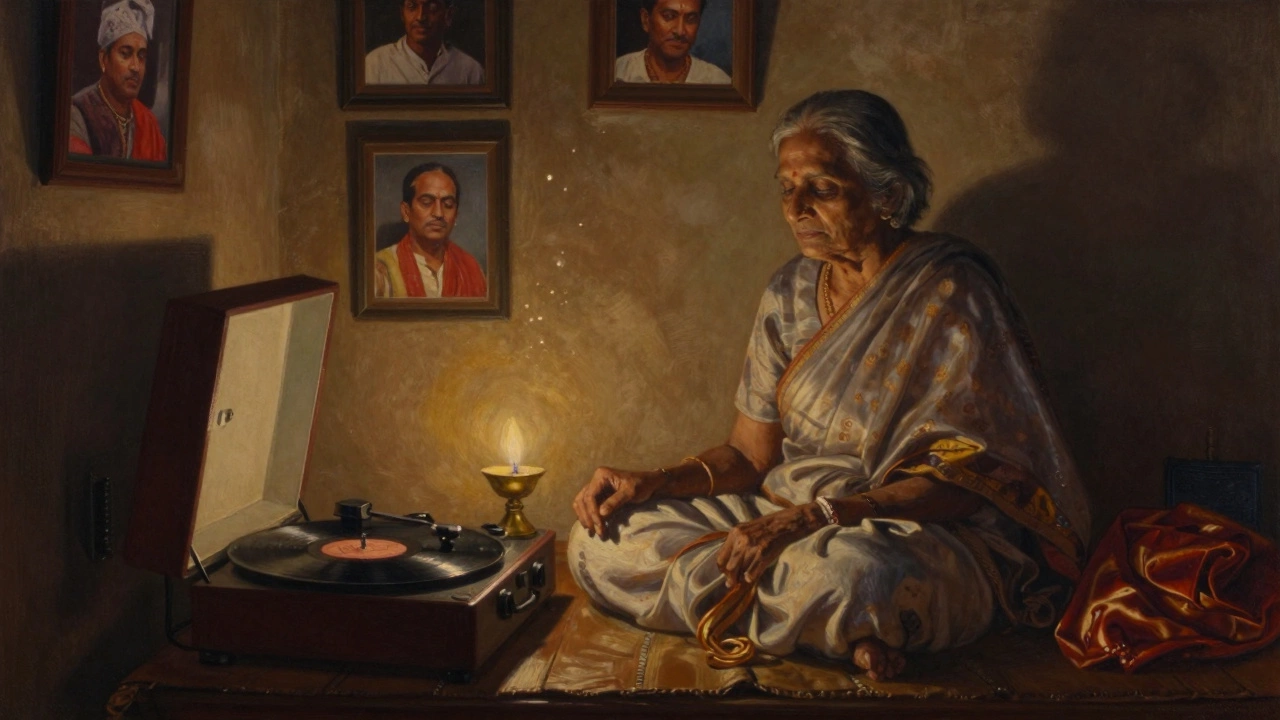
While voice is central, the Veena - an ancient string instrument with 24 frets and seven strings - is often called the "king of instruments" for playing Raga Yaman. The Veena’s long neck and resonant gourds allow for slow, sliding notes called meend. That’s essential for Raga Yaman, where the movement between notes is as important as the notes themselves.Unlike the sitar, which is more popular today, the Veena’s tone is softer, more like a human sigh. Many older masters refused to play Raga Yaman on the sitar. They said the sitar’s metallic twang disrupted the raga’s quiet gravity. Even today, you’ll find Veena players in temples of South India, playing Raga Yaman during morning rituals. It’s not for an audience. It’s for the divine.
Why No Other Raga Has Taken Its Place
There are hundreds of ragas in Indian classical music. Raga Bhairav, Raga Malkauns, Raga Todi - all are deeply loved. But none have the same universal presence as Raga Yaman.Raga Bhairav is serious, almost solemn. Raga Malkauns is mysterious, slow, and dark. Raga Todi is emotional, almost tearful. Raga Yaman? It’s balanced. It’s warm without being loud. It’s spiritual without being heavy. It’s the raga you turn to when you need peace, clarity, or connection.
It’s also the raga most often used to teach beginners. Why? Because its structure is logical. The note relationships are clear. The phrases repeat in ways that stick in memory. A student who masters Raga Yaman has learned the foundation of Hindustani music.
Where You’ll Hear It Today
You won’t find Raga Yaman on Spotify’s top 50 in India. But you’ll hear it in places no algorithm can track:- In the early morning at the Meera Bai Temple in Udaipur, where a single Veena player begins the day with this raga.
- In the living rooms of old families in Varanasi, where grandparents still play recordings of Bhimsen Joshi every evening.
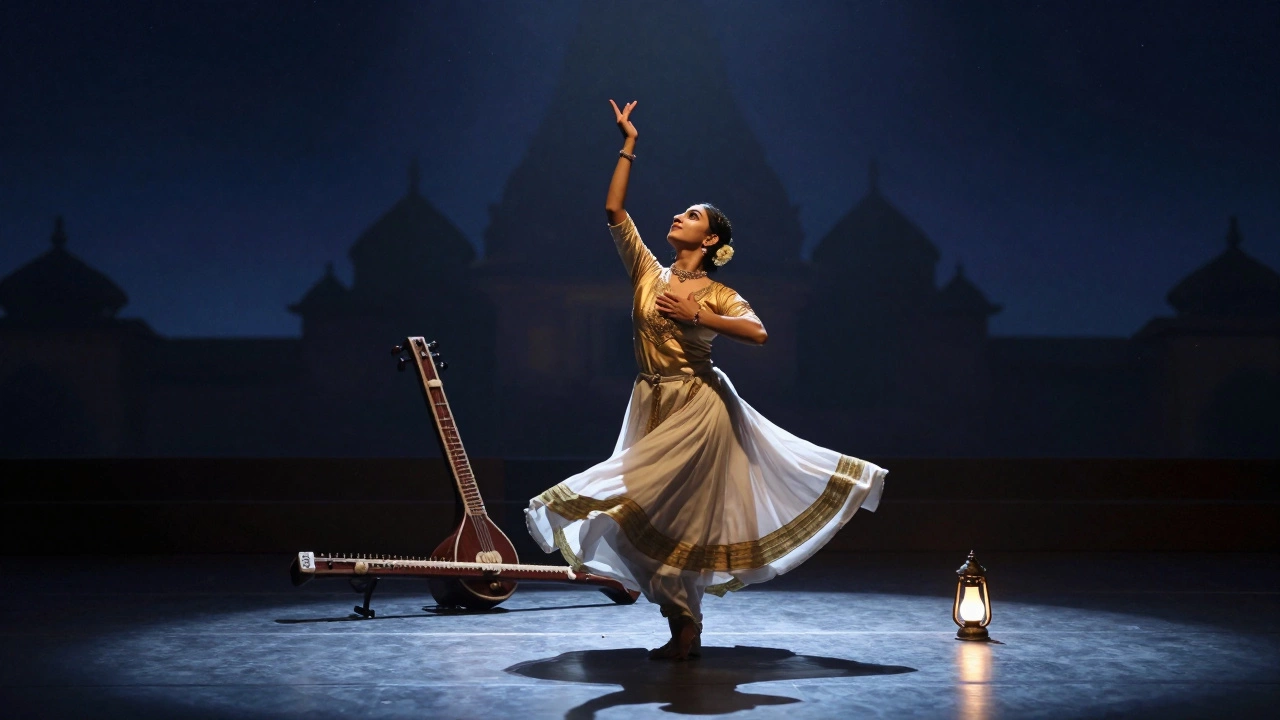
- In the final moments of a Kathak dance performance, where the dancer freezes in silence as the last note of Raga Yaman fades.
- In radio broadcasts on All India Radio during the "Raga of the Week" segment - Raga Yaman is chosen more than any other.
Even Bollywood has borrowed from it. The opening theme of the 1981 film Umrao Jaan is based on Raga Yaman. That melody, sung by Lata Mangeshkar, is still played at weddings and funerals - not because it’s sad, but because it’s sacred.
The Real Answer: There Is No "No. 1 Song"
Here’s the truth: India doesn’t have a "No. 1 song." That’s a Western idea. Indian classical music doesn’t rank. It reveres. It passes down. It lives in silence as much as in sound.Raga Yaman is the closest thing to a national melody. Not because it’s the most popular. But because it’s the most enduring. It’s the one that survives wars, migrations, and digital noise. It’s the one that still makes a 70-year-old grandmother close her eyes and whisper, "That’s home."
So if you ever hear a slow, gentle melody in the evening, with no drums, no beats - just voice and strings - you’re likely hearing Raga Yaman. And if you let it sink in, you’ll understand why so many say it’s India’s heart.
Is Raga Yaman the same as a song?
No. Raga Yaman is not a fixed song like "Happy Birthday." It’s a raga - a melodic framework with rules for improvisation. Musicians use its notes and phrases to create unique performances each time. There’s no single recording that’s "the" version - but Bhimsen Joshi’s is the most widely studied and revered.
Why is Raga Yaman played in the evening?
In Indian classical music, ragas are linked to times of day based on mood and natural energy. Raga Yaman is considered a night raga because its soothing, introspective quality matches the calm after sunset. It’s believed to help the listener reflect, relax, and connect with deeper emotions - making it ideal for evening listening.
Can Raga Yaman be played on any instrument?
Yes, but some instruments capture its essence better. The Veena and human voice are considered most authentic because they allow for smooth glides (meend) and subtle pitch variations. While the sitar, flute, or even harmonium can play it, purists say these instruments lose the raga’s soft, flowing quality - especially the delicate microtones between notes.
Is Raga Yaman popular outside India?
Yes. It’s one of the most studied ragas in global ethnomusicology programs. Universities in the U.S., Europe, and Japan include Raga Yaman in their Indian classical music courses. Western musicians like John McLaughlin and George Harrison have incorporated its structure into their work. But its deepest roots remain in India’s spiritual and cultural spaces.
Why don’t we hear Raga Yaman on radio or TV often?
Because it’s not made for quick listening. A full performance can last 30 to 60 minutes. Modern media favors short, catchy tracks. But on All India Radio’s classical music slots - especially late at night - Raga Yaman still airs regularly. Those who seek it out find it. It’s not meant for mass appeal. It’s meant for quiet attention.