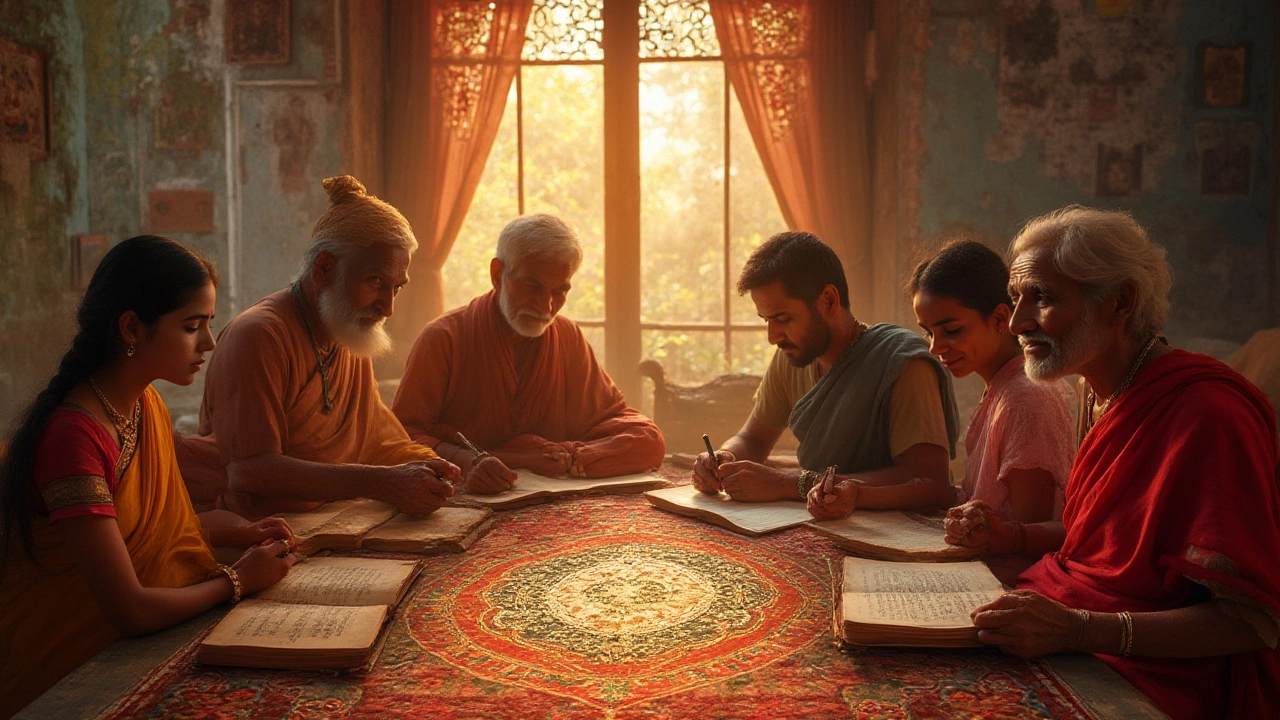
Do Hindus Have a Bible? Understanding Hindu Sacred Texts and Scriptures
Explore whether Hindus have a Bible, how Hindu scriptures are structured, and what texts shape the religion, beliefs, and daily life for millions.
When people talk about Hindu religious texts, sacred writings that guide belief, ritual, and ethics in Hinduism. Also known as Hindu scriptures, they aren't locked in libraries — they're chanted in temples, quoted in homes, and woven into festivals like Diwali and Navaratri. These aren’t just old books. They’re living guides that shape how millions understand duty, devotion, and the divine.
The Vedas, the oldest Hindu texts, composed in Sanskrit over 3,000 years ago form the foundation. Four main collections — Rig, Yajur, Sama, and Atharva — contain hymns, rituals, and chants used in ceremonies even today. Then come the Upanishads, philosophical expansions that explore the nature of the self and ultimate reality. These aren’t abstract ideas. They’re the reason many Hindus meditate, seek inner peace, or see the divine in everything around them.
The Bhagavad Gita, a 700-verse dialogue between Prince Arjuna and Lord Krishna, is perhaps the most widely read. It doesn’t just tell a story — it answers real questions: What’s my duty? How do I stay calm under pressure? Why should I act even when the outcome is uncertain? People turn to it during tough times, before big decisions, or just to find meaning in daily life. And it’s not just for monks — it’s in classrooms, boardrooms, and family discussions across India and beyond.
These texts don’t exist in a vacuum. They connect to the blue skin of Krishna, the symbolism behind Diwali’s lights, and why sweets are shared during festivals. They’re tied to the rhythm of bol banao in folk songs, the structure of Carnatic music, and even the debates around yoga’s spiritual roots. You’ll find them referenced in how Tamil communities celebrate Diwali differently, or why Ayurveda draws from ancient wisdom — and why some warn about its unregulated practices.
Some texts, like the Puranas, turn philosophy into stories — gods with multiple arms, cosmic cycles, and divine battles. These aren’t just myths. They’re cultural memory. They explain why certain rituals are done, why colors matter, and how devotion takes shape. You won’t find Aphrodite in these pages — but you’ll find Lakshmi, Radha, and Durga, each embodying love, power, and grace in ways that speak directly to life in India today.
What you’ll find below isn’t a textbook list. It’s a collection of real questions people ask: Why are gods blue? Is yoga okay for Christians? Why do some festivals last 15 days? How do these texts show up in food, music, and family traditions? These aren’t academic puzzles. They’re lived experiences — shaped by centuries of thought, still changing as people find new meaning in old words.
Explore whether Hindus have a Bible, how Hindu scriptures are structured, and what texts shape the religion, beliefs, and daily life for millions.