Handicraft Authenticity Checker
Check Your Handicraft Authenticity
Select the craft type and answer the authenticity questions to determine if your item is genuine or a counterfeit.
When people think of India, they don’t just picture temples or spices-they think of something they can hold, wear, or hang on their wall. Something made by hand, passed down through generations, and packed with meaning. The most famous product of India isn’t a gadget, a car, or a software app. It’s a handwoven Banarasi silk sari. Or a Pashmina shawl from Kashmir. Or a Madhubani painting on paper. These aren’t just objects. They’re stories stitched into thread, painted in natural dyes, and carved into wood.
Why Handicrafts Are India’s True Export
India exports over $6 billion in handicrafts every year. That’s more than its software services exports in the 1990s. But unlike tech products that can be copied in a factory, Indian handicrafts can’t be replicated without the hands that made them. A single Banarasi sari takes 3 to 6 months to weave. A Pashmina shawl uses wool from Himalayan goats, spun by hand in freezing temperatures. A Madhubani painting uses rice paste, natural pigments, and brushes made from twigs. No machine can copy the slight unevenness that makes them real.
These crafts aren’t just beautiful-they’re alive. They’re made in villages where grandmothers teach granddaughters how to tie knots, mix colors, or carve patterns. The skill isn’t taught in schools. It’s passed down at the loom, the hearth, the kitchen table. That’s why UNESCO calls them intangible cultural heritage. They’re not just products. They’re living traditions.
The Banarasi Silk Sari: More Than Fabric
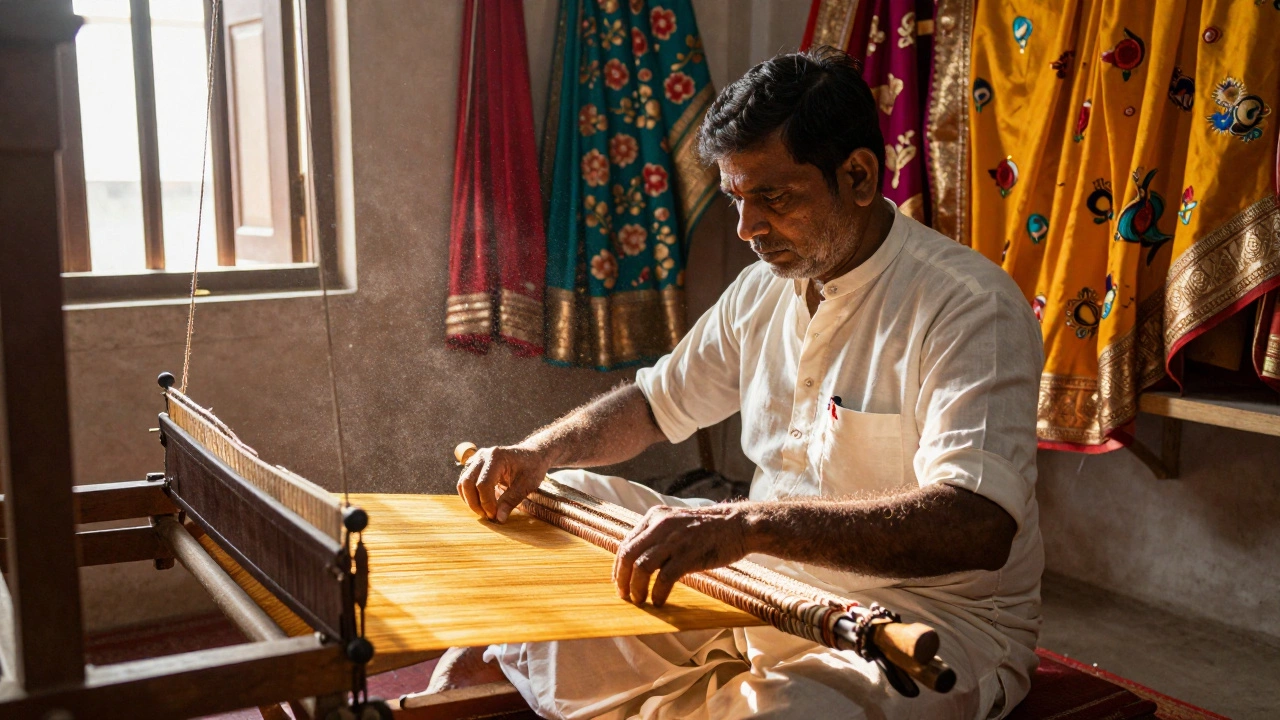
If you had to pick one item that represents India’s craftsmanship, it would be the Banarasi silk sari. Made in Varanasi, Uttar Pradesh, these saris have been woven since the Mughal era. Gold and silver zari threads-real metal, not synthetic-are threaded into silk to create floral motifs, peacocks, and intricate borders.
A good Banarasi sari isn’t cheap. It costs anywhere from ₹8,000 to ₹2 lakh ($100 to $2,500). But here’s the truth: if it’s under ₹5,000, it’s not real Banarasi. Real ones use hand-loomed silk, not power looms. The zari is pure silver coated in gold, not plastic. The patterns aren’t printed-they’re woven, thread by thread. A master weaver can produce only one sari every three months.
These saris aren’t just worn at weddings. They’re heirlooms. A mother gives her daughter a Banarasi sari as a wedding gift. It’s passed down. It’s worn again at the birth of a grandchild. That’s why the Indian government protects the Geographical Indication (GI) tag for Banarasi silk. Only saris made in Varanasi and nearby districts can legally be called Banarasi.
Pashmina: The Warmth of the Himalayas
Then there’s Pashmina. Not to be confused with the cheap acrylic shawls sold in tourist markets. True Pashmina comes from the undercoat of the Changthangi goat, found only in the high-altitude plateaus of Ladakh and Nepal. Each goat produces about 100-170 grams of fiber per year. It takes wool from three goats to make one shawl.
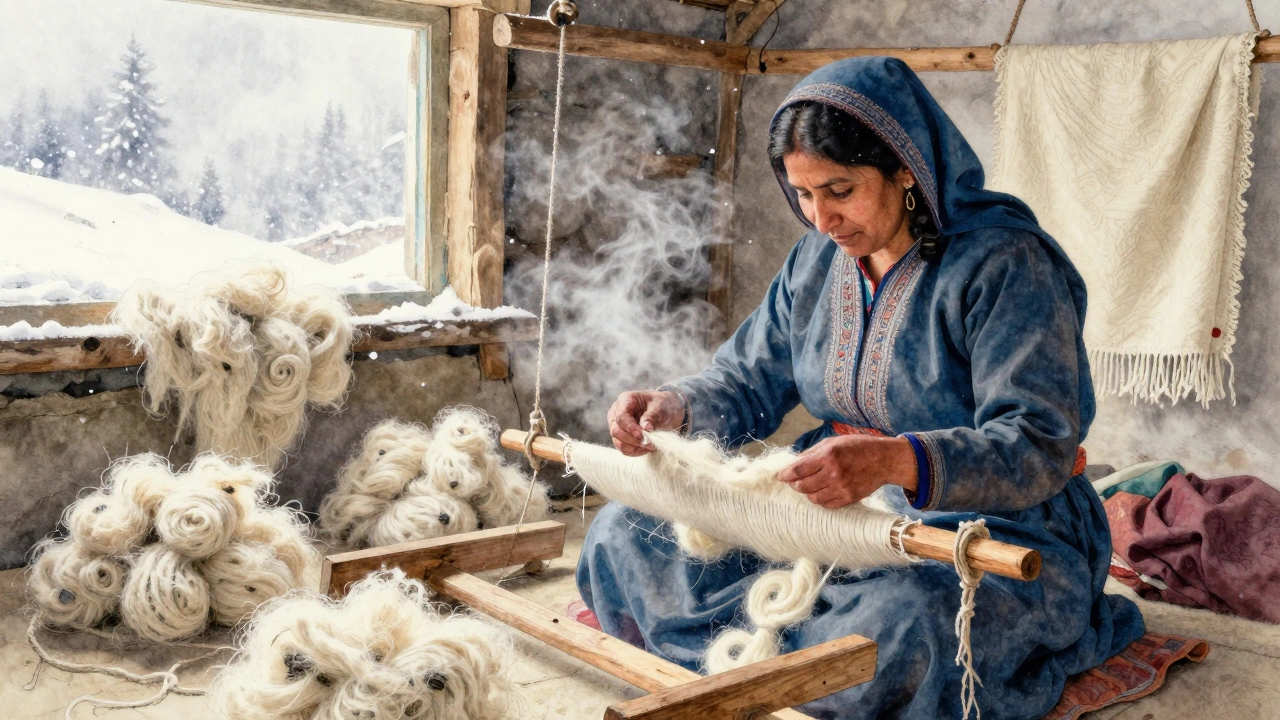
The wool is hand-spun by women in Kashmir, often in temperatures below freezing. It’s then woven on traditional wooden looms by artisans who’ve learned the craft from their fathers. The result? A shawl so light it can pass through a wedding ring. So warm it’s worn in -20°C winters. So soft it feels like clouds.
A real Pashmina shawl costs between ₹15,000 and ₹1 lakh. Fake ones, made with synthetic fibers or blended wool, sell for ₹500. The difference? Real Pashmina gets softer with age. Fakes pill and lose shape after a few washes. The GI tag protects the name-but counterfeiters still flood markets. Always buy from cooperatives like Kashmir Pashmina or Kashmir Handloom, where you can trace the artisan’s name.
Madhubani Painting: Color from the Soil
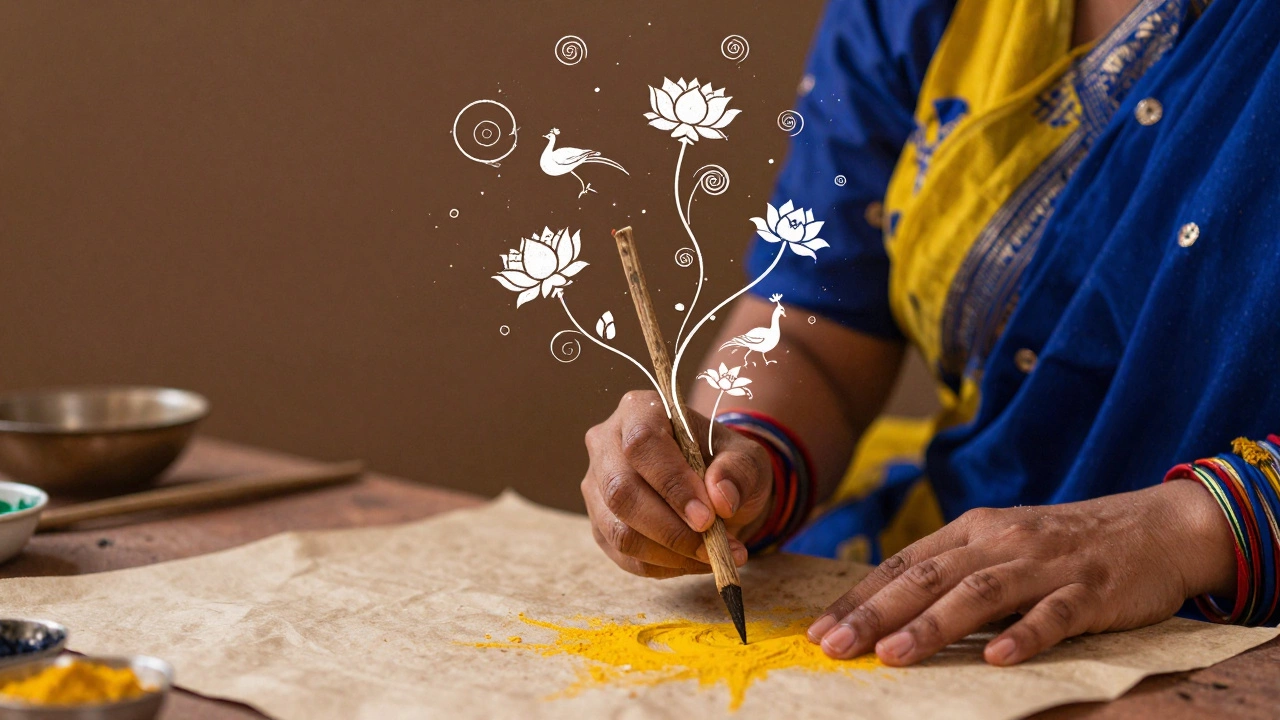
Deep in the Mithila region of Bihar, women paint on walls, floors, and paper using nothing but natural materials. This is Madhubani art. The colors? Turmeric for yellow, indigo for blue, charcoal for black, crushed flowers for red. The brushes? Twigs, cotton wrapped around sticks, even fingers.
These paintings show gods, animals, and nature-always in bold lines and filled with patterns. No empty space. Every inch tells a story. Traditionally, these were done for weddings and festivals. Now, they’re sold globally as wall art. A single Madhubani painting can take weeks to complete.
What makes Madhubani special is that it was once a secret art. Women painted only for rituals. In the 1960s, during a famine, an Indian official encouraged them to paint on paper to earn money. That’s how it went global. Today, over 10,000 women in Bihar earn their living from Madhubani art. And they still use the same natural dyes their grandmothers used.
Other Iconic Indian Handicrafts You Should Know
Banarasi, Pashmina, and Madhubani are the big three-but India’s craft heritage runs deeper.
- Chikankari Embroidery from Lucknow: Delicate white threadwork on cotton, done by hand. Each stitch is a tiny knot. A single blouse can have over 10,000 stitches.
- Warli Painting from Maharashtra: Tribal art using only white pigment on mud walls. Simple shapes-circles, triangles, lines-tell stories of harvests and dances.
- Blue Pottery from Jaipur: Made without clay. Uses quartz, glass, and multani mitti (fuller’s earth). The blue comes from cobalt oxide. Each piece is glazed and fired twice.
- Kantha Embroidery from Bengal: Old saris stitched together with running stitches to make quilts, scarves, or bags. No two are alike.
- Meenakari Work from Rajasthan: Enameling on metal-gold, silver, copper-with vibrant colors. Used in jewelry and decorative items.
Each of these crafts is tied to a place, a community, and a history. They’re not just decorative. They’re identity.
How to Spot Real vs. Fake Indian Handicrafts
There’s a market flooded with machine-made copies. Here’s how to tell the difference:
- Imperfections are good. Handmade items have slight asymmetry, uneven threads, or color variations. Perfect symmetry? Likely machine-made.
- Check the back. On a sari or shawl, the reverse side should show the same detail as the front. Machines hide the back.
- Smell it. Natural dyes smell earthy. Chemical dyes smell like plastic or perfume.
- Ask for the artisan’s name. Reputable cooperatives list the maker. If they can’t tell you who made it, be suspicious.
- Price tells the truth. If it’s too cheap, it’s not handmade. A real Pashmina shawl can’t cost ₹1,000. A Banarasi sari can’t be ₹2,000.
Buying authentic handicrafts isn’t just about owning something beautiful. It’s about supporting a way of life. When you buy a real Madhubani painting, you’re not just buying art-you’re helping a woman in Bihar send her child to school.
Why These Crafts Are Vanishing
There are fewer than 5,000 master weavers left in Varanasi. Most are over 60. Their children don’t want to spend 12 hours a day at the loom for ₹300 a day. In Kashmir, young men leave for cities because weaving doesn’t pay enough. In Bihar, girls drop out of school to marry early, and the art fades with them.
Globalization hasn’t helped. Fast fashion, cheap imports, and online marketplaces have flooded the world with knockoffs. Buyers don’t know the difference. Sellers don’t care. The result? Craftsmen are giving up.
But there’s hope. NGOs, designers, and even startups are working to revive these crafts. Some are using Instagram to sell directly to global buyers. Others are partnering with fashion houses to bring traditional patterns into modern designs. The key? Educating buyers. Making them understand value-not just price.
What You Can Do
You don’t need to buy a ₹50,000 shawl to make a difference. Start small:
- Buy a handwoven cotton napkin from a fair-trade shop instead of a mass-produced one.
- Choose a Madhubani notebook over a plain one.
- Ask sellers where their products come from.
- Share the story behind the item when you gift it.
Every purchase is a vote. When you choose handmade, you vote for tradition over mass production. For dignity over exploitation. For art over assembly lines.
The most famous product of India isn’t a brand. It’s not a company. It’s the hands of millions of artisans who still wake up before sunrise to weave, paint, spin, and carve. Their work isn’t just beautiful. It’s a quiet rebellion against forgetting.
What is the most famous Indian handicraft?
The Banarasi silk sari is widely considered the most famous Indian handicraft. Known for its intricate gold and silver zari work, it’s worn during weddings and passed down as heirlooms. Other top contenders include Pashmina shawls from Kashmir and Madhubani paintings from Bihar.
Is Pashmina really from India?
Yes, authentic Pashmina comes from the Himalayan region of India, specifically Ladakh in Jammu and Kashmir. The wool is harvested from the Changthangi goat, and the shawls are handwoven by artisans in Kashmir. However, many products sold as Pashmina outside India are made from synthetic blends. Look for the GI tag to ensure authenticity.
How can I tell if a Madhubani painting is real?
Real Madhubani paintings use natural pigments made from plants, minerals, and rice paste. The colors are earthy, not bright neon. The lines are hand-drawn with twigs or brushes made from cotton. The background is never blank-it’s filled with fine patterns. If the painting looks too perfect or has plastic-like colors, it’s likely printed.
Why are Indian handicrafts so expensive?
They’re expensive because they’re made by hand, using traditional methods that take weeks or months. A single Banarasi sari can take 3-6 months to weave. A Pashmina shawl requires wool from three goats. The artisans aren’t paid minimum wage-they’re often paid per piece. The cost reflects time, skill, and material-not mass production.
Are Indian handicrafts sustainable?
Yes, most traditional Indian handicrafts are highly sustainable. They use natural materials-cotton, silk, wool, clay, plant dyes-and generate little waste. Tools are handmade or reused for decades. Energy use is minimal. Unlike fast fashion, these crafts are made to last, often repaired, and passed on. Supporting them helps preserve both culture and the environment.