Hindu Family Customs: Traditions, Rituals, and Daily Life
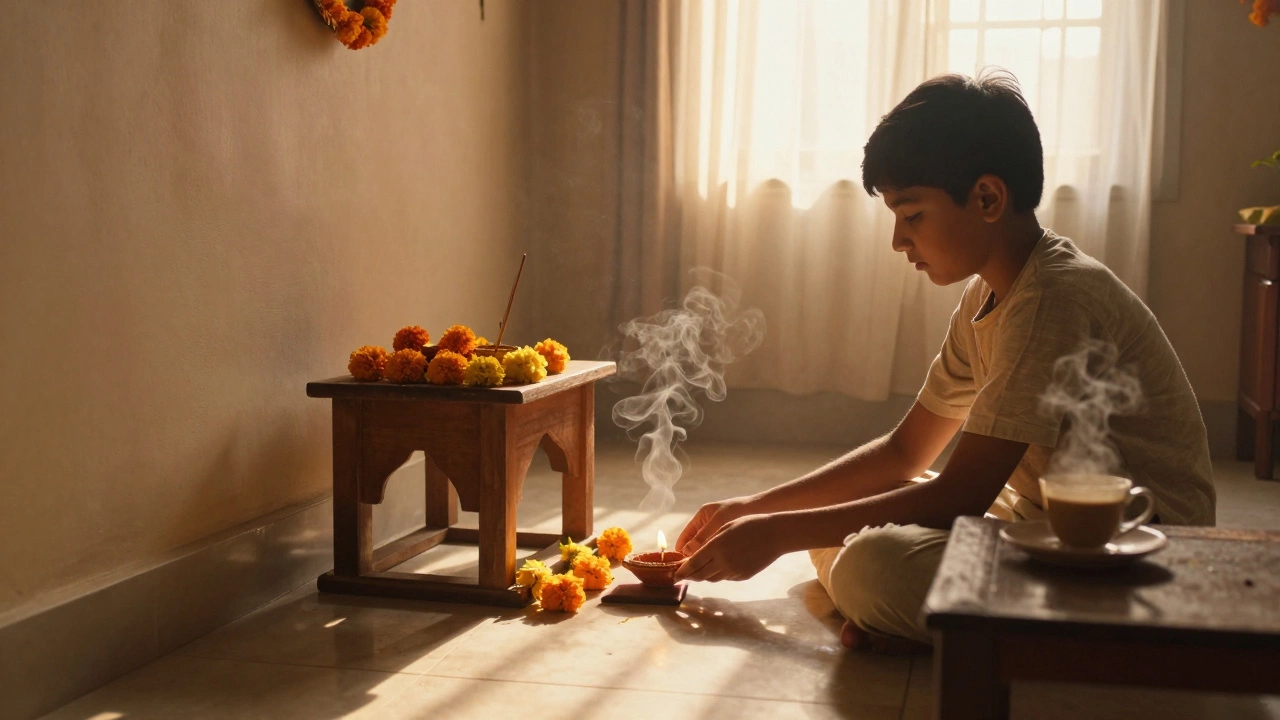
When you think of Hindu family customs, the structured, living traditions that guide daily routines, worship, and relationships within Hindu households. These aren’t just old habits—they’re the quiet backbone of how millions experience faith, family, and identity every day. It’s not about grand temples or public festivals. It’s about what happens before sunrise—when the first lamp is lit in the home altar, when rice is sprinkled on the threshold, when elders bless the day with a touch on the forehead. These acts are passed down, not through books, but through repetition—mother to daughter, father to son, grandparent to grandchild.
Hindu rituals, the repeated spiritual actions tied to time, life events, and deities are woven into the rhythm of the home. Morning puja isn’t optional—it’s as normal as brushing teeth. Meals begin with offering food to the divine before anyone eats. Even something as simple as wearing a dot on the forehead or avoiding meat on certain days carries meaning. These aren’t rules to follow blindly; they’re reminders of connection—to ancestors, to gods, to each other. In Tamil households, you’ll see this in the way they place kolams at dawn or offer coconut to Ganesha before starting anything new. In North India, it might be lighting a diya during Karva Chauth. The forms vary, but the purpose stays the same: to keep the sacred present in the ordinary.
Ancestral practices, customs tied to lineage, memory, and inherited duty are another layer. Many families still keep ancestral photos on the altar, light incense on death anniversaries, or avoid certain foods because their grandparents did. These aren’t superstitions—they’re ways of honoring those who came before. You’ll find this in the way elders insist on eating with the right hand, or how weddings include rituals that haven’t changed in centuries. Even when families move abroad, these customs hold on. A Tamil family in Toronto might cook sambar on Sunday mornings just because their grandmother did. That’s not nostalgia—it’s identity.
What ties all this together? The idea that family isn’t just people living under one roof—it’s a living chain of belief, behavior, and belonging. Hindu family customs don’t ask you to be perfect. They ask you to show up. To light the lamp. To say grace. To listen to your mother’s stories. To teach your child how to fold their hands in prayer. You don’t need to know every Sanskrit verse. You just need to do the next small thing, the way your family always has.
Below, you’ll find real stories and clear explanations about how these customs play out in homes across India—from daily prayers to festival rituals, from food rules to gender roles in worship. No theory. No fluff. Just what people actually do, why they do it, and how it keeps their families grounded.