Famous Indian Handicrafts: Traditional Arts, Regional Styles, and Cultural Roots
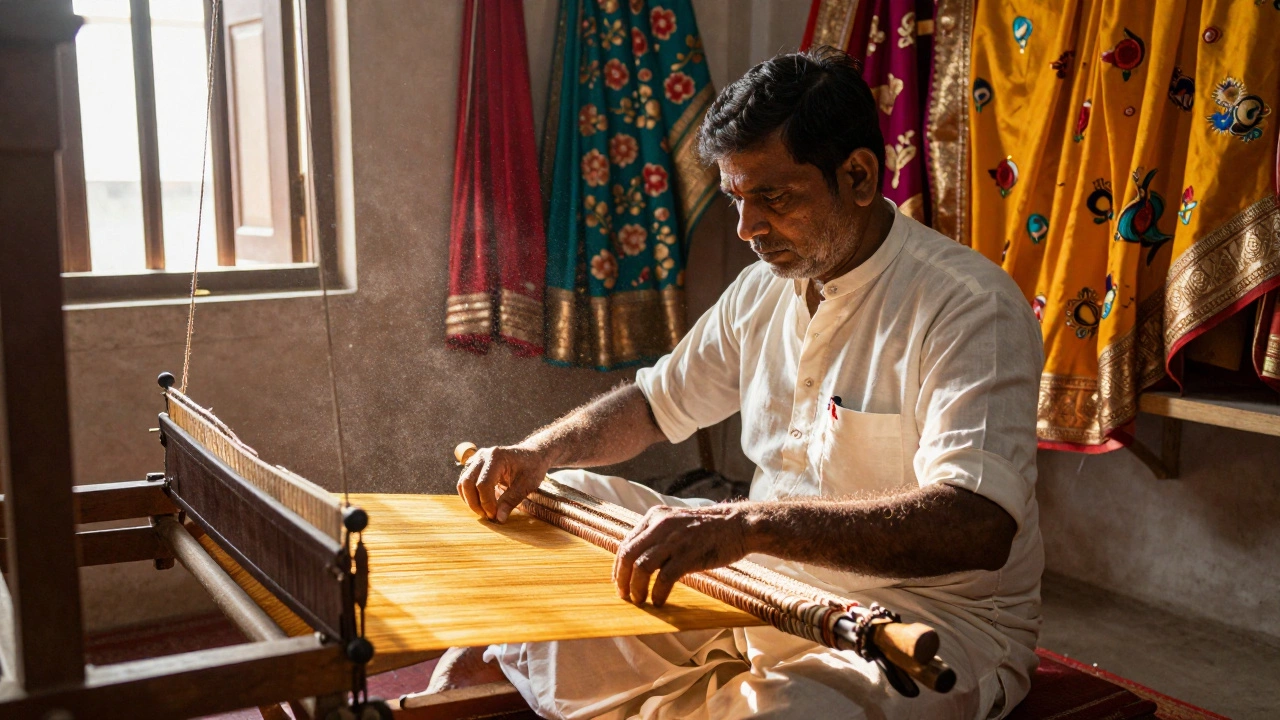
When you think of famous Indian handicrafts, handmade objects created with centuries-old techniques that reflect local identity, spirituality, and skill. Also known as Indian artisanal crafts, they’re not just decorations—they’re living stories stitched into fabric, carved into wood, and painted onto clay. These crafts aren’t stuck in the past. They’re worn during Indian festivals, vibrant community events where craft, music, and ritual come together, gifted at weddings, and sold in markets from Kerala to Kashmir.
Take Indian textiles, handwoven fabrics like Banarasi silk, Kanchipuram sarees, and Pashmina shawls, each tied to a specific region’s climate, history, and weavers’ lineage. A single Kalamkari saree from Andhra Pradesh takes weeks to make, using natural dyes and hand-block printing passed down through generations. Meanwhile, in Gujarat, the traditional crafts, including Bandhani tie-dye and embroidery styles like Zardozi and Kutchi mirror the region’s nomadic roots and religious symbolism. These aren’t just products—they’re identity markers. A woman wearing a Chanderi saree isn’t just dressed; she’s carrying a piece of Madhya Pradesh’s heritage.
It’s not just cloth. Indian handicrafts include brass lamps from Tamil Nadu, terracotta toys from West Bengal, and intricate stone carvings from Rajasthan. Each one connects to deeper cultural threads—like how Indian art, a broad term covering everything from temple sculptures to folk paintings like Warli and Madhubani, often draws from mythology, nature, and daily life. These crafts thrive because they’re part of routines: a mother teaching her daughter how to tie a Bandhani knot, a farmer’s wife weaving baskets from reeds to store grain, a temple priest lighting a brass diya made by a family that’s done it for 200 years.
You won’t find these in mass-produced stores. They’re made slowly, by hand, with patience and pride. That’s why they matter. When you hold a hand-embroidered chaddar from Lucknow or a bamboo flute from Varanasi, you’re holding more than an object—you’re holding memory, skill, and a culture that refuses to be erased. The posts below dive into exactly that: how these crafts live today, where they come from, and how they’re tied to language, religion, and family traditions across India. Whether you’re curious about the patterns on a saree or the story behind a wooden puppet, you’ll find real, grounded insights here—not just lists, but context that connects the dots.