Which Indian Festival Is Celebrated for 15 Days? - The Navratri Answer
Discover why Navratri is the Indian festival celebrated for 15 days, its regional variations, rituals, dates for 2025, and travel tips for a full experience.
When people think of Indian festivals, they often picture one-day fireworks or a single day of fasting. But some of the most meaningful celebrations in India stretch for 15 days, turning neighborhoods into living temples, stages, and kitchens. These aren’t just parties—they’re deep, layered rituals that follow ancient calendars, honor gods, and bind families across generations. A 15-day Indian festival isn’t a single event; it’s a rhythm of daily practices, each day carrying its own meaning, food, song, and prayer.
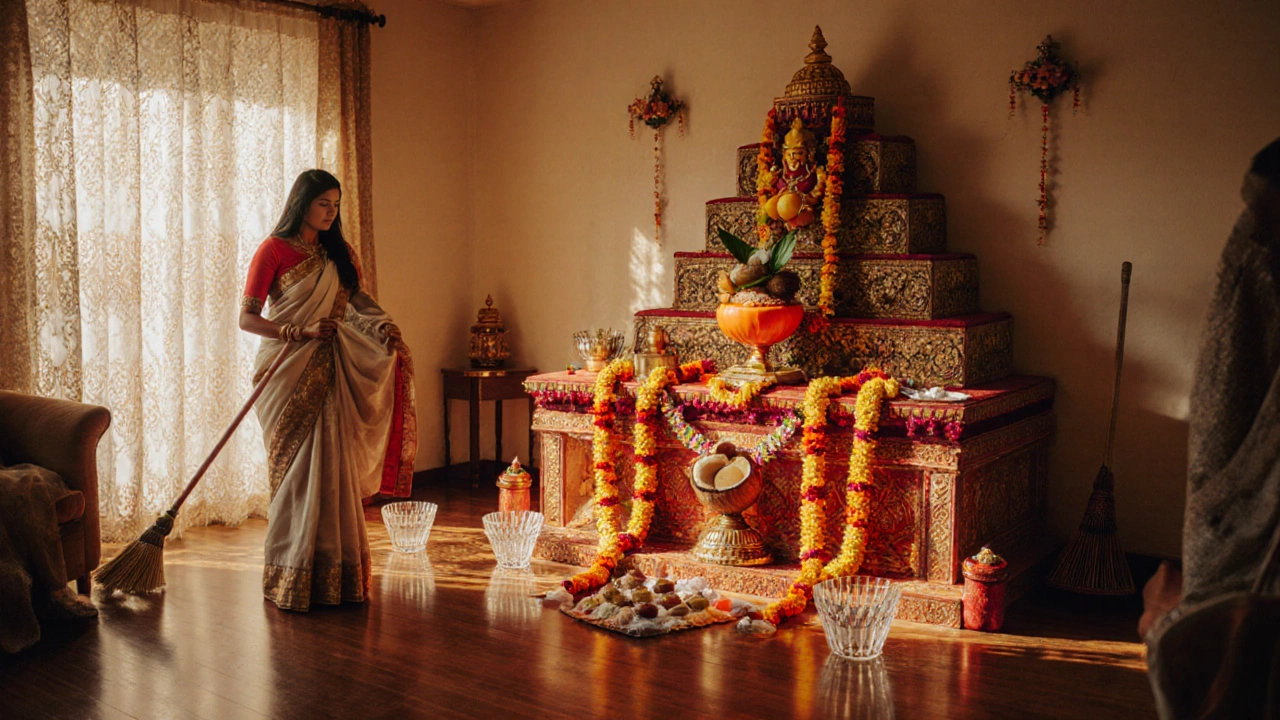
One of the most well-known examples is Diwali, a major Hindu festival of lights celebrated across India, with regional variations in timing and rituals. While many see Diwali as a one-night event, in Tamil Nadu and parts of South India, it’s part of a longer cycle that begins with Dhanteras and ends with Bhai Dooj—spanning nearly two weeks. In some homes, the rituals unfold day by day: cleaning, decorating, fasting, lighting oil lamps, offering prayers to Lakshmi, and visiting relatives. This isn’t just tradition—it’s a spiritual reset. Similarly, Navaratri, a nine-night festival honoring the goddess Durga, often extends to 15 days when combined with Dussehra and other local observances. In Gujarat, it’s dance and garba every night. In Tamil Nadu, it’s the display of Golu dolls, storytelling, and daily offerings. And in some villages, the full 15-day period includes processions, drumming, and folk theater like Theru Koothu, a traditional Tamil street performance that blends myth, music, and moral lessons.
Why 15 days? It’s not arbitrary. Many Hindu festivals follow lunar cycles, and 15 days marks a full phase of the moon—from new moon to full moon, or vice versa. This gives time for preparation, reflection, and community participation. In rural Tamil Nadu, families don’t just celebrate—they live the festival. Each day brings a new task: making sweets, weaving rangoli, tuning instruments, or rehearsing dances. Children learn by watching. Elders pass down stories that aren’t in books. And by day 15, the whole community feels changed—not just because of the rituals, but because they did them together.
What you’ll find in the posts below are real stories from people who’ve lived through these long festivals. You’ll learn how Diwali is celebrated differently in Tamil homes, why some families skip the big fireworks and focus on quiet prayers, and how folk traditions like Karakattam and Puliyattam keep these 15-day events alive. There’s no single way to do it. But if you’ve ever wondered why some Indian festivals feel so deep, so slow, so full—it’s because they’re not meant to be rushed. They’re meant to be lived.
Discover why Navratri is the Indian festival celebrated for 15 days, its regional variations, rituals, dates for 2025, and travel tips for a full experience.