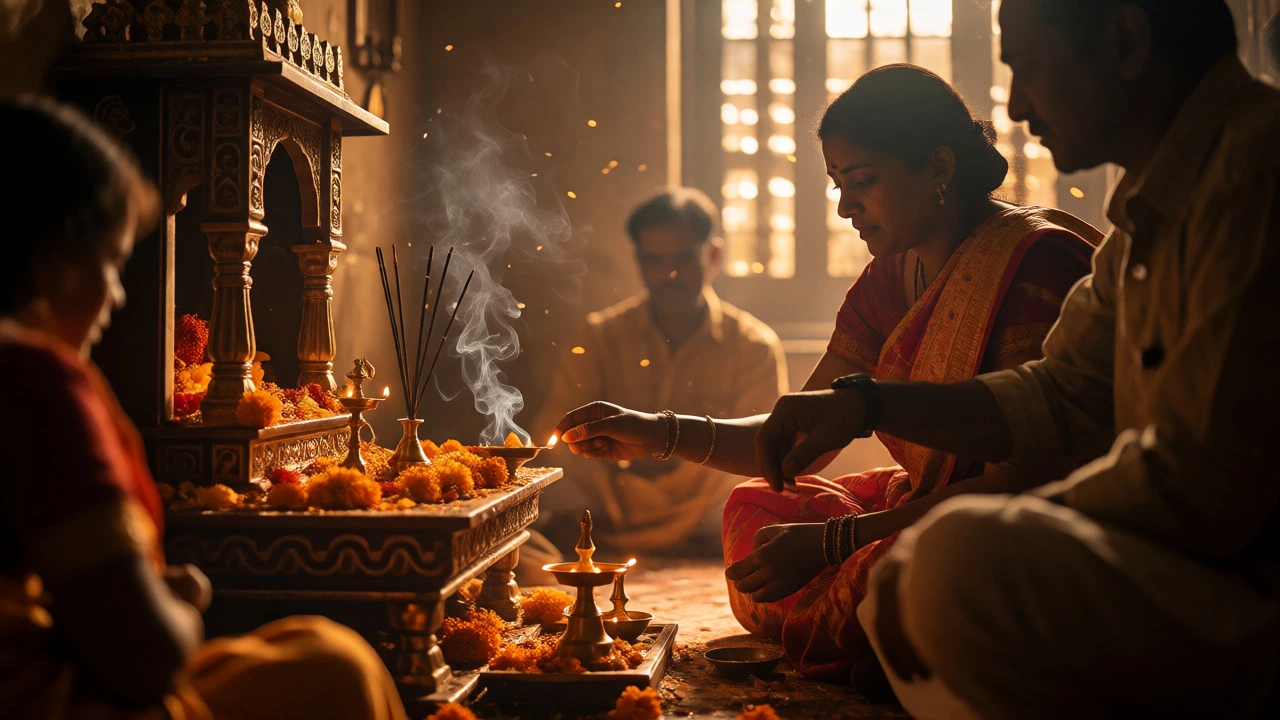
Hindu Weekly Observance Explorer
Unlike Abrahamic faiths, Hinduism does not prescribe a single universal day of rest. Instead, devotees often personalize their week based on specific deities or planetary influences. Select a day below to see its traditional significance and practical impact.
Select a Day
-Click on a weekday to view traditional practices and work impacts.
You might assume that every religion has a fixed "day off"-like Sunday for Christians or Friday for Muslims. But if you ask a practicing Hindu in Mumbai or Melbourne, "What is your day of rest?", the answer isn't a single word. It's more like a shrug and a smile. Hinduism does not prescribe a universal weekly day of rest. Instead, it offers a flexible rhythm where rest is tied to personal devotion, family needs, and the lunar calendar.
This confuses many outsiders. How can a religion with over a billion followers function without a standardized weekend? The truth is, the concept of "rest" in Hindu culture is less about stopping work entirely and more about shifting focus. For some, Tuesday is sacred; for others, Saturday. And then there are the festivals, which act as massive, irregular breaks from the daily grind. Let’s break down how this actually works in real life.
The Myth of the Universal Sabbath
Unlike Abrahamic faiths, which anchor their week around a specific creation or revelation event, Hinduism views time as cyclical rather than linear. There is no single commandment saying "Remember the seventh day." This lack of a rigid weekly sabbath gives Hindus immense freedom but also creates complexity when interacting with global business cultures that operate on Monday-to-Friday schedules.
In practice, most Hindus follow the standard five-day workweek adopted by modern India and its diaspora. However, weekends are often used for temple visits or family rituals. If you’re working in IT in Bangalore, you likely take Saturday and Sunday off just like everyone else. But if you’re a shopkeeper in Varanasi, you might close your stall on Thursday because it’s dedicated to Lord Vishnu. The "day of rest" is personalized.
Personalized Weekly Observances
While there’s no collective mandate, individual devotees often choose a specific weekday to honor a deity. This isn’t mandatory, but it’s common among devout families. These days aren’t necessarily "off" from work, but they involve dietary restrictions, prayer, or avoiding certain activities.
- Monday (Somvara): Dedicated to Lord Shiva. Many devotees fast until sunset or visit Shiva temples. It’s considered auspicious for new beginnings.
- Tuesday (Mangalvara): Associated with Lord Hanuman and Mars. Devotees may wear red clothes and offer vermilion. In South India, Tuesday evenings are busy at Murugan temples.
- Thursday (Guruvara): Linked to Jupiter (Guru) and Lord Vishnu. Fasting is common here, especially in North India. Some people avoid cutting hair or nails on Thursdays.
- Friday (Shukravara): Honors Goddess Lakshmi (wealth) and Venus. Women often light lamps and perform small pujas. It’s generally seen as a lucky day for financial transactions.
- Saturday (Shanivara): Dedicated to Saturn (Shani). Known for being a challenging day astrologically. People often donate black sesame seeds or iron items to ward off bad luck. Temples are packed on Saturdays.
- Sunday (Ravivara): Associated with the Sun God Surya. While less commonly observed with strict fasting, it’s a popular day for general worship and family gatherings.
Notice the pattern? Each day has a spiritual owner. If you’re struggling with career issues, you might prioritize Thursday. If you’re facing health problems, you might lean into Saturday rituals. Your "rest" depends on what you need spiritually.
| Day | Deity/Planet | Common Practice | Work Impact |
|---|---|---|---|
| Monday | Shiva / Moon | Fasting, Temple Visit | Low - usually normal work hours |
| Tuesday | Hanuman / Mars | Red attire, Prayers | Low - minor ritual adjustments |
| Thursday | Vishnu / Jupiter | Fasting, Yellow clothes | Medium - energy dips possible due to fasting |
| Friday | Lakshmi / Venus | Lamp lighting, Puja | Low - often a social/family evening |
| Saturday | Shani / Saturn | Donations, Caution | Medium - some avoid starting new tasks |
| Sunday | Surya / Sun | General Worship | High - typically a full day off globally |
Festivals: The Real "Days of Rest"
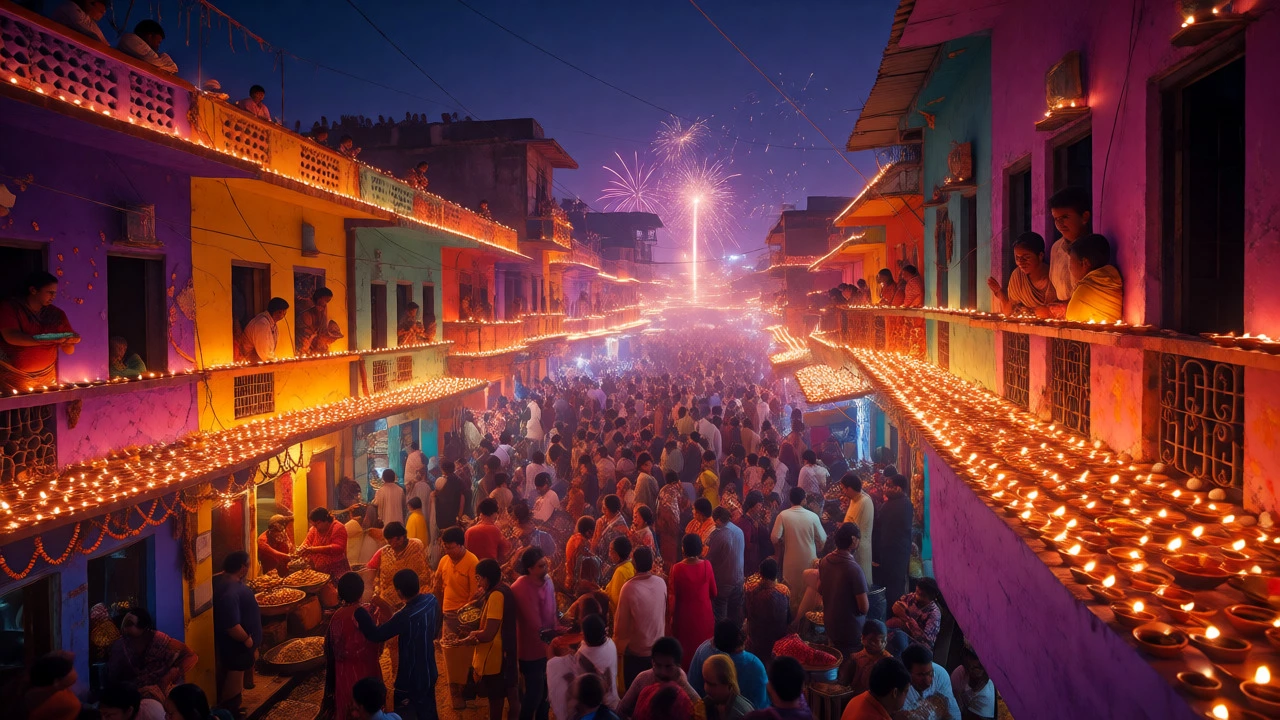
If weekly days are subtle, festivals are loud. This is where the concept of rest becomes tangible. Diwali, Holi, and Navratri are not just celebrations; they are sanctioned pauses from economic activity. During these periods, shops close, offices shut down, and families gather for days.
Consider Diwali, the Festival of Lights. In India, it’s not just one day. It’s a five-day stretch. Business owners close their ledgers on the first day (Dhanteras) and reopen them after the main festival. For millions, this is the closest thing to a vacation. You don’t just stop working; you actively engage in cleaning, cooking, and praying. It’s an active rest, not a passive sleep-in.
Then there’s Navratri, meaning "Nine Nights." In Gujarat, this involves nine nights of dancing (Garba). In other regions, it’s a period of fasting and abstaining from grains. Workplaces often adjust hours during these times. A manager in Ahmedabad might let employees leave early during Navratri so they can attend evening prayers. This flexibility is key-the religion adapts to the community’s lifestyle.
The Lunar Calendar vs. The Gregorian Week
Here’s where it gets tricky for those outside the culture. Hindu dates change every year relative to the Western calendar because they follow the lunar-solar cycle. A festival like Ganesh Chaturthi falls on different weekdays annually. One year it’s a Tuesday; the next, a Wednesday.
This fluidity means you can’t predict a "Hindu holiday" six months in advance using a standard planner. You need a Panchang (traditional almanac). For employers managing diverse teams, this requires checking local calendars yearly. For individuals, it means staying connected to community announcements. Apps now help with this, sending notifications for Ekadashi (fasting days) or Amavasya (new moon), reminding users to adjust their routine.
Ekadashi is worth noting. It occurs twice a month, on the eleventh day of the waxing and waning moon. Many devout Hindus fast completely on these days. No food, sometimes no water. Does this mean they don’t work? Often, yes. They might skip lunch meetings or leave early. It’s a physiological reset button built into the monthly rhythm.
Regional Variations Matter
India is vast, and customs vary wildly between states. What counts as a "day of rest" in Tamil Nadu differs from Punjab.
In South India, particularly Kerala and Tamil Nadu, temple festivals are major community events. On the day of a major temple procession, local businesses may close entirely. It’s a civic holiday driven by religious tradition. Conversely, in urban hubs like Delhi or Mumbai, the influence of corporate culture dominates. Here, "rest" is mostly limited to Sundays and official government holidays.
Also, consider the impact of caste and profession. Traditional priests and pandits have different schedules than software engineers. A priest’s "work" is his worship, so his rest might be midday. A farmer’s rest aligns with harvest cycles and seasonal festivals like Pongal or Baisakhi. Context is everything.

How Modern Life Adapts
Living in Brisbane, I’ve noticed how the Hindu diaspora navigates this. We don’t get public holidays for Holi or Diwali in Australia. So, we create our own micro-holidays. If Diwali falls on a Wednesday, many families will still cook elaborate meals that night, even if they worked a full shift. The "rest" shifts from daytime leisure to evening celebration.
For students and professionals, this requires planning. If you know Thursday is a fasting day for you, schedule your heavy workouts or important presentations for earlier in the week. If Saturday is a temple day, book your errands for Friday. It’s about integrating spirituality into a secular timetable without burning out.
Some companies are getting better at this. Flexible leave policies allow employees to take off for specific regional festivals. But generally, the burden of adjustment falls on the individual. You manage your energy levels based on your spiritual commitments.
Is It Really Rest?
Let’s be honest: religious observance isn’t always relaxing. Fasting makes you hungry. Dancing Garba for nine nights leaves you exhausted. Cleaning the house for Diwali is hard labor. So why call it rest?
Because it’s mental rest. In a high-pressure world, these rituals provide structure. They force you to pause, reflect, and connect with something larger than your quarterly targets. The physical tiredness is offset by emotional satisfaction. That’s the trade-off. You aren’t sleeping in; you’re waking up to a different purpose.
So, do Hindus have a day of rest? Technically, no. Practically, yes-but it’s customized, frequent, and deeply personal. It’s not about marking X on a calendar. It’s about listening to your body and your beliefs, and finding moments of stillness amidst the chaos.
Why doesn’t Hinduism have a single weekly holiday?
Hinduism emphasizes personal spiritual paths (Margas) over rigid uniformity. Since deities and planetary influences vary, devotees choose days that resonate with their specific needs or family traditions, rather than following a single mandated day.
Do Hindus work on Sundays?
Yes, most Hindus work on Sundays unless it coincides with a major festival or personal vow. Sunday is associated with the Sun God, but it is not strictly a "no work" day in traditional texts. However, modern employment norms in India and abroad often make Sunday a de facto day off.
What is Ekadashi and do people stop working?
Ekadashi is the eleventh day of each lunar fortnight, observed with fasting. While not a public holiday, many devout Hindus reduce work intensity, skip meals, and avoid entertainment. Some may take half-days or work remotely to maintain the fast comfortably.
Which day is best for visiting a temple?
Any day is auspicious, but Mondays (for Shiva), Tuesdays (for Hanuman/Murugan), and Fridays (for the Goddess) are traditionally busier. Major festivals draw the largest crowds. For a quieter experience, choose a non-festival weekday morning.
Are all Hindus vegetarian on their day of rest?
No. Dietary habits vary by region, caste, and personal choice. Some vegetarians eat meat on weekdays but avoid it on holy days. Others are non-vegetarian year-round. Fasting often involves eating only fruits or specific grains, regardless of usual diet.