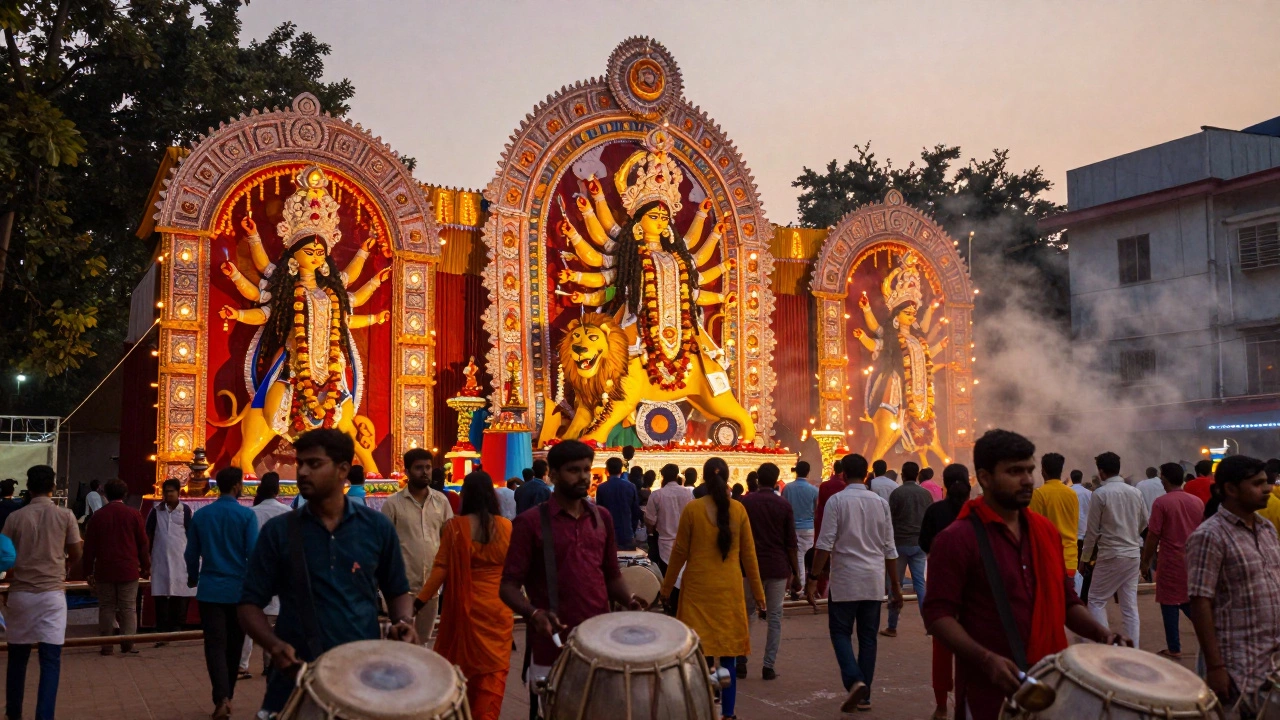
Durga Puja Festival Timeline
Durga Puja: The Five-Day Celebration
Explore the daily rhythm of the most important festival in Bengali culture with this interactive timeline.
The Goddess Arrives
The goddess Durga is unveiled in pandals. Families begin visiting and performing the first aarti at sunset. It's the official start of the festival.
The Sacred Ritual
The most important ritual begins: Pran Pratishtha, where the goddess's spirit is invoked into the idol. This is considered the most sacred moment of the entire festival.
The Climax: Sandhi Puja
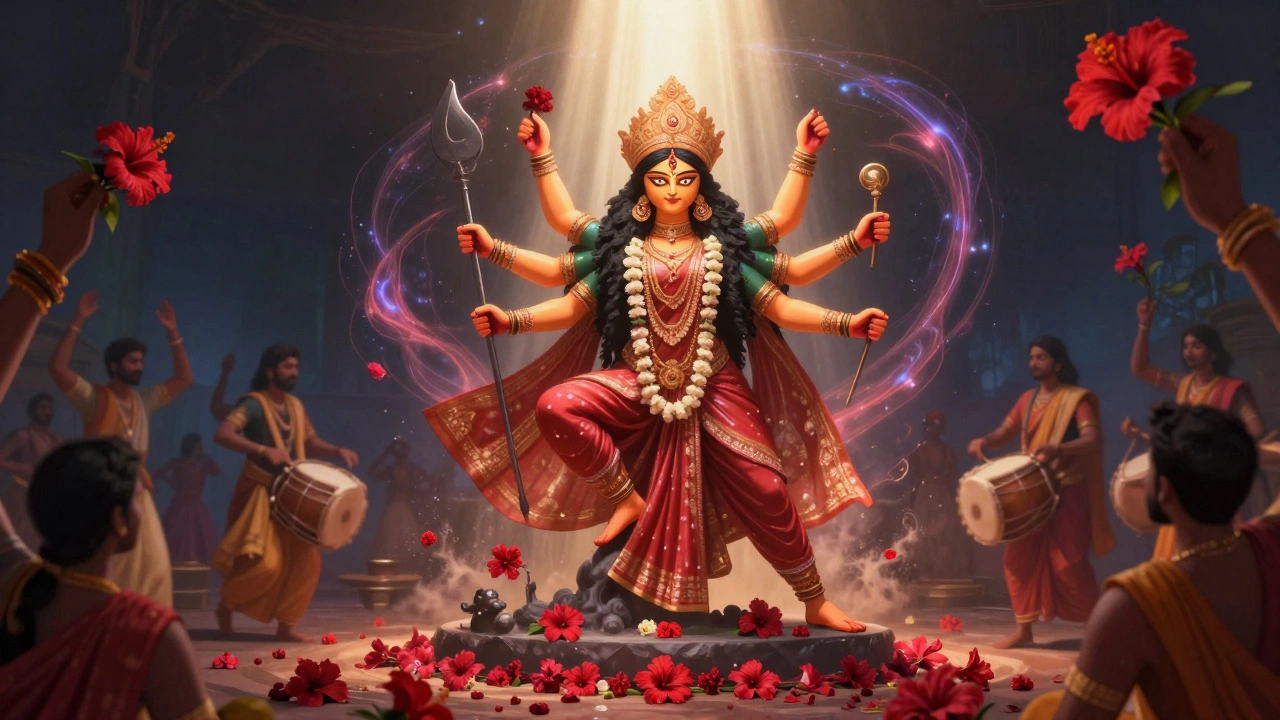
At 1:58 PM, the most significant ritual occurs: Sandhi Puja, where Durga defeats Mahishasura. Thousands gather to witness this moment, offering red hibiscus flowers.
Final Worship
The last day of worship begins. More aartis and offerings take place. Children receive gifts, and elders bless the young. The atmosphere is joyful and celebratory.
Farewell to the Goddess
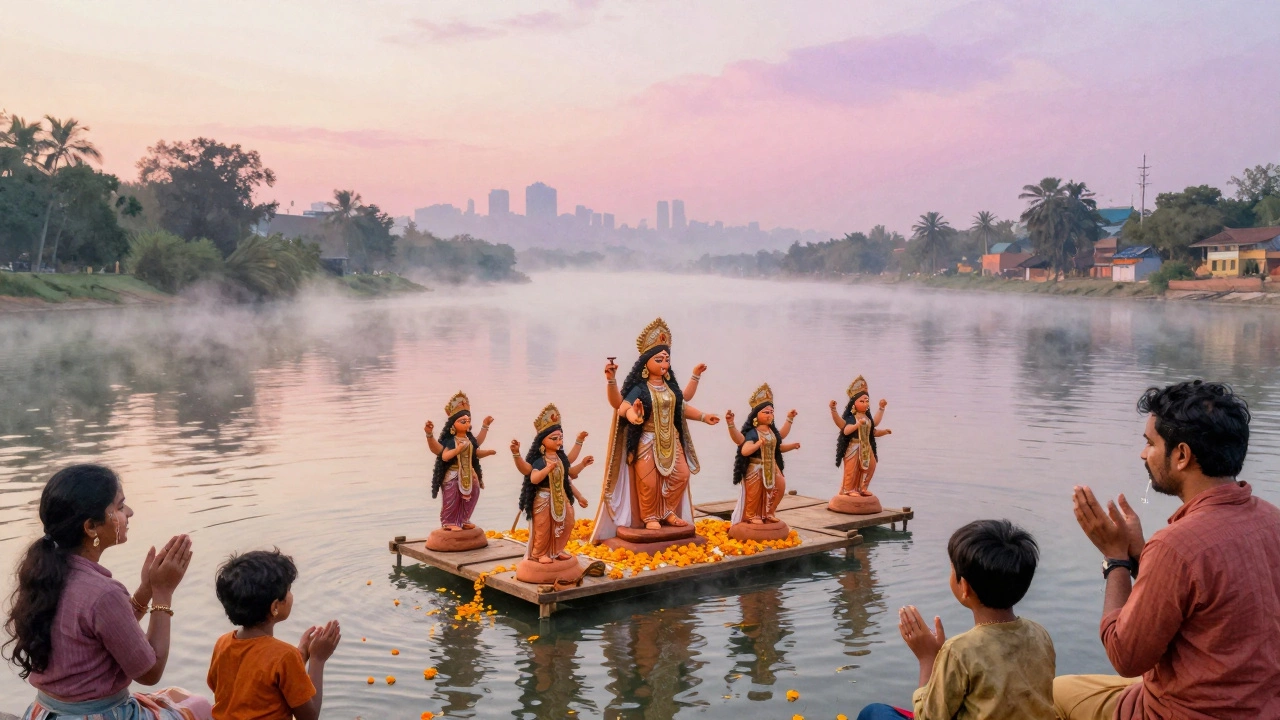
The goddess is carried in processions to rivers or lakes for immersion. People sing, dance, cry, and cheer as she returns to her celestial home. This bittersweet moment marks the end of the festival.
Understanding Durga Puja
Durga Puja isn't just a religious festival - it's a cultural celebration that brings communities together. The five-day rhythm creates a unique experience where tradition meets modern celebration.
The festival's structure reflects deep cultural values: the importance of community, the celebration of divine feminine power, and the cyclical nature of life through the immersion of idols.
Ask anyone who’s ever been to Kolkata in October, and they’ll tell you: nothing in India compares to Durga Puja. It’s not just a festival. It’s a city-wide explosion of color, music, prayer, and community that turns streets into cathedrals and neighbors into family. For Bengalis, this isn’t one of many festivals-it’s the festival. The one that defines the season, the rhythm of life, and the soul of the culture.
What makes Durga Puja the heart of Bengali identity?
Durga Puja celebrates the victory of the goddess Durga over the demon Mahishasura. But beyond the myth, it’s a deeply human story. It’s about the return of a daughter to her parental home. In Bengali households, Durga isn’t just worshipped-she’s welcomed. Families clean their homes, buy new clothes, and prepare special sweets like sandesh and rosogolla. The goddess arrives on Shashthi, and for five days, the entire region breathes in her presence.
What sets Durga Puja apart from other Hindu festivals is how it blends devotion with public celebration. In villages, simple clay idols sit under temporary tents. In cities like Kolkata, Dhaka, and Siliguri, pandals-elaborate temporary structures-become art installations. Some cost millions of rupees. Some tell stories from history, literature, or current events. One year, a pandal recreated the Mars rover landing. Another, it showed the journey of a migrant worker. The goddess is the center, but the message? Always human.
How is Durga Puja celebrated across Bengal?
While the core rituals are the same, the way Durga Puja unfolds varies by place. In rural West Bengal, families gather around small clay idols, offering flowers, fruits, and homemade food. The aarti at dusk, with oil lamps flickering and bells ringing, feels intimate, almost sacred.
In urban centers like Kolkata, the scale is different. Over 30,000 pandals light up the city. People walk miles just to see them. The best ones draw crowds of 10,000 or more in a single night. It’s not uncommon for families to plan their entire week around which pandals to visit. Some go for the art. Others for the food stalls serving puchka, jhal muri, and mishti doi. Many go just to sit, listen to live music, and watch children dance.
Even in Bangladesh, where Bengali is spoken and culture is shared, Durga Puja is a major event. Dhaka’s pandals are just as grand, and the festival draws Hindu and Muslim neighbors alike. In 2023, over 1,200 pandals were registered in Dhaka alone. That’s not just tradition-it’s a statement of unity.
The five days of Durga Puja: A daily rhythm
The festival doesn’t happen all at once. It unfolds in five named days, each with its own meaning and rituals:
- Shashthi: The goddess arrives. Idols are unveiled in pandals. Families begin visiting. The first aarti is performed at sunset.
- Saptami: The main worship begins. The ritual of Pran Pratishtha-invoking the goddess’s spirit into the idol-is done with Vedic chants. This is the most sacred moment.
- Ashtami: The biggest day. Sandhi Puja happens at the cusp of Ashtami and Navami, at 1:58 PM. This is when Durga defeats Mahishasura. Thousands gather for the moment. Many offer red hibiscus flowers, the goddess’s favorite.
- Navami: The final day of worship. More aartis, more offerings. Children receive gifts. Elders bless the young.
- Visarjan: The farewell. On the morning of the sixth day, the idols are carried in processions to rivers or lakes. People sing, dance, cry, and cheer. The water carries the goddess back to her celestial home. It’s bittersweet. But next year, she’ll come again.
Why Durga Puja is more than religion
Durga Puja isn’t just about worship. It’s about community. It’s about art. It’s about economy. It’s about identity.
Artisans spend months making idols. Painters, sculptors, carpenters, and electricians all get work. In 2024, the Durga Puja industry in West Bengal generated over ₹12,000 crore ($1.4 billion). That’s not a side hustle-it’s a major economic engine.
Young designers create themes for pandals that go viral on social media. Musicians perform live on stages built in the middle of roads. Writers publish special Puja editions of magazines. Even local restaurants see their sales triple.
And then there’s the social glue. People who haven’t spoken in years meet at a pandal. Strangers share food. Children from different neighborhoods play together. For five days, caste, class, and religion fade. Everyone is just a visitor to the goddess’s home.
How Durga Puja compares to other Bengali festivals
Other festivals matter too. Kali Puja, celebrated a month after Durga Puja, is intense and dark, focused on power and destruction. Saraswati Puja honors knowledge, with students placing books before the goddess. Poila Boishakh, the Bengali New Year, is about renewal and new beginnings.
But none of them match Durga Puja in scale, emotional depth, or cultural reach. Kali Puja is powerful, but it’s mostly private. Saraswati Puja is quiet, mostly in schools. Poila Boishakh is festive, but it’s one day. Durga Puja lasts five. It involves every age, every class, every corner of the region.
Even in the diaspora, Durga Puja is the anchor. In London, New York, or Sydney, Bengali communities spend months preparing. They rent halls, import clay, hire musicians. Why? Because without Durga Puja, they feel disconnected from home.
What you’ll see if you attend Durga Puja for the first time
If you’ve never been, here’s what to expect:
- Colors: Red, white, gold, and green everywhere. Idols wear silk saris. Pandals glow with LED lights.
- Sound: Dhak drums beat nonstop. Chants mix with modern remixes. Children laugh. Bells ring.
- Smell: Incense, fried snacks, jasmine garlands, wet earth from the river after visarjan.
- Touch: You’ll be offered sweets. Someone will put a tilak on your forehead. You’ll be invited to sit.
No one will ask if you’re Hindu or not. No one will care if you’re foreign. You’re welcome because the goddess is for everyone.
What happens after the festival ends?
When the last idol is immersed, the city doesn’t go quiet. People hug. They say, “Next year.” They start planning. Artists sketch new ideas. Families save money. Children ask when the pandals will return.
Durga Puja doesn’t end. It just waits.
Is Durga Puja only celebrated in India?
No. Durga Puja is also widely celebrated in Bangladesh, especially in Dhaka, Chittagong, and Sylhet. It’s a national event there, with government support and participation from both Hindu and Muslim communities. Bengali diaspora communities in the US, UK, Canada, Australia, and the Middle East also hold large public celebrations.
How long does Durga Puja last?
Durga Puja officially lasts five days: Shashthi, Saptami, Ashtami, Navami, and Visarjan. The main worship happens from Saptami to Navami, with the most intense rituals on Ashtami. The festival begins with the arrival of the goddess and ends with her immersion in water.
What is the significance of the clay idols?
The clay idols symbolize the temporary nature of life and the return of the divine to its source. Made from soil collected from sacred places, they are hand-sculpted by artisans and painted with natural colors. After the festival, they’re immersed in rivers, returning to nature-symbolizing the cycle of creation and dissolution.
Can non-Bengalis or non-Hindus attend Durga Puja?
Absolutely. Durga Puja is open to everyone. There are no restrictions on who can enter a pandal. Visitors are often offered sweets, shown around, and invited to join the aarti. Many tourists plan their trips to Kolkata around Durga Puja because of its welcoming atmosphere.
What’s the difference between Durga Puja and Navratri?
Both honor the goddess Durga, but they’re different in form and scale. Navratri, celebrated across India, is a nine-night festival with fasting and Garba dancing, especially in Gujarat and Maharashtra. Durga Puja, unique to Bengal, centers on public idol worship, elaborate pandals, and five days of community celebration. It’s more artistic, more social, and more immersive.