Rajasthan Handicraft Explorer
Click on a craft below to discover its unique materials, origins, and how to spot authenticity.
Block Print
Blue Pottery
Bandhani
Kathputli
Mirror Work
Overview
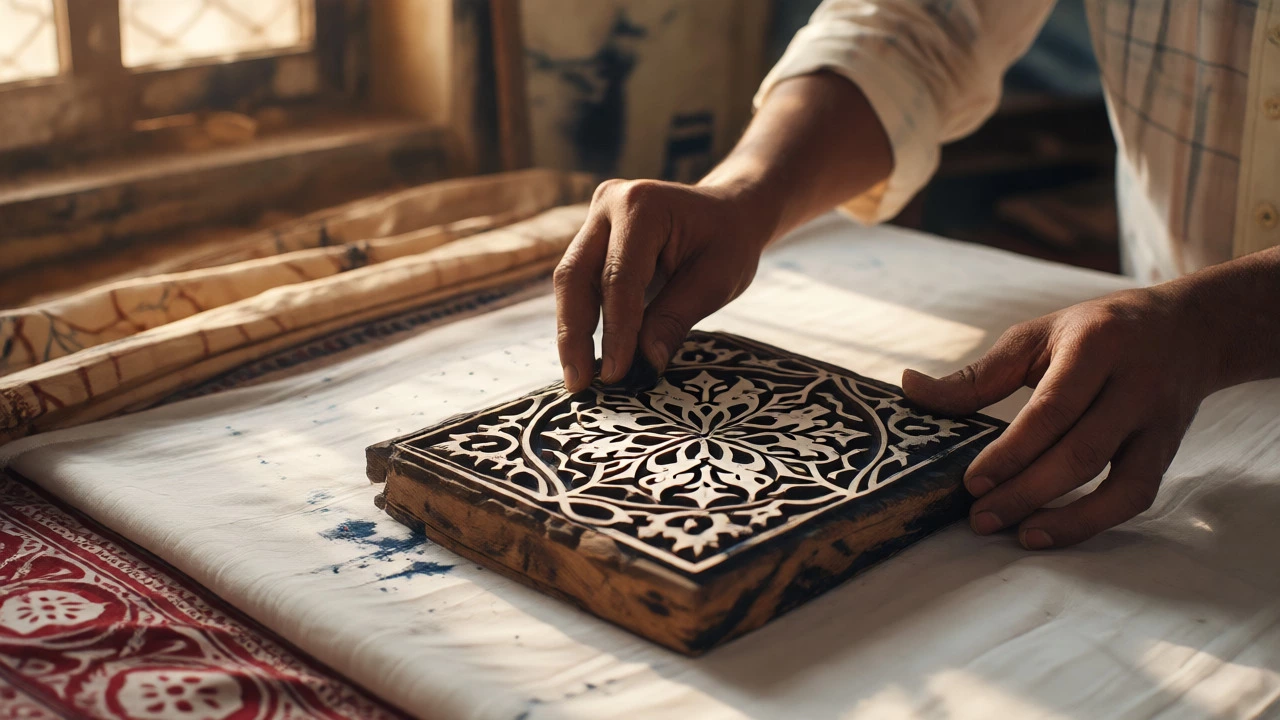
Traditional method using hand-carved wooden blocks and natural dyes. Two main hubs: Sanganer (fine lines, white backgrounds) and Bagru (earthy tones, geometric motifs).
Authenticity Check
- Smell: Earthy, natural dye scent.
- Look: Slight imperfections in pattern alignment.
- Feel: Natural fabric texture, not plasticky.
Overview
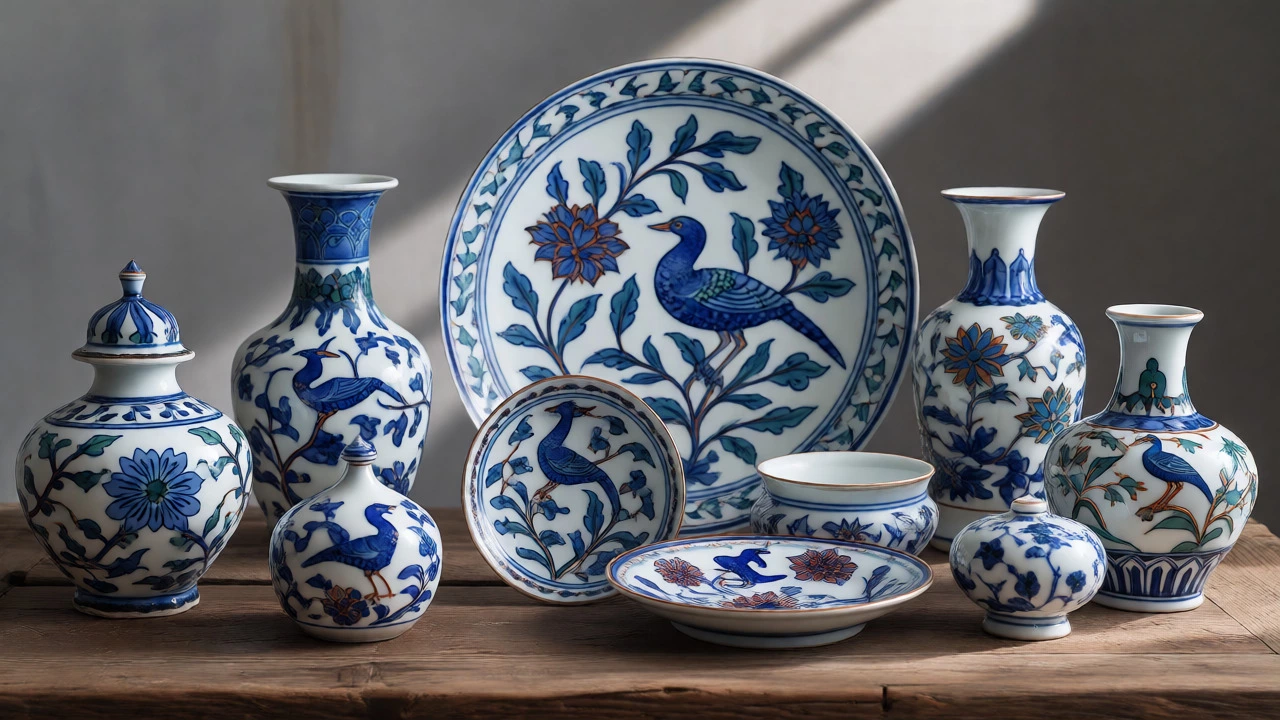
Surprisingly, this is not made from clay. It uses quartz stone powder, glass powder, borax, and gum. Originated in Persia, perfected in Jaipur during the Mughal era.
Authenticity Check
- Weight: Heavier than it looks due to quartz.
- Finish: Smooth, glossy, no visible pores.
- Fragility: Shatters easily; handle with care.
Overview
Ancient tie-dye technique where fabric is plucked and tied with thread before dyeing. Creates intricate dotted patterns. "Gharchola" style uses yellow/red for brides.
Authenticity Check
- Dots: Hand-tied dots are slightly uneven.
- Uniformity: Machine-made dots are too perfect.
- Knots: Look for tiny knot marks if threads remain.
Overview
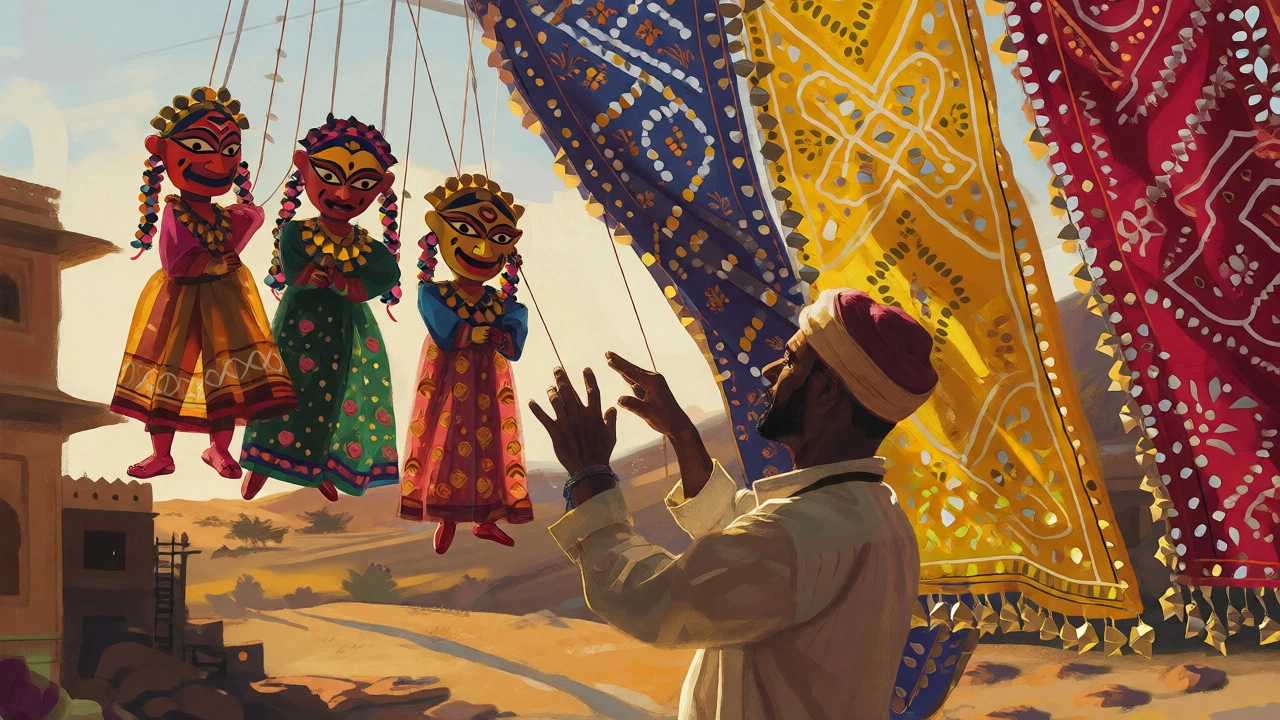
String marionettes used in folk theater. Made from soft wood, cloth, and wire. Each puppet is carved individually, making them unique storytelling artifacts.
Buying Tip
- Ask: Who is the character? (e.g., Ravana, Dancer)
- Face: No two faces are exactly alike.
- Context: Best bought from artisans, not just tourist stalls.
Overview
Embroidery featuring reflective shards. Historically used by Rabari/Bharwad communities to ward off evil spirits. Originally real mirrors, now often metalized film.
Quality Check
- Stitching: Tight, dense embroidery around edges.
- Fabric: Heavy cotton or silk preferred over polyester.
- Snags: Loose threads indicate cheap production.
You’ve probably seen them on Instagram or in high-end boutiques: those intricate, mirror-worked bags or the striking cobalt-blue plates that look like they belong in a museum. But if you’re standing in a bustling market in Jaipur or Jodhpur, wondering which handicraft is famous in Rajasthan, the answer isn’t just one thing. It’s a vibrant ecosystem of skills passed down through generations.
Rajasthan doesn’t just make things; it turns necessity into art. The harsh desert climate, the royal courts, and the nomadic lifestyle all shaped what people created. If you are looking for the definitive "top" craft, you might be missing the point. Instead, let’s break down the specific crafts that define this region, so you know exactly what to look for and why it matters.
Block Printing: The Heartbeat of Sanganer and Bagru
If there is one craft that has exploded in popularity globally, it’s Block Printing. This is a traditional method of printing patterns on fabric using hand-carved wooden blocks. While many places do this, Rajasthan’s version is distinct because of its natural dyes and complex geometric motifs.
The two main hubs are Sanganer and Bagru, both near Jaipur. Here’s how they differ:
- Sanganer Prints: Known for their fine lines and use of white backgrounds. They often feature floral motifs inspired by Mughal gardens.
- Bagru Prints: Typically use earthy tones-mud brown, indigo, and madder red. The designs are bolder and more geometric, reflecting the rural aesthetic.
Why does this matter? Because most mass-produced "ethnic" wear uses chemical dyes and screen printing. Authentic Rajasthani block print uses natural pigments like turmeric, indigo, and pomegranate rind. When you buy authentic pieces, you’re supporting artisans who spend days carving a single teak wood block. The process is slow, imperfect, and beautifully human.
Blue Pottery: Not Actually Clay?
Here’s a fact that surprises most tourists: Blue Pottery is not made from clay. It’s made from quartz stone powder, powdered glass, borax, and gum. This mixture gives the finished product a smooth, porcelain-like finish with no visible pores.
Originating from Persia but perfected in Jaipur during the Mughal era, this craft is fragile. Unlike terracotta pots, which can survive a drop, a blue pot shatters easily. That fragility adds to its value. The signature color comes from cobalt oxide, while green comes from copper oxide. You’ll see these colors used in intricate depictions of birds, flowers, and animals.
| Craft Name | Primary Material | Main Hub | Key Characteristic |
|---|---|---|---|
| Block Printing | Fabric, Natural Dyes, Wooden Blocks | Sanganer, Bagru | Geometric/Mughal motifs, earthy tones |
| Blue Pottery | Quartz, Glass Powder, Cobalt Oxide | Jaipur | No clay, glossy finish, fragile |
| Bandhani (Tie-Dye) | Fabric, Thread | Jodhpur, Bikaner | Dotted patterns created by tying knots |
| Kathputli (Puppets) | Wood, Cloth, Wire | Churu, Jaipur | String marionettes, folk storytelling |
| Mirror Work | Glass Shards, Fabric, Thread | Kutch border areas | Reflective surfaces, tribal origins |
Bandhani: The Art of Thousands of Knots
If you’ve ever wondered how those tiny, perfect dots get onto a sari without paint, meet Bandhani. This is an ancient tie-dye technique where fabric is plucked and tied with thread before dyeing.
The name comes from the Sanskrit word "bandh," meaning to tie. The process is incredibly labor-intensive. To create a simple pattern, an artisan might tie hundreds of thousands of knots. After dyeing, the threads are cut, revealing the reserved white or colored dots against the dyed background.
While Gujarat is also famous for Bandhani, Rajasthan has its own distinct style, particularly in Jodhpur and Bikaner. Look for the "Gharchola" style, which traditionally uses yellow and red ties, symbolizing auspiciousness for brides. If you see a Bandhani piece with uneven dots, don’t dismiss it as poor quality. It’s proof of handwork. Machine-made versions have perfectly uniform dots that lack soul.
Kathputli: Puppets That Tell Stories
Not all handicrafts are for decoration. Some are for performance. Kathputli refers to traditional string marionettes used in folk theater. The word literally translates to "wooden doll," though modern puppets are often made from soft wood, cloth, and wire frames.
These aren’t just toys. In villages across Rajasthan, puppeteers travel from town to town, performing epics like the Ramayana or local folklore. The puppets are brightly colored, with exaggerated facial features and large eyes. Collectors love them because each puppet is carved individually. No two faces are exactly alike.
Buying a Kathputli is buying a story. Ask the seller about the character. Is it Ravana? Is it a dancer? Knowing the context makes the purchase meaningful. These crafts are often sold in clusters near tourist spots, but the best ones come from artisans in Churu district.
Mirror Work: Sparkle from the Desert
Walk into any boutique in India, and you’ll see clothes adorned with small, reflective shards. This is Mirror Work, also known as Shisha embroidery. Originally, real mirrors were used. Today, most use thin plastic or metalized film, but the technique remains the same.
The craft originated among the Rabari and Bharwad communities of Kutch and Rajasthan. Historically, women would stitch mirrors into their garments to ward off evil spirits-the reflection was believed to bounce bad energy away. Practically, it also helped them find each other in the dark desert nights!
When shopping for mirror work, check the stitching. High-quality pieces use tight, dense embroidery around the edges of the mirror. Cheap versions have loose threads that snag easily. Also, notice the base fabric. Traditional pieces use heavy cotton or silk, while cheaper imports use polyester blends that feel scratchy.
How to Spot Authenticity vs. Mass Production
So, how do you know if you’re getting the real deal? Tourist markets are flooded with machine-made imitations. Here are three quick checks:
- Smell Test: Authentic natural dyes (like indigo) have a distinct, earthy smell. Chemical dyes smell sharp or artificial.
- Imperfections: Hand-block printing leaves slight gaps in the pattern where the block didn’t align perfectly. Machine prints are too perfect.
- Weight and Feel: Real Blue Pottery is heavier than it looks due to the quartz content. Fake resin copies feel light and plasticky.
Supporting authentic handicrafts isn’t just about aesthetics. It’s about economics. The Crafts Council of India estimates that millions of households depend on these skills. When you buy direct from artisans or certified emporiums, your money goes to preserving these traditions rather than lining the pockets of middlemen.
Where to Buy Without Getting Scammed
If you are visiting Rajasthan, avoid the first shop you see near major monuments like Hawa Mahal. Prices there are inflated for tourists. Instead, head to established government emporiums like Rajasthali in Jaipur. They have fixed prices, so you don’t need to haggle aggressively, and the authenticity is guaranteed.
For online buyers, look for sellers who provide details about the artisan or the village of origin. Vague descriptions like "Indian ethnic wear" usually mean mass production. Specific terms like "Bagru hand block print" or "Jaipur Blue Pottery" indicate a higher likelihood of authenticity.
Is Blue Pottery durable?
No, Blue Pottery is quite fragile compared to ceramic or earthenware. It is made from quartz and glass powder, making it brittle. It is best used for decorative purposes or gentle dining experiences, not for rough handling or microwave use.
What is the difference between Bandhani and Leheriya?
Both are tie-dye techniques from Rajasthan. Bandhani involves tying small points to create dotted patterns. Leheriya involves rolling the fabric diagonally and tying it at intervals to create wave-like stripes. Leheriya is generally easier and faster to produce than the intricate knotting required for Bandhani.
Are Rajasthani handicrafts expensive?
Prices vary widely. Mass-produced items are cheap, but authentic handmade goods command higher prices due to the labor involved. For example, a hand-block printed bedsheet may cost 3-4 times more than a machine-printed one, but it will last longer and retain its color better after washing.
Can I wash hand-block printed fabrics?
Yes, but with care. Use cold water and mild detergent. Avoid bleach, as it can strip natural dyes. Wash separately for the first few times to prevent color bleeding. Air drying in shade is recommended to preserve the vibrancy of the colors.
What is Gota Patti work?
Gota Patti is a form of appliqué embroidery using gold or silver ribbon. It is popular in bridal wear and festive clothing in Rajasthan. The ribbons are folded and stitched onto fabric to create intricate floral and paisley patterns. It is lighter and less time-consuming than Zardozi embroidery.