Kumbh Mela Date Calculator
Next Kumbh Mela Events
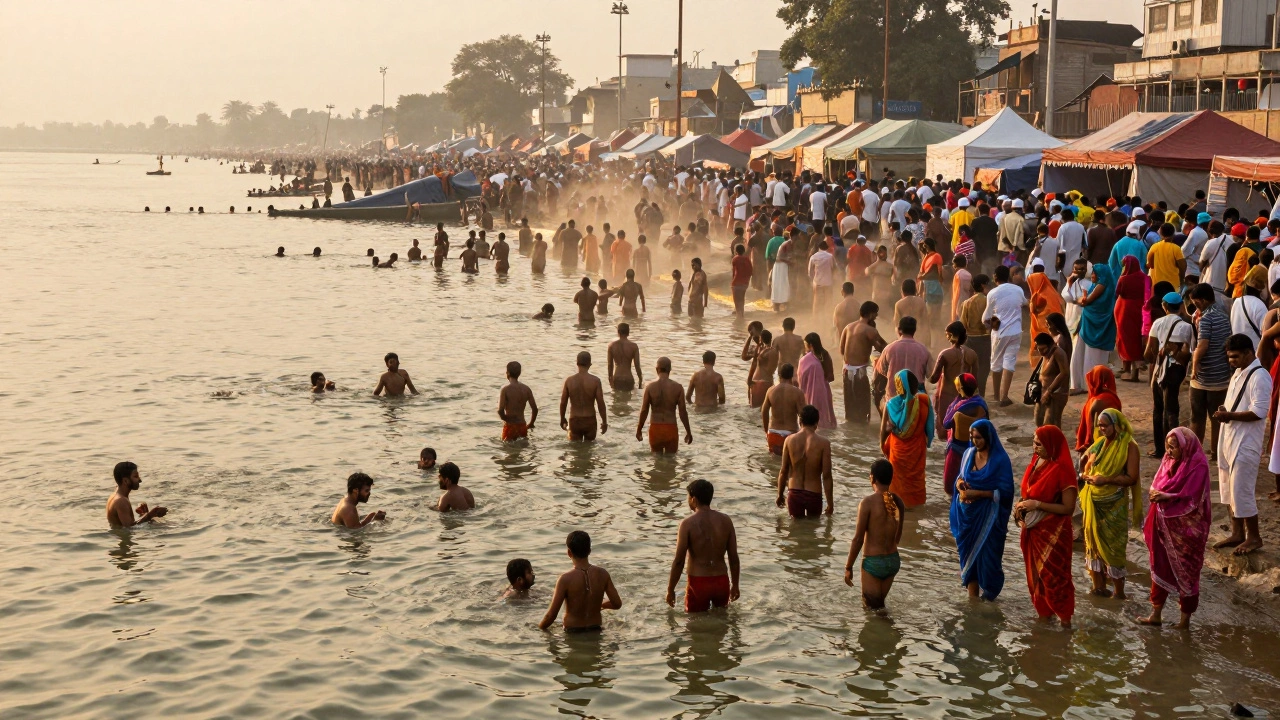
The largest Hindu festival in the world isn’t just a gathering-it’s a phenomenon. Imagine over 100 million people converging on a single stretch of riverbank over a few weeks. Dust rises in clouds. Beggars sit beside billionaires. Sadhus with matted hair and ash-covered bodies walk past families in silk saris. Pilgrims bathe at dawn, chanting hymns as the sun rises. This isn’t a movie. This is the Kumbh Mela.
What Exactly Is Kumbh Mela?
Kumbh Mela is a mass Hindu pilgrimage where tens to over a hundred million people gather to bathe in sacred rivers. The name comes from two Sanskrit words: kumbh (pot or pitcher) and mela (fair or gathering). According to Hindu mythology, the gods and demons churned the ocean of milk to obtain the nectar of immortality. During the struggle, drops of this nectar fell at four places on Earth: Prayagraj (Allahabad), Haridwar, Ujjain, and Nashik. These are the four sites where Kumbh Mela rotates every three years.
The festival isn’t held annually. It follows a complex astrological calendar based on Jupiter’s movement. When Jupiter enters Aquarius (Kumbha) and the Sun enters Aries (Mesha), the Kumbh Mela is held in Haridwar. When Jupiter enters Taurus (Vrishabha), it moves to Prayagraj. The full Kumbh, the largest version, happens every 12 years at each site. But every three years, one of the four locations hosts a smaller version called Ardh Kumbh (half Kumbh). The biggest of all is the Maha Kumbh, which occurs once every 144 years in Prayagraj.
Why Do So Many People Go?
For Hindus, bathing in these rivers during Kumbh Mela isn’t just a ritual-it’s believed to wash away sins and break the cycle of rebirth. The belief is that the water becomes infused with divine energy during the festival, especially at the exact moment dictated by planetary alignment. People come from every corner of India and beyond: farmers, students, corporate workers, retirees, and spiritual seekers. Many walk hundreds of kilometers. Some carry their elderly parents on their backs. Others arrive with nothing but a loincloth and a bowl.
The scale is staggering. In 2013, at Prayagraj, an estimated 120 million people attended over 55 days. That’s more than the entire population of Germany. The single largest day, known as the Shahi Snan, saw over 30 million people in the water at once. Police used drones, AI-based crowd monitoring, and over 100,000 personnel to manage it. No other religious gathering on Earth comes close.
Where Does It Happen?
The four sacred sites rotate every three years:
- Haridwar on the Ganges River in Uttarakhand
- Prayagraj (formerly Allahabad) at the confluence of the Ganges, Yamuna, and the mythical Saraswati rivers
- Ujjain on the Shipra River in Madhya Pradesh
- Nashik on the Godavari River in Maharashtra
Each site has its own flavor. Haridwar draws more ascetics and yogis. Prayagraj is the most crowded and spiritually significant because of the triveni sangam-the meeting of three rivers. Ujjain has a strong connection to the ancient city of Avanti and its temple traditions. Nashik, linked to Lord Rama’s exile, is quieter but deeply rooted in Vedic lore.
Who Comes to Kumbh Mela?
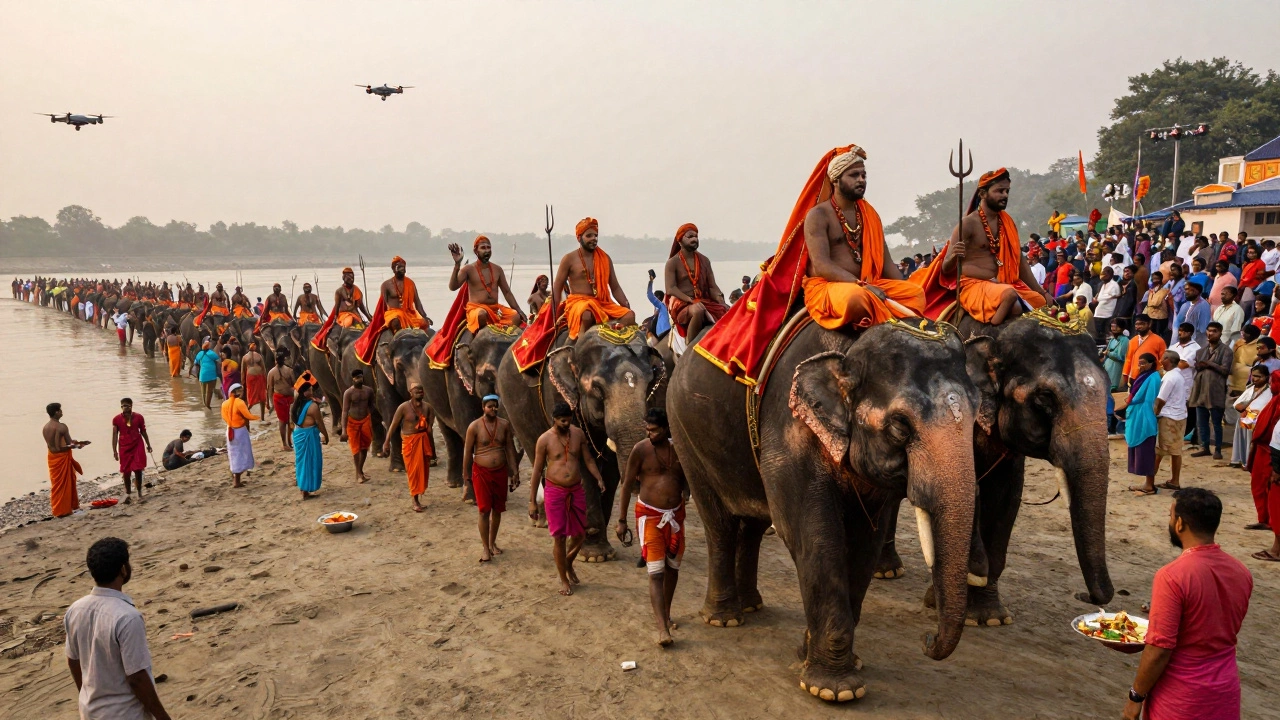
It’s not just ordinary pilgrims. The festival is also home to the Akharas-organized groups of sadhus, or Hindu monks. There are 13 major Akharas, each with its own lineage, traditions, and hierarchy. Some are Shaivite (devotees of Shiva), others Vaishnavite (devotees of Vishnu). These groups march in grand processions on the Shahi Snan days, riding elephants, camels, and horse-drawn chariots. Their leaders, called Mahants, are revered like living saints.
Women make up nearly half the attendees. Many come with their children, dressed in bright colors. Families camp for weeks. Food stalls serve langar-style meals-free, vegetarian, and prepared by volunteers. There are medical tents, mobile libraries, and even temporary courts to settle disputes. It’s a city of over 10 million people built from scratch, with roads, water pipes, electricity grids, and sanitation systems-all temporary, all functional.
How Is It Organized?
The logistics of Kumbh Mela are mind-boggling. The government sets up a full municipal infrastructure. In 2025, the Uttar Pradesh government built 150,000 temporary toilets, 1,200 kilometers of roads, and 10,000 tents for pilgrims. Over 200,000 volunteers work under the banner of the Kumbh Mela Authority. Mobile apps help pilgrims find their camps, track bathing dates, and report emergencies.
Security is tight. Over 10,000 police and paramilitary personnel patrol the grounds. Facial recognition systems are used to track missing persons. Drones monitor crowd density in real time. Medical teams are on standby for heatstroke, dehydration, and heart attacks. In 2019, over 100,000 people received free health checkups.
Even the bathing schedule is planned. Each Akhara gets a specific date and time to enter the river. The order is fixed by tradition. The Naga Sadhus, who go naked and carry tridents, lead the procession. Their entry is the most dramatic and symbolic moment of the entire festival.
Is It Only for Hindus?
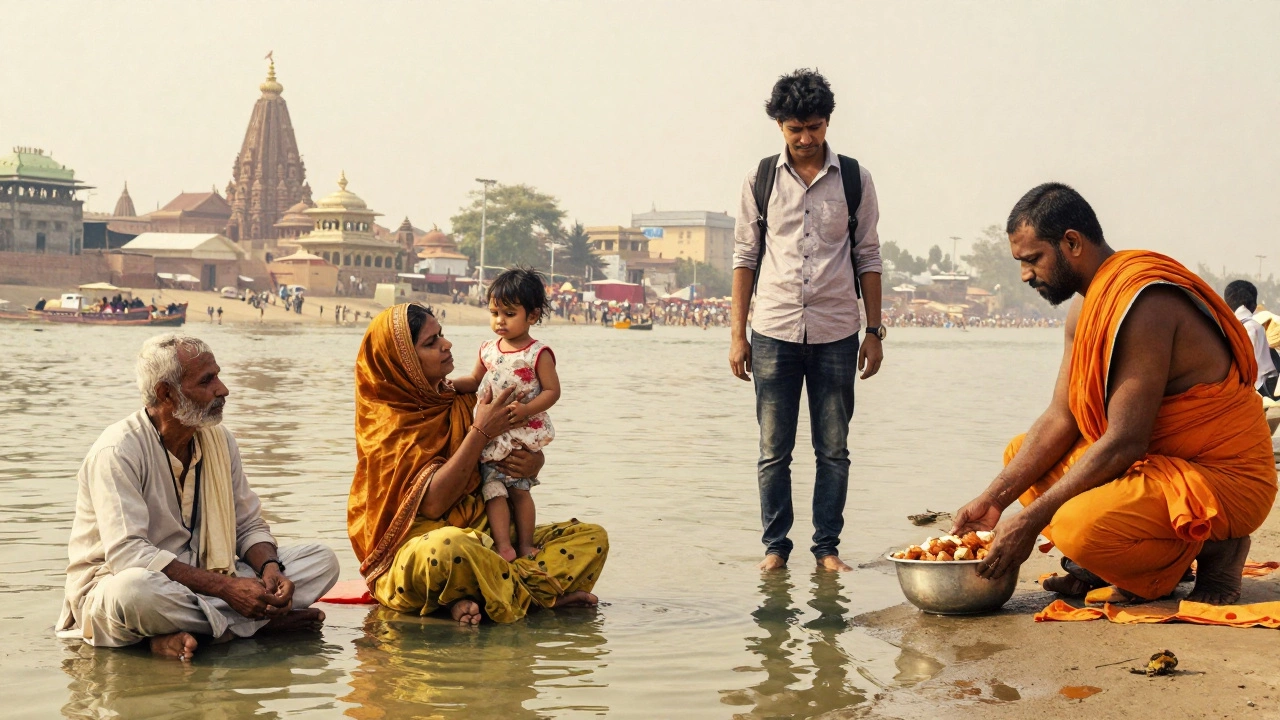
No. While Kumbh Mela is rooted in Hindu tradition, it’s open to everyone. Tourists from over 100 countries attend each year. Many Westerners come to study yoga, meditation, or simply witness the scale of devotion. Buddhist monks from Tibet, Jain ascetics, and even Muslim volunteers help manage food distribution. The festival has become a symbol of India’s pluralism.
In 2025, UNESCO recognized Kumbh Mela as an Intangible Cultural Heritage. It’s not just a religious event-it’s a living archive of Indian culture, architecture, music, and community organization.
What Makes It Unique?
Other festivals have fireworks, music, or dancing. Kumbh Mela has silence. It has millions of people, yet you hear only the rhythm of chants, the splash of water, and the occasional bell. It’s not about spectacle-it’s about surrender. People come not to see, but to be seen by the divine.
There’s no ticket. No entry fee. No VIP section. A beggar and a billionaire bathe side by side. A mother from Bihar, a professor from London, and a monk from Nepal-all equal in the water. That’s the true power of Kumbh Mela.
When Is the Next One?
The next Maha Kumbh Mela will be held in Prayagraj in 2025. The first Shahi Snan is scheduled for January 14, 2025, when Jupiter is in Aquarius and the Sun enters Aries. Millions are already preparing. Temples are being cleaned. Food supplies are being stockpiled. The riverbanks are being leveled. It’s not just a festival. It’s a reset-for the soul, for the community, for a civilization.
Is Kumbh Mela the largest human gathering on Earth?
Yes, Kumbh Mela is the largest human gathering on Earth. In 2013, an estimated 120 million people attended over 55 days. The single largest day saw over 30 million people in the water at once. This dwarfs other gatherings like the Hajj, which peaks at around 3 million, or New Year’s Eve in Times Square, which draws about 1 million.
How often does Kumbh Mela occur?
Kumbh Mela occurs every three years at one of the four sacred sites: Haridwar, Prayagraj, Ujjain, and Nashik. A full Kumbh Mela happens every 12 years at each site. The Maha Kumbh, the largest version, occurs once every 144 years in Prayagraj. The next Maha Kumbh is in 2025.
Can non-Hindus attend Kumbh Mela?
Yes, Kumbh Mela is open to everyone regardless of religion. Tourists, scholars, and spiritual seekers from all over the world attend. Many Western visitors come to experience the spirituality, observe rituals, or study the cultural and logistical aspects of the event. Volunteers from different faiths help with food distribution and crowd management.
What is the significance of bathing in the river during Kumbh Mela?
Hindus believe that bathing in the sacred rivers during Kumbh Mela cleanses sins and helps break the cycle of rebirth. The water is thought to become spiritually charged at the exact moment dictated by planetary alignment. The confluence of rivers, especially at Prayagraj, is considered especially powerful. Many pilgrims travel for months just to reach the site and bathe at the right time.
How do people survive the crowds and conditions?
The government and volunteers build a temporary city with over 150,000 toilets, 10,000 tents, clean water pipelines, medical centers, and food stalls. Free meals are served daily. Security forces use drones and AI to monitor crowd density. Mobile apps help pilgrims navigate. Emergency medical teams are stationed every few kilometers. Despite the scale, the death rate remains low due to meticulous planning and community cooperation.