Indian Festival Calendar
Major Indian Festivals
-
DiwaliOctober 24, 20235 days
-
HoliMarch 8, 20241 day
-
Eid al-FitrMarch 10, 20241 day
-
Navratri9 days
-
Durga PujaOctober 20, 202310 days
-
ChristmasDecember 25, 20231 day
How Indian Festivals Work
Indian festivals follow lunar calendars and agricultural cycles, which means their dates shift every year. Unlike fixed-date holidays in many countries, Indian festivals occur on different dates each year based on the moon's position and seasonal changes.
When people ask, "What is an Indian celebration called?" they’re not looking for one name. India doesn’t have a single celebration-it has hundreds. Every state, every community, every religion has its own way of marking time, seasons, and stories. There’s no one word that covers it all. But if you want to understand what makes Indian celebrations unique, you need to see them in action.
Diwali: The Festival of Lights
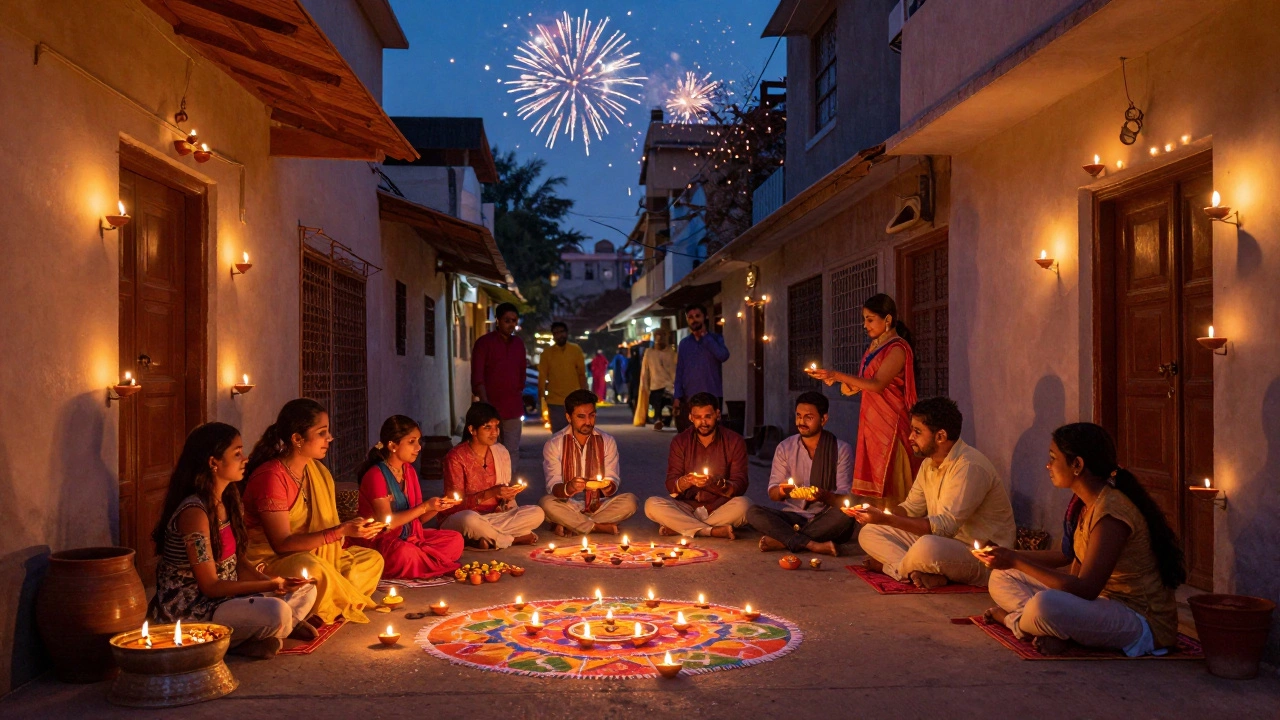
Diwali is the most widely recognized Indian celebration around the world. Also called Deepavali, it’s a five-day festival that usually falls between mid-October and mid-November. It’s not just about fireworks. In homes across India, families clean their houses, light oil lamps called diyas, and draw colorful rangoli patterns at their doorsteps. The lamps symbolize the victory of light over darkness, knowledge over ignorance. In North India, it marks the return of Lord Rama after 14 years in exile. In the South, it celebrates Lord Krishna’s defeat of the demon Narakasura. And in Western India, it’s tied to the story of Lord Vishnu sending the demon king Bali to rule the netherworld.
Over 1.3 billion people celebrate Diwali, making it the largest festival by participation on Earth. It’s not just a Hindu event. Jains mark it as the day their last spiritual leader, Mahavira, attained nirvana. Sikhs celebrate it as Bandi Chhor Divas-the day their sixth guru was freed from prison. Even some Buddhists in India observe it as a day of reflection.
Holi: The Festival of Colors
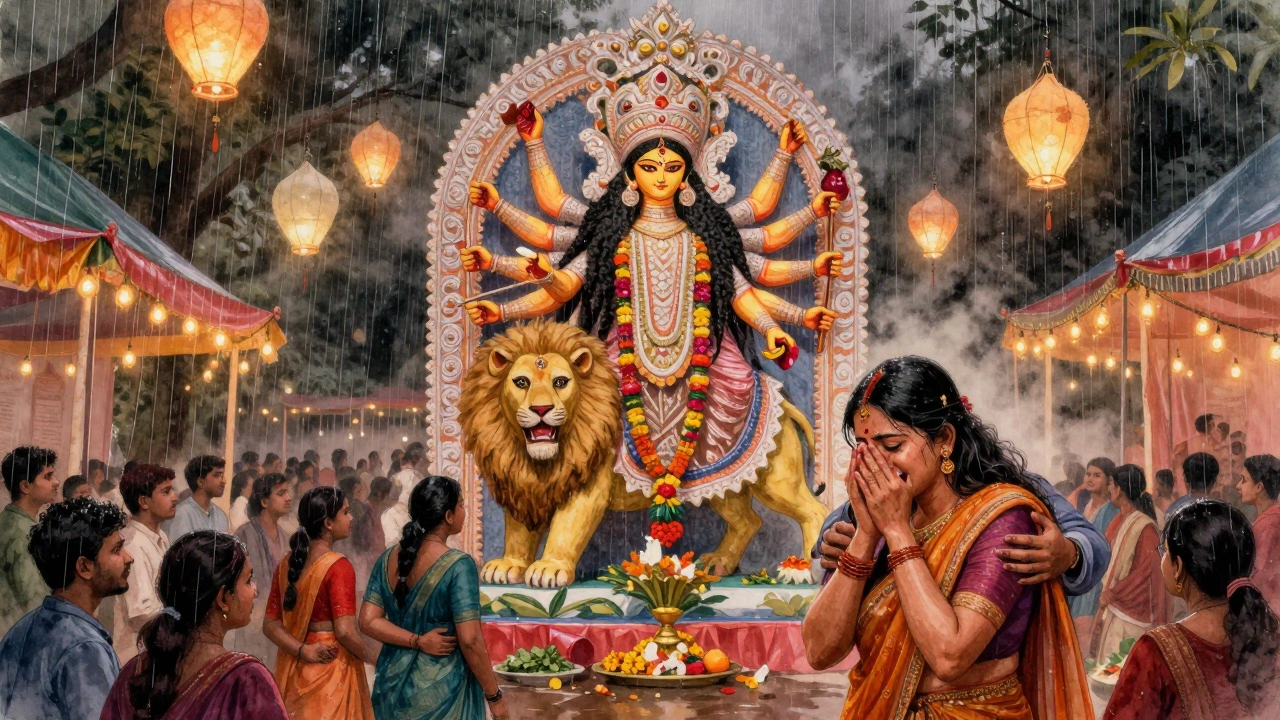
If Diwali is about light, Holi is about chaos-and joy. Celebrated in March, Holi turns streets into paint bombs. People throw colored powders, splash water, dance to dhol drums, and eat sweet treats like gujiya. The roots go back to ancient Hindu myths, especially the story of Prahlad and Holika. But today, it’s less about religion and more about breaking barriers. Caste, class, age-they all vanish under a rainbow of gulal. In Vrindavan and Mathura, Holi lasts for days. In Mumbai, it’s a citywide party. In rural Punjab, it’s called Lathmar Holi, where women playfully hit men with sticks.
What makes Holi unique is how it’s lived. You don’t just watch it-you get covered in it. It’s not a performance. It’s participation. And that’s true of most Indian celebrations: they’re not meant to be observed from the sidelines.
Eid: Celebrating Unity Across Faiths
India has the third-largest Muslim population in the world. Eid al-Fitr and Eid al-Adha are major celebrations here, not just in Muslim neighborhoods but across cities like Lucknow, Hyderabad, and Kolkata. On Eid al-Fitr, families wake before dawn, pray in open grounds, wear new clothes, and give charity to the poor. The day ends with feasts of biryani, sheer khurma, and kebabs.
What’s surprising to outsiders is how non-Muslims join in. In many neighborhoods, Hindu neighbors bring sweets to Muslim households. Christian schoolteachers give students the day off. In Kerala, Muslim families invite Christian friends to break their fast. It’s not just tolerance-it’s shared joy. Eid in India is a reminder that celebrations don’t need to be exclusive to be meaningful.
Navratri and Durga Puja: Dance, Devotion, and Drama
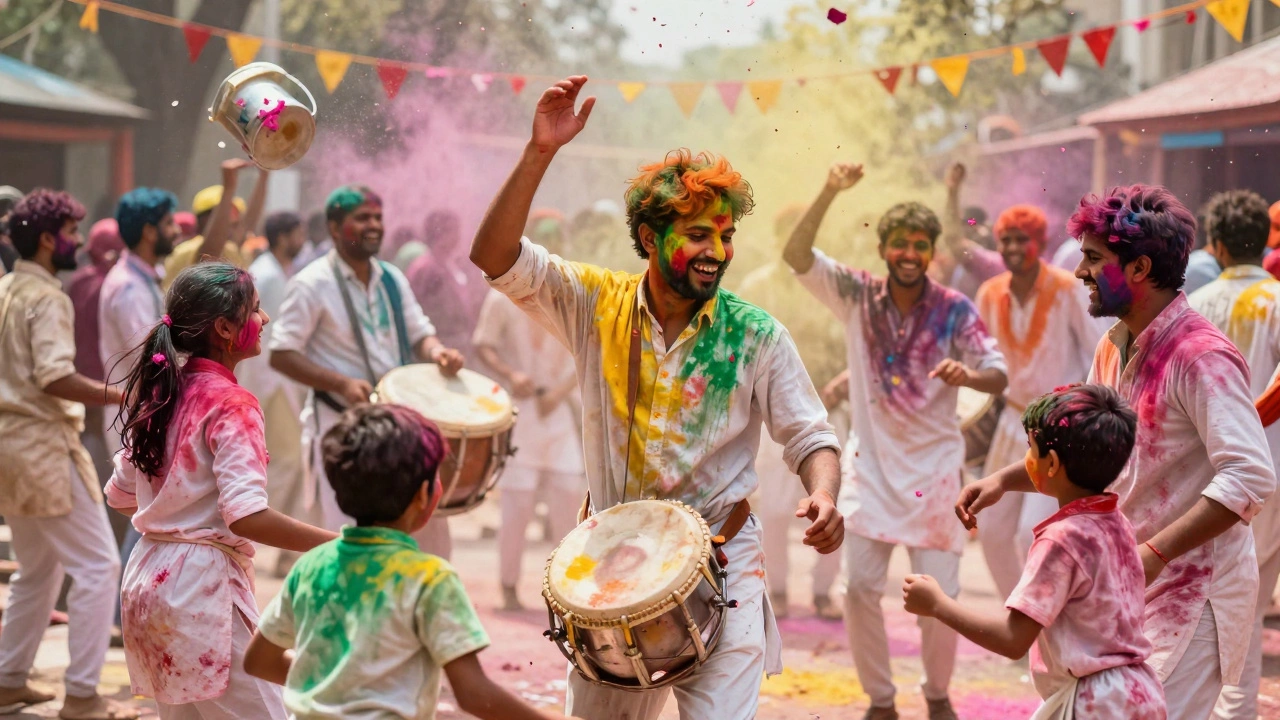
Navratri means "nine nights." It’s celebrated in two main ways. In Gujarat and Rajasthan, it’s a dance festival. People wear colorful chaniya cholis and dandiya sticks, dancing in circles for hours to folk songs. In West Bengal, Odisha, and Assam, it’s Durga Puja-the worship of Goddess Durga’s victory over the buffalo demon Mahishasura. Massive idols are made, lit up with thousands of bulbs, and carried through streets in processions.
The scale is staggering. In Kolkata alone, over 10,000 pandals (temporary shrines) are built each year. Each one is a work of art-some with themes like climate change, space travel, or Bollywood. People walk miles just to see them. And when the idols are immersed in rivers, it’s not just a ritual-it’s a communal goodbye. Families cry. Strangers hug. It’s emotional, deeply personal, and utterly public.
Christmas in India: More Than Just Santa
India has over 28 million Christians. Christmas is a big deal in states like Goa, Kerala, and Nagaland. In Goa, the streets are decorated with lanterns and nativity scenes. Midnight Mass is packed, with choirs singing in Konkani and Latin. In Kerala, families light oil lamps and share a special bread called appam with stew. In Nagaland, tribal communities hold week-long festivals with traditional dances, local food, and church services under open skies.
What stands out is how Indian Christians blend global traditions with local culture. Santa might be there, but so is a man dressed as Saint Thomas, the apostle who brought Christianity to India. The carols are sung in Hindi, Tamil, or Mizo. And the feasts? They’re not turkey and ham. They’re chicken curry, rice cakes, and sweet pongal.
Why Indian Celebrations Are Different
Most Western festivals are tied to a single date. Christmas is December 25. Halloween is October 31. But Indian celebrations follow lunar calendars, monsoon cycles, and harvest seasons. That means their dates shift every year. Diwali might be in October one year and November the next. Holi can fall in late February or mid-March.
They’re also not just religious. They’re cultural, seasonal, and social. A festival like Pongal in Tamil Nadu celebrates the harvest. Bihu in Assam marks the beginning of the Assamese New Year and the first ploughing. Onam in Kerala is about a mythical king who returns once a year to bless his people.
And unlike many global celebrations that are commercialized, Indian festivals still center on community. You don’t buy a ticket to Diwali. You’re invited. You don’t pay to see Durga Puja. You walk in, and someone hands you a flower. The magic isn’t in the spectacle-it’s in the inclusion.
What You’ll Never See in a Tourist Brochure
Most photos of Indian festivals show color, noise, and crowds. But the real heart of these celebrations is quieter.
It’s the grandmother who wakes at 4 a.m. to make ladoos. The teenager who stays up all night helping paint a Durga idol. The shopkeeper who closes his store to help neighbors set up a pandal. The stranger who shares his umbrella during a Holi splash.
These aren’t performances for tourists. They’re acts of belonging. That’s why no single word-"festival," "celebration," "ritual"-can fully capture what they are. They’re threads in a living fabric. Pull one, and the whole pattern shifts. But if you’re lucky enough to be part of it, you’ll never forget how it feels to be held by a thousand hands.
What is the most important Indian celebration?
There’s no single "most important" celebration in India because it depends on where you are and who you are. Diwali is the most widely observed across religions and regions, with over a billion participants. But for millions in West Bengal, Durga Puja is the pinnacle of the year. For Muslims, Eid is the most sacred. For farmers in Tamil Nadu, Pongal is the highlight. India doesn’t rank its festivals-it lets each one breathe in its own way.
Are Indian festivals only religious?
No. While many have religious origins, today they serve multiple purposes. Holi is rooted in a Hindu myth but is now a social event that erases social barriers. Navratri includes dance competitions and music festivals. Onam is tied to a myth but is mainly a harvest celebration. Pongal is about thanking nature for the crop. These events blend spirituality with culture, agriculture, and community bonding.
Do all Indians celebrate the same festivals?
Absolutely not. India has 28 states and 8 union territories, each with its own languages, traditions, and dominant religions. A Hindu in Gujarat celebrates Navratri with dandiya dances, while a Hindu in Tamil Nadu celebrates Pongal. A Muslim in Kashmir observes Eid with special prayers and feasts, while a Christian in Nagaland celebrates Christmas with tribal dances. Even within one religion, practices vary wildly. There’s no single "Indian" way-only a thousand local ones.
Can foreigners join Indian celebrations?
Yes-and they’re often welcomed. Many Indian families invite foreign friends to Diwali dinners, Holi parties, or Christmas gatherings. At Durga Puja pandals, tourists are given flower garlands. At Eid feasts, non-Muslims are served food without question. The only rule is respect: dress modestly, ask before taking photos, and don’t refuse sweets. Indians don’t expect you to know the rituals-they’ll teach you. The spirit is: come as you are, leave as family.
How long do Indian festivals last?
It varies. Some, like Holi, last just one day. Others stretch over weeks. Diwali is five days. Durga Puja runs for ten. In Kerala, Onam celebrations go on for 10 days with daily events. In Gujarat, Navratri is nine nights of dancing. In rural areas, festivals can last even longer, tied to local harvest cycles or temple traditions. The length isn’t about spectacle-it’s about depth. The more time spent, the more the community connects.