Indian Family Tradition Explorer
Select a tradition below to learn about its action and deeper cultural significance.
Welcome to the Explorer
Action: Choose one of the buttons above to see details.
Meaning: Learn how these practices strengthen family bonds in Indian culture.
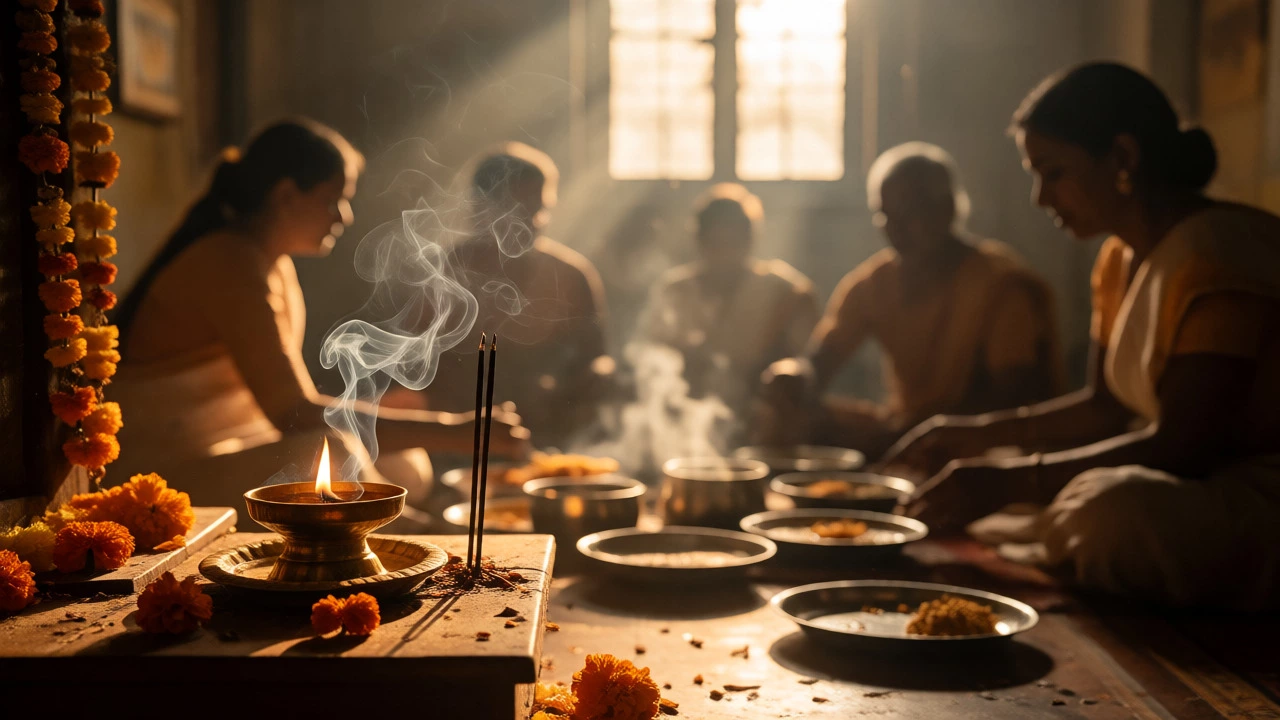
Imagine walking into a home in Varanasi or Mumbai on a Tuesday morning. Before you even see the kitchen, you smell incense burning near a small altar. You hear the faint hum of a prayer chant mixed with the clatter of steel plates being set for breakfast. This isn't just a scene from a movie; it is the daily rhythm of millions of households across India. Indian family traditions are not static museum pieces. They are living, breathing practices that shape how people greet each other, what they eat, and how they navigate life's biggest milestones.
You might think these traditions are all about grand weddings or colorful festivals like Holi. And sure, those are huge parts of it. But the real glue holding Indian families together often lies in the small, everyday habits. It’s the way a younger person touches the feet of an elder to show respect. It’s the communal meal where everyone eats from the same large platter. These acts reinforce a sense of belonging that transcends individual identity. If you are trying to understand the heart of Indian culture, you have to look at how families operate behind closed doors.
The Core Unit: The Joint Family System
For centuries, the default social structure in India was the joint family. Unlike the nuclear family model common in the West, which consists only of parents and children, a joint family includes grandparents, uncles, aunts, cousins, and their children all living under one roof or in close proximity. While urbanization has shifted many young couples toward nuclear setups, the emotional architecture remains deeply rooted in this collective mindset.
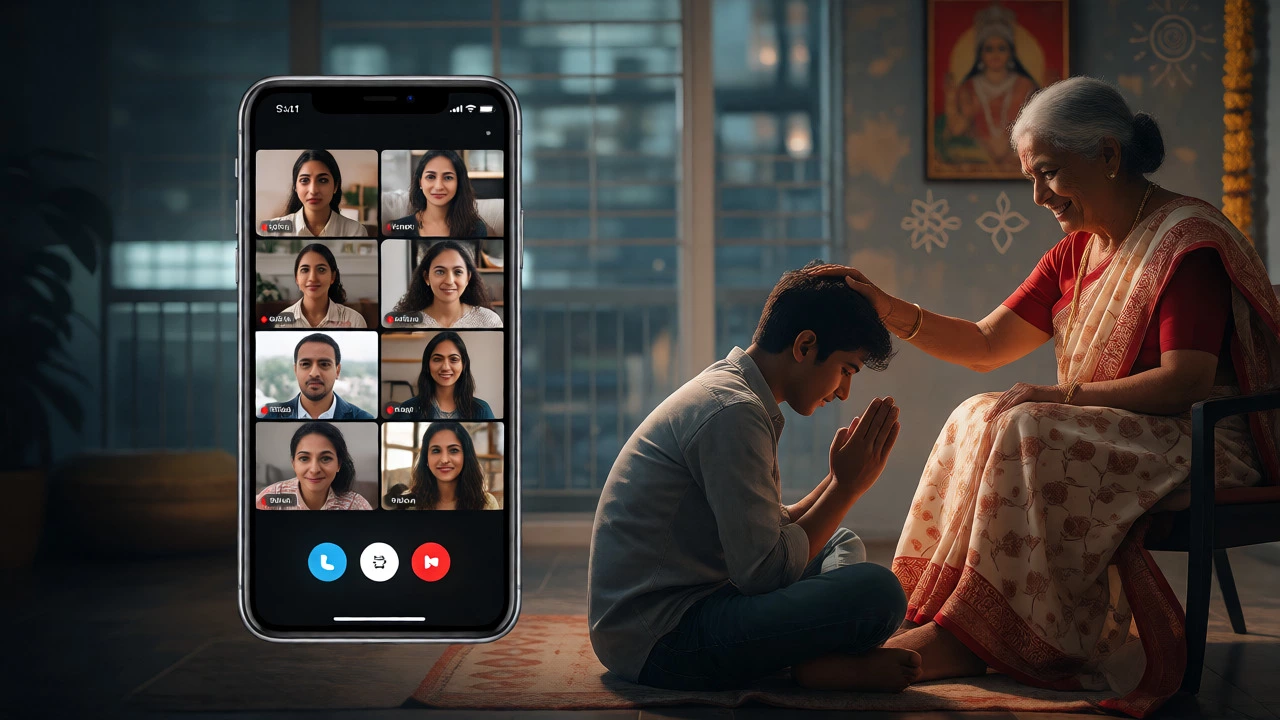
This structure creates a specific set of expectations. Decisions aren't made in isolation. Whether it is buying a car, choosing a college, or planning a wedding, the extended family weighs in. This can feel overwhelming to outsiders, but for those within the system, it provides a robust safety net. Childcare is shared among aunts and grandmothers. Financial burdens are distributed. Emotional support is immediate and constant. Even when families live apart, technology keeps them connected through group chats that buzz from dawn until late night, discussing everything from cricket scores to health updates.
Daily Rituals and Respect for Elders
Respect for elders is perhaps the most visible tradition in Indian homes. It starts early in the morning with the concept of Pranam, or touching the feet of parents and grandparents. This gesture acknowledges that elders hold wisdom and experience. In return, the elder places a hand on the younger person's head and offers a blessing, known as 'Aashirwad'. This exchange reinforces the hierarchy while ensuring love flows both ways.
Another daily practice is the Puja or prayer ritual. Most homes have a dedicated corner for deities, whether it is Ganesha, Lakshmi, or a generic family deity. Lighting a lamp (diya) and offering flowers or sweets is a routine task, often performed by the eldest woman of the house. This isn't always about strict religious dogma; for many, it is a moment of mindfulness and gratitude before the chaos of the day begins. It centers the family around a shared spiritual anchor.
Festivals as Family Anchors
If daily rituals are the heartbeat, festivals are the pulse spikes. Diwali, the festival of lights, is arguably the biggest family gathering of the year. Families clean their homes, light oil lamps, and prepare elaborate spreads of sweets and savory snacks. But beyond the decorations, Diwali is about reunion. Migrant workers travel thousands of kilometers to be home. The tradition of exchanging gifts and sweets strengthens bonds between neighbors and relatives who may not have seen each other in months.
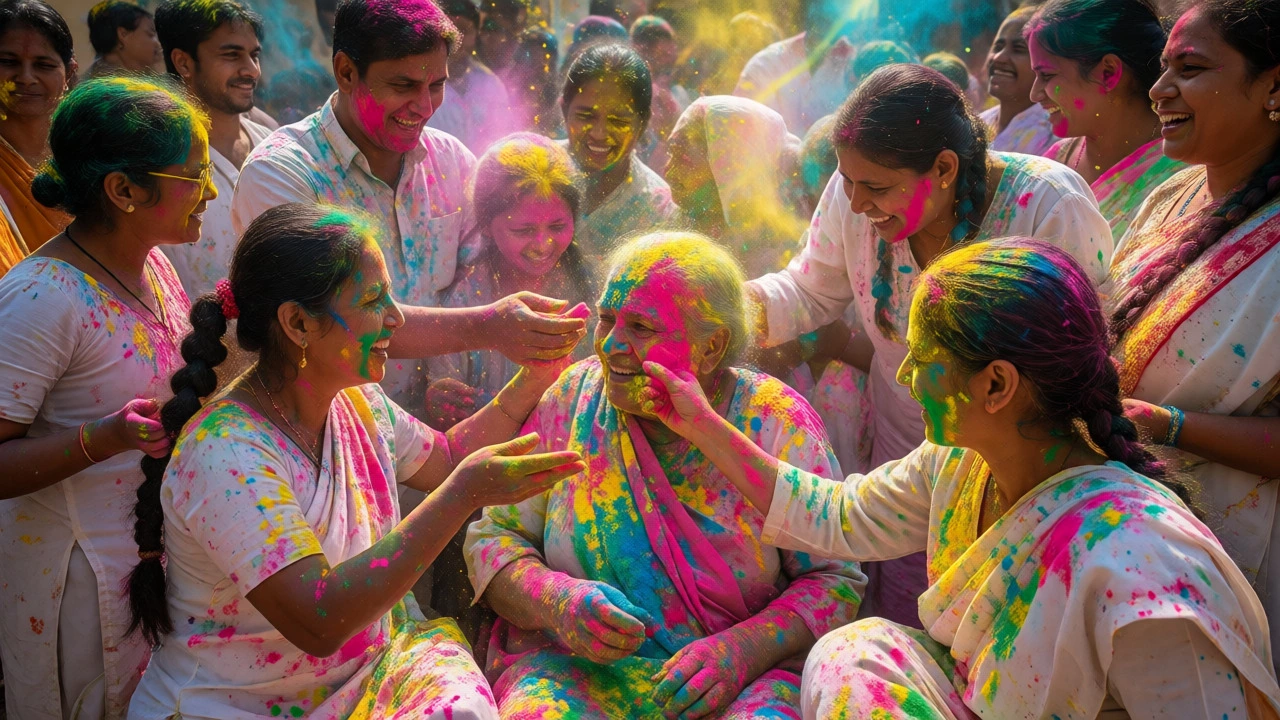
Holi offers a different kind of bonding. By smearing colored powder on each other, social barriers dissolve temporarily. A boss might playfully color an employee; a child might tease a parent. It breaks down rigid hierarchies through joy. Similarly, Raksha Bandhan focuses specifically on sibling relationships. Sisters tie a sacred thread (rakhi) on their brothers' wrists, symbolizing protection and care, while brothers pledge to support their sisters. It is a tangible reminder that family ties extend beyond bloodlines to chosen bonds.
Culinary Traditions and Communal Eating
You cannot talk about Indian family traditions without talking about food. Food is love language in India. Cooking is rarely done for just one person. It is prepared for the household. The tradition of eating together, often sitting on the floor or around a low table, emphasizes equality and community. In many traditional homes, men and women might eat separately, but the act of serving-where the youngest serves the oldest-is strictly observed.
Regional variations are vast, but the principle of hospitality remains constant. Guests are treated as gods ('Atithi Devo Bhava'). No guest leaves a home hungry. Preparing special dishes for visitors is a standard expectation. Furthermore, fasting is a common family activity during certain religious days. When one member fasts, the whole family often adjusts their meals to accommodate simple, satvik (pure) foods. This shared discipline fosters empathy and spiritual connection.
Lifecycle Events: Birth to Death
Indian culture marks every stage of life with specific ceremonies. A birth is celebrated with a naming ceremony, often involving astrology to choose a name based on planetary positions. The baby's first feeding of solid food, called Annaprasan, is a major event attended by relatives.
Weddings are the ultimate display of family tradition. They are not just two people getting married; they are two families merging. The rituals vary by region-from the North Indian Mehendi (henna application) to the South Indian Kashi Yatra (a mock procession). However, the core theme is always community involvement. Relatives contribute money, time, and labor. The financial burden is shared, reflecting the collective nature of the society.
Death also brings families together. Mourning periods last for 13 days in many communities, during which the family stays indoors, avoids celebrations, and performs rituals to help the soul transition. Friends and neighbors bring food so the grieving family doesn't have to cook. This practical support highlights how interconnected the social fabric truly is.
| Tradition | Action | Symbolic Meaning |
|---|---|---|
| Namaste | Palms pressed together, slight bow | Respect; acknowledging the divine in others |
| Pranam | Touching elders' feet | Humility; seeking blessings and wisdom |
| Sanskar | Rites of passage (e.g., Upanayana) | Spiritual initiation; marking life stages |
| Bhandara | Community feast | Sharing abundance; removing ego |
| Shradh | Ancestral offerings | Honoring lineage; connecting past and present |
Modern Shifts and Digital Traditions
Are these traditions disappearing? Not exactly. They are evolving. Young Indians in cities like Bangalore or Delhi might live in nuclear apartments, but they still video call their grandparents every Sunday. They might order groceries online instead of visiting the local market, but they still insist on making homemade pickles during summer. Technology has become a new vessel for old values. WhatsApp groups serve as digital living rooms where jokes, news, and family dramas unfold in real-time.
There is also a growing trend of 'conscious parenting,' where parents selectively adopt traditions. They might skip the rigid gender roles of the past but keep the emphasis on education and family unity. The definition of 'family' is expanding too, including friends and chosen kin in celebrations. Yet, the underlying desire for connection remains unchanged. People crave the stability and warmth that these rituals provide in a rapidly changing world.
Why These Traditions Matter Today
In an era of global homogenization, Indian family traditions offer a distinct counter-narrative. They prioritize interdependence over independence. They value continuity over novelty. For diaspora Indians living abroad, these practices are lifelines to their roots. Teaching a child how to fold a betel leaf or explain why we don't step on books after sunset isn't just about rules; it's about transmitting cultural DNA.
Understanding these traditions helps bridge gaps. When a colleague explains why they need leave for a family function, or why they eat vegetarian on Tuesdays, you gain insight into their worldview. It moves interactions from transactional to relational. Ultimately, Indian family traditions are about maintaining harmony-within oneself, within the home, and within the wider community.
Do all Indian families follow the same traditions?
No, India is incredibly diverse. Traditions vary significantly by region, religion, caste, and community. For example, wedding rituals in Kerala differ vastly from those in Punjab. However, broad concepts like respect for elders and communal eating are widely shared across most groups.
Is the joint family system still common in India?
While nuclear families are becoming more prevalent in urban areas due to housing constraints and job mobility, the joint family ideal remains strong emotionally. Many families maintain 'virtual joint families' through frequent visits, shared finances, and collective decision-making, even if they live in separate houses.
What is the significance of touching feet in Indian culture?
Touching the feet (Pranam) is a gesture of deep respect and humility towards elders. It signifies acknowledging their wisdom and experience. The elder reciprocates by blessing the younger person, creating a cycle of mutual respect and affection.
How do Indian families celebrate birthdays differently than Western cultures?
While cake cutting is now common, traditional birthday celebrations often include a morning puja (prayer) for longevity and health. Older individuals might visit temples or donate food to the needy. The focus is often on gratitude for another year of life rather than just partying.
Are arranged marriages still the norm in Indian families?
Arranged marriages remain very common, but they are increasingly 'semi-arranged.' Families introduce potential partners, but the couple has significant input and veto power. Love marriages are also rising, especially in metros, though family approval is still highly valued in most cases.