Indian Traditional Craft Explorer
Select a category below to discover the rich heritage of Indian craftsmanship.
India is not just a country; it is a living museum where every village seems to guard a secret technique passed down for centuries. When you hold a piece of Pashmina shawl from Kashmir or a hand-block printed textile from Rajasthan, you are touching history. These aren't mass-produced souvenirs found in generic tourist shops. They are the result of generations of artisans who have turned raw materials like clay, wood, silk, and metal into objects of profound beauty and utility.
The question "What are the traditional crafts of India?" doesn't have a simple answer because there isn't one single tradition. There are thousands. Each state, and often each district, has its own signature craft. From the intricate metalwork of the South to the delicate paper art of the East, these crafts define the visual identity of the subcontinent. Understanding them means understanding the geography, religion, and daily life of the people who make them.
The Soul of Textiles: Weaving and Printing
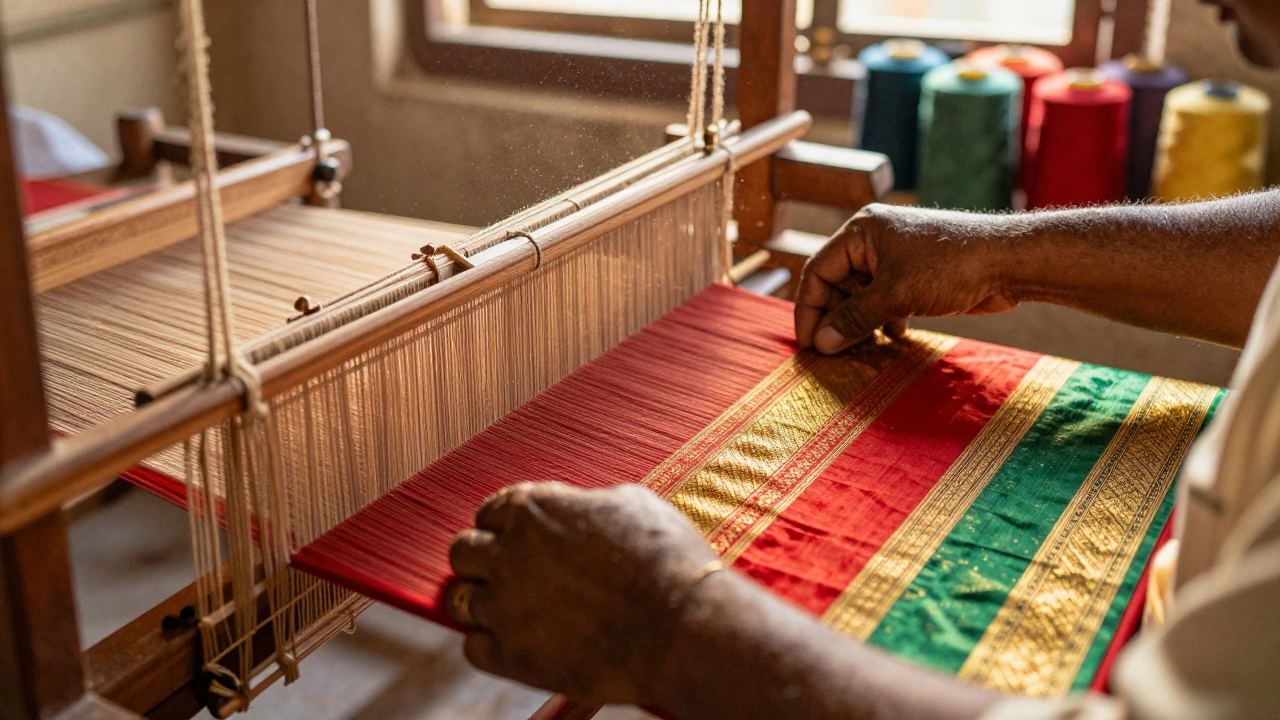
If you look at any map of Indian crafts, textiles dominate. The climate here demands breathable fabrics, which led to the development of some of the finest weaving techniques in the world. But it’s not just about making cloth; it’s about how that cloth is made.
Kanchipuram Silk from Tamil Nadu is famous for its durability and rich gold zari work. Unlike synthetic blends, this silk is woven with pure mulberry silk and real silver threads coated in gold. The weight of a Kanchipuram saree can be substantial, sometimes over two kilograms, reflecting the density of the weave. This isn't just clothing; it's an heirloom meant to last decades.
In contrast, Ikat weaving, particularly Patola from Gujarat, uses a resist-dyeing technique on the yarn before weaving. The pattern is created by tying and dyeing specific sections of the thread. If the weaver makes even a millimeter error during the dyeing process, the final pattern will misalign. This requires incredible precision and patience, often taking months to complete a single pair of sarees.
Then there is Chikankari embroidery from Lucknow. This is white-on-white embroidery that relies on subtle shadows and textures rather than bright colors. Artisans use over twenty different stitches, including the murri (knot) and phanda (loop), to create floral motifs. It looks deceptively simple, but creating a fine Chikankari suit can take weeks of hand-stitching.
| Craft Name | Origin Region | Key Technique | Primary Material |
|---|---|---|---|
| Kanchipuram Silk | Tamil Nadu | Dobby Loom Weaving with Zari | Mulberry Silk, Gold/Silver Thread |
| Patola Ikat | Gujarat | Double Ikat Resist Dyeing | Silk Yarn |
| Chikankari | Uttar Pradesh | Hand Embroidery (20+ Stitches) | Cotton, Muslin, Georgette |
| Banarasi Brocade | Uttar Pradesh | Jakquard Loom Weaving | Silk, Brocaded Fabric |
Earth and Fire: Pottery and Terracotta
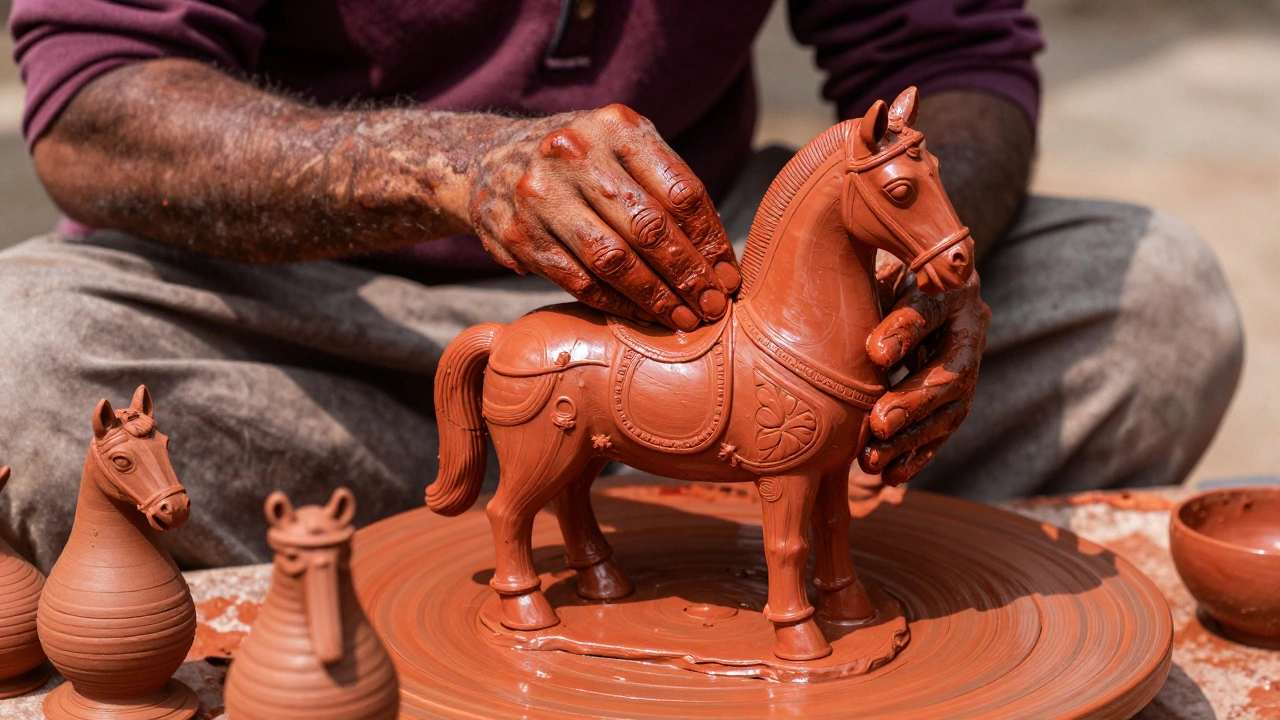
Clay is abundant across India, and almost every region has developed a unique pottery style. In West Bengal, the town of Bankura is synonymous with Bankura Horse statues. These terracotta horses are not just decorative; they are part of local folklore and are often used in festivals. The clay here is red and porous, giving the finished product a distinct earthy tone. Artists shape the horse using coils of clay, allowing it to dry slowly before firing in open pits.
Move north to Rajasthan, and you find Blue Pottery of Jaipur. Interestingly, this craft does not use local clay. Instead, it uses quartz powder, glass powder, and gum tragacanth. The mixture is shaped and then glazed with cobalt blue and turquoise pigments. The result is a cool, smooth finish that feels different from standard earthenware. It was introduced during the Mughal era, showing how Indian crafts absorb foreign influences and make them their own.
In Madhya Pradesh, Khurja Pottery is known for its durability and variety. Khurja is often called the pottery capital of India because it produces everything from household utensils to industrial tiles. The glazing techniques here are advanced, using chemical compounds to create vibrant greens, yellows, and blues that withstand high temperatures.
Wood and Stone: Sculpture and Furniture
India’s forests provided timber, and its hills provided stone, leading to a rich tradition of carving. Warli Painting from Maharashtra is technically done on walls or canvas, but it shares the geometric simplicity of wood carvings. However, when it comes to actual woodcraft, Sandur Rosewood furniture from Karnataka stands out. The wood is dense and dark, resisting termites naturally. Artisans carve intricate floral patterns into doors, windows, and furniture pieces. The finish is usually polished with natural oils, highlighting the grain without hiding it under heavy varnish.
Stone carving reaches its peak in Andhra Pradesh and Odisha. Black Stone Carving from Nidamangalam in Tamil Nadu involves working with soapstone. This soft stone allows artists to carve extremely detailed figures of gods, dancers, and animals. Once carved, the statue is heated to harden the surface, preserving the details for centuries. You can see similar techniques in the temples of Konark and Khajuraho, where entire structures are essentially large-scale sculptures.
Metal and Glass: Durability Meets Delicacy
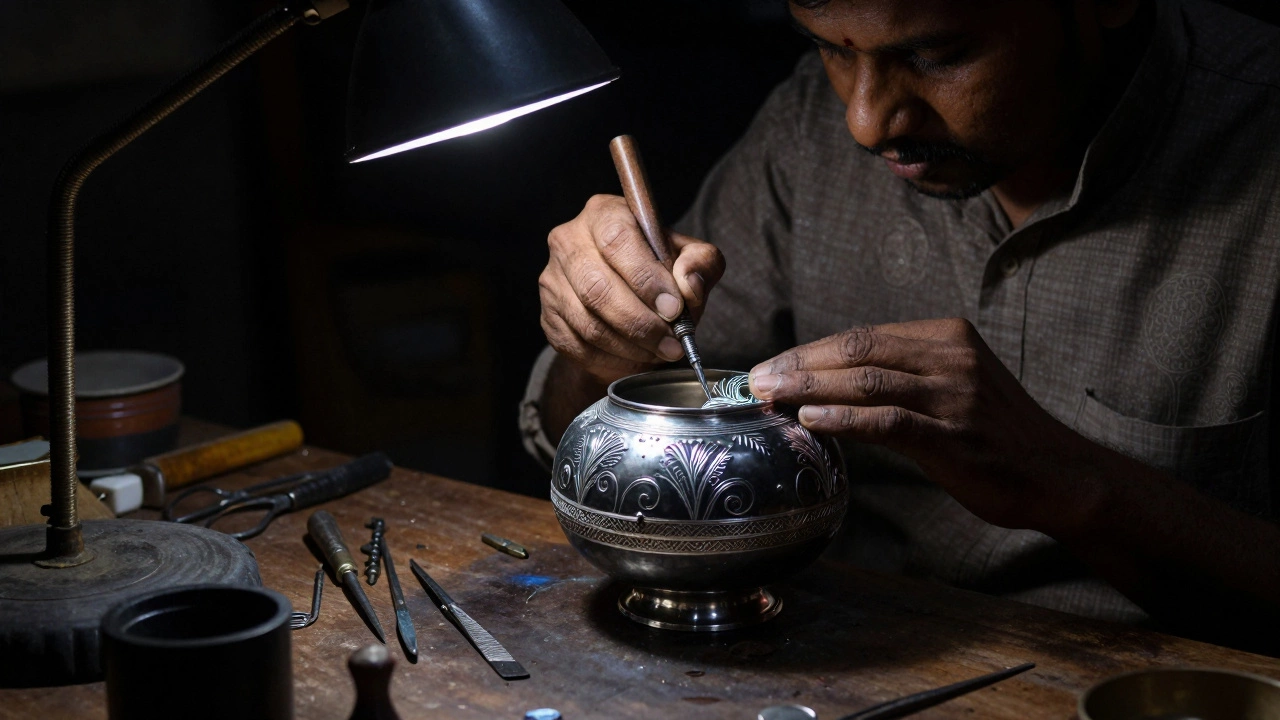
Metalwork in India ranges from massive temple bells to tiny jewelry pieces. Bidriware from Bidar, Karnataka, is a unique alloy of zinc and copper. The base metal is blackened using a chemical process involving manganese sulfate, and then silver wires are inlaid into the design. The contrast between the jet-black background and the shining silver creates a striking visual effect. This craft was patronized by the Bahmani Sultanate and remains a symbol of luxury.
In the North, Moradabad Brass is famous for its animal figurines and ornamental lamps. The brass is cast using sand molds, a technique that allows for complex shapes. After casting, artisans engrave patterns onto the surface and sometimes apply enamel colors. The city of Moradabad has been a hub for brass trading since the 17th century, exporting these goods globally.
Glassblowing finds its home in Firozabad, Uttar Pradesh, known as the "Glass City." Here, artisans produce everything from bangles to decorative vases. The process involves heating silica sand until it melts, then shaping it with blowpipes and tools. The skill lies in controlling the temperature and air pressure to avoid bubbles and cracks. Many of these glass items are hand-painted with metallic foils, adding another layer of craftsmanship.
Paper and Bamboo: Sustainable Crafts
Not all crafts rely on heavy materials. In the Northeast, Bamboo Craft from Assam and Meghalaya is essential to daily life. Bamboo grows rapidly and is highly versatile. Artisans weave it into baskets, mats, furniture, and even musical instruments. The weaving patterns vary by tribe, serving as a form of cultural identification. For example, the Ao Naga tribe uses specific knotting techniques that differ from those of the Karbi tribe.
In West Bengal and Odisha, Patachitra painting uses handmade paper or cloth. The paints are natural, made from crushed stones, indigo, and turmeric. The stories depicted are usually mythological, featuring characters from the Ramayana or Mahabharata. The border designs are intricate, often filled with floral motifs. This craft preserves oral traditions through visual storytelling.
Deccani Paper Mache from Hyderabad offers a lighter alternative. Waste paper is pulped and molded into shapes, then painted with vibrant colors and gold leaf. It is used to make boxes, trays, and decorative items. The process is eco-friendly, recycling waste into beautiful objects, and requires no high-temperature firing, making it energy-efficient.
Why These Crafts Matter Today
In a world dominated by fast fashion and plastic disposables, Indian traditional crafts offer a counter-narrative. They represent slow production, where quality matters more than quantity. Each piece has imperfections that prove it was made by human hands, not machines. Supporting these crafts helps preserve livelihoods for millions of artisans, many of whom live in rural areas with limited economic opportunities.
Moreover, these crafts are sustainable. Natural dyes, biodegradable materials, and low-energy processes mean a smaller carbon footprint. When you buy a hand-block printed cotton shirt instead of a synthetic polyester one, you are choosing a product that breathes, ages gracefully, and returns to the earth without harming it.
The challenge today is accessibility. Many artisans struggle to reach global markets due to lack of digital presence and fair trade practices. However, initiatives connecting buyers directly with craftsmen are growing. By learning what these crafts are and where they come from, consumers can make informed choices that support cultural heritage.
What is the most famous traditional craft of India?
While it is hard to pick just one, Kanjeevaram Silk sarees and Blue Pottery from Rajasthan are among the most internationally recognized. Textiles generally dominate due to their widespread use in daily life and ceremonies.
How can I identify authentic handmade Indian crafts?
Look for slight irregularities in patterns or stitching, which indicate handwork. Check for certifications like GI (Geographical Indication) tags, which verify the origin. Authentic pieces often feel heavier or have a natural texture compared to machine-made imitations.
Are traditional Indian crafts expensive?
Prices vary widely. Simple cotton block prints can be affordable, while intricate Bidriware or Patola silks can cost thousands of dollars due to the time and skill involved. Fair trade prices ensure artisans are paid well, which may reflect in the cost.
Which Indian states are best for buying handicrafts?
Kerala for coir and Kathakali masks, Rajasthan for textiles and blue pottery, West Bengal for terracotta and pattachitra, and Karnataka for silk and rosewood furniture. Each state has specialized clusters of artisans.
Do traditional crafts use natural materials?
Most traditional crafts rely on natural materials like cotton, silk, clay, wood, and natural dyes derived from plants and minerals. However, some modern adaptations may use synthetic alternatives to reduce costs, so checking material composition is important.