
Carnatic Music Three Pillars Visualizer
Performance Controls
Have you ever listened to a Carnatic music concert and felt like you were hearing three different conversations happening at once? One voice soaring through complex melodies, another keeping a steady heartbeat with drums, and a third providing a deep, resonant drone. It sounds chaotic until you realize it is actually one of the most structured art forms in the world.
Carnatic music is the classical music tradition of Southern India, known for its intricate melodic structures and rhythmic complexity. Unlike Western music, which often relies on written sheet music and fixed compositions, Carnatic music lives in the moment. It is improvised, spontaneous, and deeply spiritual. But how do musicians keep everything together without a conductor waving a baton?
The answer lies in what scholars and practitioners call the "Three Pillars" of Carnatic music. These are not just instruments; they are roles that define the entire ecosystem of the performance. If you want to understand this ancient art form, you need to look beyond the notes and see the structure holding them up. Let’s break down these three essential components: the Vocalist (or Lead Instrumentalist), the Percussionist, and the Harmonic Support.
Pillar 1: The Vocalist or Lead Instrumentalist (The Melody Carrier)
In Carnatic music, the human voice is considered the primary instrument. Even when other instruments play, they are trying to mimic the nuances of the human throat. This is why the first pillar is always the lead performer, whether that is a singer or a player of a melody instrument like the Vina, Flute, or Violin.
This role is responsible for presenting the Raga. A Raga is not just a scale; it is a melodic framework with specific rules about which notes can be used, how they should be ornamented, and even the time of day it is best performed. The vocalist doesn't just sing the tune; they explore it. They take a simple phrase and stretch it, twist it, and decorate it in a section called Alapana.
Think of the vocalist as the storyteller. They have the freedom to improvise within the boundaries of the Raga. Their job is to evoke emotion-whether it is devotion, love, or sorrow. Without this pillar, there is no narrative. There is only noise. The audience connects with the vocalist because they are expressing the soul of the composition.
Pillar 2: The Percussionist (The Rhythm Keeper)
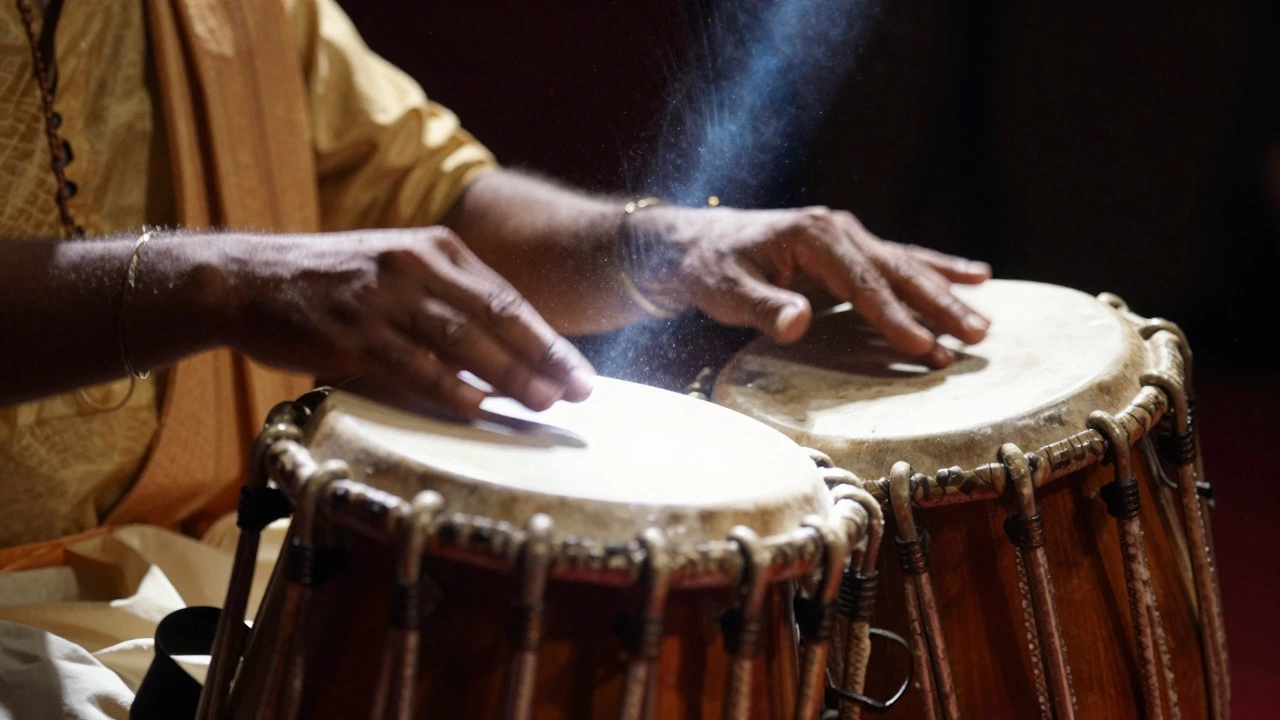
If the vocalist is the storyteller, the percussionist is the architect building the house around them. In Carnatic music, rhythm is not background decoration; it is a central character. This second pillar is usually handled by the Mridangam, a double-headed drum made of wood and leather. Sometimes, the Ghatam (a clay pot) or Kanjiira (a frame drum) takes this role.
The percussionist maintains the Tala. Tala is the rhythmic cycle. Unlike Western time signatures that might just count "1-2-3-4," Tala is a circular concept. It has a beginning, a middle, and an end that loops back to the start. Common Talas include Adi Tala (8 beats) and Rupaka Tala (6 beats).
Here is where it gets interesting. The percussionist doesn't just keep time; they engage in a dialogue with the vocalist. This exchange is called Layakari. The vocalist will sing a fast, complex rhythmic pattern, and the Mridangam player must echo it exactly, sometimes even speeding it up or breaking it down further. It is a musical tennis match. If the percussionist misses a beat or fails to respond creatively, the tension breaks. This pillar provides the structural integrity and the excitement of the performance.
Pillar 3: The Harmonic Support (The Drone)
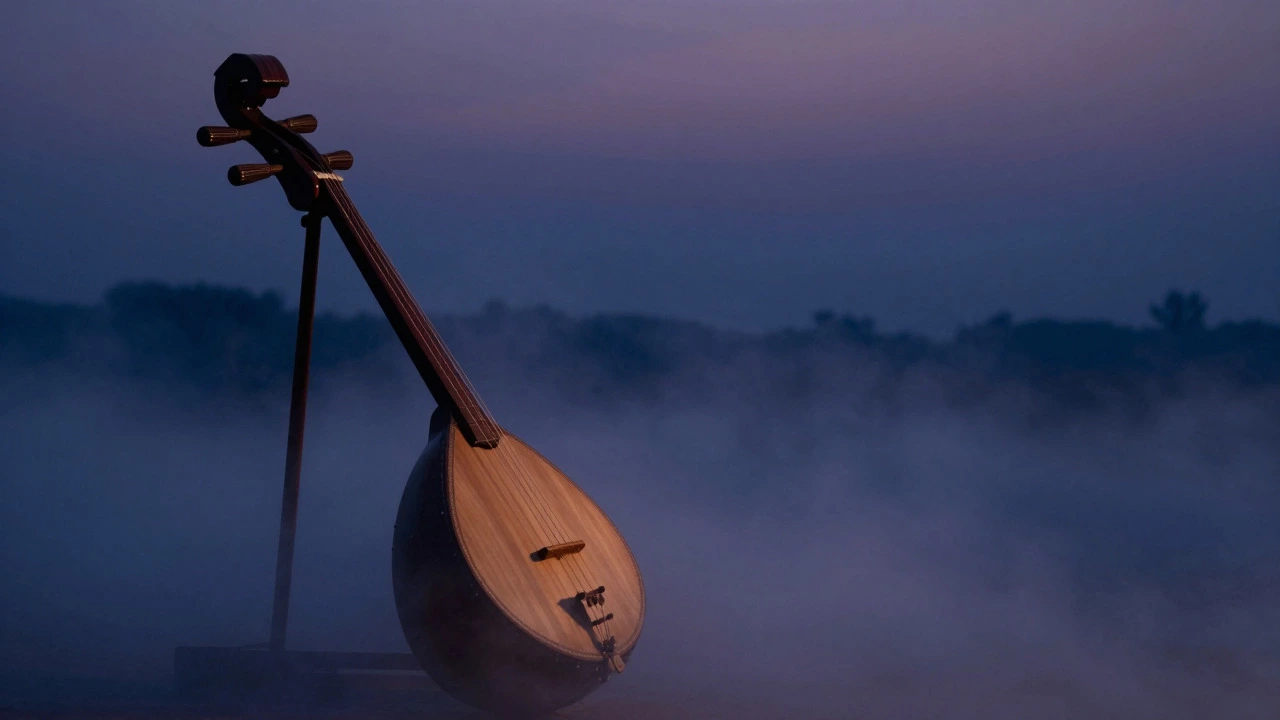
You might notice that in many Carnatic concerts, there is an instrument sitting quietly in the corner, emitting a constant, humming sound. This is the third pillar: the harmonic support. Traditionally, this was done by the Tanpura, a long-necked string instrument plucked continuously. Today, electronic versions like the Electronic Tanpura or Nadaswaram drones are common, but the function remains the same.
The Tanpura does not play melodies. It plays two main notes: the Sa (the tonic or root note) and the Pa (the perfect fifth). These notes create a continuous drone. Why is this so important? Because Carnatic music is microtonal. Notes are not fixed like keys on a piano; they slide between frequencies. The drone acts as a reference point, a tuning fork that never changes.
Imagine walking in a foggy field. The drone is the ground beneath your feet. It allows the vocalist and percussionist to experiment with wild improvisations because they always have a stable anchor to return to. Without the drone, the pitch would drift, and the emotional resonance of the Raga would be lost. It provides the spiritual atmosphere, creating a meditative space for both the performers and the listeners.
| Pillar | Primary Role | Key Instruments | Core Concept |
|---|---|---|---|
| Vocalist / Lead | Melody & Emotion | Voice, Vina, Flute, Violin | Raga (Melodic Framework) |
| Percussionist | Rhythm & Structure | Mridangam, Ghatam, Kanjiira | Tala (Rhythmic Cycle) |
| Harmonic Support | Drone & Stability | Tanpura, Electronic Drone | Shruti (Microtonal Reference) |
How the Pillars Interact: The Concert Format
Understanding these pillars separately is one thing, but seeing them work together reveals the magic of Carnatic music. A typical concert follows a strict progression that highlights each pillar's strength.
The concert usually begins with a Varnam, a short piece that warms up the voice and introduces the Raga and Tala. Here, all three pillars are present but restrained. The vocalist sings clearly, the Mridangam keeps a simple beat, and the Tanpura hums steadily.
As the concert progresses, the pieces get longer and more complex. During the Kriti (the main composition), the vocalist explores the lyrics and melody. The Mridangam waits for cues to join in, adding rhythmic patterns that complement the singing. The interaction becomes tighter. You will hear the vocalist sing a phrase, and the Mridangam will immediately answer with a similar rhythmic motif. This is called Pallavi exploration.
The climax of the concert is often the Tani Avartanam. This is a solo percussion performance. The vocalist stops singing, the Tanpura continues its drone, and the Mridangam player takes center stage. They perform a series of increasingly fast and complex rhythmic cycles, showcasing their technical mastery. This segment proves that the percussionist is not just a timekeeper but a solo artist in their own right.
Why This Structure Matters Today
In a world of auto-tuned pop music and digital beats, the three-pillar structure of Carnatic music offers something rare: authenticity and presence. There is no backing track. If the vocalist misses a note, everyone hears it. If the percussionist loses the beat, the whole performance wobbles. This vulnerability creates a unique connection between the artist and the audience.
For learners, understanding these pillars helps demystify the music. Instead of getting lost in the speed of the singing, you can focus on one element at a time. Listen to the Tanpura to feel the mood. Watch the Mridangam to follow the rhythm. Then, let the vocalist's melody wash over you. By separating the layers, you gain a deeper appreciation for the skill required to weave them together.
Moreover, this structure teaches discipline and collaboration. Each musician must listen intently to the others. The vocalist cannot ignore the rhythm, and the percussionist cannot overpower the melody. It is a balance of independence and interdependence. This lesson extends beyond music into life, reminding us that harmony requires attention to both individual expression and collective structure.
Common Misconceptions About the Pillars
Many newcomers to Carnatic music assume that the Tanpura is just background noise. They tune it out after a few minutes. But try listening to a performance without the drone. You will notice how disorienting it feels. The drone is the glue that holds the microtones together. Without it, the Raga loses its identity.
Another misconception is that the percussionist is merely keeping time. While they do maintain the Tala, their role is far more creative. They are improvising rhythms in real-time, responding to the vocalist's cues. It is a dynamic conversation, not a static metronome. Watching a skilled Mridangam player is like watching a jazz drummer, but with stricter rules and deeper cultural roots.
Finally, some people think that only vocalists are true Carnatic musicians. This overlooks the immense skill required to master instruments like the Vina or Flute. These instrumentalists face the same challenges as singers: they must mimic the human voice, navigate complex Ragas, and interact with the percussion. The distinction between vocal and instrumental is blurring in modern times, with many artists excelling in both areas.
Exploring Beyond the Pillars
While the three pillars form the core of any Carnatic performance, there are other elements that enrich the experience. For instance, the use of Gatam in instrumental concerts adds a layer of rhythmic complexity specific to instruments like the Mridangam or Ghatam. Similarly, the inclusion of Javali songs, which are devotional and romantic in nature, brings a softer, more lyrical quality to the concert.
Regional variations also play a role. In Tamil Nadu, the style might be more elaborate and theoretical, while in Karnataka, it could be more direct and emotive. Understanding these nuances adds depth to your listening experience. It transforms a passive activity into an active exploration of culture and history.
As you continue to explore Carnatic music, keep these three pillars in mind. They are the foundation upon which centuries of tradition rest. Whether you are a beginner or a seasoned listener, recognizing the interplay between melody, rhythm, and drone will enhance your appreciation of this timeless art form.
What is the difference between Raga and Tala?
Raga refers to the melodic framework, defining the notes and their relationships. Tala refers to the rhythmic cycle, defining the timing and beat patterns. Together, they form the backbone of Carnatic music.
Can I learn Carnatic music without knowing the three pillars?
It is difficult to progress significantly without understanding these pillars. Beginners start with basic Ragas and Talas, gradually learning to appreciate the interplay between melody, rhythm, and drone.
Is the Tanpura optional in Carnatic music?
While some experimental performances may omit it, the Tanpura (or drone) is traditionally essential. It provides the pitch reference and atmospheric context necessary for authentic Raga presentation.
Who is the most famous Carnatic musician?
There are many legendary figures, including M.S. Subbulakshmi, Tyagaraja, and Lalgudi Jayaraman. Each contributed uniquely to preserving and evolving the tradition.
How long does a typical Carnatic concert last?
A standard concert lasts about two hours, starting in the evening. It includes various compositions ranging from short warm-ups to long, elaborate pieces.