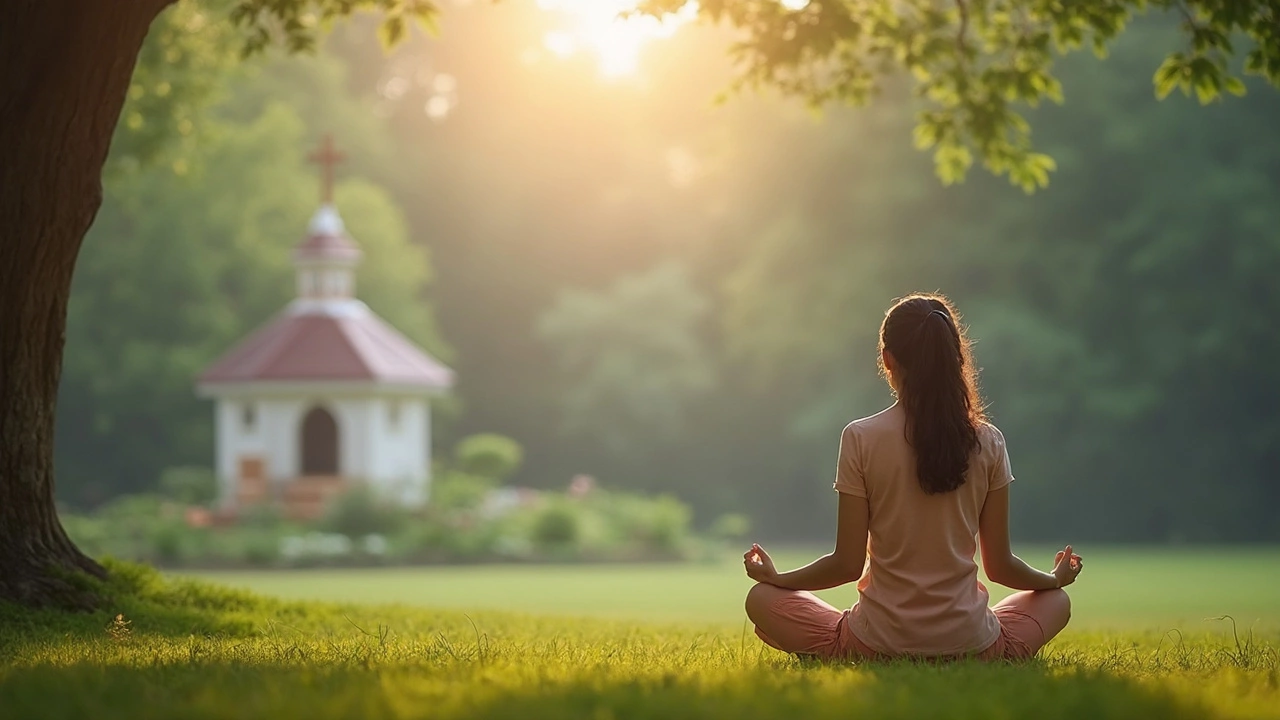
Yoga and Spirituality: What They Really Mean and How They Connect
When you think of yoga, a physical and mental practice originating in ancient India that combines movement, breath, and focus. Also known as union, it isn’t just stretching—it’s a system designed to quiet the mind and connect with something deeper. But yoga doesn’t stop at the mat. It’s tied to something bigger: spirituality, a personal search for meaning, inner peace, or connection to a higher power beyond organized religion. People mix them up because yoga often includes meditation, chanting, or breathwork that feels spiritual. But you can do yoga without any of that—and still get stronger. And you can be deeply spiritual without ever doing a single downward dog.
The confusion comes from where yoga started. It grew out of Hindu philosophy, a complex system of beliefs about the self, the universe, and how to live well. Ancient texts like the Bhagavad Gita and the Yoga Sutras talk about yoga as a path to self-realization, not just fitness. That’s why the Catholic Church has concerns—it sees yoga’s spiritual side as clashing with Christian prayer. But here’s the thing: most people today don’t practice yoga to become Hindu. They do it to sleep better, reduce stress, or feel more in control. That’s where meditation, the quieting of the mind through focused attention. and mindfulness, paying attention to the present moment without judgment. come in. These aren’t religious. They’re tools. And they work whether you’re religious, spiritual, or just tired.
What you’ll find in these articles isn’t a debate about religion. It’s a look at how yoga and spirituality actually show up in real life. Why do some people think yoga is sacred? Why do others avoid it? How do Hindu festivals like Diwali or Navaratri tie into spiritual practices? What’s the truth behind claims that yoga can heal or transform you? You’ll see how Tamil communities celebrate Diwali with the same quiet reverence as families in Punjab. You’ll learn why the Catholic Church warns against yoga’s spiritual roots—and what alternatives they suggest. You’ll even meet the Jalpari, a water spirit from Indian folklore, and realize how deeply myth and mindfulness are woven together in this culture.
This isn’t about telling you what to believe. It’s about showing you what’s real. Yoga isn’t magic. Spirituality isn’t a trend. They’re both tools people have used for thousands of years to find calm in chaos. And if you’ve ever wondered why you feel lighter after a session—even if you didn’t chant a single mantra—this collection will help you understand why.