What to Wear for an Ayurvedic Massage: Abhyanga, Shirodhara, Panchakarma Guide
Worried about what to wear to an Ayurvedic massage? See exactly what to keep on, what to pack, and how draping works for Abhyanga, Shirodhara, and more.
When you step into a spa, a place in India designed for healing, relaxation, and ritual-based wellness. Also known as Ayurvedic center, it isn't just about massage—it's about balancing body, mind, and energy the way generations have done in Tamil Nadu, Kerala, and beyond. Unlike Western spas that focus on luxury and silence, Indian spas are rooted in ancient practices that demand respect, stillness, and awareness. You’re not just booking a treatment—you’re entering a space shaped by temple traditions, herbal wisdom, and quiet discipline.
At the heart of Ayurvedic spa, a wellness system from India that uses herbs, oils, and rhythms to restore dosha balance is the idea that your body speaks through touch. That’s why you’re asked to shower before your massage—clean skin lets the oils work better. You won’t find loud music or chatty therapists. Silence is part of the therapy. You’re expected to arrive early, turn off your phone, and let go of the rush. If you’re getting a traditional Tamil spa tradition, a regional form of bodywork and herbal treatment common in Tamil Nadu, often tied to temple rituals and seasonal cycles, you might be offered warm turmeric water or asked to sit barefoot on a cloth. These aren’t quirks—they’re part of the healing.
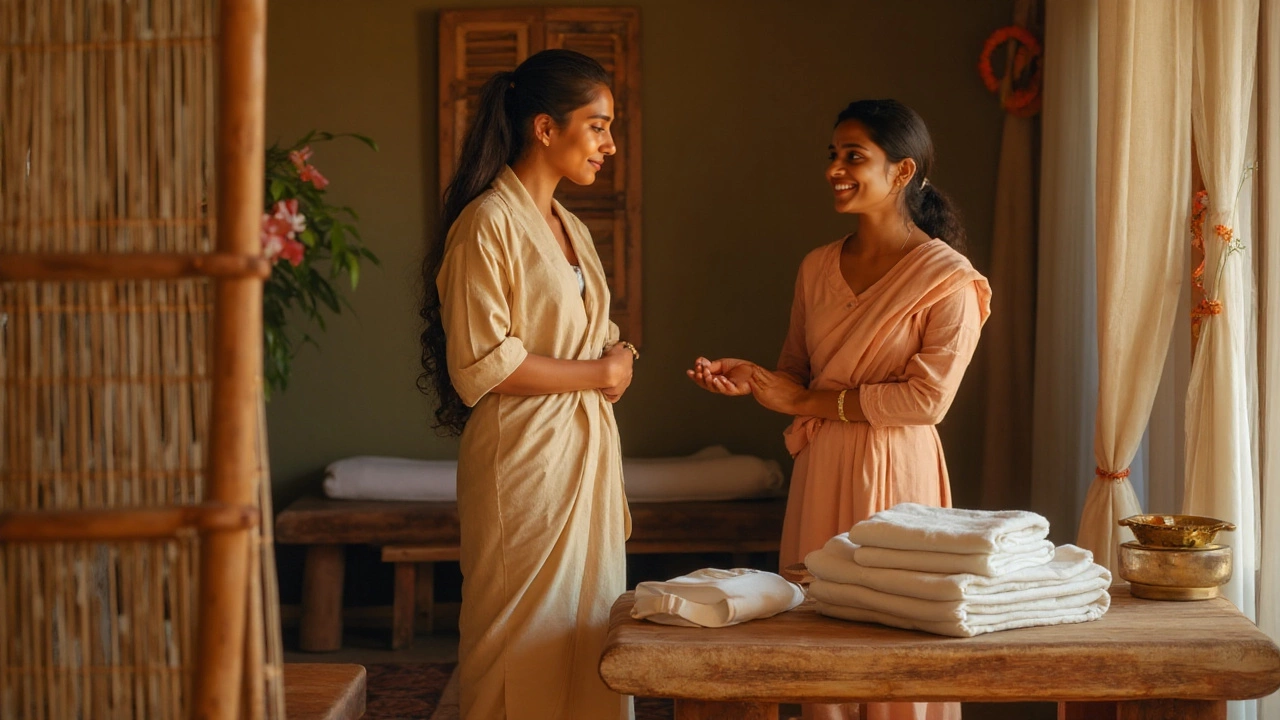
Women and men usually receive treatments in separate rooms, and modesty is respected. Most places provide cotton underwear or a dhoti; you don’t bring your own. If you’re unsure what to wear, just ask. No one will judge you for not knowing. The therapist will guide you through each step—oil application, steam, pressure points—and your job is to breathe, relax, and say if something feels too hot or too hard. This isn’t a race. A 60-minute session might feel like two hours because your body is finally slowing down.
And yes, the oils smell strong. That’s because they’re made from crushed herbs, sesame, coconut, or castor—ingredients used for centuries to ease pain, calm nerves, and detoxify. Don’t rush to shower right after. Let the oil sink in for at least 30 minutes. Many people nap afterward. That’s normal. That’s the point.
There’s no tipping culture in most traditional Indian spas. A quiet thank you is enough. If you want to show appreciation, bring fruit or tea for the staff—it’s more meaningful than cash. And if you’re visiting a temple-linked spa, like in Madurai or Kumbakonam, dress modestly even outside the treatment room. No shorts, no tank tops. It’s not about rules—it’s about honoring the space.
What you’ll find in the posts below are real stories from people who’ve been to these places—what worked, what surprised them, and what they wish they’d known before walking in. From the quiet Ayurvedic retreats in Kerala to the bustling Tamil wellness centers in Chennai, these aren’t just guides. They’re warnings, tips, and quiet truths from those who’ve been there. You don’t need to know Sanskrit or yoga to benefit. You just need to show up, be still, and let the tradition do its work.
Worried about what to wear to an Ayurvedic massage? See exactly what to keep on, what to pack, and how draping works for Abhyanga, Shirodhara, and more.