Raga: The Soul of Indian Classical Music and Its Cultural Roots
When you hear a single note stretch into a long, trembling phrase that makes your chest tighten or your eyes well up, you’re experiencing Raga, a structured melodic framework in Indian classical music that carries emotion, time of day, and spiritual meaning. Also known as melodic mode, it’s not just a scale—it’s a living system that guides how notes are bent, paused, and layered to evoke specific feelings like longing, joy, or peace. Unlike Western scales, a raga isn’t fixed. It’s a path. A musician walks it slowly, choosing which notes to emphasize, which to skip, and when to let silence speak louder than sound.
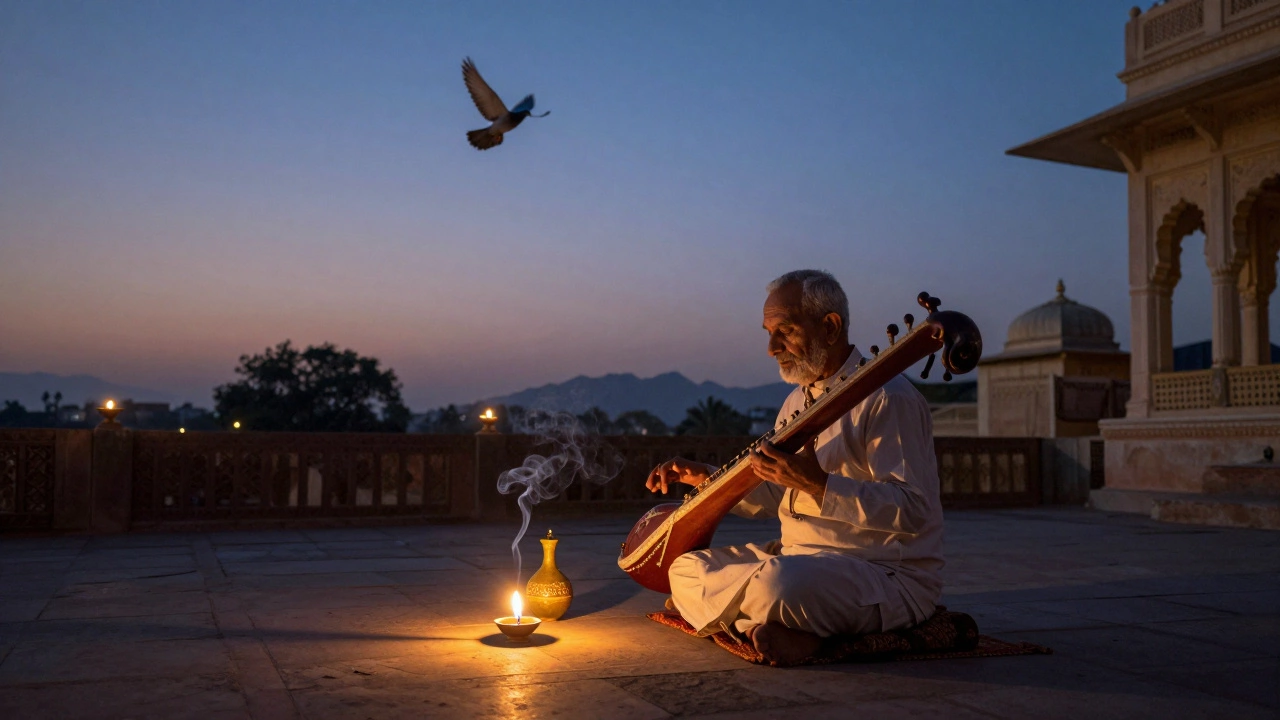
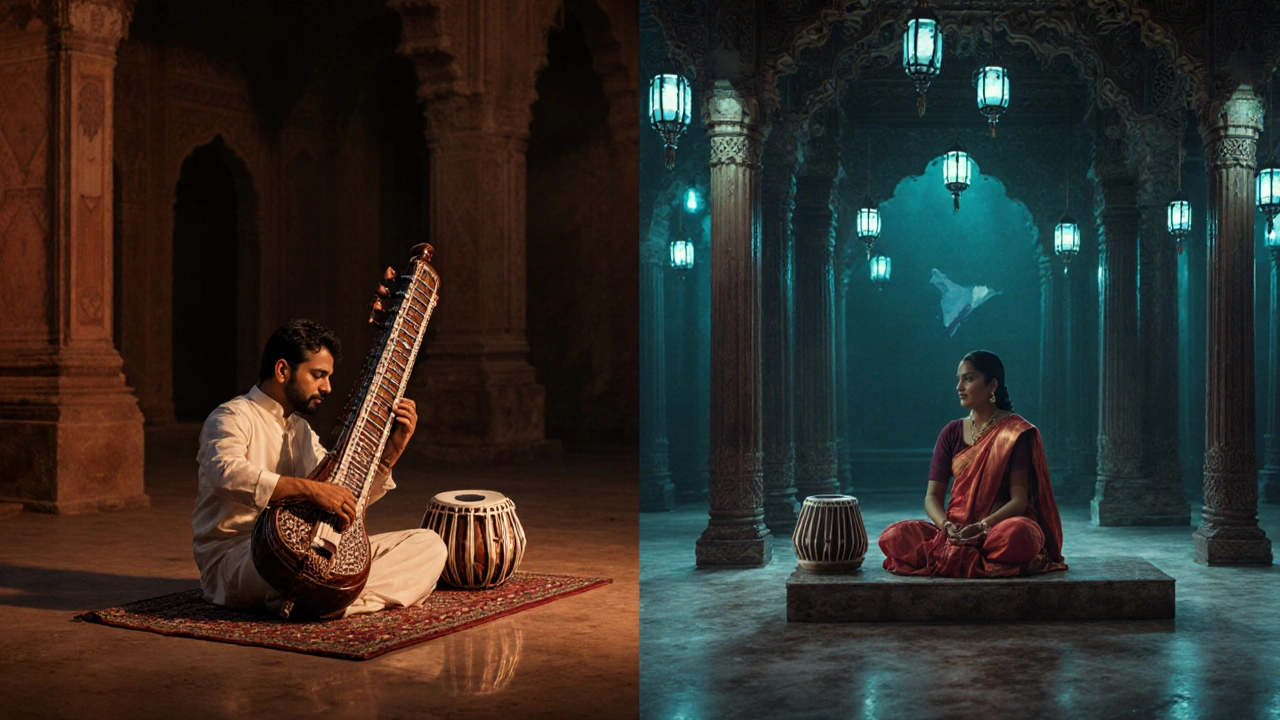
Raga is the bridge between Carnatic music, the devotional, temple-rooted classical tradition of South India, especially Tamil Nadu and Hindustani music, the north Indian style shaped by Mughal courts and Persian influences. In Tamil Nadu, ragas like Mohanam and Shankarabharanam aren’t just played—they’re prayed with. They’re tied to temple rituals, morning chants, and even the rhythm of farming life. Meanwhile, in the north, ragas like Yaman and Bhairav are linked to specific hours—Yaman for twilight, Bhairav for dawn—because each raga carries its own time of day, like a musical calendar.
What makes ragas powerful isn’t complexity—it’s intention. A single raga can be played on a sitar, a violin, or even a human voice, and still move you the same way. That’s why Tamil folk traditions like Bol banao, a rhythmic, wordless vocal style used in rural rituals and work songs, borrow from raga structures without using formal notation. You don’t need to read music to feel a raga. You just need to listen. And that’s why you’ll find ragas in everything from temple bells to film songs to the humming of a grandmother cooking rice.
Some ragas are ancient, passed down through generations of gurus and students. Others are modern inventions, shaped by artists who push boundaries while staying true to the rules. But every raga shares one thing: it’s designed to make you feel something real. Not just hear music—feel it in your bones. That’s why, whether you’re listening to a Carnatic concert in Chennai or a folk singer in a Tamil village, you’re always hearing the same thing: the quiet, powerful voice of Raga.
Below, you’ll find articles that explore how ragas live beyond the concert hall—in festivals, folk songs, spiritual practices, and even in the way people talk about music across India. Some explain why certain ragas are played at sunrise. Others uncover how Tamil communities blend raga with their own traditions. No theory lectures. No jargon. Just real stories about the sounds that move a culture.