What Is a Punjabi Song? A Simple Guide to the Music of Punjab
Discover what a Punjabi song really is-its language, instruments, history, and key sub‑genres-plus tips for listening and exploring the vibrant world of Punjabi music.
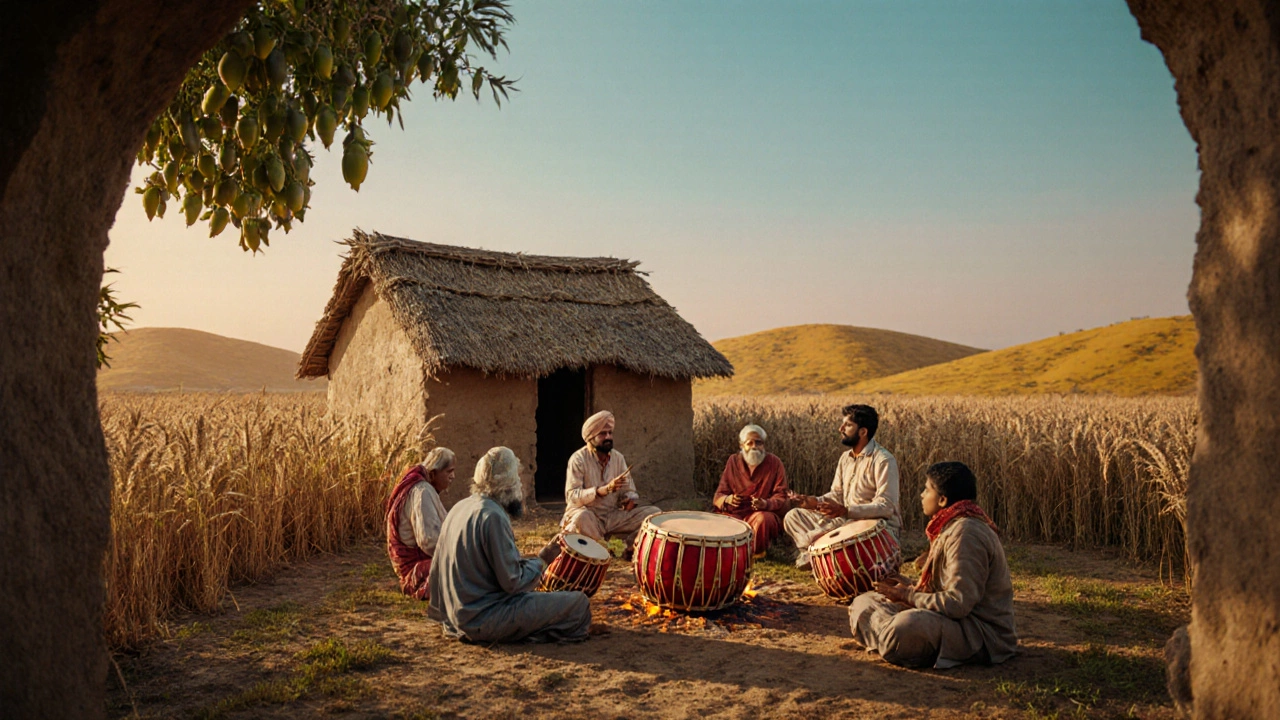
When you hear the thunder of a Punjabi folk music, a living tradition of rural songs and rhythms passed down through generations in Punjab, India. Also known as Punjabi traditional songs, it’s not just entertainment—it’s memory, protest, prayer, and celebration wrapped in rhythm. This music doesn’t live on stages. It lives in fields during harvest, at wedding processions, in village squares, and around bonfires where elders teach the young how to clap in time with the dhol.
The soul of this music is the dhol, a double-headed drum played with sticks, central to Punjabi folk gatherings and the driving force behind bhangra. Also known as Punjabi folk drum, it’s not just an instrument—it’s the pulse that tells the story of the land. Then there’s the tumbi, a single-stringed plucked instrument with a sharp, twangy sound that cuts through crowds. The algoza, two flutes played together by one person, mimics conversation. And don’t forget the chimta—metal tongs with jingles—that keeps time while women sing in unison during chores. These aren’t relics. They’re tools still used daily by farmers, brides, and grandmothers.
Punjabi folk music doesn’t wait for festivals. It rises from daily life. A farmer hums a tune while sowing wheat. A bride sings lullabies to her newborn that have been sung for 200 years. These songs aren’t written in books—they’re learned by ear, passed from mother to daughter, uncle to nephew. You won’t find sheet music for them. You’ll find them in the sweat of harvest season, in the laughter of a village wedding, in the quiet moments before dawn.
And yes, bhangra is part of it—but only part. Most people think bhangra is Punjabi folk music. It’s not. Bhangra is the dance that grew from the music. The real music? It’s the ballads of love and loss, the work chants of laborers, the spiritual hymns sung to local deities like Jhulelal. It’s the songs women sing while grinding grain, the ones men shout to coordinate pulling a plow, the ones children chant while jumping rope. This music doesn’t need a stage. It needs soil, sweat, and story.
What you’ll find in the posts below aren’t just songs. They’re windows into how Punjabi folk music connects to other Indian traditions—from the nonsense singing of Tamil villages to the rhythms of Carnatic and Hindustani forms. You’ll see how these sounds travel, change, and survive—even when the world moves on. Whether you’re here because you heard a dhol at a party or because your grandma sang you a lullaby in Punjabi, this collection is for you. No theory. No fluff. Just the real, raw, living sound of Punjab.
Discover what a Punjabi song really is-its language, instruments, history, and key sub‑genres-plus tips for listening and exploring the vibrant world of Punjabi music.